semi合集-English.pdf - 第4262页
SEMI F78-0304 © SEMI 2003, 2004 15 Figure 9 If a Cut-Out or Cu t-In is Required, Purge Shall be Applied to Both En ds or the Downstre am End Must be Discarded or Cleaned
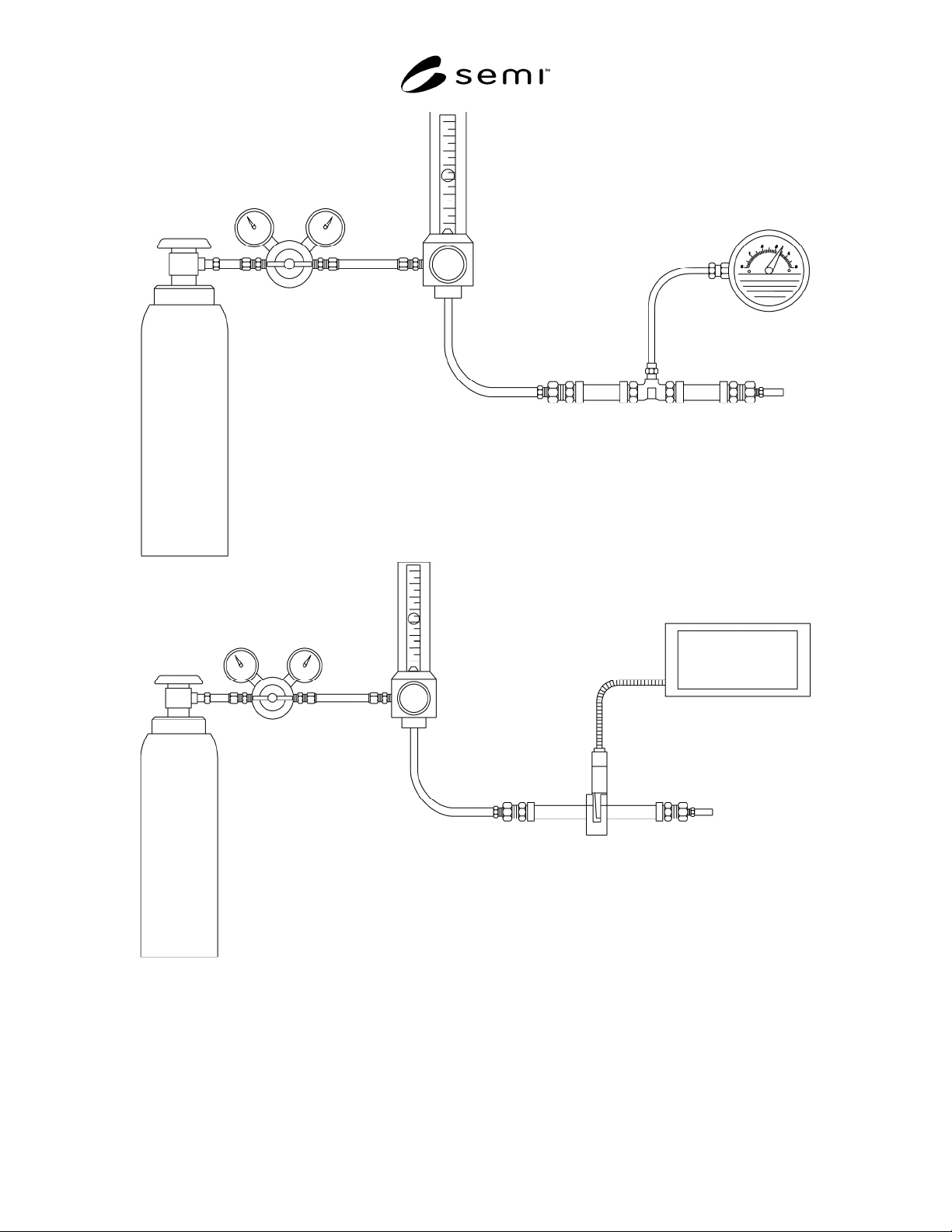
SEMI F78-0304 © SEMI 2003, 2004 14
Figure 8
All Welds Must Use Positive and Repeatable Form of ID Purge
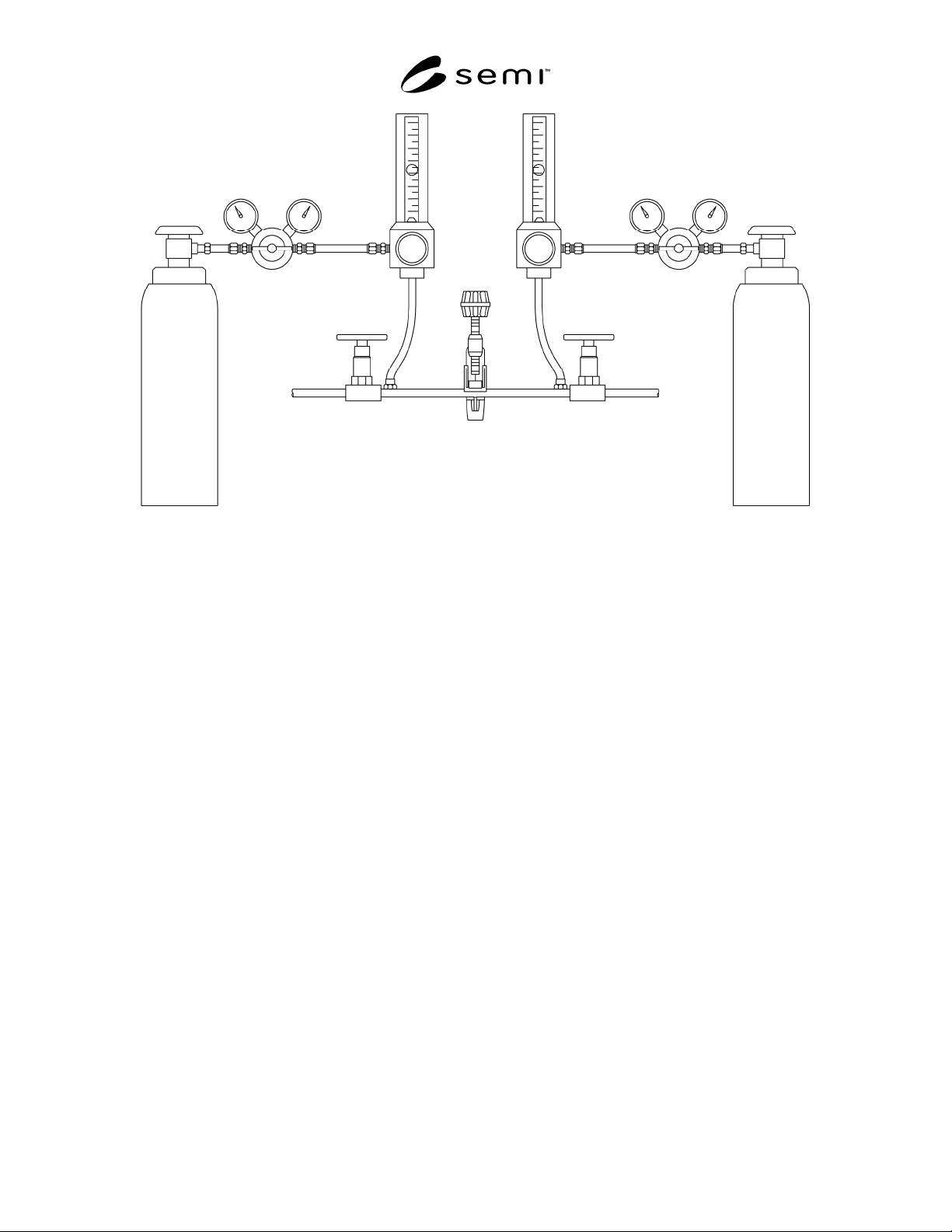
SEMI F78-0304 © SEMI 2003, 2004 15
Figure 9
If a Cut-Out or Cut-In is Required, Purge Shall be Applied to Both Ends or the Downstream End Must be
Discarded or Cleaned
SEMI F78-0304 © SEMI 2003, 2004 16
APPENDIX 1
STAINLESS STEEL AND WELDING FUME
NOTICE: The material in this appendix is an official part of SEMI F78. It has been derived from the cited
documents. Determination of the suitability of the material is solely the responsibility of the user.
A1-1 General
A1-1.1 The fume generated when welding stainless
steels includes respirable particles, the composition of
which—particularly with the flux-shielded welding
processes—suggests a risk to cause cancers. However,
epidemiological analyses have not identified any actual
risk specific to stainless steels but have shown a slight
excess of lung cancers among welders as a whole, i.e.
both welders of non-alloyed steels and welders of
stainless steels, compared with the general population.
The cause of this excess has not been identified but may
be connected with factors incidental to welding.
Nevertheless, appropriate precautions to avoid exposure
to welding fume of all kinds are advisable and indeed
necessary if regulatory limits are to be observed.
A1-1.2 There is an important difference between the
chemical forms of chromium in fume from the flux
processes and from the gas-shielded processes. In the
former group most of the chromium is present in
hexavalent form (chromates), while almost all
chromium in fume produced by the gas-shielded
processes is in the trivalent form and hexavalent
compounds are only present in very small proportions.
The relevance of this difference is that, without
reference to welding, hexavalent chromium compounds
are classified as carcinogenic to humans (Group 1) by
the IARC
5
particularly lung cancer. This fear is based
on the chemical composition of the fume, especially
that produced by the flux processes, and the very small
size of the particles, which puts them in the respirable
range, i.e., capable of penetration down to the level of
the lung alveoli. Trivalent chromium compounds are
unclassifiable to carcinogenicity to humans (Group 3).
Nickel compounds are also classified in Group 1 by the
IARC.
A1-1.3 Further information on the above topic can be
found in Status Report: Stainless Steel and Welding
Fume, SR-0008, March 2001, Nickel Development
Institute, 214 King Street West, Suite 510, Toronto,
Ontario, Canada M5H 3S6.
A1-1.4 For information about hexavalent chromium,
refer to HESIS Hazard Alert, June 1992, Hazard
Evaluation System & Information Service, California
Occupational Health Program, 2151 Berkeley Way,
Annex 11, Third Floor, Berkeley, CA 94704.
5 International Agency for Research on Cancer
NOTICE: SEMI makes no warranties or
representations as to the suitability of the standards set
forth herein for any particular application. The
determination of the suitability of the standard is solely
the responsibility of the user. Users are cautioned to
refer to manufacturer's instructions, product labels,
product data sheets, and other relevant literature,
respecting any materials or equipment mentioned
herein. These standards are subject to change without
notice.
By publication of this standard, Semiconductor
Equipment and Materials International (SEMI) takes no
position respecting the validity of any patent rights or
copyrights asserted in connection with any items
mentioned in this standard. Users of this standard are
expressly advised that determination of any such patent
rights or copyrights, and the risk of infringement of
such rights are entirely their own responsibility.
Copyright by SEMI® (Semiconductor Equipment and Materials
International), 3081 Zanker Road, San Jose, CA 95134. Reproduction o
f
the contents in whole or in part is forbidden without express written
consent of SEMI.