semi合集-English.pdf - 第2763页
SEMI E98-1102 © SEMI 2000, 2002 28 State Name Superstate Definition ACTIVE IN SERVICE The AbstractEq uipmentModule is performing activities that change its ph ysical state. ACTIVE SERVICE ACTIVE While assigned to manufac…
SEMI E98-1102 © SEMI 2000, 2002 27
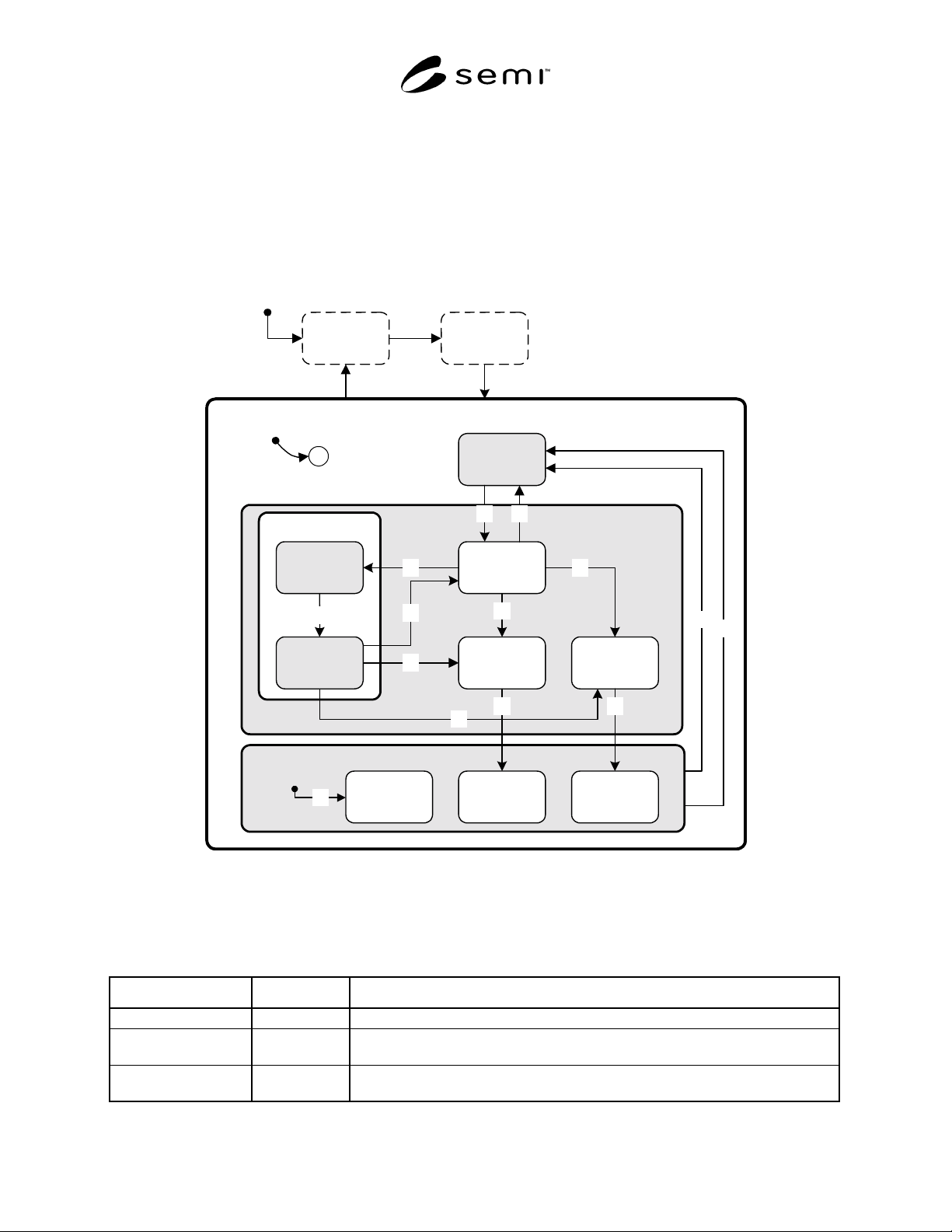
10.5.5.2 Additional details of the BEHAVIOR state are shown in Figure 18.
10.5.5.3 In addition to the states shown above, the AbstractEquipmentModule has an ARAMS state model, defined
in SEMI E58. The diagram for the ARAMS state model for modules is shown in Figure 6 in that document.
10.5.5.4 AbstractEquipmentModule Behavior State
10.5.5.4.1 The details of the BEHAVIOR state are shown in Table 11. POWERDOWN and INITIALIZING states
are included in the table to simplify comparisons with the ARAMS State Model and the Operational State Model
defined in SEMI E58. State models are initialized during the INITIALIZATION state. Communications shall be
initialized before the ARAMS state model is initialized in order to allow reporting of power down events.
ACTIVE
BEHAVIOR
IDLE
ACTIVE
SERVICE
12
PAUSE
PAUSING 14
25
13
16
INACTIVE
ABORTINGSTOPPING
19
ABORTEDSTOPPED
21
2220
IDLE WITH
ALARMS
24
18
17
23
PAUSED
15
INITIALIZATION
POWER
DOWN
C
11
Figure 18
Behavior State
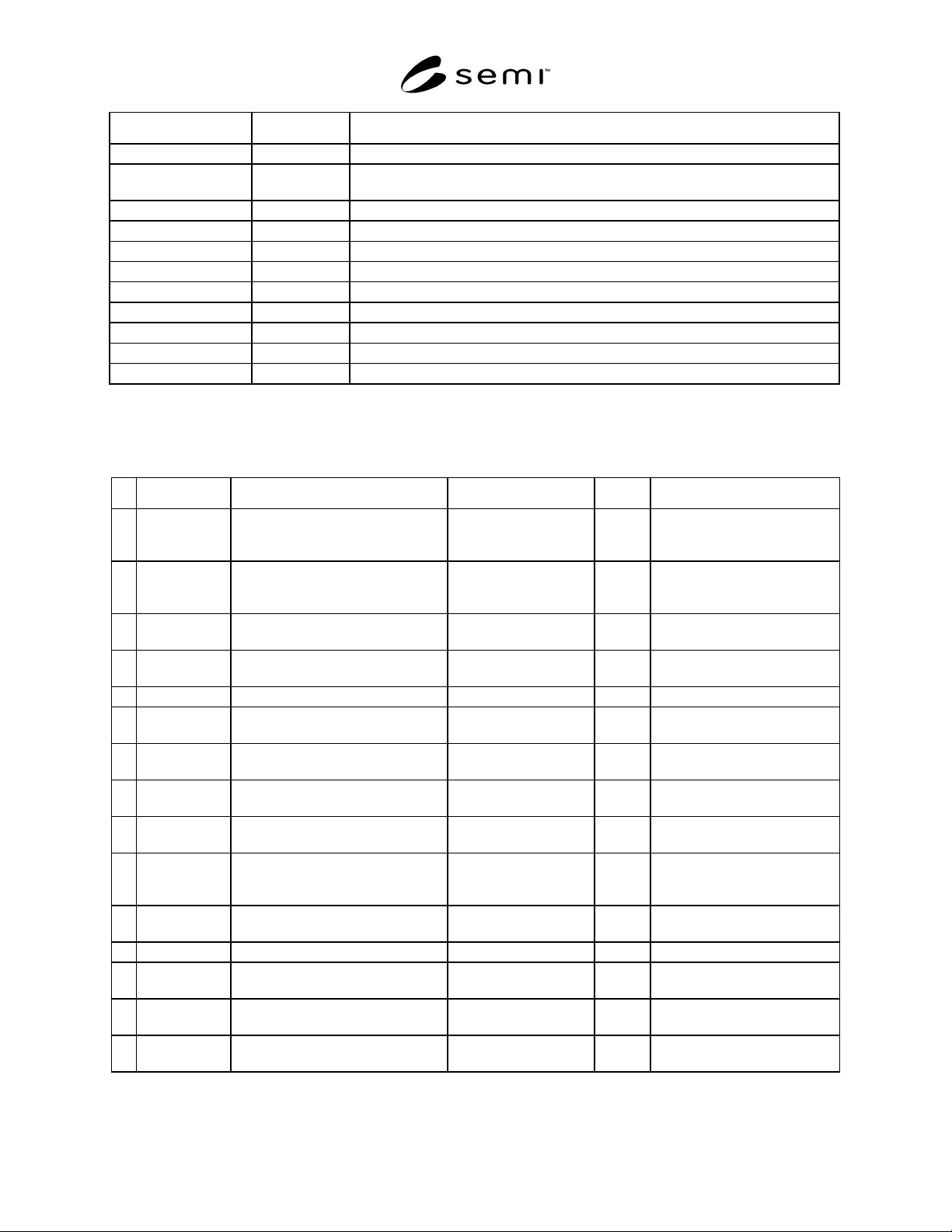
10.5.5.4.2 Table 11 defines the substates of the BEHAVIOR state.
Table 11 AbstractEquipmentModule Behavior State Definitions
State Name Superstate Definition
POWERDOWN None The AbstractEquipmentModule is powered off.
INITIALIZING None The AbstractEquipmentModule system, including hardware and software, is being
initialized. It is not ready to accept instructions.
IDLE IN SERVICE The AbstractEquipmentModule is fault free and able to accept instructions to perform
a manual or automated procedure that may change its physical state.
SEMI E98-1102 © SEMI 2000, 2002 28
State Name Superstate Definition
ACTIVE IN SERVICE The AbstractEquipmentModule is performing activities that change its physical state.
ACTIVE SERVICE ACTIVE While assigned to manufacturing, the AbstractEquipmentModule may only perform
its normal process.
PAUSE ACTIVE The AbstractEquipmentModule has received instructions to pause its activity.
PAUSING PAUSE The AbstractEquipmentModule is in the process of putting itself into a safe state.
PAUSED PAUSE The AbstractEquipmentModule is in a safe state.
STOPPING ACTIVE The AbstractEquipmentModule has begun the stop operation.
ABORTING ACTIVE The AbstractEquipmentModule has started the abort operation.
INACTIVE IN SERVICE The AbstractEquipmentModule has completed its stop or abort operation.
IDLE WITH ALARMS INACTIVE The AbstractEquipmentModule is idle but has a fault condition.
STOPPED INACTIVE The AbstractEquipmentModule has completed the stop operation.
ABORTED INACTIVE The AbstractEquipmentModule has completed the abort operation.
10.5.5.5 AbstractEquipment Module State Transition Table — Table 12 defines the state transitions for the
AbstractEquipmentModule Operations state model.
Table 12 AbstractEquipmentModule Behavior State Transitions
# Previous State Trigger New State Action(s) Comment
11 Any State model is initialized. depends on previous
state and current
condition
None See Section 9.5.2.2.
12 IDLE An activity changing the physical
state of the module is started.
ACTIVE SERVICE None Substates of ACTIVE
SERVICE are module
dependent.
13 ACTIVE
SERVICE
All activities changing the physical
state are completed without fault.
IDLE None IDLE is fault-free.
14 ACTIVE
SERVICE
The module received instructions to
pause its activity.
PAUSING None The module is responsible for
reaching a safe state.
15 PAUSING All activity is paused. PAUSED None
16 PAUSED The module has received instructions
to resume its activity.
ACTIVE SERVICE None
17 PAUSED The module has received instructions
to stop its activity.
STOPPING None The module is responsible for
reaching a safe state.
18 PAUSED The module has received instructions
to abort its activity.
ABORTING None
19 ACTIVE
SERVICE
The module has received instructions
to stop its activity.
STOPPING None
20 STOPPING The Stop operation has completed
and all material started has been
returned to its proper destination.
STOPPED None
21 ACTIVE
SERVICE
The module has received instructions
to abort its activity.
ABORTING None The module is responsible for
reaching a safe state.
22 ABORTING Completion of aborting activity. ABORTED None
23 Any Default entry into INACTIVE IDLE WITH ALARMS None One or more exceptions
detected during initialization.
24 INACTIVE The module received instructions to
return to IDLE.
IDLE None IDLE is fault-free.
25 INACTIVE The module returns to IDLE
automatically.
IDLE None IDLE is fault-free.

SEMI E98-1102 © SEMI 2000, 2002 29
10.5.6 AbstractEquipmentModule Attributes
10.5.6.1 The AbstractEquipmentModule Object is shown in Figure 19.
Model
ModelRevision
Nickname
BehaviorState
PreviousBehaviorState
ProcessSetup
ProcessType
ProcessCapabilitiesList
SoftwareVersions
AbstractEquipment
Module
Abort
AddProcessCapability
Pause
RemoveProcessCapability
Resume
Shutdown
Start
Startup
Stop
Figure 19
AbstractEquipmentModule Object Type
10.5.6.2 Attributes of the AbstractEquipmentModule are defined in Table 13.
Table 13 AbstractEquipmentModule Attribute Definition
Attribute Name Definition Access Reqd Form
ObjType Object type RO Y Text=“AbstractEquipmentModule”
ObjID Object identifier RO Y Text
Nickname User-assigned name RW Y Text
Model Model designator RO Y Text
ModelRevision Model Revision RO Y Text
BehaviorState Current substate of BEHAVIOR RO Y Enumerated
ProcessType Characterization of processes for user RW Y Text
ProcessCapabilityList One or more specific process capabilities RO Y List of text
PreviousBehaviorState The previous operations state RO Y Enumerated
ProcessSetup Name of current setup. RW Y Text
SoftwareVersions The set of software versions installed RO Y Ordered list of text
Units Type of material held RO Y Text
NOTE 1: Required if the AbstractEquipmentModule provides recipe execution services.
10.5.7 AbstractEquipmentModule Services — The AbstractEquipmentModule has one or more automated activities,
including its normal process (its intended function). The user shall be able to start, stop, abort, and resume the
activities of the module.
NOTE 4: Changing the operational state of an individual AbstractEquipmentModule within a multi-process Equipment during
automatic processing will affect both upstream and downstream operations. The Equipment is responsible for determining the
impact on other AbstractEquipmentModules.
NOTE 5: Directly changing the operational state of the AbstractEquipmentModule is not the same as changing the state of a job
or as changing the operational state of the Equipment. The equipment supplier shall document the relationships between the
operational state of the Equipment, the AbstractEquipmentModule, and the different job types that it supports.