semi合集-English.pdf - 第6818页
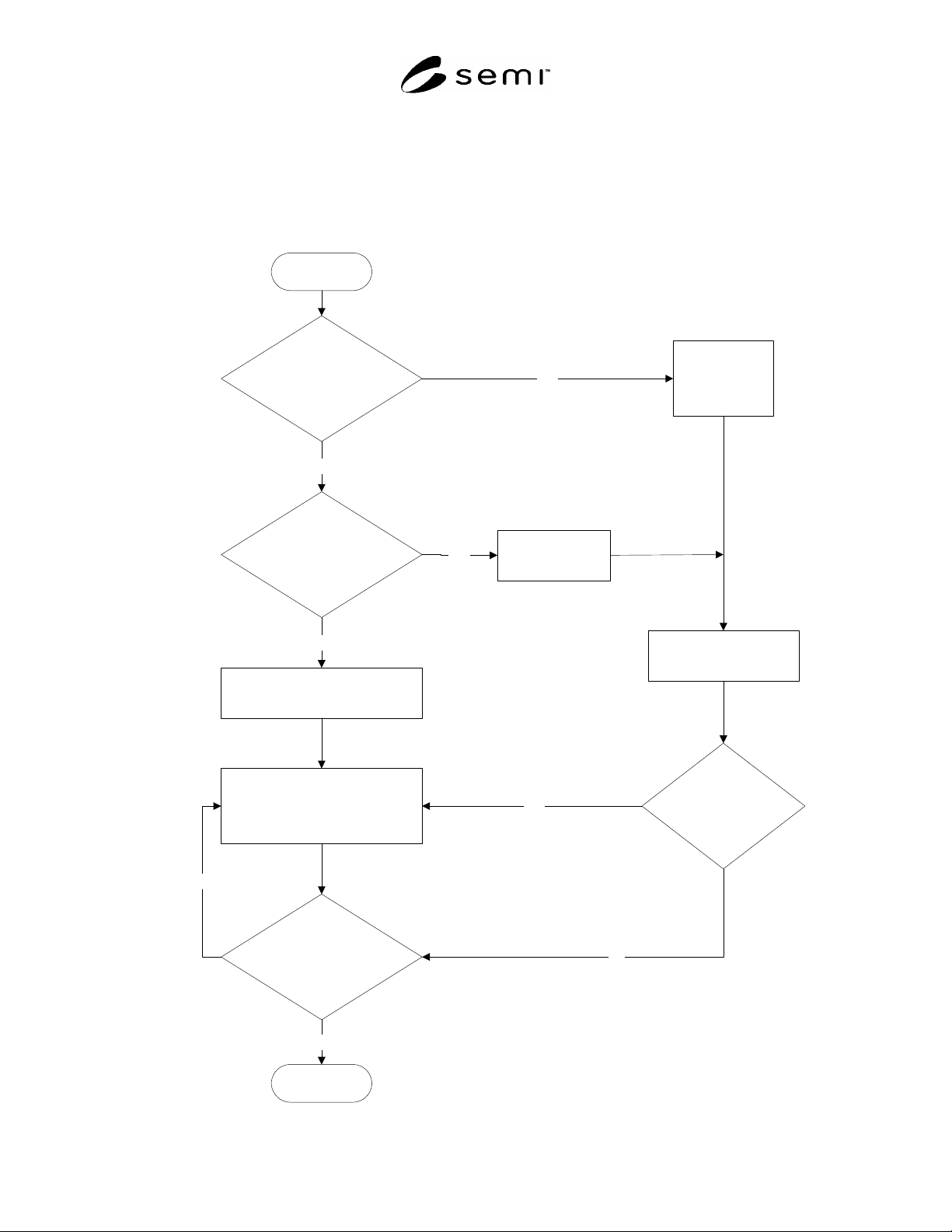
SEMI S2-0703a E © SEMI 1991, 2004 47 APPENDIX 6 FIRE PROTECTION: FLOWCHART FOR SELECTING MATERIALS OF CONSTRUCTION NOTICE : The material in this appendix is an official part of SEMI S2 and was approved by full letter bal…
SEMI S2-0703a
E
© SEMI 1991, 2004 46
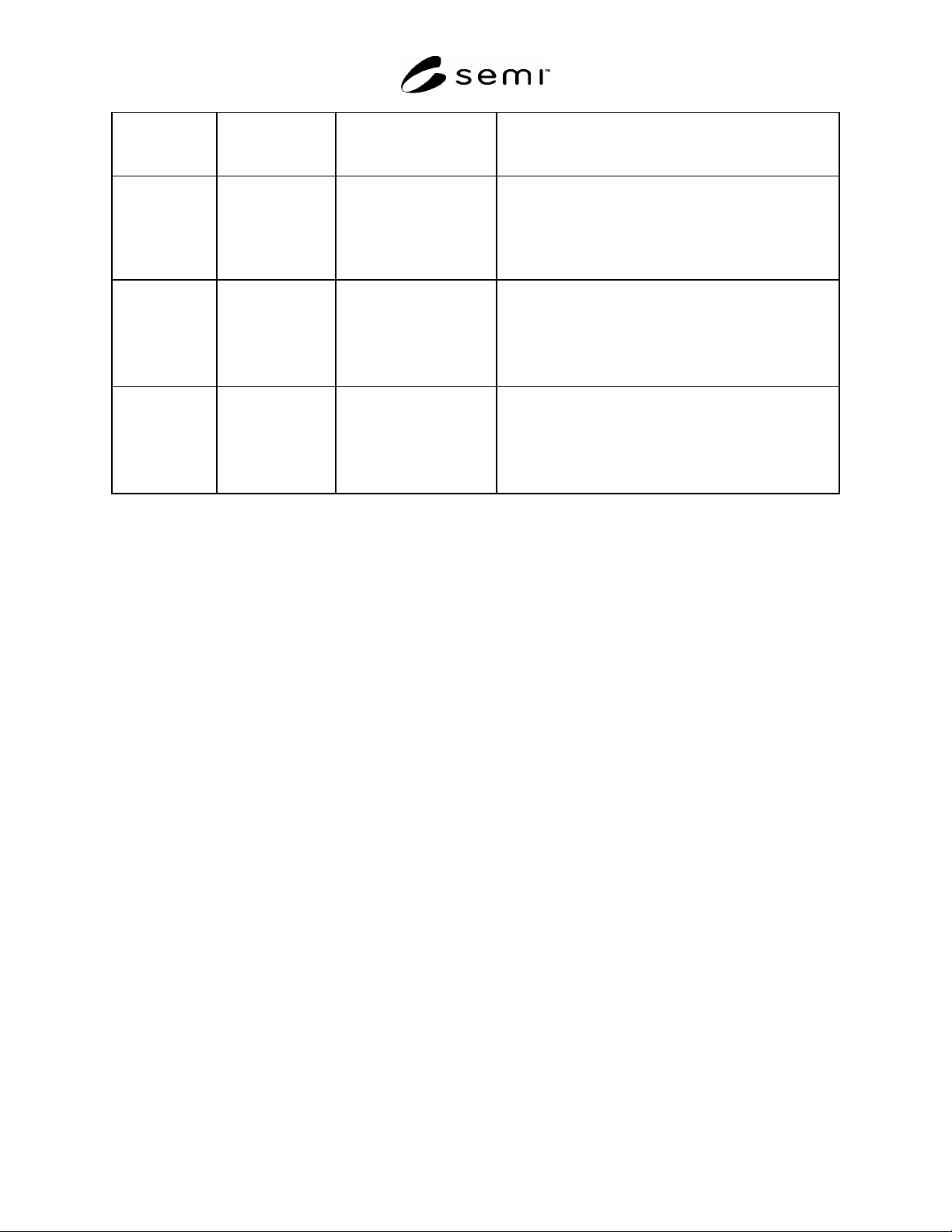
Optical Energy Physical Quantity
Measured
(units)
Access Limit Testing Methods
Visible Light
1
400 nm to
700 nm
(e.g., heating
lamps)
Irradiance
µW/cm
2
(See NOTES 1, 2,
and 3.)
Radiance
W/m
2
- sr
Wavelength dependent
20% of the applicable
exposure limits.
(See Reference 1.)
Thermocouple, thermopile, pyroelectric, photoelectric
Direct measurement locating the maximum irradiance and
orientation of the light energy at the closest approach to
view port(s) or accessible leakage point(s).
Ultraviolet
Energy
1
315 nm to
400 nm
(e.g., plasma,
stepper)
Irradiance
mW/cm
2
(See NOTES 1
and 2.)
0.2 mW/cm
2
Photoelectric detectors with filters and or controlled
phosphors
Direct measurements locating the maximum irradiance
and orientation of the energy at the closest approach to
the view port(s) or accessible leakage point(s).
Ultraviolet
Light
1
180 nm to
315 nm
(e.g., plasma,
stepper)
Effective
Irradiance
µW/cm
2
(See NOTE 4.)
0.02 W/ cm
2
Photoelectric detectors with filters and/or controlled
phosphors (See NOTE 5.)
Direct measurements locating the maximum irradiance
and orientation of the energy at the closest approach to
the view port(s) or accessible leakage point(s).
NOTE 1: “Irradiance” is essentially the same as “power density.”
NOTE 2: Lamp manufacturer data can sometimes be used to estimate and evaluate exposures using a spreadsheet.
NOTE 3: These guidelines cover visible, IR-A, and IR-B, and are frequency dependent. Separate evaluations may be needed for thermal or
photochemical retinal hazards and infrared eye hazards.
NOTE 4: “Effective irradiance” is irradiance adjusted to account for the wavelength-dependent biological hazard. Permissible exposure time =
0.003 J/cm2 divided by the effective irradiance.
NOTE 5: Instrumentation is commercially available that accounts for the wavelength dependence of the standard and gives results in effective
irradiance.
A5-5 References
1. 1996 TLVs and BEIs Threshold Limit Values for Chemical Substances and Physical Agents Biological
Exposure Indices, ACGIH, Cincinnati, OH
2. ANSI/IEEE Standard for Safety Levels with Respect to Human Exposure to Radio Frequency Electromagnetic
Fields, 3 kHz to 300 GHz, C95.1-1991, Piscataway, New Jersey
3. Guidelines on Limits of Exposure to Broad-Band Incoherent Optical Radiation (0.38 to 3 M), Health Physics
Vol. 73, No. 3 (September), pp.539-554, 1997
4. ICNIRP 1994 “Guidelines on Limits of Exposure to Static Magnetic Fields,” Health Physics Vol 66 (1)
(January), pp. 100-106, 1994
5. Interim Guidelines on the Limits of Exposure to 50/60 Hz Electric and Magnetic Fields, IRPA/ICNIRP
Guidelines, Health Physics Vol. 58, No. 1 (January), pp. 113-122, 1990
SEMI S2-0703a
E
© SEMI 1991, 2004 47
APPENDIX 6
FIRE PROTECTION: FLOWCHART FOR SELECTING MATERIALS OF
CONSTRUCTION
NOTICE: The material in this appendix is an official part of SEMI S2 and was approved by full letter ballot
procedures on December 15, 1999 by the North American Regional Standards Committee.
Construct of
materials which do
not propagate flame
*
Can the system
reasonably be constructed
of materials which do not
propagate flame
*
?
Start
Construct from
non-combustible
materials
Can the system
reasonably be constructed
of non-combustible
materials?
Is there a significant fire
risk, based on process
chemicals?
End
No
No
Does a qualified
party (see Section 14.2.1)
accept the risk assessment and
engineering controls?
No
Yes
Yes
Yes
Design engineering controls to mitigate
the fire risks based on materials of
construction and process chemicals.
This may include fire detection and
suppression systems.
No
Yes
Assess the fire risks based on the
materials of construction and process
chemicals.
Assess the fire risks based
on the process chemicals.
*beyond the ignition zone with or
without the continued application of
the ignition source

SEMI S2-0703a
E
© SEMI 1991, 2004 48
NOTICE: Paragraphs entitled “NOTE” are not an
official part of this safety guideline and are not intended
to modify or supersede the official safety guideline.
These have been supplied by the committee to enhance
the usage of the safety guideline.
SEMI makes no warranties or representations as to the
suitability of the guideline set forth herein for any
particular application. The determination of the
suitability of the guideline is solely the responsibility of
the user. Users are cautioned to refer to manufacturer’s
instructions, product labels, product data sheets, and
other relevant literature respecting any materials
mentioned herein. This guideline is subject to change
without notice.
The user’s attention is called to the possibility that
compliance with this guideline may require use of
copyrighted material or of an invention covered by
patent rights. By publication of this guideline, SEMI
takes no position respecting the validity of any patent
rights or copyrights asserted in connection with any
item mentioned in this guideline. Users of this guideline
are expressly advised that determination of any such
patent rights or copyrights, and the risk of infringement
of such rights, are entirely their own responsibility.
NOTICE: A new Appendix will be added (in
numerical order) upon July 1, 2006 publication as
shown in Delayed Revisions Section 1. The EH&S
Committee has voted that addition of this Appendix
section is OPTIONAL before the Effective Date.