semi合集-English.pdf - 第6672页
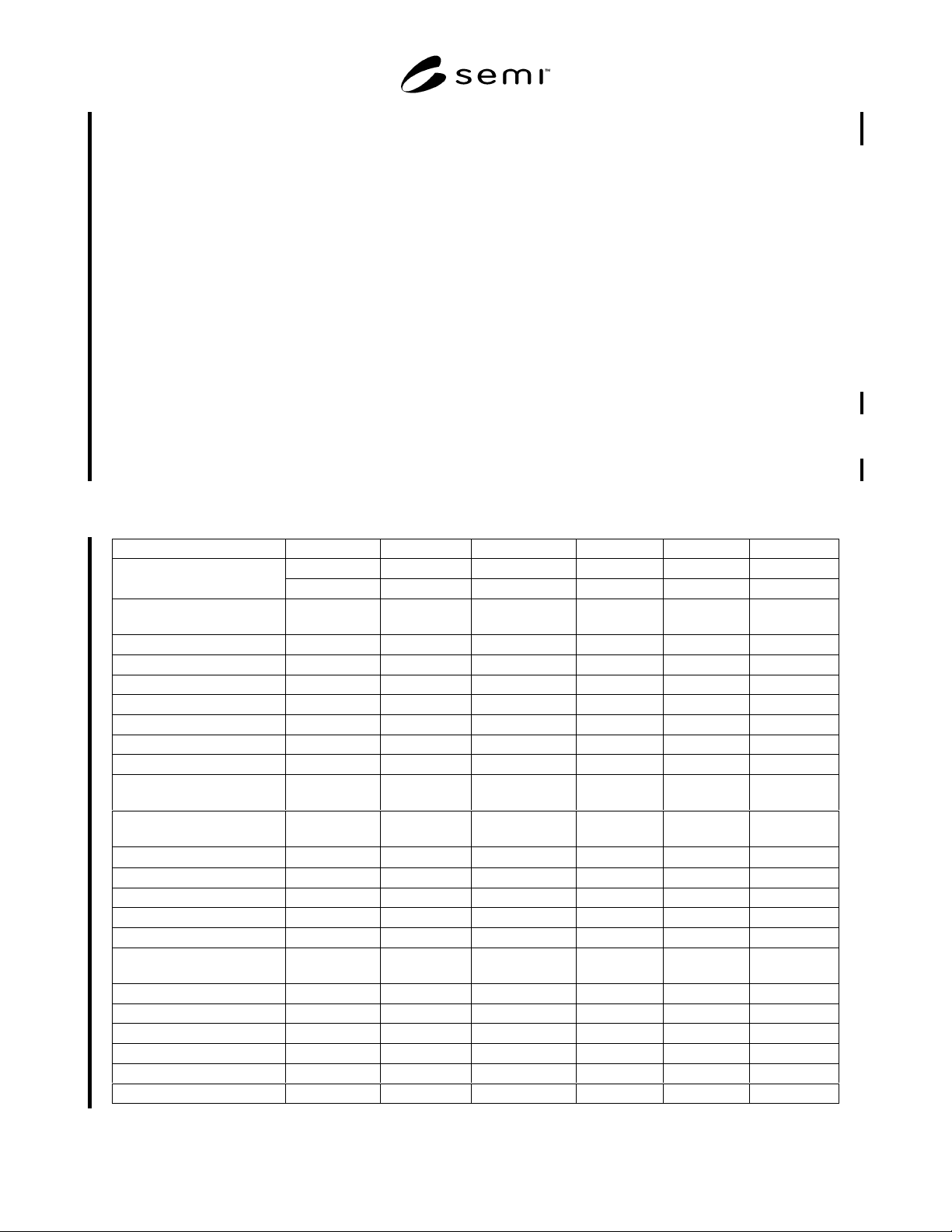
HYDROGEN PER OXIDE SEMI C30 -1101 © SEMI 1 978, 2001 9 Previous SEMI Ref erence # C1.9-96 C7.5-95 C8.5-02 98 -- -- C11.4-9 4 Grade 1 Grade 2 Grade 3 Grade 4 Grade 5 V LSI Grade (Specificatio n) (Specificatio n) (Specific…
SEMI C30-1101 © SEMI 1978, 2001 HYDROGEN PEROXIDE8
12.4.2.3 Water — The water used for all of the
dilutions, calibrations, and standards should be the
appropriate grade of 18.2 Mohm-cm water that meets
the criteria for Type E1.2 in ASTM D 5127.
12.4.2.4 Indium Internal Standard — Make up the
indium internal standard solution to a concentration of
20 µg/mL (ppm) from the appropriate concentrated
indium standard solution.
12.4.3 Sample Preparation
12.4.3.1 In a clean environment, place 200 g of sample
into a tared FEP bottle and add 20 µL of the indium
internal standard.
12.4.4 Analysis
12.4.4.1 Using the prepared solutions and blanks,
analyze the aforementioned metals by GFAA and/or
inductively coupled plasma mass spectrometry (ICP-
MS). For calibration, the standards are made up with
the 1% nitric acid solution and the indium internal
standard such that the final concentration is 2 ng/g of
indium. Run a reagent blank.
13 VLSI Grade Procedures
13.1 Specific procedures for this grade do not exist.
Refer to Sections 8 and 9 for available procedures.
14 Tier A Procedures
14.1 This section does not apply to this chemical.
15 Tier B Procedures
15.1 This section does not apply to this chemical.
16 Tier C Procedures
16.1 This section does not apply to this chemical.
17 Tier D Procedures
17.1 This section does not apply to this chemical.
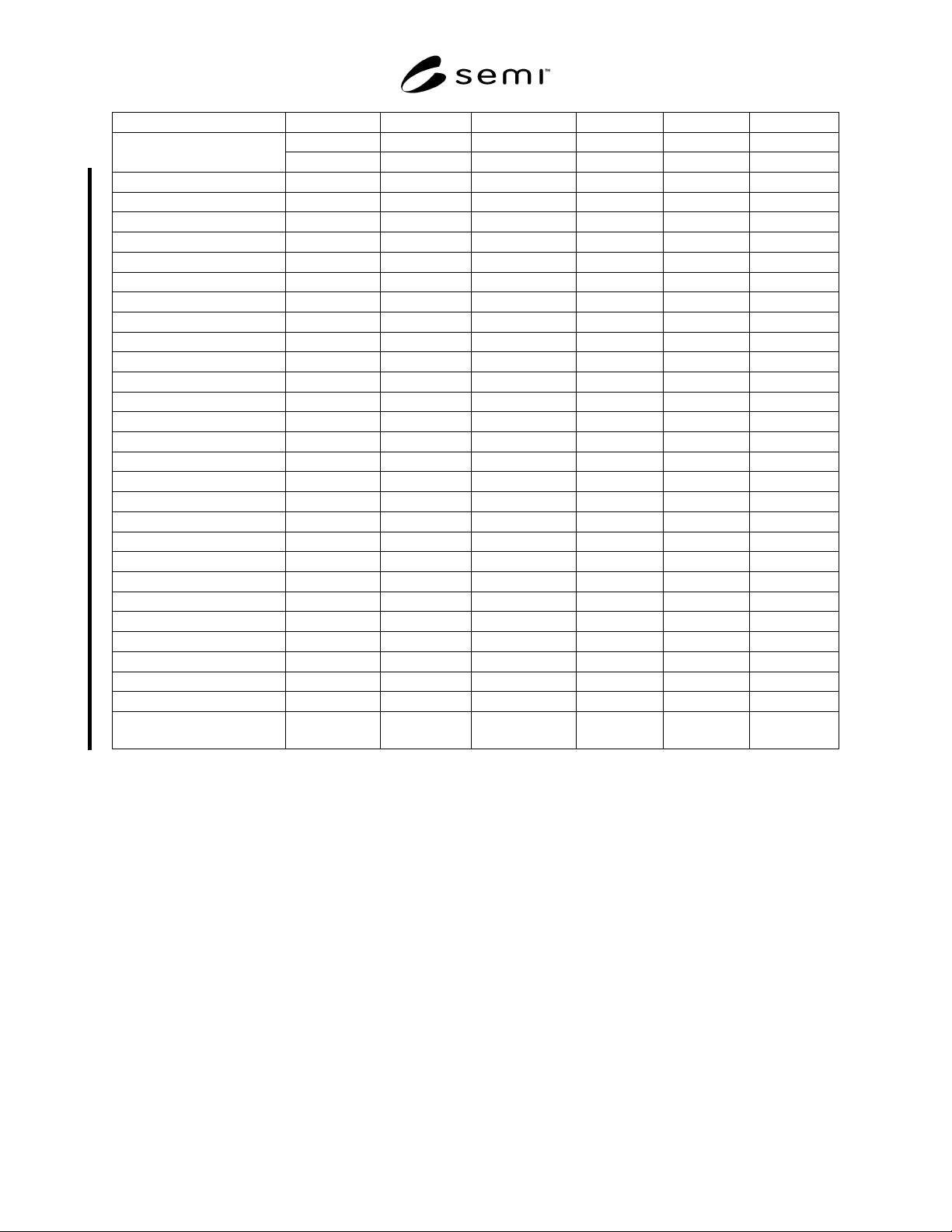
Table 1 Impurity Limits and Other Requirements for Hydrogen Peroxide
Previous SEMI Reference # C1.9-96 C7.5-95 C8.5-0298 -- -- C11.4-94
Grade 1 Grade 2 Grade 3 Grade 4 Grade 5 VLSI Grade
(Specification) (Specification) (Specification) (Specification) (Specification) (Guideline)
Assay (H
2
O
2
) 30.0–32.0% 30.0–32.0% 30.0–32.0% 30.0–32.0% 30.0–32.0% 30.0–32.0% or
34.0–36.0%
Color (APHA) 10 max 10 max 10 max -- -- 10 max
Residue after Evaporation -- -- -- -- -- 20 ppm max
Chloride (Cl) 2 ppm max 200 ppb max 200 ppb max 30 ppb max 30 ppb max 0.5 ppm max
Nitrate (NO
3
) -- 400 ppb max 400 ppb max 30 ppb max 30 ppb max --
Phosphate (PO
4
) 2 ppm max 200 ppb max 200 ppb max 30 ppb max 30 ppb max 1 ppm max
Sulfate (SO
4
) 5 ppm max 200 ppb max 200 ppb max 30 ppb max 30 ppb max 1 ppm max
Total Nitrogen (N) -- -- -- -- -- 2 ppm max
Total Organic Carbon (TOC) 20 ppm max 20,000 ppb
max
20 ppm max -- -- --
Total Oxidizable Carbon
(TOC)
-- -- -- 10 ppm max 10 ppm max --
Free Acid
0.6 µeq/g max
0.6 µeq/g max 0.6 µeq/g max -- -- 0.6 µeq/g max
Aluminum (Al) 1 ppm max 10 ppb max 1 ppb max 100 ppt max 10 ppt max 0.2 ppm max
Ammonium (NH
4
) -- -- -- -- -- 2 ppm max
Antimony (Sb) -- 5 ppb max 1 ppb max 100 ppt max 10 ppt max --
Arsenic (As) -- 5 ppb max 1 ppb max 100 ppt max 10 ppt max --
Arsenic and Antimony (as
As)
0.01 ppm max -- -- -- -- 0.01 ppm max
Barium (Ba) -- 10 ppb max -- 100 ppt max 10 ppt max 0.05 ppm max
Beryllium (Be) -- 10 ppb max -- -- -- 0.01 ppm max
Bismuth (Bi) -- 10 ppb max -- -- -- 0.02 ppm max
Boron (B) 0.1 ppm max 10 ppb max 1 ppb max 100 ppt max 10 ppt max 0.02 ppm max
Cadmium (Cd) -- 10 ppb max 1 ppb max 100 ppt max 10 ppt max 0.01 ppm max
Calcium (Ca) 0.2 ppm max 10 ppb max 1 ppb max 100 ppt max 10 ppt max 0.05 ppm max
HYDROGEN PEROXIDE SEMI C30-1101 © SEMI 1978, 20019
Previous SEMI Reference # C1.9-96 C7.5-95 C8.5-0298 -- -- C11.4-94
Grade 1 Grade 2 Grade 3 Grade 4 Grade 5 VLSI Grade
(Specification) (Specification) (Specification) (Specification) (Specification) (Guideline)
Chromium (Cr) 0.05 ppm max 10 ppb max 1 ppb max 100 ppt max 10 ppt max 0.01 ppm max
Cobalt (Co) -- 10 ppb max 1 ppb max -- -- 0.01 ppm max
Copper (Cu) 0.05 ppm max 10 ppb max 1 ppb max 100 ppt max 10 ppt max 0.01 ppm max
Gallium (Ga) -- 10 ppb max -- -- -- 0.02 ppm max
Germanium (Ge) -- 10 ppb max -- -- -- 0.05 ppm max
Gold (Au) 0.3 ppm max 10 ppb max 10 ppb max -- -- 0.02 ppm max
Indium (In) -- -- -- -- -- 0.02 ppm max
Iron (Fe) 0.1 ppm max 10 ppb max 1 ppb max 100 ppt max 10 ppt max 0.05 ppm max
Lead (Pb) 0.3 ppm max 10 ppb max 1 ppb max 100 ppt max 10 ppt max 0.01 ppm max
Lithium (Li) -- 10 ppb max 1 ppb max 100 ppt max 10 ppt max 0.01 ppm max
Magnesium (Mg) 0.1 ppm max 10 ppb max 1 ppb max 100 ppt max 10 ppt max 0.05 ppm max
Manganese (Mn) 0.05 ppm max 10 ppb max 1 ppb max 100 ppt max 10 ppt max 0.01 ppm max
Molybdenum (Mo) -- 10 ppb max 1 ppb max -- -- 0.01 ppm max
Nickel (Ni) 0.05 ppm max 10 ppb max 1 ppb max 100 ppt max 10 ppt max 0.01 ppm max
Niobium (Nb) -- 10 ppb max -- -- -- --
Platinum (Pt) -- -- -- -- -- 0.02 ppm max
Potassium (K) 1 ppm max 10 ppb max 1 ppb max 100 ppt max 10 ppt max 0.05 ppm max
Silver (Ag) -- 10 ppb max 1 ppb max -- -- 0.02 ppm max
Sodium (Na) 1 ppm max 10 ppb max 1 ppb max 100 ppt max 10 ppt max 0.05 ppm max
Strontium (Sr) -- 10 ppb max 1 ppb max -- -- 0.01 ppm max
Tantalum (Ta) -- 10 ppb max -- -- -- --
Thallium (Tl) -- 10 ppb max -- -- -- 0.02 ppm max
Tin (Sn) 1 ppm max 10 ppb max 1 ppb max 100 ppt max 10 ppt max 0.02 ppm max
Titanium (Ti) 0.3 ppm max 10 ppb max 1 ppb max 100 ppt max 10 ppt max 0.01 ppm max
Vanadium (V) -- 10 ppb max 1 ppb max 100 ppt max 10 ppt max 0.01 ppm max
Zinc (Zn) 0.1 ppm max 10 ppb max 1 ppb max 100 ppt max 10 ppt max 0.05 ppm max
Zirconium (Zr) -- 10 ppb max -- -- -- 0.01 ppm max
Particles in bottles
(size, #/mL)
≥ 1.0 µm, 25
max
≥ 0.5 µm, 25
max
≥ 0.5 µm, 25 max
(see NOTE 1)
See NOTE 2. See NOTE 2.
≥ 0.5 µm, 250
max
NOTE 1: Care must be taken in analyzing particles because of the potential formation of microbubbles.
NOTE 2: Due to the limitations of current particle counters, particle size and number are to be agreed upon between supplier and user. See SEMI
C1, Section 3.9 for particle counting methodology.
NOTICE: SEMI makes no warranties or representations as to the suitability of the standards set forth herein for any
particular application. The determination of the suitability of the standard is solely the responsibility of the user.
Users are cautioned to refer to manufacturer’s instructions, product labels, product data sheets, and other relevant
literature respecting any materials mentioned herein. These standards are subject to change without notice.
The user’s attention is called to the possibility that compliance with this standard may require use of copyrighted
material or of an invention covered by patent rights. By publication of this standard, SEMI takes no position
respecting the validity of any patent rights or copyrights asserted in connection with any item mentioned in this
standard. Users of this standard are expressly advised that determination of any such patent rights or copyrights, and
the risk of infringement of such rights, are entirely their own responsibility.
Copyright by SEMI® (Semiconductor Equipment and Materials
International), 3081 Zanker Road, San Jose, CA 95134. Reproduction o
f
the contents in whole or in part is forbidden without express written
consent of SEMI.
METHANOL SEMI C31-0301 © SEMI 1978, 20011
SEMI C31-0301
SPECIFICATION FOR METHANOL
This specification was technically approved by the Global Process Chemicals Committee and is the direct
responsibility of the North American Process Chemicals Committee. Current edition approved by the North
American Regional Standards Committee on October 17, 1999. Initially available at www.semi.org February
2001; to be published March 2001. This document replaces SEMI C1.10 in its entirety. Originally published
in 1978; previously published June 1999.
1 Purpose
1.1 The purpose of this document is to standardize
requirements for methanol used in the semiconductor
industry and testing procedures to support those
standards. Test methods have been shown to give
statistically valid results. This document also provides
guidelines for grades of methanol for which a need has
been identified. In the case of the guidelines, the test
methods may not have been statistically validated yet.
2 Scope
2.1 The scope of this document is all grades of
methanol used in the semiconductor industry.
2.2 These standards do not purport to address safety
issues, if any, associated with their use. It is the
responsibility of the user of these standards to establish
appropriate safety and health practices and determine
the applicability of regulatory limitations prior to use.
3 Limitations
3.1 None.
4 Referenced Standards
4.1 SEMI Standards
SEMI C1 — Specifications for Reagents
4.2 ASTM Standards
1
ASTM D5127 — Standard Guide for Ultra Pure Water
Used in the Electronics and Semiconductor Industry
NOTE 1: As listed or revised, all documents cited shall be the
latest publications of adopted standards.
5 Terminology
5.1 None.
6 Physical Property (for information only)
Density at 25°C 0.79 g/mL
Boiling Point 64.5°C
1 American Society for Testing and Materials, 100 Barr Harbor
Drive, West Conshohocken, Pennsylvania 19428-2959, USA.
Telephone: 610.832.9585, Fax: 610.832.9555. Website:
www.astm.org
7 Requirements
7.1 The requirements for methanol for Grade 1 are
listed in Table 1.
8 Grade 1 Procedures
NOTE 2: Each laboratory is responsible for verifying the
validity of the method within its own operation.
8.1 Assay — Analyze the sample by gas
chromatography (see SEMI C1, Section 3.1, Guidelines
for Assay by Wide Bore Column Gas
Chromatography). The parameters cited have given
satisfactory results.
Column: 30 meter × 530 micron I.D. fused silica
capillary, coated with 5 micron film of DB-1 or
equivalent (100% methyl silicone which has been
surface bonded and cross linked).
Column Temperature: 40°C isothermal for 5 minutes,
then programmed to 200°C at 10°C/min.
Injector Temperature: 150°C
Detector Temperature: 250°C
Sample Size: 0.2 µL splitless
Carrier Gas: Helium at 3 mL/min
Detector: Thermal Conductivity
Approximate Retention Times
(min):
Methanol 3.0
Ethanol 4.0
Acetone 4.8
8.2 Color — Dilute 2.0 mL of platinum-cobalt stock
solution (APHA No. 500) to 100 mL with water.
Compare this standard (APHA No. 10) with 100 mL of
sample in Nessler tubes. View vertically over a white
background. The sample must be no darker than the
standard.
8.3 Acidity — To 25 mL of water in a glass-stoppered
flask, add 10 mL of sample and 0.1 mL of
phenolphthalein indicator solution. Add 0.01 N sodium
hydroxide until a slight pink color persists after shaking
for one-half minute. Add 42 mL (33 g) of the sample,
mix well, and titrate with 0.01 N sodium hydroxide
until the pink color is reproduced. Not more than 1.0