semi合集-English.pdf - 第2923页
SEMI E109-0305 © SEMI 2001, 2005 33 14.5 Reticle Allocation State Model 14.5.1 The purpose of the Reticle Allocation State Model is to de fine the host’s view of a reticle’s allocation state. 14.5.2 Reticle Allocation St…
SEMI E109-0305 © SEMI 2001, 2005 32
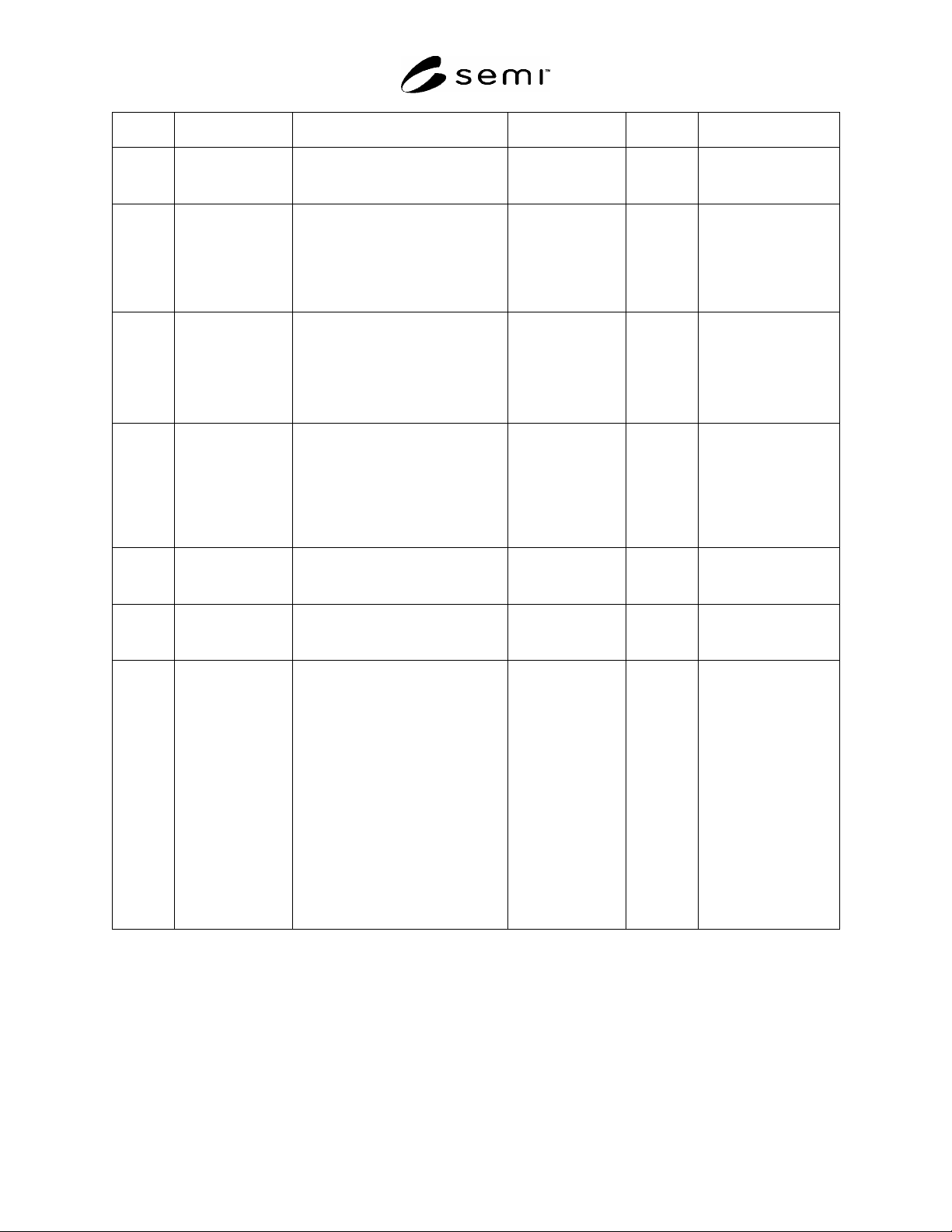
# Current State Trigger New (Sub-)State Action Comment
16 READING ID ID read fail – A reticle ID read fails
on a previously instantiated Reticle.
RETICLE
WAITING FOR
HOST
17 REJECTED Host Based – The equipment
receives an OktoUseReticle service.
Operator based – An Operator
issues an OktoUseReticle service
from the equipment operator
interface.
QUALIFIED
18 QUALIFIED For Exposure Equipment: An
exposure process has started.
For Reticle Inspection Equipment: A
Reticle Inspection has started.
For Bare Reticle Stockers: A reticle
kitting has started.
IN USE This transition should
take place as soon as
the needed physical
movement of a reticle
for processing or
inspection has begun.
19 IN USE For Exposure Equipment: A reticle
exposure process has finished.
For Reticle Inspection Equipment:
An inspection process has finished.
For Bare Reticle Stockers — The
reticle has been deselected for kitting
or kitting has been completed.
QUALIFIED
20 RETICLE AT
EQUIPMENT
Reticle pod containing the reticle is
removed from the machine.
- Delete
reticle
object.
21 RETICLE AT
EQUIPMENT
Reticle has been manually removed
from the equipment.
- Delete
reticle
object.
Abnormal situation
22 RETICLE AT
EQUIPMENT
Via service: Reticle object has been
destroyed via a CancelBind,
CancelReticleTransferJob,
CancelPodNotification, or
CancelMoveReticle service from the
host prior to the Reticle being
physically read.
Via equipment based verification
failure: A reticle instantiated via
Bind, ReticleTransferJob,
PodNotification, Pod Tag read (for a
pod tag that holds the contentmap
attribute of the pod) or MoveReticle
service failed equipment based
verification and the equipment
destroys the reticle object.
- Delete
reticle
object.
Abnormal situation
SEMI E109-0305 © SEMI 2001, 2005 33
14.5 Reticle Allocation State Model
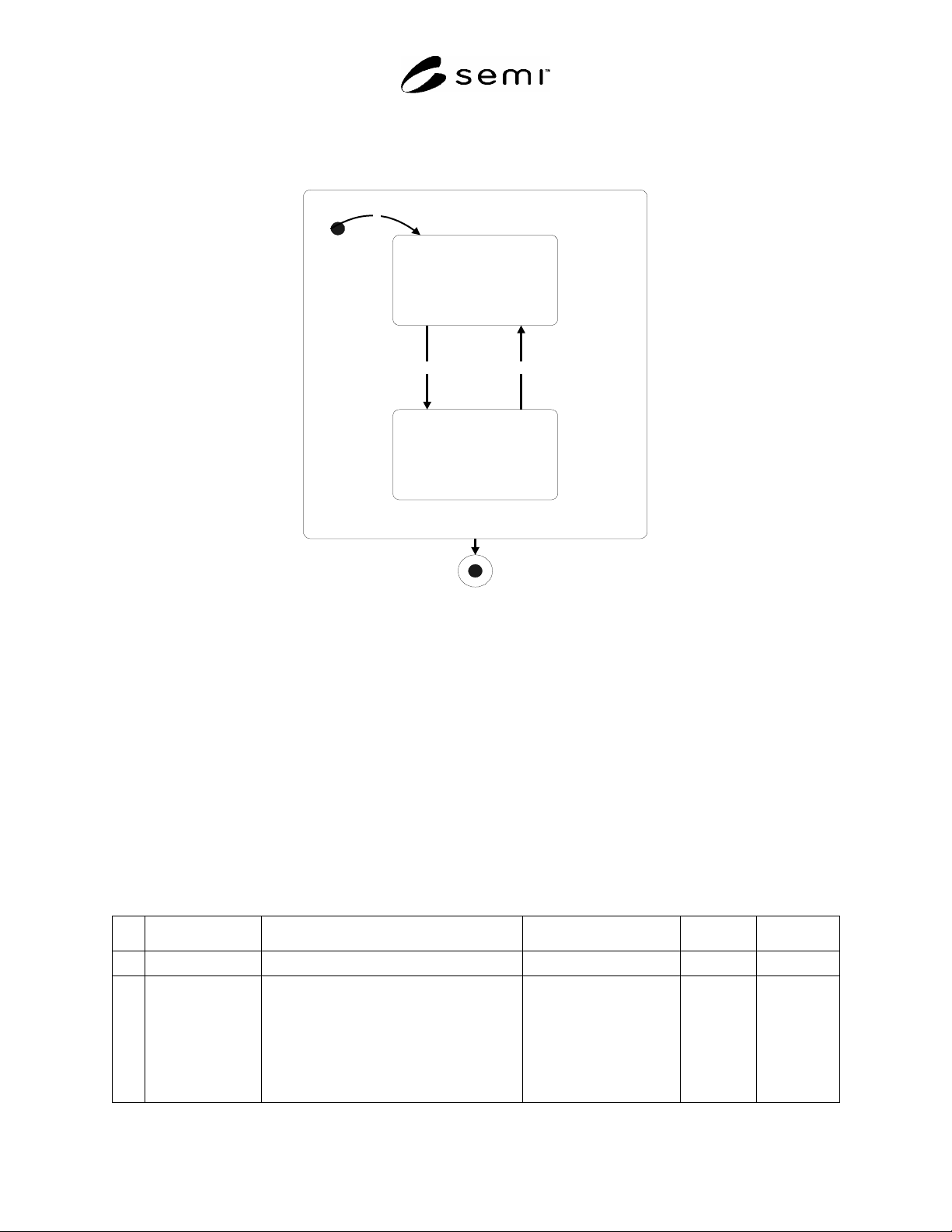
14.5.1 The purpose of the Reticle Allocation State Model is to define the host’s view of a reticle’s allocation state.
14.5.2 Reticle Allocation State Model Diagram
Reticle Allocation State
Not Allocated
Allocated
1
2 3
4
Figure 8
ReticleAllocation State Model Diagram
14.5.3 Reticle Allocation State Definition
14.5.3.1 RETICLE ALLOCATION STATE — The super state of NOT ALLOCATED and ALLOCATED.
14.5.3.1.1 NOT ALLOCATED — A substate of RETICLE ALLOCATION STATE, this state is active when the
reticle is not allocated to a lot in the queue or not selected for inspection. For Bare Reticle Stockers – not kitted
and not currently selected for kitting.
14.5.3.1.2 ALLOCATED — A substate of RETICLE ALLOCATION STATE, this state is active when the reticle is
allocated to one or more lots in the queue or selected for inspection. For Bare Reticle Stockers – allocated includes
being selected for kitting or already kitted.
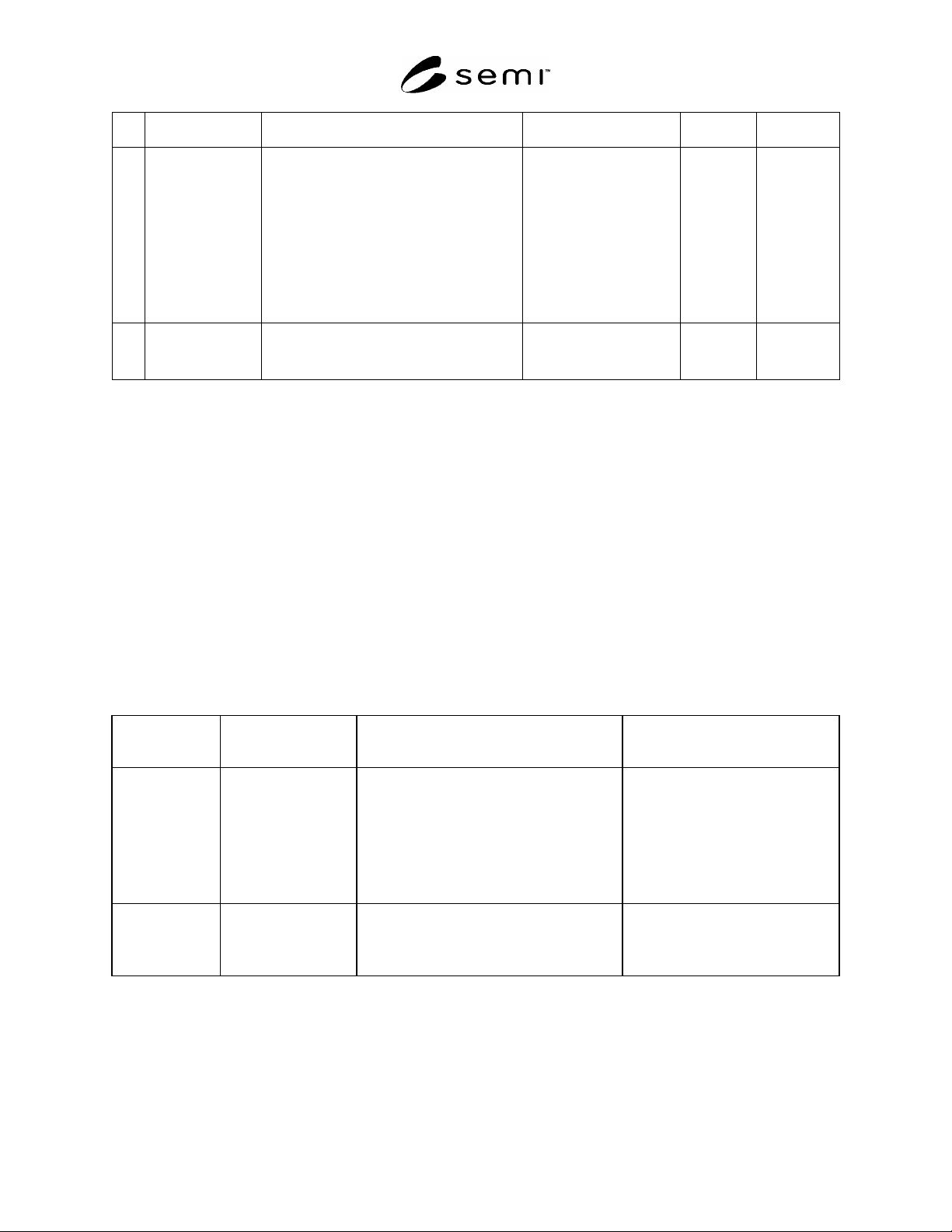
14.5.4 Reticle Allocation State Transition Table — Table 14 indicates the triggers and the expected behavior of the
instantiated reticle in regards to the allocation state.
Table 14 Reticle Allocation State Transition Definition
# Current State Trigger New (Sub-) State Action Comment
1 - A reticle is instantiated. NOT ALLOCATED
2 NOT
ALLOCATED
Production Equipment: The reticle becomes
allocated to a pre-processing or processing
lot.
Inspection Equipment: The reticle becomes
allocated to an inspection.
Bare Reticle Stocker: The reticle is selected
for kitting.
ALLOCATED
SEMI E109-0305 © SEMI 2001, 2005 34
# Current State Trigger New (Sub-) State Action Comment
3 ALLOCATED Production Equipment: The last lot
allocation to the reticle by a preprocessing or
processing lot is removed because this lot
has been moved to another state OR the
equipment has been restarted.
Inspection Equipment: The inspection for
which the reticle was allocated has been
finished or has been cancelled.
Bare Reticle Stocker: The reticle has been
deselected for kitting.
NOT ALLOCATED
4 RETICLE
ALLOCATION
STATE
The Reticle object has been destroyed. -
15 Verification
15.1 Verification is the operation of comparing an actual value with an expected value. Verification may be
performed by either the host or the equipment, depending upon whether the host is using the Bind,
ReticleTransferJob, or PodNotification service or not.
15.1.1 If the host provides the expected value before the actual value is obtained by the production equipment, then
the production equipment shall perform the verification.
15.1.2 If the host does not provide the expected value before the actual value is read, then the production equipment
shall provide to the host, the information necessary for host based verification.
15.1.3 There are three values that are defined by Reticle and Pod Management that require verification: PodID, Pod
Slot Map, and ReticleID.
15.2 PodID Verification
15.2.1 Table 15 defines the methods for verifying the PodID.
Table 15 PodID Verification Methods
Verification
Method Desired
Host Actions before
Load
Equipment Action When Reticle Pod Is
Loaded
Host Actions after Load
Production
Equipment Based
Bind or
ReticleTransferJob
Service: The host
executes the Bind or
ReticleTransferJob
service to associate a
reticle pod load port
and a PodID.
Bind or ReticleTransferJob Service: The
production equipment reads the PodID from
the reticle pod, compares it to the podID
supplied with the Bind or ReticleTransferJob
service.
Verification Passed: Transition 6 of the
Reticle Pod State Model occurs. The
production equipment proceeds with
processing.
Verification Passed: None.