semi合集-English.pdf - 第951页
SEMI E124-1103 © SEMI 2003 6 6.2 Unlike OE E, OFE and its factors are not dimensioned in tim e divided by time, because not all equipment in the factories is present or op erating for the same am ount of time. Similar t …
SEMI E124-1103 © SEMI 2003 5
availability
efficiency
finished
units out
average
cycle time
good unit
equivalents out
(12)
WIP
capacity
theoretical production
time per unit
total
time
scrapped
units out
overall factory
efficiency
(1)
yield
efficiency
(3)
line
yield
(6)
test
yield
(7)
volume
efficiency
(2)
normalizing
exponent
(9)
critical
WIP
(10)
best-case
cycle time
(18)
best-case
throughput rate
(20)
average
WIP
(15)
theoretical
throughput rate
(21)
WIP
turnover
(22)
actual
throughput rate
(19)
theoretical
cycle time
(16)
bottleneck
throughput rate
(17)
throughput-rate and
cycle-time efficiency
(13)
operational
efficiency
WIP
efficiency
(14)
production
efficiency
(8)
normalized
production efficiency
(4)
balance
efficiency
(5)
process
capacity
(11)
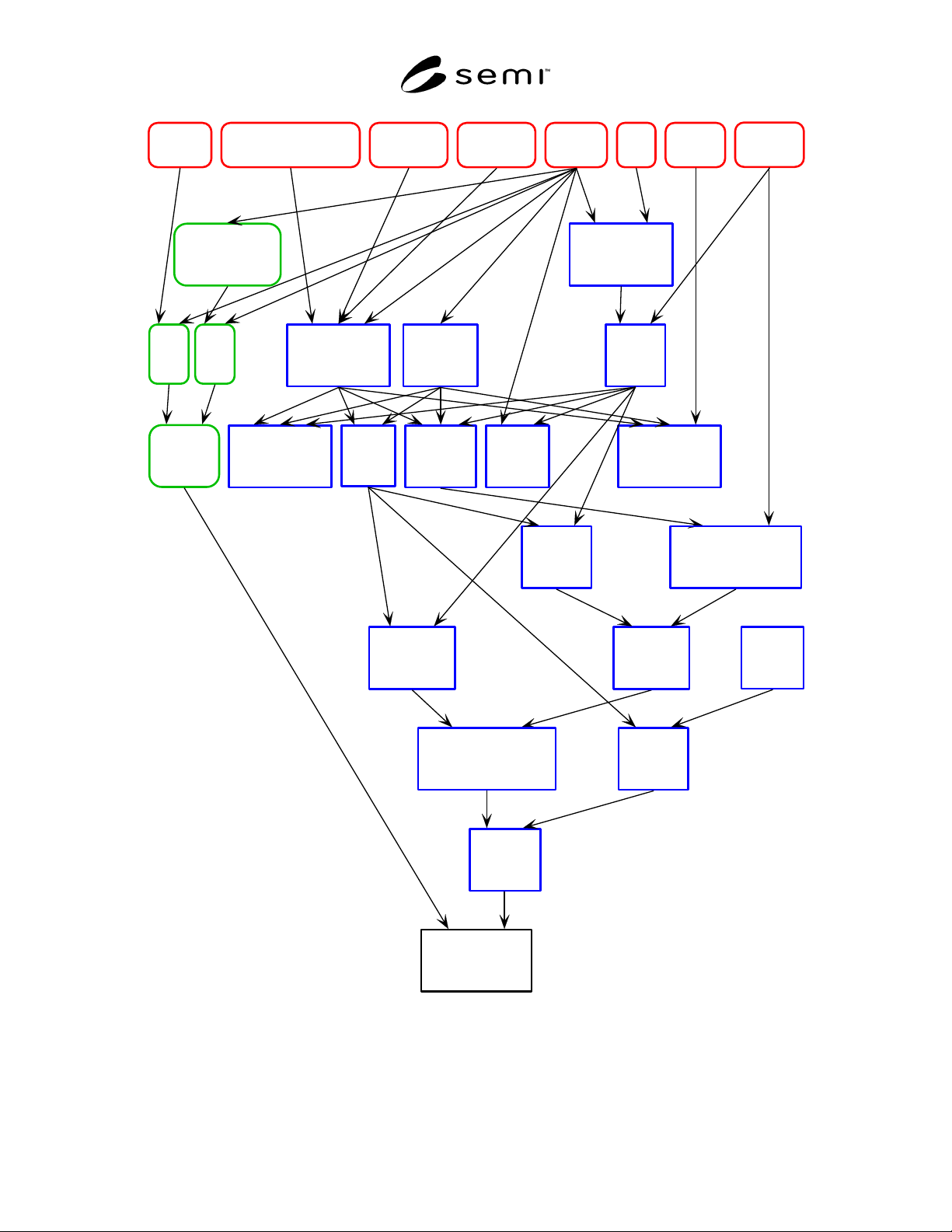
Figure 2
Definition Tree for Factory-Level Productivity Metrics

SEMI E124-1103 © SEMI 2003 6
6.2 Unlike OEE, OFE and its factors are not
dimensioned in time divided by time, because not all
equipment in the factories is present or operating for the
same amount of time. Similar to OEE, this metric:
• is dependent on product mix, process flow,
operations, and time period, so be aware of this
when comparing different factories or even
comparing different time periods in the same
factory when the product mix or process has
changed (although such comparisons are still valid)
especially when the factory variability is due to
external factors (such as demand or excess capacity
in non-bottleneck equipment).
• does not comprehend down-stream demand or the
varying importance of different products (which
might be addressed by a separate metric).
• varies between zero (total chaos or gridlock) and
one (unobtainable perfection).
• is a product of dimensionless efficiencies.
(
)
(
)
(
)
overall factory volume yield
efficiency efficiency efficiency
=× (1)
() ()
normalized
volume balance
production
efficiency efficiency
efficiency
=×
(2)
(
)
(
)
(
)
()( )
yield line test
efficiency yield yield
equivalent good units out
finished scrapped
units out units out
=×
=
+
(3)
()()
()
normalizing
exponent
normalized production
production efficiency efficiency
=
(4)
(
)
critical WIP
balance
efficiency
process capacity
=
(5)
()
()( )
finished units out
line
yield
finished scrapped
units out units out
=
+
(6)
(
)
g
ood unit equivalents out
test
yield
finished units out
=
(7)
() ()
-
-
throughput rate
production WIP
and cycle time
efficiency efficiency
efficiency
=×
(8)
(
)
()()
()()
{}
2
1
1
log
min ,
normalizing
exponent
average critical
WIP WIP
average critical
WIP WIP
=
+−
(9)
NOTE 13: For x>0, log
2
(x) = log
10
(x)/log
10
(2) = ln(x)/ln(2).
(
)
(
)
(
)
critical theoretical bottleneck
WIP cycle time throughput rate
=×
(10)
()
maximum
average
number of
number
units processed
of tools
simultaneously
in
on a tool of
equipment
equipment
type
type
process
capacity
eE
e
e
=×
∈
∑
(11)
NOTE 14: The symbol e, e*, E, f, F, p, P, s, and S are defined
in Sections 5.1.23 through 5.1.27.
total number
of good
p
roduct devices
of type in
number of product
devices on each
unit of type
p
good unit
finished units out
equivalents
out
pP
p
=
∈
∑
(12)
(
)
-
-
-
best case cycle time
throughput rate and
cycle time efficiency
average cycle time
=
(13)
()
(
)
(
)
{
}
()( )
{}
min ,
max ,
critical average
WIP WIP
WIP
efficiency
critical average
WIP WIP
= (14)
(
)
(
)
(
)
average average actual
WIP cycle time throughput rate
=×
(15)
(
)
theoretical
cycle time
minimum
number
cycle
of units
time of
of
a single
product
unit of
type
product
in
type in
step on
equipment
type
pe
p
eEsS
p
finished
s
units
out
e
×
∈∈
=
∑∑
pP
finished units out
∈
∑
(16)

SEMI E124-1103 © SEMI 2003 7
bottleneck
throughput
rate
average average
number of
tools in
bottleneck of bottleneck
equipment equipment
type * type *
number of
units of
product
type in
availability
finished
efficiency
units
out
ee
p
fini
××
=
*
for product type
in step on
bottleneck
equipment
type *
pe
theoretical
production
time per unit
ps
pP sS
shed
units out
e
×
∈∈
∑∑
(17)
NOTE 15: One of the factors in this metric is the average
number of available tools in the current bottleneck equipment
set, not the total number of tools nominally in the set.
()
()
-
max ,
average
best
WIP
case theoretical
cycle cycle time
bottleneck
time
throughput
rate
=
(18)
NOTE 16: See Related Information 1 for why Equations (18)
and (20) theoretically represent the best possible cases.
actual
finished units out
throughput
total time
rate
=
(19)
(
)
()
-
min ,
average
best case bottleneck
WIP
throughput throughput
theoretical
rate rate
cycle time
=
(20)
(
)
()
min ,
WIP
theoretical
bottleneck
capacity
throughput throughput
theoretical
rate
rate
cycle time
=
(21)
(
)
f
inished units out
WIP
turnover
average WIP
=
(22)
7 Related Documents
7.1 SEMI Standards
SEMI E35 — Cost of Ownership for Semiconductor
Manufacturing Equipment Metrics
SEMI E58 — Automated Reliability, Availability, and
Maintainability Standard (ARAMS): Concepts,
Behavior, and Services
SEMI E116 — Provisional Specification for Equipment
Performance Tracking
NOTICE: Unless otherwise indicated, all documents
cited shall be the latest published versions.
NOTICE: SEMI makes no warranties or
representations as to the suitability of the standards set
forth herein for any particular application. The
determination of the suitability of the standard is solely
the responsibility of the user. Users are cautioned to
refer to manufacturer's instructions, product labels,
product data sheets, and other relevant literature,
respecting any materials or equipment mentioned
herein. These standards are subject to change without
notice.
By publication of this standard, Semiconductor
Equipment and Materials International (SEMI) takes no
position respecting the validity of any patent rights or
copyrights asserted in connection with any items
mentioned in this standard. Users of this standard are
expressly advised that determination of any such patent
rights or copyrights, and the risk of infringement of
such rights are entirely their own responsibility.