semi合集-English.pdf - 第6856页
SEMI S2-0703a E © SEMI 1991, 2004 85 R14-8.3.1.1 Use of Fail-to- safe Equipment Contro l Syst ems with Dual Network s fo r Standa rd and Fail-to-safe Communicat io ns and Com bined Controllers — Figures R 14-3 and R14-4 …
SEMI S2-0703a
E
© SEMI 1991, 2004 84
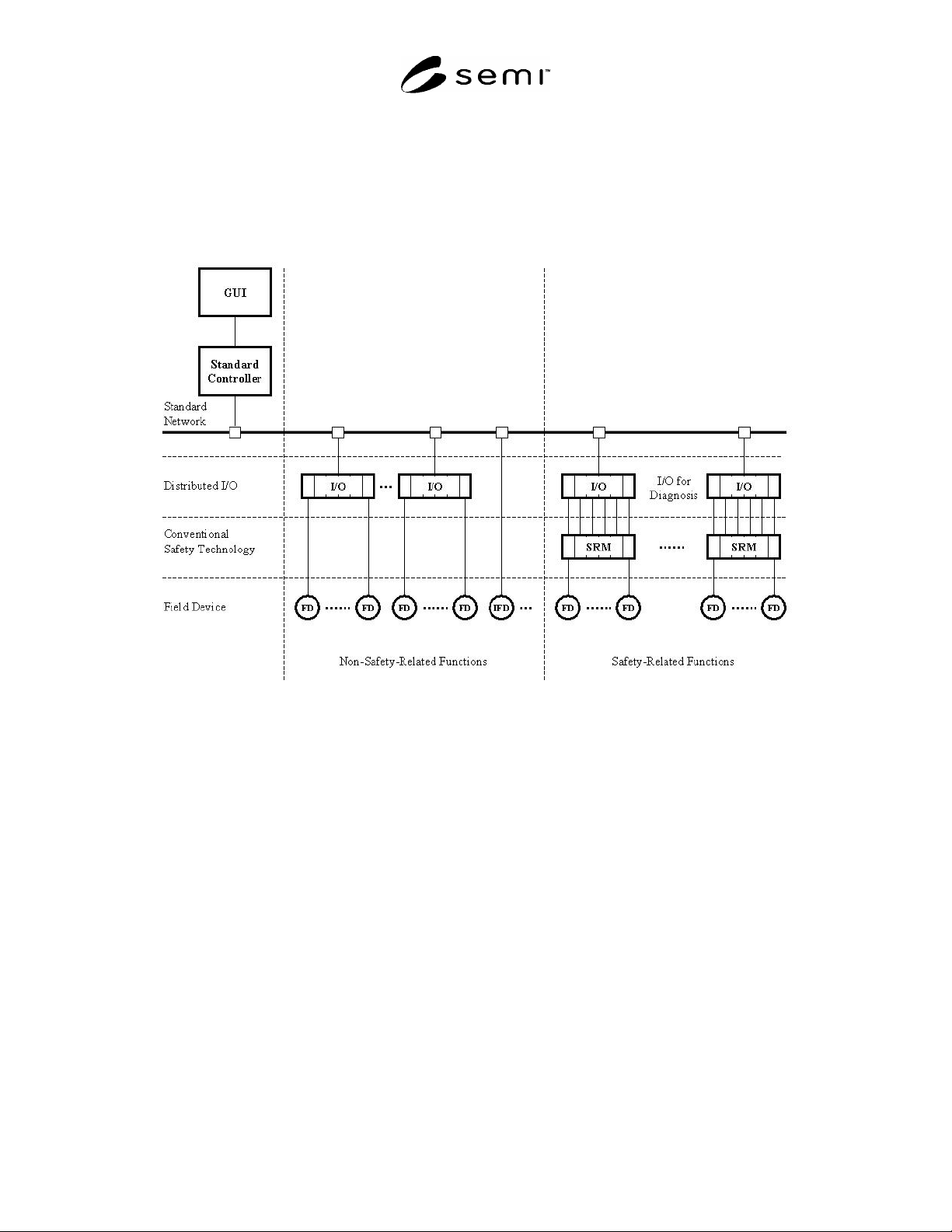
R14-8.3.1 Use of Fail-to-safe Equipment Control Systems with Conventional Safety Technology — Equipment
manufacturers can achieve functional safety by the use of hardwired circuits. Such hardwired circuits are realized
with terminals, electromechanical or electronic safety relays, and contactors. The relays would be certified for use
in CAT 4 applications according to ISO 13849. In Figure R14-2, a standard industrial controller is used with
standard I/O over a standard network to provide for the non-safety aspects of the machine and to provide diagnostics
and visualization of the hardwired safety functions.
Figure R14-2
Fail-to-safe Equipment Control System with Conventional Safety Technology
SEMI S2-0703a
E
© SEMI 1991, 2004 85
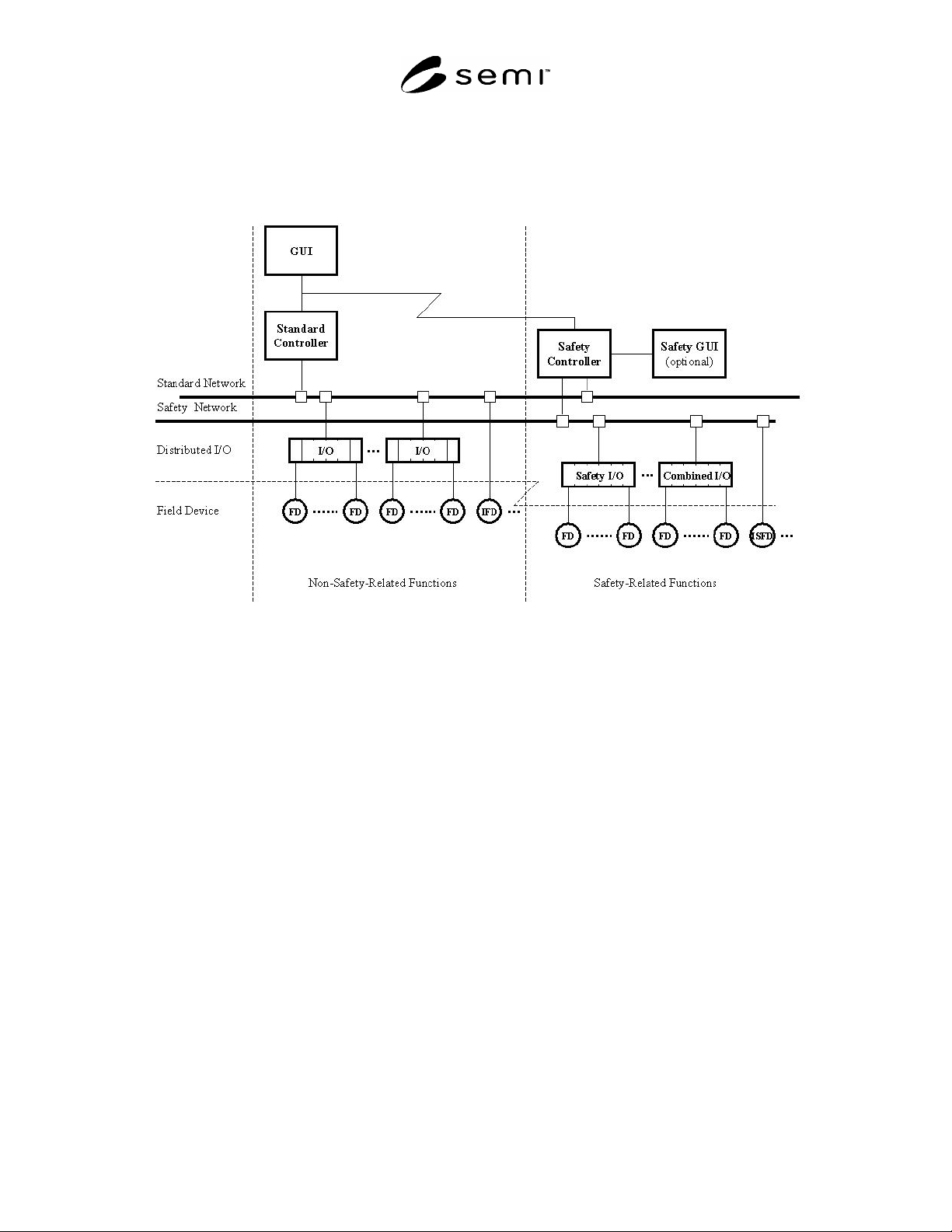
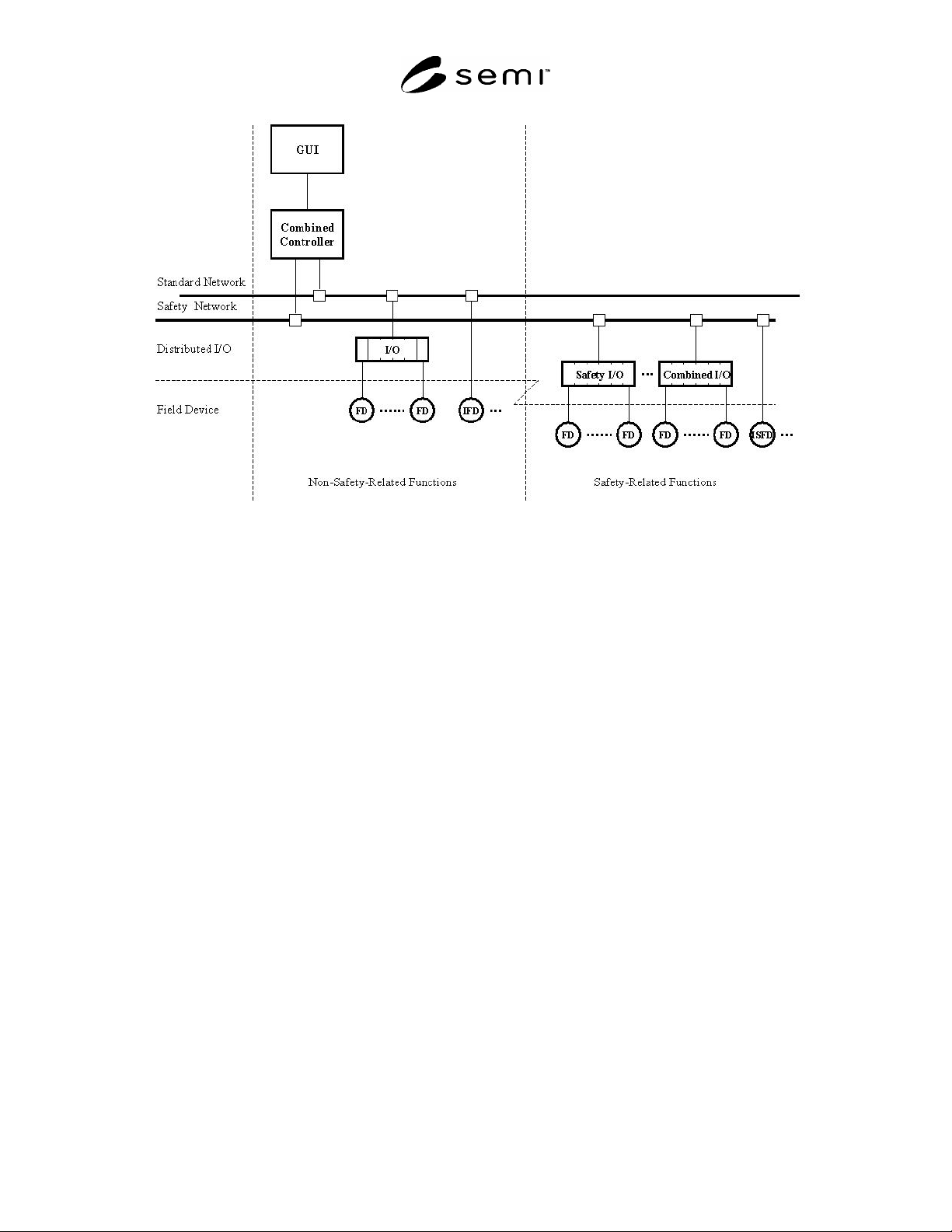
R14-8.3.1.1 Use of Fail-to-safe Equipment Control Systems with Dual Networks for Standard and Fail-to-safe
Communications and Combined Controllers — Figures R14-3 and R14-4 are dual network systems with control of
the non-safety functions remaining the same as in Fail-to-safe Equipment Control Systems with Conventional Safety
Technology. Safety functions, however, are achieved using FECS with safety-related information and control
managed over a separate dedicated safety network.
Figure R14-3
Fail-To-Safe Equipment Control System with Dual Network for Standard and Fail-To-Safe Communication
and Separated Standard and Safety Controllers
SEMI S2-0703a
E
© SEMI 1991, 2004 86
Figure R14-4
Fail-To-Safe Equipment Control System with Dual Network for Standard and Fail-To-Safe Communication
and Combined Controller