semi合集-English.pdf - 第3466页
SEMI E134-0305 © SEMI 2004, 2005 19 9.1.2.5. 5 ActivatePlan Operation Arguments Table 23 A cti vatePlan A rgument Definitions Argument Description Kind Form planId Identifier for the requested p lan. in Text, equal to a …
SEMI E134-0305 © SEMI 2004, 2005 18
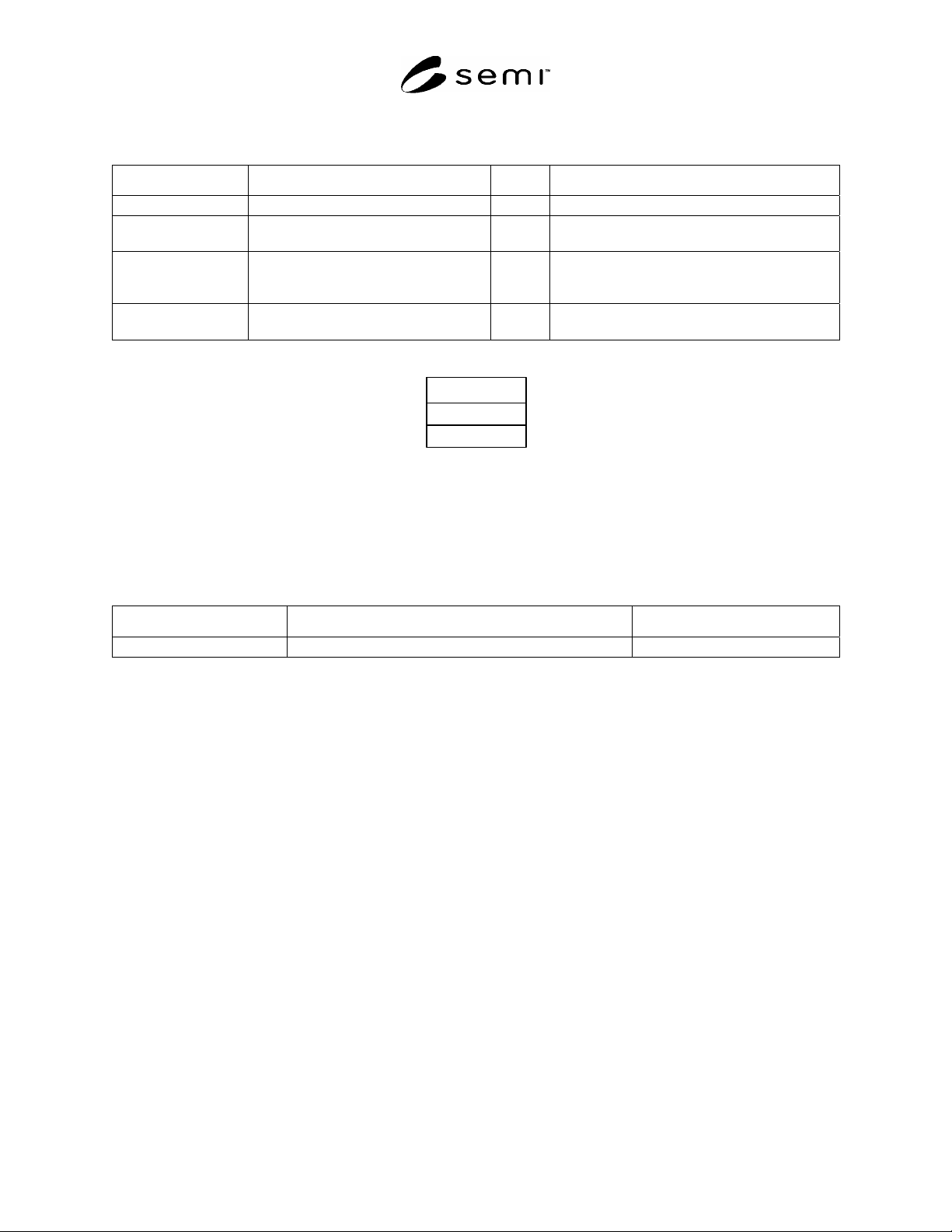
9.1.2.4.2 GetPlanDefinition Operation Arguments
Table 21 GetPlanDefinition Argument Definitions
Argument Description Kind Form
planId Identifier for the requested plan. in Text, equal to a valid DCP id.
planDefinition The requested plan definition. out Structure, of type DataCollectionPlan, described
in Section 11.1.
error The consumer submitting the DCP does
not have sufficient privilege to retrieve
the requested DCP.
error Structure, of type UnauthorizedOperation,
described in Section 9.1.2.2.5.
error The equipment does not recognize the
requested planId.
error Structure, of type NoSuchPlan, described in
Section 9.1.2.4.3.
planId
NoSuchPlan
Figure 10
NoSuchPlan Error
9.1.2.4.3 NoSuchPlan — This class describes an error indicating an unrecognized DCP id.
9.1.2.4.3.1 NoSuchPlan Attribute Definition Table
Table 22 NoSuchPlan Attribute Definition
Attribute Name Definition Form
planId The unrecognized planId. Text.
9.1.2.5 ActivatePlan — Upon receiving this request, the equipment shall begin sending all DCP events, exceptions,
and trace data collection reports to the consumer according to any buffering policies specified in the DCP. The
equipment shall place no a-priori limitation on the number of DCPs that a consumer can activate. The equipment
shall place no a-priori limitation on the number of consumers that can activate the same DCP (see Section 12.1
Table 45, transition 4). This operation is the only means by which a DCP can be activated.
9.1.2.5.1 Any limitations on supportable DCP activity imposed by constraints on available equipment processing
power or network interface bandwidth shall be documented by the equipment supplier. If such limitations are
encountered at runtime, the equipment shall use the equipment operational performance monitoring messages and
behavior defined in Section 13 to manage DCP activity with consumers.
9.1.2.5.2 The equipment shall ensure that the requested DCP is valid (see Section 9.1.2.2.6) at the time it is
activated. If, at activation time, the requested DCP is not valid, the equipment shall return an InvalidPlan error, and
shall not activate the DCP. The equipment shall not prevent DCP activation for any reason (including internal
communication failures) if the DCP is valid and the consumer has sufficient privilege (see Section 10). For required
behavior in the event of internal communication failures, see Section 12.2.2.
9.1.2.5.3 If the consumer does not have sufficient privilege (see Section 10) to activate the requested DCP, the
equipment shall return an UnauthorizedOperation error.
9.1.2.5.4 The equipment shall respond to duplicate requests from the same consumer to activate the same DCP by
returning an error including the DCPActivated information corresponding to that consumer’s original activation
request, but shall take no other actions. The equipment shall not activate a DCP more than once for the same
consumer.
SEMI E134-0305 © SEMI 2004, 2005 19
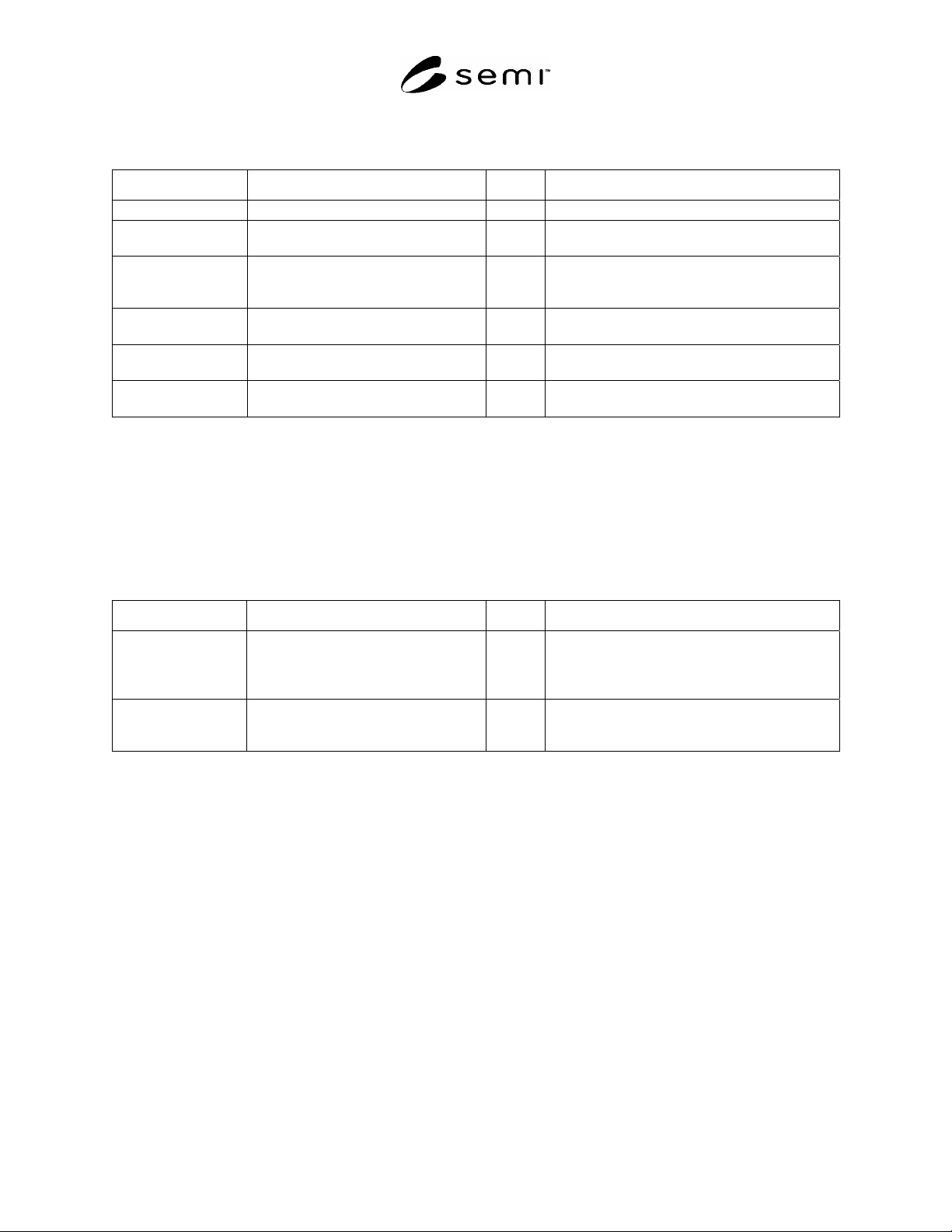
9.1.2.5.5 ActivatePlan Operation Arguments
Table 23 ActivatePlan Argument Definitions
Argument Description Kind Form
planId Identifier for the requested plan. in Text, equal to a valid DCP id.
activatedPlan Confirmation that the requested plan has
been activated.
out Structured data, of type DCPActivated, described
in Section 9.1.2.8.4.
error The consumer submitting the DCP does
not have sufficient privilege to activate
the requested DCP.
error Structured data, of type UnauthorizedOperation,
described in Section 9.1.2.2.5.
error The equipment does not recognize the
requested planId.
error Structured data, of type NoSuchPlan, described in
Section 9.1.2.4.3.
error The requested DCP is invalid. error Structured data, of type InvalidPlan, described in
Section 9.1.2.2.6.
error The consumer making the request has
previously activated the same DCP.
error Structured data, of type DCPIsActive, described in
Section 9.1.2.8.3.
9.1.2.6 GetActivePlanIds — Upon receiving this request, the equipment shall return a list of the id’s of all DCPs
that have been activated by the requesting consumer at the time of the request. If the consumer has sufficient
privilege (see Section 10), the id’s of all activation requests for all currently active DCPs shall be returned.
9.1.2.6.1 If the consumer does not have sufficient privilege (see Section 10) to retrieve the currently-active DCP
id’s, the equipment shall return an UnauthorizedOperation error.
9.1.2.6.2 GetActivePlanIds Operation Arguments
Table 24 GetActivePlanIds Argument Definitions
Argument Description Kind Form
activePlans List of active DCP id’s. out Unordered list of elements of type DCPActivated,
described in Section 9.1.2.8.4. Empty if no DCPs
are active. See Section 9.1.2.6.3 for further
explanation.
error The consumer submitting the DCP does
not have sufficient privilege to retrieve a
list of active DCPs.
error Structured data, of type UnauthorizedOperation,
described in Section 9.1.2.2.5.
9.1.2.6.3 activePlans — The information returned in the response to this operation depends on the privilege
assigned to the requesting consumer. The equipment shall only return the DCPActivated information for activation
requests made by the consumer that is invoking the GetActivePlanIds operation (unless the consumer has sufficient
privilege – see Section 9.1.2.6.3.1). For example, if some DCPs have been activated by other consumers, but not by
the requesting consumer, the equipment shall not return the DCPActivated information for those other DCPs. Also,
if the requesting consumer has activated a DCP, and other consumers have also activated that same DCP, the
equipment shall not return the DCPActivated information for those other consumers.
9.1.2.6.3.1 For consumers with sufficient privilege only (see Section 10), the equipment shall return all available
DCPActivation information for all consumers of all DCPs that are active at the time of the request.
9.1.2.7 DeactivatePlan — Upon receiving this request, the equipment shall stop sending of all event, exception, and
trace requests associated with the identified DCP to the requesting consumer. If there are no other consumers
receiving data from the identified DCP, the equipment shall disable all collection/buffering activity related to this
DCP (see Table 45, transition 8). In this case, the equipment shall discard any buffered data at the time of the
request.
9.1.2.7.1 If the identified DCP has not been previously activated by the requesting consumer, and the request is not
a termination request (see Section 9.1.2.7.5), the equipment shall return the DCPNotActive error. If the request is a
SEMI E134-0305 © SEMI 2004, 2005 20
termination request, but the requested plan has not been previously activated by any consumer, the equipment shall
return the DCPNotActive error.
9.1.2.7.2 If the consumer does not have sufficient privilege (see Section 10) to deactivate the requested DCP, the
equipment shall return an UnauthorizedOperation error.
9.1.2.7.3 DeactivatePlan Operation Arguments
Table 25 DeactivatePlan Argument Definitions
Argument Description Kind Form
planId Identifier for the requested plan. in Text, equal to a valid DCP id.
terminate Whether or not the DCP should be
deactivated for all consumers.
in Boolean. See Section 9.1.2.7.4 for more
information.
deactivatedPlan Confirmation that the requested plan has
been deactivated
out Structure, of type DCPDeactivated, described in
Section 9.1.2.7.6.
error The consumer submitting the DCP does
not have sufficient privilege to deactivate
the DCP
error Structured data, of type UnauthorizedOperation,
described in Section 9.1.2.2.5.
error The equipment does not recognize the
requested planId
error Structured data, of type NoSuchPlan, described in
Section 9.1.2.4.3.
error The requested plan is not active. error Structured data, of type DCPNotActive, described
in Section 9.1.2.7.7.
9.1.2.7.4 planId — This operation defines the following reserved planId to name groups of DCPs for deactivation.
This identifier is not valid for use as a DCP id in any operation other than DeactivatePlan.
9.1.2.7.4.1 “urn:semi-org:dcm:allDCPs” — This identifier can be used to request deactivation of all plans that are
currently active for the requesting consumer. If other consumers have activated any of these same plans, those
consumers shall continue to receive DataCollectionReports from those plans. When used together with a request to
terminate (see Section 9.1.2.7.5), the equipment shall terminate all DCPs currently active on the equipment for all
consumers, including those that have been activated by the requesting consumer.
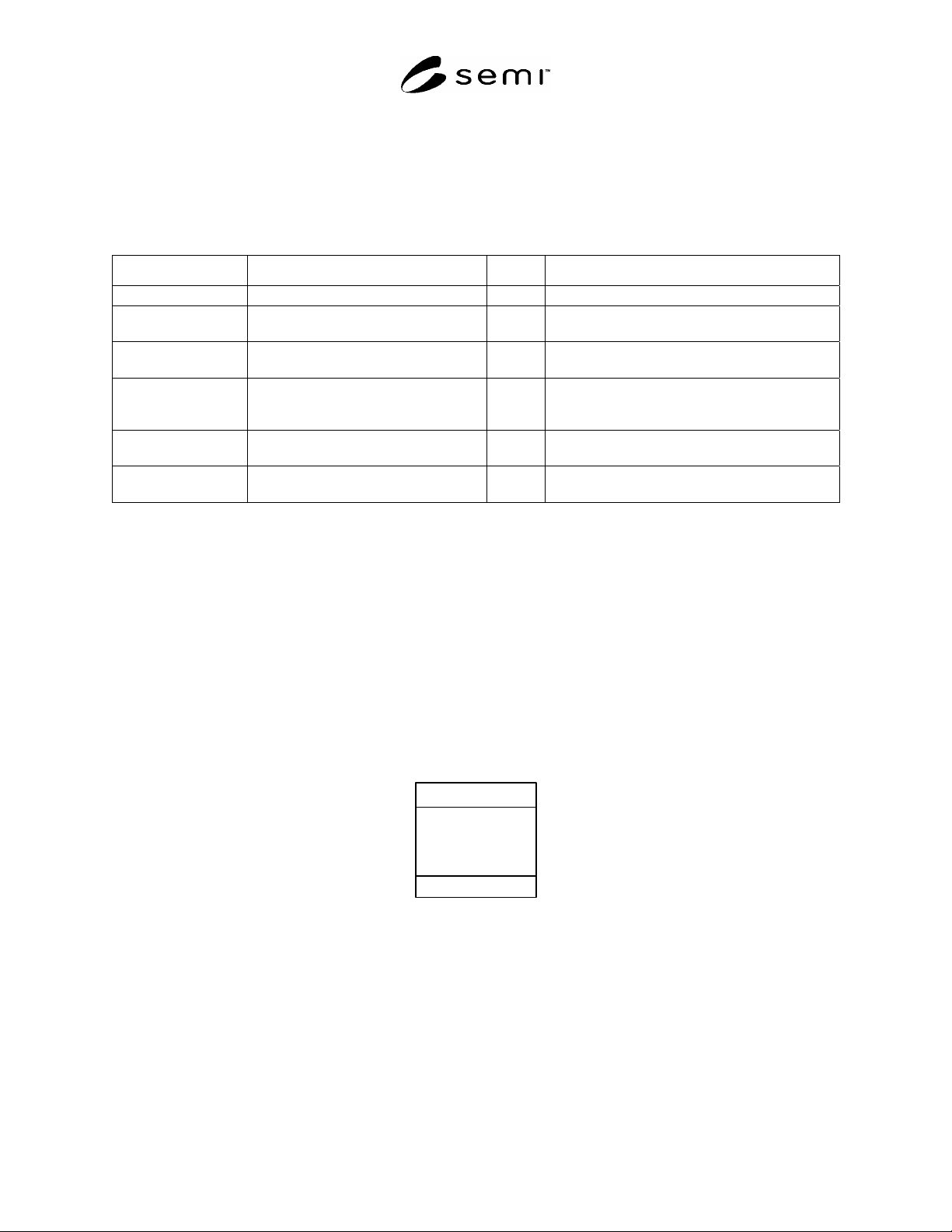
9.1.2.7.5 terminate — If set to “true”, the equipment shall stop buffering/sending all data included in the identified
DCP to all consumers that have previously activated the DCP. The equipment shall discard any buffered data at the
time of the request. The equipment shall notify each such consumer of the reason for the termination using the
DCPDeactivated notification (see Section 15.1.6.2). The consumer must have sufficient privilege (see Section 10)
to request termination of a DCP.
planId
timeDeactivated
deact ivatedBy
reason
DCPDeactivated
Figure 11
DCPDeactivated Class