semi合集-English.pdf - 第6731页
SEMI C44-0301 © SEMI 1978, 2001 SULFURIC ACID 4 12 Grade 5 P rocedu res 12.1 This section does not apply to t h i s chemical. 13 VLSI G rade Pro cedures 13.1 Specif ic procedures for this gr a d e do not exist. Refer to …

SULFURIC ACID SEMI C44-0301 © SEMI 1978, 20013
8.7.5 All Other Elements — In a clean environment,
place 100 g of sulfuric acid in a quartz crucible. Slowly
evaporate on a hot plate avoiding loss of sample by
effervescence or spattering until approximately 2 mL of
liquid remains. Cool. Add carefully, 1 mL of high
purity, 70% nitric acid. While maintaining volume,
carefully warm several minutes to dissolve any residue.
Cool. Transfer quantitatively to a 50 mL volumetric
flask using 2% nitric acid and dilute to volume. Run a
reagent blank.
8.7.6 Analysis — Using the prepared solutions and
blanks, analyze boron by inductively coupled plasma
mass spectrometry (ICP/MS). Using the acid sample
and reagent blank, analyze group I elements by flame
atomic absorption spectroscopy. Analyze all other
elements by plasma emission spectroscopy.
NOTE 4: Analysis of dilute sulfuric acid can produce rapid
corrosion of nickel cones commonly used in inductively
coupled plasma mass spectrometry, platinum cones should be
considered as alternative when performing this analysis.
9 Grade 2 Procedures
NOTE 5: Each laboratory is responsible for verifying the
validity of the method within its own operation.
9.1 Non-Metal Impurities — See Section 8, which
contains procedures for the following tests:
Assay
Color (APHA)
Chloride
Nitrate
Phosphate
9.2 Trace Metals Analysis
9.2.1 The following method has given satisfactory
results in determining metal ion impurities at the values
specified for each of the following metals: aluminum
(Al), antimony (Sb), arsenic (As), barium (Ba),
beryllium (Be), bismuth (Bi), boron (B), calcium (Ca),
chromium (Cr), cobalt (Co), copper (Cu), gallium (Ga),
germanium (Ge), gold (Au), iron (Fe), lead (Pb),
lithium (Li), magnesium (Mg), manganese (Mn),
molybdenum (Mo), nickel (Ni), niobium (Nb),
potassium (K), silver (Ag), sodium (Na), strontium (Sr),
tantalum (Ta), tin (Sn), titanium (Ti), vanadium (V),
zinc (Zn), and zirconium (Zr). Alternate methods may
be used as long as appropriate studies demonstrate a
recovery between 75–125% of a known sample spike
for half of the value of each specified element.
9.2.2 Special Reagents
9.2.2.1 Nitric Acid, Ultrapure — Use nitric acid
specified for low metal ion content.
9.2.2.2 1% Nitric Acid Solution — Dilute 10 mL of
ultrapure nitric acid to 1 L using water meeting the
criteria for Type E1.1 in ASTM D5127.
9.2.2.3 Water — The water used for all the dilution,
calibration and standards should meet at a minimum the
criteria for Type E1.1 in ASTM D5127 in regard to
cation analysis.
9.2.2.4 Indium Internal Standard — Make up the
indium intenal standard solution to a concentration of
20 µg/mL (ppm) from the appropriate concentrated
indium standard solution.
9.2.3 Sample Preparation
9.2.3.1 Chromium, Cobalt, Lithium, Manganese,
Nickel, Titanium, Vanadium, and Zinc — In a clean
environment, place 1.00 g of sample into a clean quartz
dish. Slowly evaporate on a hot plate to dryness
avoiding loss of sample by effervescence or spattering.
Dissolve the residue with 5 mL of the 1% nitric acid
solution by heating on a hot plate at low temperature for
several minutes. Cool to room temperature, dilute to 15
mL with 1% nitric acid, add 15 µL of the indium
internal standard, mix well. Run a reagent blank.
9.2.3.2 All Other Elements — In a clean environment,
dilute 1.00 g sample with 15.0 g of Type E1.1 water
and add 15 µL of the indium internal standard. Run a
reagent blank.
9.2.4 Analysis
9.2.4.1 Using the prepared solutions and blanks,
analyze sodium, potassium, calcium and iron by
graphite furnace atomic absorption (GFAA) and the
remaining elements by inductively coupled plasma
mass spectrometry (ICP/MS). For calibration, the
standards are made up with the 1% nitric acid solution
and the indium internal standard such that the final
indium concentration is 20 ng/g. For boron and
tantalum, the standards for calibration must be matrix
matched with equal amounts of sulfuric acid certified to
have both elements below 1 µg/mL in the concentrated
acid.
NOTE 6: Analysis of dilute sulfuric acid can produce rapid
corrosion of nickel cones commonly used in inductively
coupled plasma mass spectrometry, platinum cones should be
considered as alternative when performing this analysis.
10 Grade 3 Procedures
10.1 This section does not apply to this chemical.
11 Grade 4 Procedures
11.1 This section does not apply to this chemical.
SEMI C44-0301 © SEMI 1978, 2001 SULFURIC ACID4
12 Grade 5 Procedures
12.1 This section does not apply to this chemical.
13 VLSI Grade Procedures
13.1 Specific procedures for this grade do not exist.
Refer to Sections 8 and 9 for available procedures.
14 Tier A Procedures
14.1 This section does not apply to this chemical.
15 Tier B Procedures
15.1 Standardized test methods are being developed
for all parameters at the purity levels indicated. Until
standardized test methods are published, test
methodology shall be determined by user and producer.
The Chemical Reagent Committee considers a test
method to be valid only if there is a documented
recovery study showing a recovery of 75–125%.
Recovery is for a known sample spike at 50% of the
specified level.
16 Tier C Procedures
16.1 Standardized test methods are being developed
for all parameters at the purity levels indicated. The
Process Chemicals Committee considers a test method
to be valid if there is a documented recovery study
showing a recovery of 75–125%. Recovery is for a
known sample spike at 50% of the specified level.
17 Tier D Procedures
17.1 This section does not apply to this chemical.
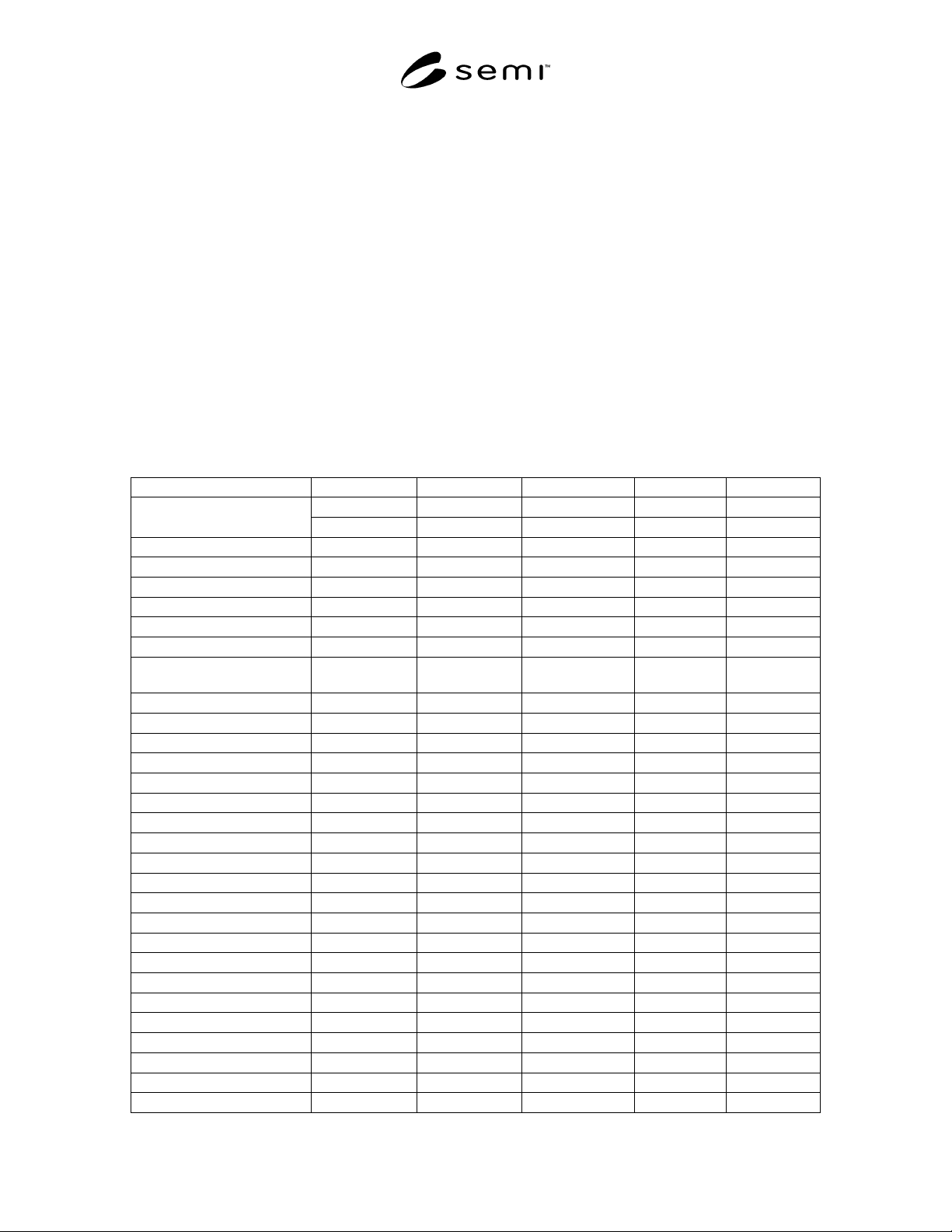
Table 1 Impurity Limits and Other Requirements for Sulfuric Acid
Previous SEMI Reference # C1.16-96 C7.8-94 C11.5-94 C8.8-92
Grade 1 Grade 2 VLSI Grade Tier B Tier C
(Specification) (Specification) (Guideline) (Guideline) (Guideline)
Assay (H
2
SO
4
) 95.0–97.0% 95.0–97.0 % 95.0–97.0% 95.0–97.0% 95.0–97.0%
Color (APHA) 10 max 10 max 10 max 10 max 10 max
Residue after Ignition -- -- 3 ppm max -- --
Chloride (Cl) 0.1 ppm max 100 ppb max 0.1 ppm max 50 ppb max 50 ppb max
Nitrate (NO
3
) 0.2 ppm max 200 ppb max 0.2 ppm max 100 ppb max 100 ppb max
Phosphate (PO
4
) 0.5 ppm max 500 ppb max 0.5 ppm max 100 ppb max 100 ppb max
Matters Reducing KMnO
4
(as O)
-- -- 2 ppm max -- --
Aluminum (Al) 0.2 ppm max 10 ppb max 0.02 ppm max 1 ppb max 100 ppt max
Ammonium (NH4) -- -- 1 ppm max -- --
Antimony (Sb) -- 5 ppb max -- 1 ppb max 100 ppt max
Arsenic (As) -- 10 ppb max -- 1 ppb max 100 ppt max
Arsenic and Antimony (as As) 0.005 ppm max -- 0.01 ppm max -- --
Barium (Ba) -- 10 ppb max 0.01 ppm max 1 ppb max 100 ppt max
Beryllium (Be) -- 10 ppb max 0.01 ppm max 1 ppb max --
Bismuth (Bi) -- 10 ppb max 0.05 ppm max 1 ppb max --
Boron (B) 0.02 ppm max 20 ppb max 0.02 ppm max 1 ppb max 100 ppt max
Cadmium (Cd) -- 10 ppb max 0.01 ppm max 1 ppb max --
Calcium (Ca) 0.3 ppm max 10 ppb max 0.05 ppm max 1 ppb max 100 ppt max
Chromium (Cr) 0.2 ppm max 10 ppb max 0.01 ppm max 1 ppb max 100 ppt max
Cobalt (Co) -- 5 ppb max 0.01 ppm max 1 ppb max --
Copper (Cu) 0.1 ppm max 10 ppb max 0.01 ppm max 1 ppb max 100 ppt max
Gallium (Ga) -- 10 ppb max 0.01 ppm max 1 ppb max --
Germanium (Ge) -- 10 ppb max 0.01 ppm max 1 ppb max --
Gold (Au) 0.3 ppm max 5 ppb max 0.02 ppm max 1 ppb max --
Indium (In) -- -- 0.01 ppm max -- --
Iron (Fe) 0.2 ppm max 10 ppb max 0.05 ppm max 1 ppb max 100 ppt max
Lead (Pb) 0.3 ppm max 10 ppb max 0.01 ppm max 1 ppb max 100 ppt max
Lithium (Li) -- 10 ppb max 0.01 ppm max 1 ppb max --
SULFURIC ACID SEMI C44-0301 © SEMI 1978, 20015
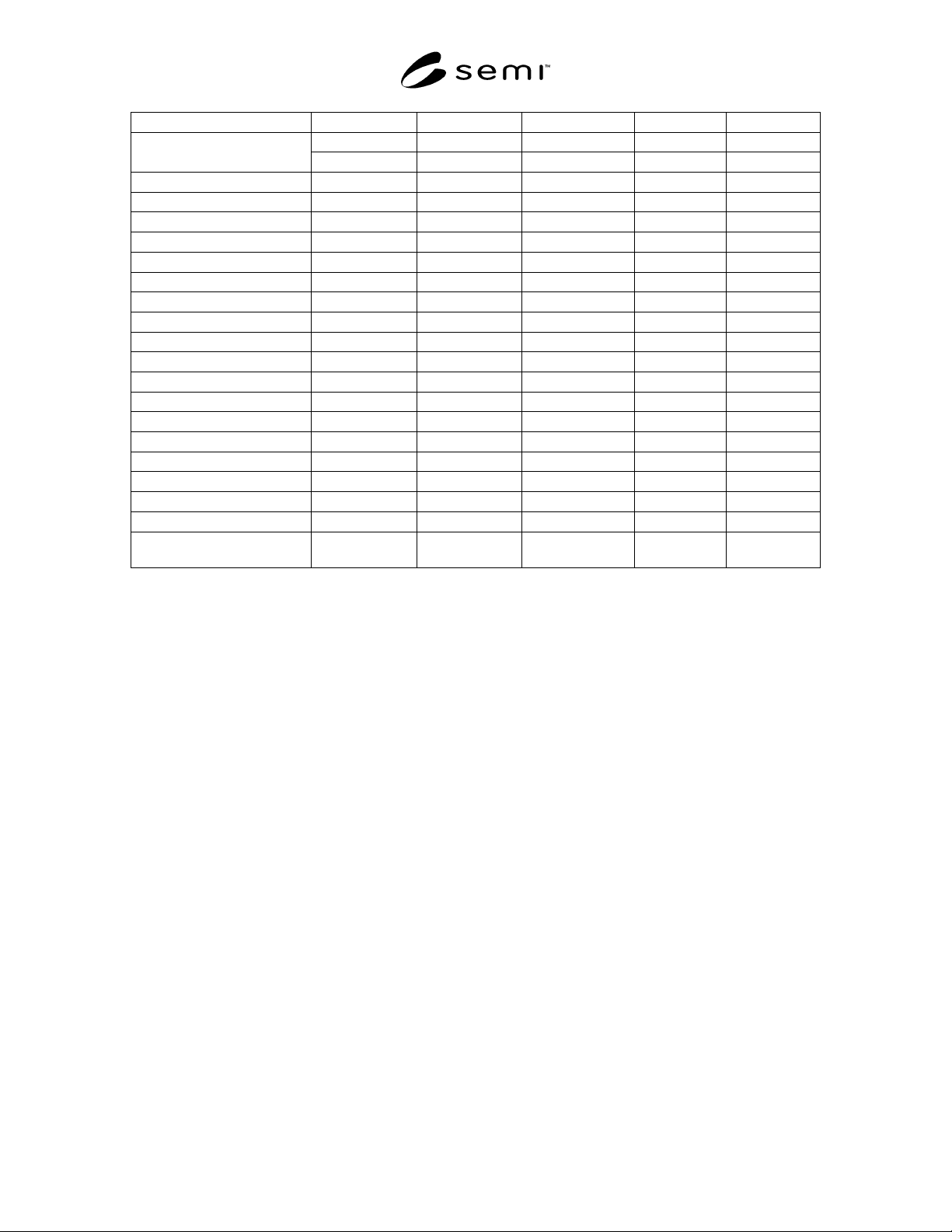
Previous SEMI Reference # C1.16-96 C7.8-94 C11.5-94 C8.8-92
Grade 1 Grade 2 VLSI Grade Tier B Tier C
(Specification) (Specification) (Guideline) (Guideline) (Guideline)
Magnesium (Mg) 0.3 ppm max 10 ppb max 0.05 ppm max 1 ppb max 100 ppt max
Manganese (Mn) 0.2 ppm max 10 ppb max 0.01 ppm max 1 ppb max 100 ppt max
Molybdenum (Mo) -- 10 ppb max 0.02 ppm max 1 ppb max --
Nickel (Ni) 0.1 ppm max 10 ppb max 0.01 ppm max 1 ppb max 100 ppt max
Niobium (Nb) -- 10 ppb max -- 1 ppb max --
Platinum (Pt) -- -- 0.05 ppm max -- --
Potassium (K) 0.3 ppm max 10 ppb max 0.05 ppm max 1 ppb max 100 ppt max
Silicon (Si) -- -- -- 1 ppb max --
Silver (Ag) -- 10 ppb max 0.01 ppm max 1 ppb max --
Sodium (Na) 0.3 ppm max 10 ppb max 0.1 ppm max 1 ppb max 100 ppt max
Strontium (Sr) -- 10 ppb max 0.02 ppm max 1 ppb max --
Tantalum (Ta) -- 10 ppb max -- 1 ppb max --
Thallium (Tl) -- 10 ppb max 0.05 ppm max 1 ppb max --
Tin (Sn) 0.2 ppm max 10 ppb max 0.05 ppm max 1 ppb max 100 ppt max
Titanium (Ti) 0.3 ppm max 10 ppb max 0.05 ppm max 1 ppb max 100 ppt max
Vanadium (V) -- 10 ppb max 0.01 ppm max 1 ppb max --
Zinc (Zn) 0.2 ppm max 10 ppb max 0.05 ppm max 1 ppb max 100 ppt max
Zirconium (Zr) -- 10 ppb max 0.05 ppm max 1 ppb max --
Particles in bottles
(size, #/mL)
≥ 1.0 µm, 25 max ≥ 0.5 µm, 25 max ≥ 0.5 µm, 250 max
(See NOTE 1.) (See NOTE 1.)
NOTE 1: Due to the limitations of current particle counters, particle size and number are to be agreed upon between supplier and user. See
SEMI C1, Section 3.9 for particle counting methodology.
NOTICE: SEMI makes no warranties or representations as to the suitability of the standard set forth herein for any
particular application. The determination of the suitability of the standard is solely the responsibility of the user.
Users are cautioned to refer to manufacturer’s instructions, product labels, product data sheets, and other relevant
literature respecting any materials mentioned herein. These standards are subject to change without notice.
The user’s attention is called to the possibility that compliance with this standard may require use of copyrighted
material or of an invention covered by patent rights. By publication of this standard, SEMI takes no position
respecting the validity of any patent rights or copyrights asserted in connection with any item mentioned in this
standard. Users of this standard are expressly advised that determination of any such patent rights or copyrights, and
the risk of infringement of such rights, are entirely their own responsibility.
Copyright by SEMI® (Semiconductor Equipment and Materials
International), 3081 Zanker Road, San Jose, CA 95134. Reproduction o
f
the contents in whole or in part is forbidden without express written
consent of SEMI.