semi合集-English.pdf - 第1914页
SEMI E54.1-1000 © SEMI 1996, 2000 20 7.3.1.23.5 Th e UTC with Time Displacem e n t Factor (T DF) (Type 3) us es the above f ormat followed by 16 bits to represent the number of minutes displacem ent from the Greenwich Me…
SEMI E54.1-1000 © SEMI 1996, 200019
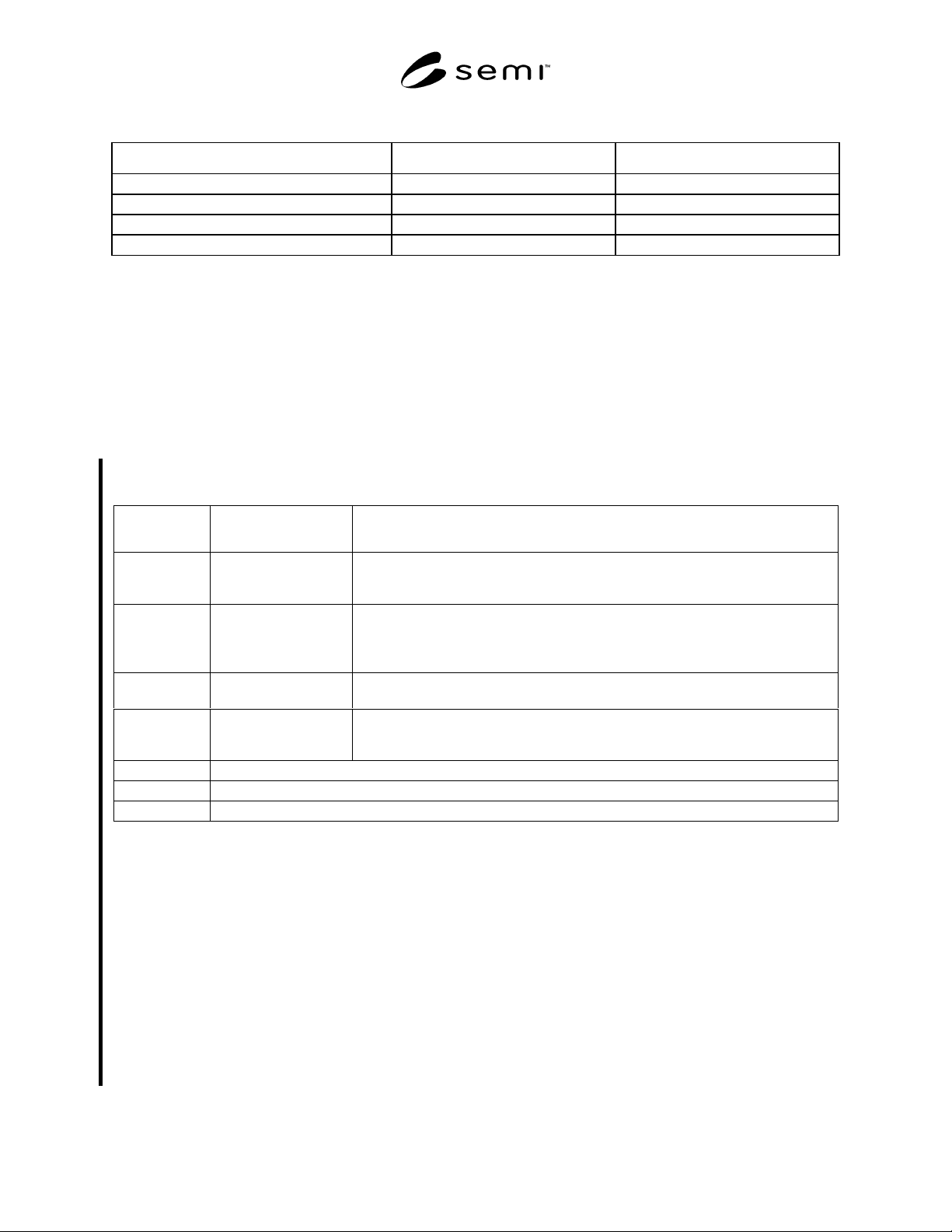
Table 22 ExceptionDetailType Attribute Values for Alarm and Warning Reporting Methods
Reporting Method Attribute High Nibble Value (Alarm) Attribute Low Nibble Value (Warning)
Basic 0 0
Expanded 1 1
Queued 2 2
Reserved for Future Extension of CDM 3 – 15 3 – 15
7.3.1.21 ExceptionDetailAlarmQueue (Optional) — An attribute consisting of an ordered list of alarm events; the
data structure of the individual alarm events (i.e., queue elements) is determined by the values of the
ExceptionStatus attribute; if bit 7 of the ExceptionStatus attribute indicates a Basic Mode reporting data format then
each queue element is of the same data type as ExceptionStatus; if bit 7 of the ExceptionStatus attribute indicates an
Expanded Mode reporting data format then each queue element is of the same data type as ExceptionDetail
(Alarm/Warning). The behavior of this queue in storing and reporting alarms is described in Section 7.3.3.
7.3.1.22 ExceptionDetailWarningQueue (Optional) — An attribute consisting of an ordered list of warning events;
the data structure is determined as described in Section 7.3.1.21. The behavior of this queue in storing and reporting
warnings is described in Section 7.3.3.
7.3.1.23 Date and Time — A structure that relates the current time as perceived by the device. The form of the
structure depends on the value of the Data and Time Type attribute as follows:
Date and
Time Type
Date and Time
Structure
Semantics
0 [default] Struct of:
UDINT
UINT
{Standard Time and Date} (6 Bytes)
Number of milliseconds since midnight
Number of days since 01 January, 1972
1 Struct of:
UDINT
UINT
INT
{Standard Time and Date with Offset} (8 Bytes)
Number of milliseconds since midnight
Number of days since 01 January, 1972
Number of minutes displacement from the Greenwich Meridian
2 Struct of:
LINT
{Universal Time Coordinated (UTC)} (8 Bytes)
Number of 100 nanoseconds since 15 October, 1582, 00:00:00
3 Struct of:
LINT
INT
{UTC with Time Displacement Factor} (10 Bytes)
Number of 100 nanoseconds since 15 October, 1582, 00:00:00
Number of minutes displacement from the Greenwich Meridian
4 - 63 Reserved
64 - 127 Specific Device Model definitions as required
128 - 255 Manufacturer specified as required
7.3.1.23.1 If the Date and Time Type attribute is not supported, the default value of zero (0) is assumed.
7.3.1.23.2 The Standard Time and Date (Type 0) uses 32 bits to represent the number of milliseconds since
midnight followed by 16 bits to represent the number of days since 01 January, 1972. The reference for this format
is either Greenwich Mean Time or Local Time as defined by the user. This format has a range of 01 January, 1972
to 06 June, 2151.
7.3.1.23.3 The Standard Time and Date with Offset (Type 1) uses the above format followed by 16 bits to represent
the number of minutes displacement from the Greenwich Meridian. Meridians to the East are positive, while those
to the West are negative.
7.3.1.23.4 The Universal Time Coordinated (UTC) (Type 2) is based on the format used by the WWV radio station
of NIST. It uses 64 bits to represent the number of 100 nanoseconds since 15 October, 1582, 00:00:00. The
reference for this format is always Greenwich Mean Time. This format has an approximate range of BC 27,000 to
AD 30,000.
SEMI E54.1-1000 © SEMI 1996, 2000 20
7.3.1.23.5 The UTC with Time Displacement Factor (TDF) (Type 3) uses the above format followed by 16 bits to
represent the number of minutes displacement from the Greenwich Meridian. Meridians to the East are positive,
while those to the West are negative.
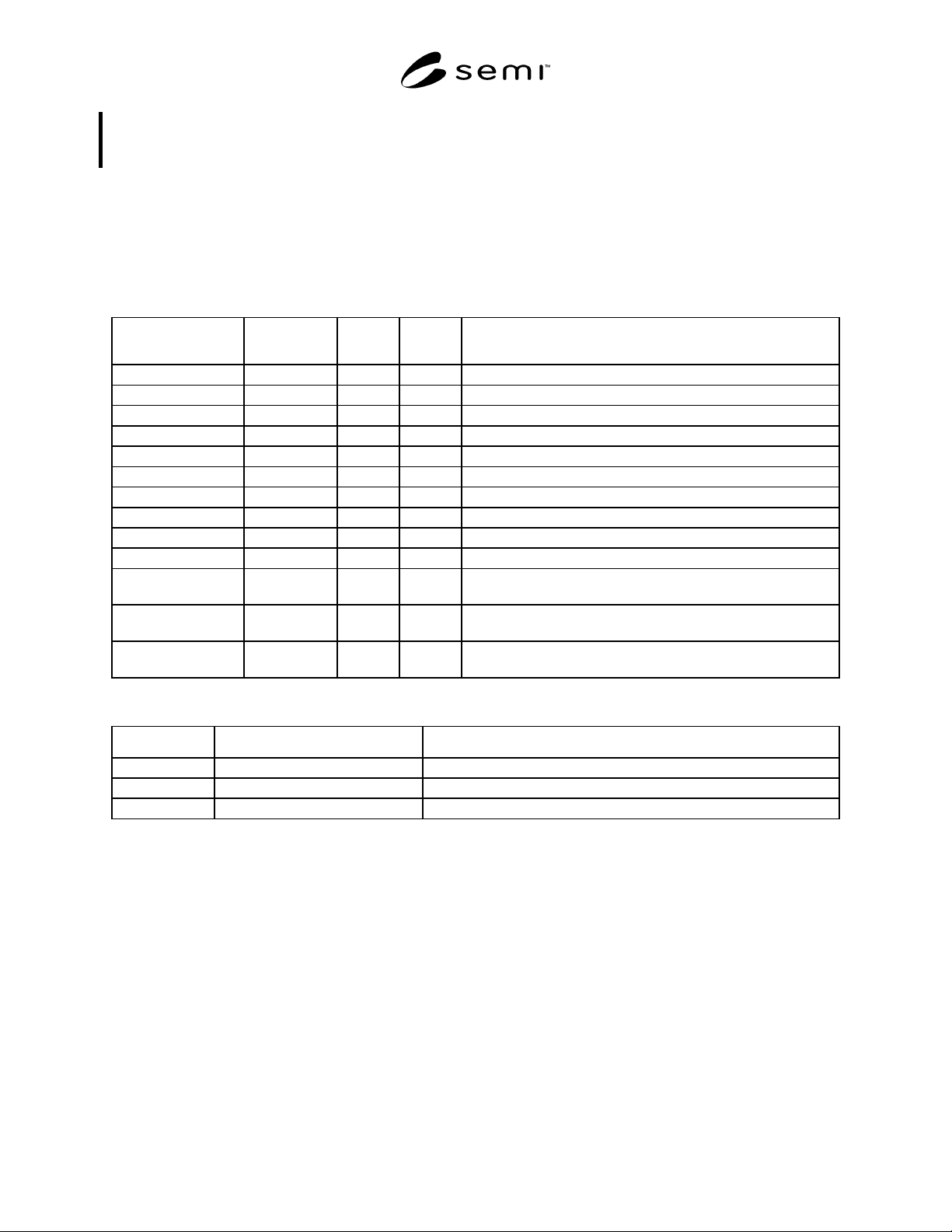
7.3.2 DM Object Services — All DM object instances must provide the services listed in Table 23. (The DM object
is the “service provider” of these services.) Note that all of these services are Request services, with the exception of
the PublishAttribute service (which is a notification service). DM services are identified with a service identifier of
the form “DmSn”, where “n” is a positive decimal number. Dm service identifiers DmS1 through DmS8 are used by
this common device model standard. DM service identifiers DmS9 through DmS32 are reserved. Service parameters
that are specified in this standard are summarized in Table 24.
Table 23 DM Object Service Resource Definition
Service Service
Identifier
Required Type Description
Reset DmS1 Y R Used to place object in INITIALIZED state.
Abort DmS2 Y R Used to place object in ABORT state.
Recover DmS3 Y R Used to move object from ABORT state to RECOVERED state.
GetAttribute DmS4 Y R Used to read object attribute.
SetAttribute DmS5 Y R Used to modify object attribute.
Execute DmS6 Y R Used to move object from IDLE state to EXECUTING state.
PerformDiagnostics DmS7 Y R Used to instruct object to perform diagnostic test.
PublishAttribute DmS8 N N Used to proactively report exception status attribute.
Lock DmS9 N R Used to restrict access to READ only attributes.
Unlock DmS10 N R Used to make READ only attributes modifiable.
Get Exception Queue DmS11 N R Used to retrieve all, or a specified number of, exception events
from the front of the ExceptionDetailAlarm/WarningQueue.
Clear Exception
Queue
DmS12 N R Used to clear all exception events from the ExceptionDetail Alarm
or WarningQueue.
Reserved by CDM DmS13 –
DmS32
— — Reserved for CDM expansion.
Table 24 DM Object Service Parameter Dictionary
Parameter Form Description
AttributeID Enumerated DM object attribute identifier (see Table 17)
AttributeValue Context-specific (see Table 17) Value of DM object attribute.
TestID Non-negative integer, < 256 Type and possibly detail of diagnostic test to be performed.
A detailed description of these services follows.
7.3.2.1 Reset (Service Identifier: DmS1) — Used to place the DM object in its INITIALIZED state. There are no
parameters specified for this service.
7.3.2.2 Abort (Service Identifier: DmS2) — Used to place the DM object in its ABORT state. There are no
parameters specified for this service.
7.3.2.3 Recover (Service Identifier: D mS3) — Used to move the DM object from its ABORT state to a recovered
state (which is the IDLE state for this object). There are no parameters specified for this service.
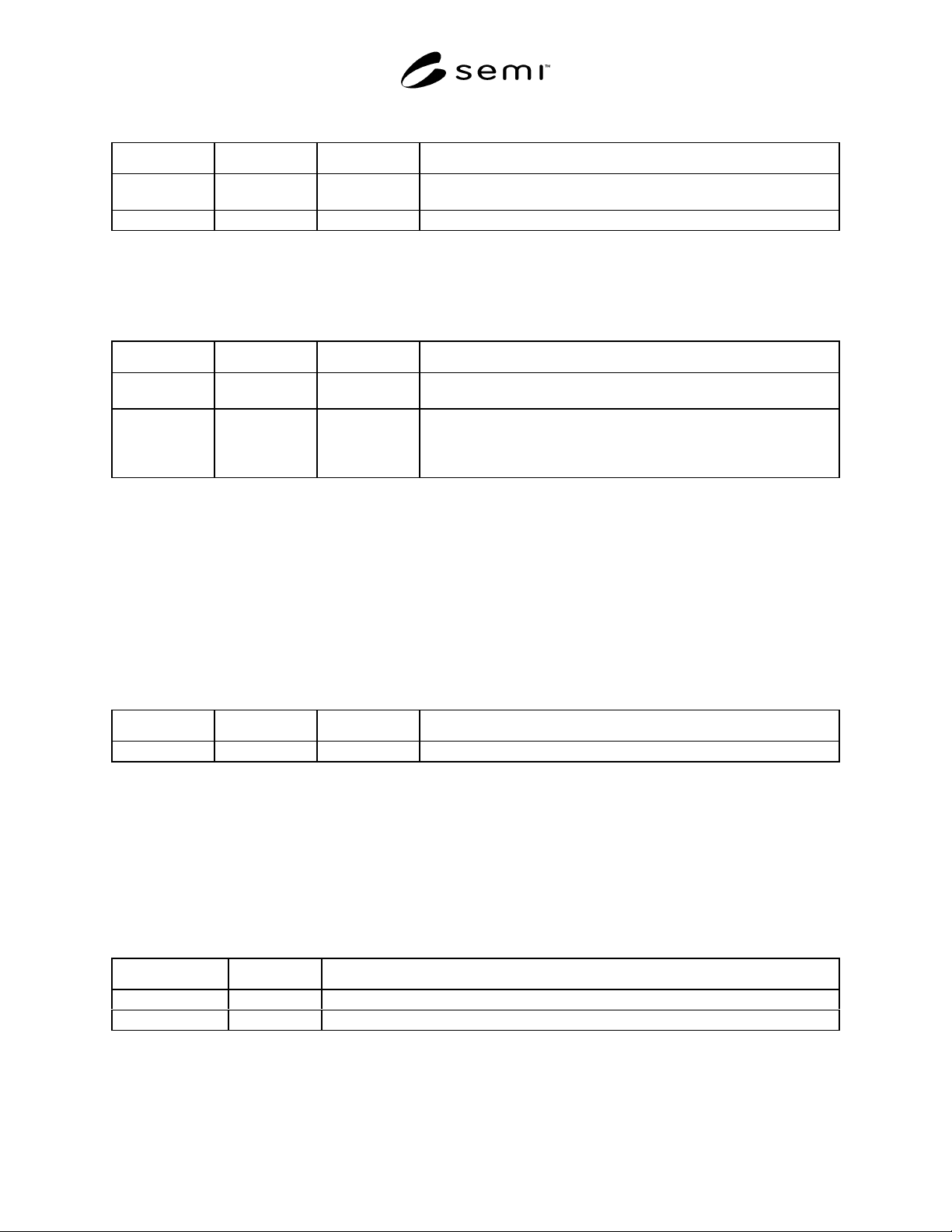
7.3.2.4 GetAttribute (Service Identifier: DmS4) — Used to read a DM object attribute.
SEMI E54.1-1000 © SEMI 1996, 200021
GetAttribute Service Message Definition Table*
Parameter Req/Ind Rsp/Conf Description
AttributeID M C**, = Attribute Identifier of attribute whose value is being requested. Inclusion
of attribute in Rsp/Conf. is optional.
AttributeValue — M Value of attribute requested.
* See Section 6.4.3 for a further description of terminology used in this table.
** The determination of whether Attribute ID is supplied in the service response/confirm is outside the scope of this document.
7.3.2.5 SetAttribute (Service Identifier: DmS5) — Used to modify a DM object attribute.
Set_Attribute Service Message Definition Table*
Parameter Req/Ind Rsp/Conf Description
AttributeID M C, = Attribute Identifier of attribute whose value is to be modified. Inclusion
of Attribute in Rsp/Conf. is optional.
AttributeValue M C Value to which the attribute is to be modified. Inclusion of Attribute in
Rsp/Conf. is optional. Conditions under which the value may differ from
that supplied in the associated Req/Ind. message (e.g., negative response)
are not defined in this document.
* See Section 6.4.3 for a further description of terminology used in this table.
7.3.2.6 Execute (Service Identifier: DmS6) — Used to move the DM object from its IDLE state to its EXECUTING
state. Note that this service may be internally generated by the DM object. There are no parameters specified for this
service.
7.3.2.7 PerformDiagnostics (Service Identifier: DmS7) — Used to instruct the DM object to perform a diagnostic
test. A diagnostic test is either of type “common” or “device-dependent.” “Common” diagnostic tests could include:
RAM, EPROM, non-volatile memory, and communications. The structure of “common” type diagnostic tests is
implementation-specific. All detail of “device-dependent” diagnostics is outside the scope of this document. The
following table describes parameters specified for this service.
Perform_Diagnostics Service Message Definition Table*
Parameter Req/Ind Rsp/Conf Description
TestID M C, = Indicates the type and possibly detail of the test to be performed.
* See Section 6.4.3 for a further description of terminology used in this table.
Additional services and/or service parameters that are device-specific and/or implementation-specific may be
provided by a DM object. These services may be Notification or Request type services (see Section 6.4.1). A
complete definition of additional services and service parameters that are device-specific may be found in an
appropriate sensor/actuator network specific device model specification.
7.3.2.8 PublishAttribute (Optional — Service Identifier: DmS8) — Used to proactively communicate a DM object
attribute. The following table describes parameters specified for this service.
PublishAttribute Service Message Definition Table*
Parameter Ind Description
AttributeID M Attribute Identifier of attribute whose value is being reported.
AttributeValue M Value of attribute being reported.
* The utilization of a service response message and its format is outside the scope of this document.