semi合集-English.pdf - 第1901页
SEMI E54.1-1000 © SEMI 1996, 2000 7 Table 3 Object s Embedded in SAC O bject and Identifiers Object Na me Ob ject Identifi er (tag) Su pport Required in a Device Comment Assembly AsmIn * No Zero or more instan ces per de…
SEMI E54.1-1000 © SEMI 1996, 2000 6
Table 2 Device Objects and Identifiers
Object Name Object Identifier (tag) Support Required
in a Device
Comment
Sensor/Actuator/Controller SacI0* Yes Only one instance per device allowed.
Sensor SenIn** No Zero or more instances per device allowed.***
Actuator ActIn** No Zero or more instances per device allowed.***
Controller CntIn** No Zero or more instances per device allowed.***
Device Manager DmI0* Yes Only one instance per device allowed.
* Only one object instance per device; identifier uses “I0” to specify “instance zero.”
** “In” is used to indicate the instance number of the object; “n” is a non-negative integer.
*** The specification of the number of sensor, actuator, and/or controller object instances allowed per device may be further constrained by the
appropriate sensor/actuator network specification.
The objects described in this document collectively define a device’s capabilities, including how it has been
configured for network interoperability. The information in the attributes of these object instances must be
accessible over the network and stored at the device.
Character strings described in this document have a prescribed maximum length. If the contents of the string are
shorter than the prescribed length, the string must be terminated with the null character: a byte whose value is 00h.
Note that this specification of null termination does not indicate that a sensor/actuator network protocol
implementation communicating a character string over a network must send the null termination; the presentation of
character string data over a network is sensor/actuator network communication protocol-specific.
7.2 Sensor/Actuator/Controller (SAC) Object — The SAC object is the device component responsible for
coordinating the interaction of the device with the sensory/actuation/control environment. A view of the SAC object
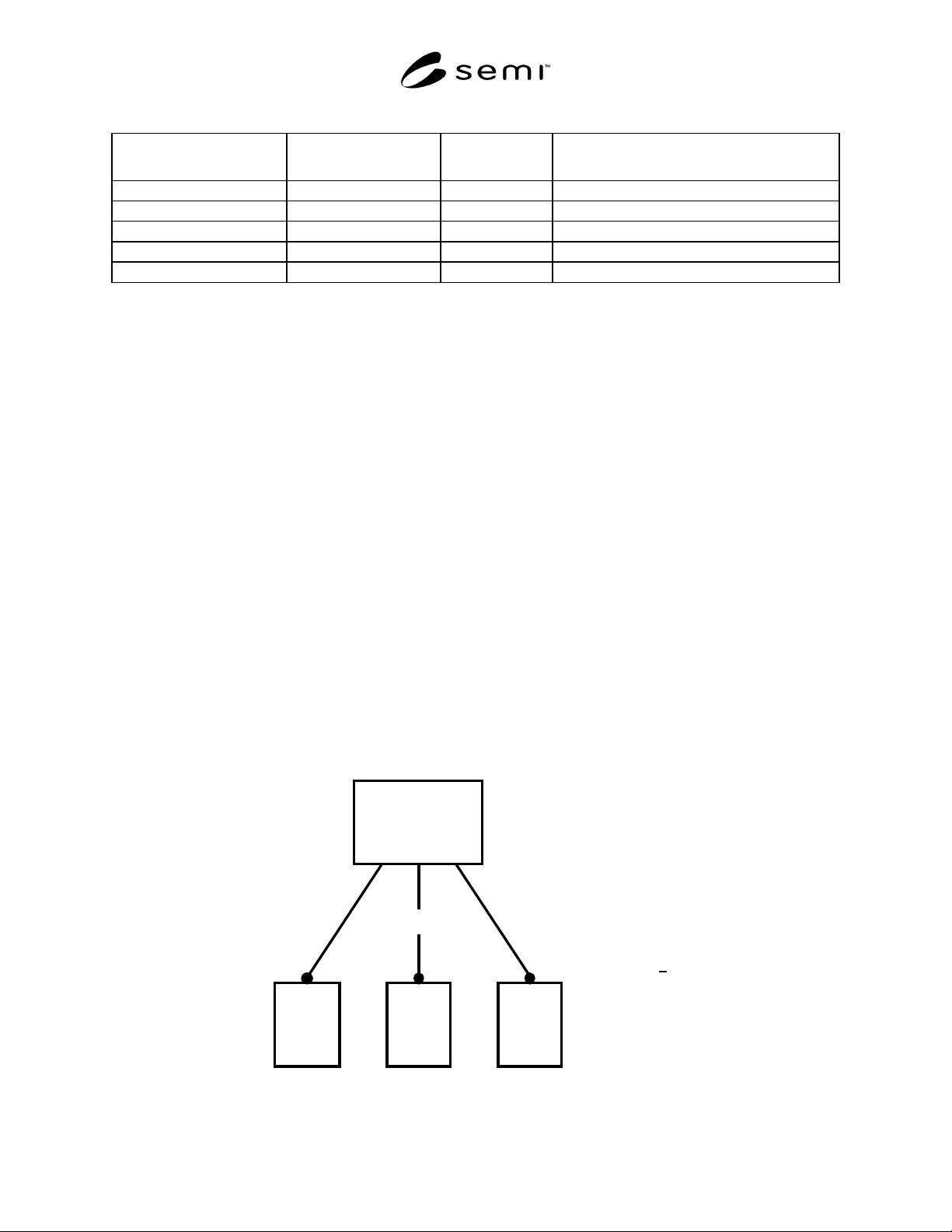
is shown in Figure 4. The SAC object coordinates operation of one or more sensor, actuator, and/or control object
instances that collectively form the sensory/actuation/control portion of the device, so as to enable desired device
behavior. For example, it could coordinate the operation of the device sensor, actuator, and/or control elements to
enable device level data reporting or actuation, alarming detection and servicing, status reporting, device self-
testing, device shutdown, etc. The number of sensor, actuator, and/or controller object instances allowed per device
may be specified by the appropriate sensor/actuator network specific device model. An operating device shall
contain exactly one instance of a SAC object.
The SAC object has embedded in it other objects that address specific tasks associated with coordinating the
interaction of the device with the sensor/actuation/control environment. These objects are listed in Table 3. Note that
although only one instance of the SAC object is allowed per device, a device can have multiple instances of
embedded objects. These objects are described in Section 7.2.4.
m + n + p > 1
Sensor / Actuator /
Controller Object
(SAC)
S
m
A
n
C
p
Sensor
Object(s)
Actuator
Object(s)
Coordinates
Controller
Object(s)
mn p
Figure 4
Detailed View of the Sensor/Actuator/Controller Object
SEMI E54.1-1000 © SEMI 1996, 20007
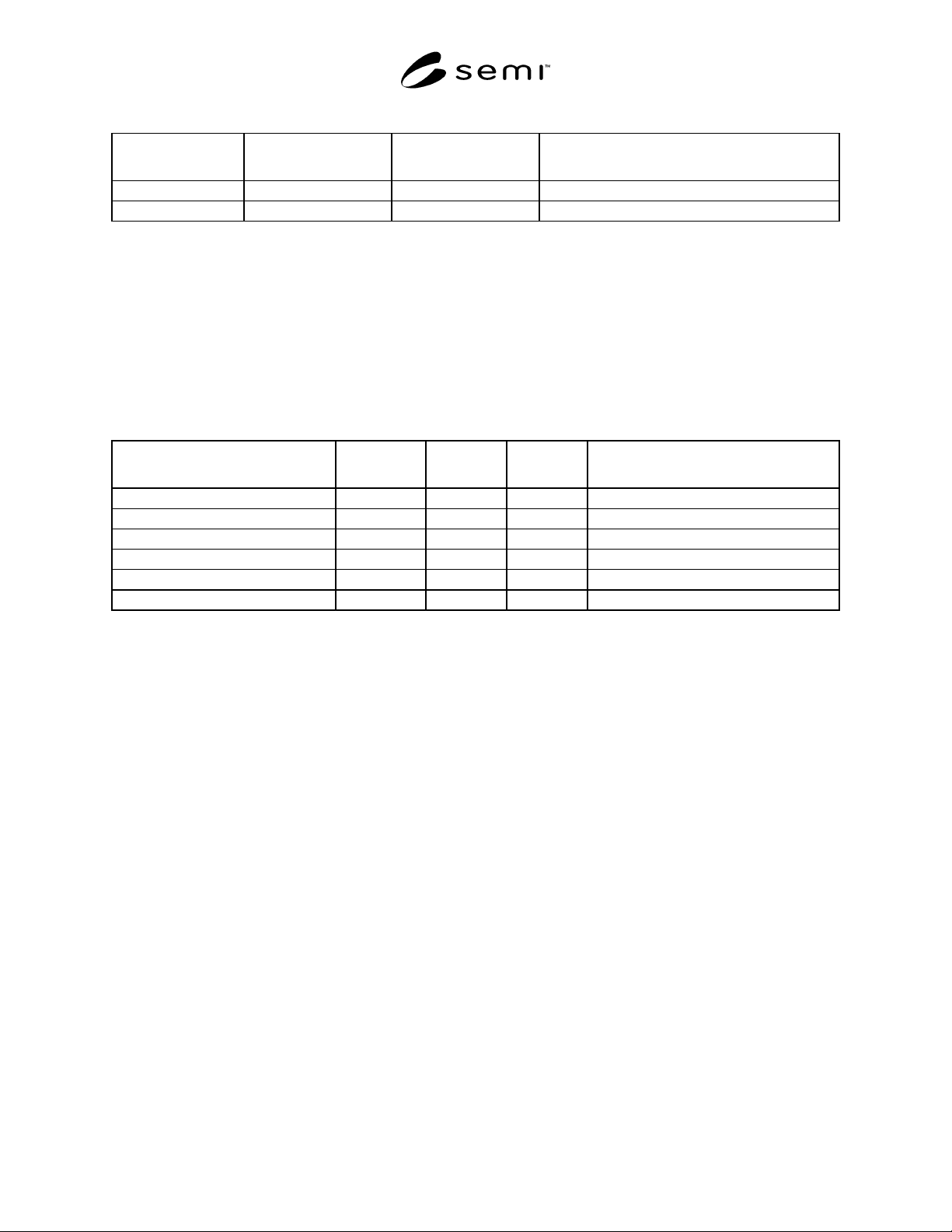
Table 3 Objects Embedded in SAC Object and Identifiers
Object Name Object Identifier (tag) Support Required in a
Device
Comment
Assembly AsmIn* No Zero or more instances per device allowed.**
Local Link LnkIn* No Zero or more instances per device allowed.**
* “In” is used to indicate the instance number of the object; “n” is a non-negative integer.
** The specification of the number of Assembly or Local Link object instances allowed per device may be further constrained by the appropriate
sensor/actuator network specification.
7.2.1 SAC Object Attributes — All required and “common optional” SAC object attributes are listed in Table 4.
Note that many of the attributes are in text “human-readable” forms. Information provided in this table includes, for
each attribute: (1) an attribute identifier tag; (2) an indication of user access (via the network) to the attribute, (i.e.,
an indication of whether the attribute is network-settable); and (3) an attribute type. Required attributes must be
supported in all SAC object instantiations. Optional attributes may or may not be supported; a further specification
of the requirement of support for these optional attributes can be found in Section 7.2.3 and in an appropriate
sensor/actuator network specific device model specification.
Table 4 SAC Object Attributes
Attribute Name Attribute
Identifier
Access
Network
Required Form
Last Calibration Date SacA1 RW No date
Next Calibration Date SacA2 RW No date
Expiration Timer SacA3 RW No signed integer
Expiration Warning Enable SacA4 RW No* Boolean
Run Hours SacA5 R No unsigned integer
Reserved SacA7-SacA64 — — Reserved for future expansion.
* The Expiration Warning Enable attribute is required if the Expiration Timer attribute is supported.
7.2.1.1 Last Calibration Date (Optional) — An attribute which identifies the date the device was last calibrated.
The attribute is formatted as a date defined in Section 5.2.
7.2.1.2 Next Calibration Date (Optional) — An attribute which identifies the date the device is scheduled for the
next calibration. The attribute is formatted as a date defined in Section 5.2.
7.2.1.3 Expiration Timer (Optional) — An attribute which identifies the number of run hours remaining until the
next recommended calibration. The attribute is an unsigned integer with a resolution of 1 hour.
7.2.1.4 Expiration Warning Enable (Optional) — An attribute which specifies whether the calibration expiration
timer will set a specific warning status bit in the exception status attribute of the DM object instance (specifically the
“calibration expiration” exception bit — see Section 7.3.1.14).
The expiration warning enable attribute is Boolean and can take on one of the following values:
0 = Disable
1 = Enable
7.2.1.5 Run Hours (Optional) — An attribute which identifies the number of hours that the device has been
powered ON. The attribute is an unsigned integer with a resolution of 1 hour.
SEMI E54.1-1000 © SEMI 1996, 2000 8
7.2.1.6 Initial and Default Values — The initial and default values for relevant SAC attributes are given in Table 5:
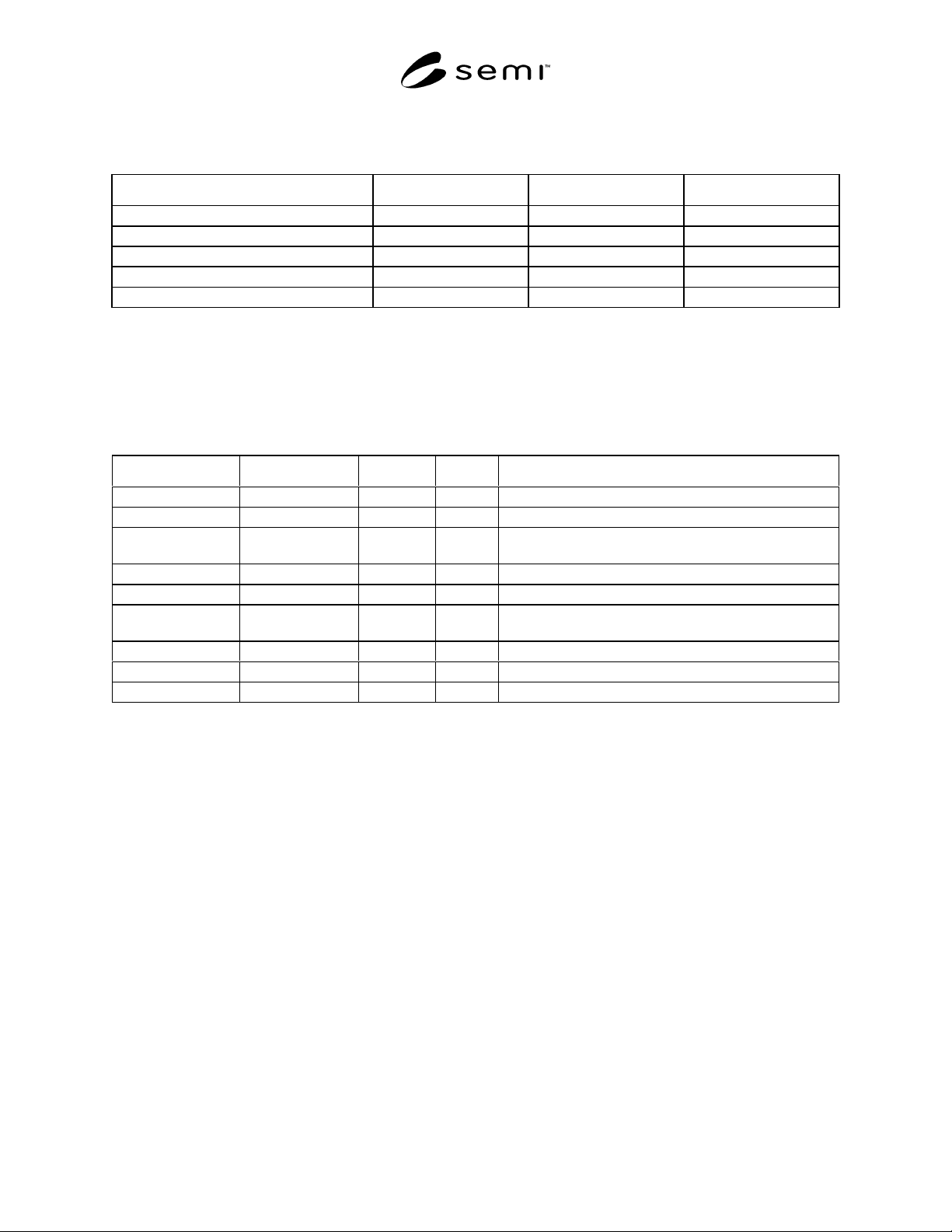
Table 5 SAC Attribute Initial and Default Values
Attribute Initial Value Default Value Comment
Last Calibration Date LVV 0,0,0*
Next Calibration Date LVV 0,0,0
Expiration Timer LVV 0
Expiration Warning Enable LVV 0
Run Hours LVV 0
* Corresponding to year, month, and day; see Section 5.2.
7.2.2 SAC Object Services — All SAC object instances must provide the services listed in Table 6 (the SAC object
is the “service provider” of these services). SAC services are identified with a service identifier of the form “SacSn”,
where “n” is a positive decimal number. SAC service identifiers SacS1 through SacS3 are used by this common
device model standard. SAC service identifiers SacS4 through SacS32 are reserved.
Table 6 SAC Services
Service Service Identifier Required Type Description
Reset SacS1 Yes R Used to place object in INITIALIZING state.
Abort SacS2 Yes R Used to place object in ABORT state.
Recover SacS3 Yes R Used to move object from ABORT state to
RECOVERING state.
Get Attribute SacS4 Yes R Used to read object attribute.
Set Attribute SacS5 Yes R Used to modify object attribute.
Operate SacS6 Yes R Used to move object to the OPERATING state from
INITIALIZING or RECOVERING state.
Restore Default SacS7 No R Used to restore object attributes to their default values.
Publish Attribute SacS8 No N Used to proactively report an object attribute value.
<SacS32 – – Reserved for future extensions of the CDM.
7.2.2.1 Reset (Service Identifier: SacS1) — Used to place the SAC object in its INITIALIZED state. The
description of this state is device-specific. There are no parameters specified for this service.
7.2.2.2 Abort (Service Identifier: SacS2) — Used to place the SAC object in its ABORT state. The description of
this state is device-specific. There are no parameters specified for this service.
7.2.2.3 Recover (Service Identifier: SacS3) — Used to move the SAC object from an ABORT state to its
RECOVERED state. The description of this state is device-specific. There are no parameters specified for this
service.
Additional services and/or service parameters may be provided by a SAC object that are device-specific and/or
implementation-specific. These services may be Notification or Request type services (see Section 6.4.1). A
complete definition of additional services and service parameters that are device-specific may be found in an
appropriate sensor/actuator network specific device model specification.