semi合集-English.pdf - 第2782页
SEMI E98-1102 © SEMI 2000, 2002 47 RELATED INFORMATION 3 ADDITIONAL DATA NOTE: This related information is not an official part of SEMI E98. This is Rela ted Information for the provisional specificati on and is not inte…

SEMI E98-1102 © SEMI 2000, 2002 46
RELATED INFORMATION 2
RELATIONSHIP TO THE CIM FRAMEWORK
NOTE: This related information is not an official part of SEMI E98. This is Related Information for the provisional specification
and is not intended to modify or supersede the official standard. Determination of the suitability of the material is solely the
responsibility of the user.
This section discusses the relationship of OBEM and
the OBEM objects to the objects defined in SEMI E81.
It uses terms both from the CIM Framework and from
OBEM. It is not part of the OBEM standard.
Additional documentation should be provided in this
section as the CIM Framework develops.
R2-1 Equipment and Machine
R2-1.1 The interface to Equipment defined in OBEM
is provided for the physical equipment on the
manufacturing floor. From time to time, the Equipment
will be powered off for maintenance and at these times
is unable to communicate. In contrast, the Machine
object, defined in the CIM Framework, is part of the
manufacturing execution system and is always
available, even when the Equipment is powered off or
otherwise unable to communicate.
R2-1.2 The Machine provides a generic interface for
factory logistics and is able to provide some services
without relying on the Equipment itself. The Machine
is responsible for communications with the Equipment
and for representing the Equipment to the Factory and
representing the Factory to the Equipment.
R2-2 EquipmentModule and MachineResource
R2-2.1 The EquipmentModule defined in OBEM
corresponds to the MachineResource interface defined
in the CIM Framework. The MachineResource is a type
of Resource and therefore can respond to requests to
start up and shut down. These services are provided for
the EquipmentModule but not for its supertypes.
R2-3 Location Tracking
R2-3.1 The CIM Framework defines an interface for a
MaterialTrackingLocation. The MaterialTracking-
Location differs from the OBEM MaterialLocation.
MaterialLocations represent places within the
equipment itself where carriers and substrates can be
placed, including wafer chucks, carrier slots, and robot
end effectors. A MaterialTrackingLocation, in contrast,
is at a higher level of granularity and provides the
ability to locate material associated with a Machine.
MaterialTrackingLocation does not track material
locations down to the level of specific places within the
equipment.
SEMI E98-1102 © SEMI 2000, 2002 47
RELATED INFORMATION 3
ADDITIONAL DATA
NOTE: This related information is not an official part of SEMI E98. This is Related Information for the provisional specification
and is not intended to modify or supersede the official standard. Determination of the suitability of the material is solely the
responsibility of the user.
This section provides examples of equipment models to clarify the standard.
This section contains additional information that is not part of the standard.
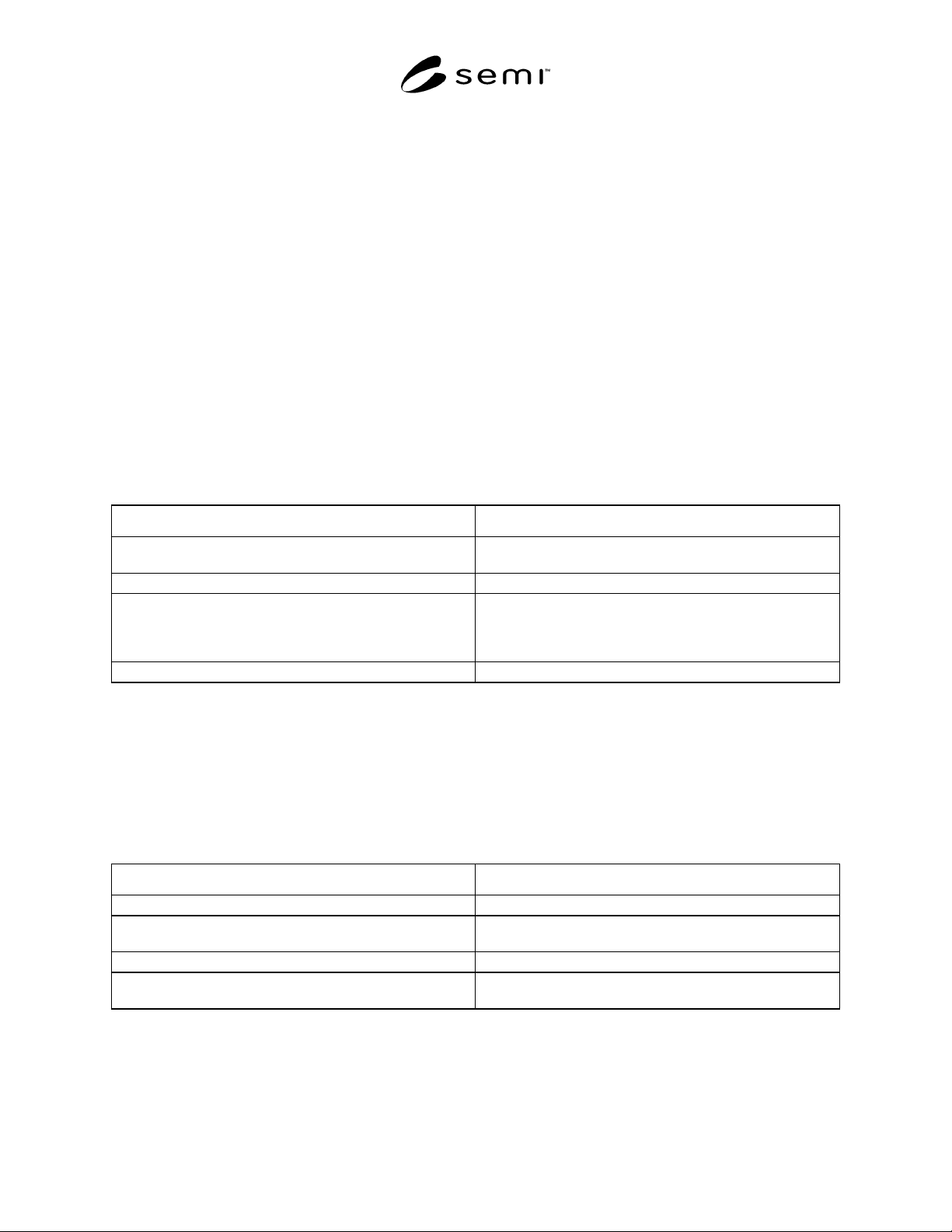
R3-1 Representations of Date and Time
R3-1.1 This section discusses several date and time representations, and provides background information in
support of the OBEM adoption of an IEEE floating point representation of date and time values.
R3-1.2 In this section, the term “date value” means an encoding of a date and time value, such as 12/25/1997
11:04:56.
R3-1.3 ASCII Digit Representation
R3-1.3.1 The standard date and time format in SECS communication is the ASCII representation
“YYYYMMDDhhmmsscc”. In this representation, date and time are represented as a fixed length sequence of
ASCII digit characters, grouped into fields as indicated.
Advantages Disadvantages
Very simple conversion to display format. Date computations difficult. For example, adding two date
values is not a trivial operation.
Simple to extract date and time from date value. Many digit sequences are not valid date values.
The format does not lend itself to expressions of time
intervals. The representation of “ten minutes” might be
“00000000001000”, but the job of adding this interval to a
date value is not simple.
The resolution of the representation is fixed at seconds.
R3-1.4 Long Signed Integer Representation
R3-1.4.1 UNIX represents date and time as the number of ticks since Epoch. Typically the time interval of a tick is
one second. Date values are expressed as the number of ticks since a certain instant, called the Epoch.
R3-1.4.2 There are 31,536,000 seconds in a 365 day year. If stored as a four byte signed integer, with ticks in
seconds, this representation will overflow after approximately 68 years. Eight byte integers provide sufficient range
for dates spanning human history many times. Unfortunately, eight byte integers are inconvenient on many
computer platforms.
Advantages Disadvantages
All bit sequences are valid date values. Difficult to separate date and time from date value.
Intervals are simple to express. Eight byte representation required for sufficient range, but
inconvenient on many computer platforms.
Date value arithmetic is simple. No simple way to convert date value to display format.
The resolution of the representation is fixed at the tick value,
typically seconds.
R3-1.5 Floating Point Representation
R3-1.5.1 This representation is used in many applications. It represents date values as floating point numbers, with
units of days past 12/30/1899. It is very similar to the “Ticks since the Epoch” representation, except that the tick
values are days.
SEMI E98-1102 © SEMI 2000, 2002 48
R3-1.5.2 This representation has the advantages of the “Tick since Epoch” representation for date value arithmetic.
Second, the separation of the date and time from a date value is simple. The date is the whole value, the time is the
fractional value. Third, the minimum time resolution is very small, and is not fixed by the representation.
R3-1.5.3 The following calculation is used to determine roughly the minimum time resolution that can be
expressed:
R3-1.5.4 The IEEE 8 byte floating point representation uses an excess 128 notation. This means 7 bits of exponent
and one bit of sign. This leaves 7 bytes of significant. On November 18, 1997 the day number is 35752. This is
hex 8BA8, and requires two bytes. This leaves 5 bytes of significant to represent the fractional day, or the time
portion of the date value. These 5 bytes of significant contain 40 bits, and can represent values to 2^ 40, or one part
in 1,099,511,627,776. There are 86,400 seconds in one day, so this representation is accurate to approximately
7.86E-08 seconds, or about 1/10 of a microsecond. In about a hundred years the day number will have doubled, and
this resolution will have shrunk by a factor of 2. For practical purposes the resolution is no worse than one
microsecond resolution.
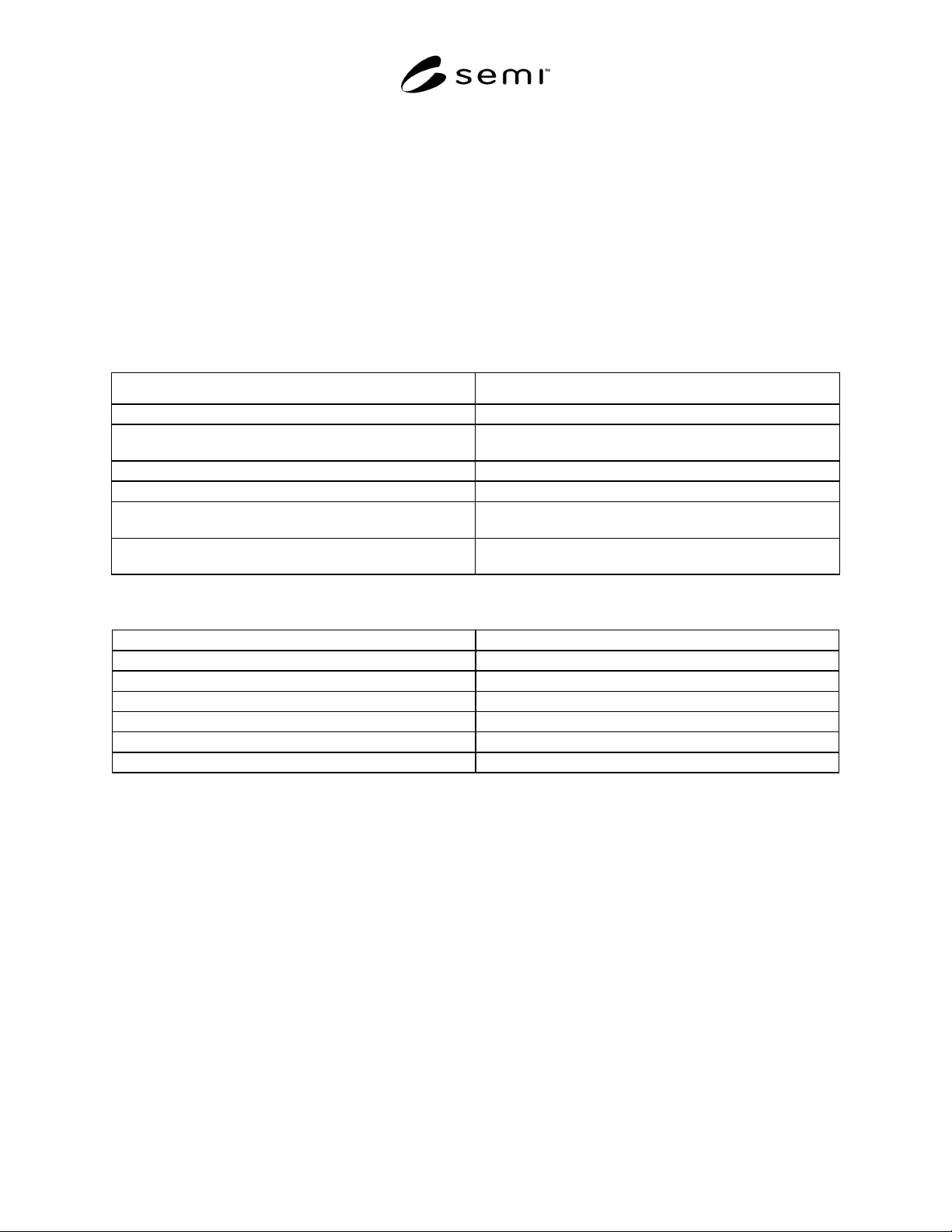
Advantages Disadvantages
All legal float values are valid date values. Minimum resolution changes over time.
Simple to separate date and time from a date value. No simple way to convert date value to display format (but
simpler than the “Tick since the Epoch” representation).
Intervals are simple to express.
Date value arithmetic is simple.
The eight byte floating point representation used is supported
on most computer platforms.
The time resolution is not implied by the representation, but
is valid to very small intervals.
R3-1.6 Examples
11/18/1997 35752
11/18/97 1:03:13 PM 35752.543912037
One second 1.15740740740741E-05
One day 1
One microsecond 1.15740740740741E-11
1/1/1000 -328716
12/30/1899 0