semi合集-English.pdf - 第2660页
SEMI E95-1101 © SEMI 2000 , 2001 15 7 Related Documents 7.1 S EMATECH Documents 1 Computer Integ rated Ma nufacturing (C IM) Application Framework Specification SCC User-Interface Style Guide NOTICE: SE MI makes no warra…
SEMI E95-1101 © SEMI 2000, 2001 14
6.2.1 Mandatory: In order to be compliant with this
standard, all of the mandatory requirements shall be
both implemented and compliant as defined in this
specification.
6.2.2 Conditional: In order to be compliant with this
standard, each conditional requirement shall either be
implemented as defined in this specification or shall
both not be implemented in the user interface and not
be supported in some other way by the equipment. (i.e.,
no conditional capability which is present on the
equipment shall be implemented in a manner other than
as defined in this specification).
6.2.3 Recommended: Implementation of these feat-
ures is at the discretion of the implementers. The only
requirement for compliance with this specification for
these capabilities is that they be accurately documented
in the compliance statement for the equipment.
6.3 Each requirement/capability shall be marked “Yes”
under “Implemented” if the equipment includes a
feature which provides equivalent functionality as that
defined in this specification even if that feature appears
in a different form. Otherwise it shall be marked “No”.
6.4 Each requirement/capability shall be marked “Yes”
under “HCI Compliant” if the equipment includes a
feature which conforms to all aspects of the
requirement or recommended capability as defined in
this specification. Otherwise it shall be marked “No”.
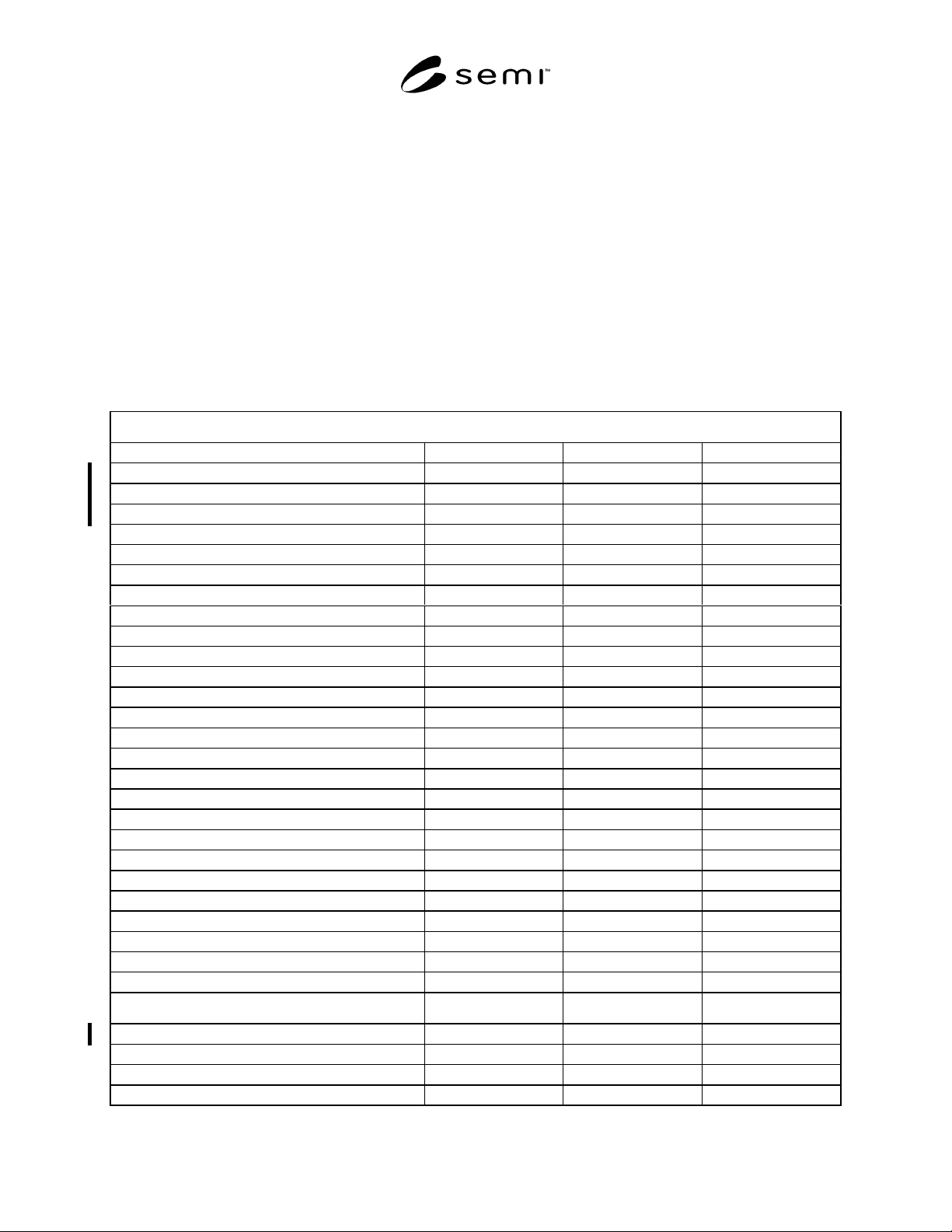
Table 2 HCI Compliance Statement
HCI Compliance Statement
Mandatory Requirements Reference Implemented HCI Compliant
Button Size 5.2.2.1 Yes No Yes No
Button Behavior 5.2.2.3 Yes No Yes No
Button Text 5.2.2.4 Yes No Yes No
Dialog Boxes 5.2.5 Yes No Yes No
Basic Network Navigation Model 5.3 Yes No Yes No
Basic Layout 5.3.6 Yes No Yes No
Title Panel Basic Information 5.3.9 Yes No Yes No
Navigation Panel 5.4 Yes No Yes No
Required Navigation Panel Functions 5.4.2 Yes No Yes No
Navigation Panel Layout 5.4.4 Yes No Yes No
Information Panel 5.5 Yes No Yes No
Command Panel 5.6 Yes No Yes No
Conditional Requirements Reference Implemented HCI Compliant
Saliences 5.2.3 Yes No Yes No
Information Dialog Boxes 5.2.6 Yes No Yes No
Input/Selection Dialog Box 5.2.7 Yes No Yes No
Message Dialog Box 5.2.8 Yes No Yes No
Network Navigation Model with Sub-navigation 5.3.4 Yes No Yes No
Title Panel with Conditional Information 5.3.10 Yes No Yes No
Title Panel Host Communications Status 5.3.10.2 Yes No Yes No
Title Panel Login/Logout Button 5.3.10.3 Yes No Yes No
Conditional Navigation Panel Functions 5.4.3 Yes No Yes No
Navigation Panel Alarm & Help Buttons 5.4.5 Yes No Yes No
Navigation Button Labels 5.4.6 Yes No Yes No
Navigation Panel Saliences 5.4.7 Yes No Yes No
Sub-navigation 5.4.8 Yes No Yes No
Recommended Capabilities Reference Implemented HCI Compliant
Button Dimensions 5.2.2.2 Yes No Yes No
Enhanced Layout 5.3.7 Yes No Yes No
Title Panel with Additional Information 5.3.11 Yes No Yes No
Title Panel Alarms Button 5.3.11.2 Yes No Yes No

SEMI E95-1101 © SEMI 2000, 200115
7 Related Documents
7.1 SEMATECH Documents
1
Computer Integrated Manufacturing (CIM) Application
Framework Specification
SCC User-Interface Style Guide
NOTICE: SEMI makes no warranties or
representations as to the suitability of the standard set
forth herein for any particular application. The
determination of the suitability of the standard is solely
the responsibility of the user. Users are cautioned to
refer to manufacturer’s instructions, product labels,
product data sheets, and other relevant literature
respecting any materials mentioned herein. These
standards are subject to change without notice.
The user’s attention is called to the possibility that
compliance with this standard may require use of
copyrighted material or of an invention covered by
patent rights. By publication of this standard, SEMI
takes no position respecting the validity of any patent
rights or copyrights asserted in connection with any
item mentioned in this standard. Users of this standard
are expressly advised that determination of any such
patent rights or copyrights, and the risk of infringement
of such rights, are entirely their own responsibility.
1 SEMATECH, 2706 Montopolis Drive, Austin, TX, 78741-6499.
Website: www.sematech.org
Copyright by SEMI® (Semiconductor Equipment and Materials
International), 3081 Zanker Road, San Jose, CA 95134. Reproduction o
f
the contents in whole or in part is forbidden without express written
consent of SEMI.

SEMI E96-1101 © SEMI 1999, 20011
SEMI E96-1101
GUIDE FOR CIM FRAMEWORK TECHNICAL ARCHITECTURE
This guide was technically approved by the Global Information and Control Committee and is the direct
responsibility of the North American Information and Control Committee. Current edition approved by the
European Regional Standards Committee on June 11, 2001, and by the North American Regional Standards
Committee on July 19, 2001. Initially available at www.semi.org August 2001; to be published November
2001. Originally published February 2000. This document replaces PR5-0699 in its entirety.
1 Purpose
1.1 This guide describes technical architecture choices
that enable application components to cooperate in a
Computer Integrated Manufacturing (CIM) environ-
ment and reduce the effort required to integrate those
components into a working solution. The CIM Frame-
work technical architecture guide builds on publicly
available specifications for distributed object comput-
ing. It defines manufacturing production systems
requirements for the technical infrastructure needed for
improved component interoperability, substitutability,
and extensibility. It provides guidance for specifying
components and addresses options for using an under-
lying distributed object communication infrastructure.
1.2 This guide provides guidance for the technical
foundation of the SEMI Computer Integrated Manufact-
uring (CIM) Framework standards. It discusses a com-
ponent-based architecture using object-oriented and
framework technology that helps implementers achieve
component interoperability and substitutability, applica-
tion extensibility, and reuse. It establishes the role of
distributed object communications infrastructure in pro-
viding necessary support for the framework technology.
Specification methods for mapping a CIM Framework
specification to alternative infrastructure technologies
are also addressed by this technical architecture. How-
ever, these mappings are not intended to be prescrip-
tive. Further work may be required to define additional
mappings to emerging technologies. Many implement-
ation issues that should be resolved for a particular
software implementation are outside the scope of this
guide.
1.3 Adhering to this guide for technical architecture
alone does not provide interoperability between appli-
cations. While the technical architecture provides a
foundation for interoperability, it is limited by the
following factors:
• Multiple infrastructure implementation choices are
possible, and interoperability across these environ-
ments is not guaranteed.
• The technical architecture intentionally limits its
scope to only the most fundamental infrastructure
requirements, leaving additional technical issues
for future guide upgrades or for implementers’
discretion.
• Conformance to a specification for CIM Frame-
work Domain Architecture is also required for
interoperability of domain components.
• More complete semantics (including behavioral
constraints and collaboration patterns) for compo-
nents are needed to ensure consistent interactions
among components developed by separate
suppliers.
1.4 A guide for technical architecture is a necessary,
but not a sufficient, basis to achieve the goals of the
CIM Framework specifications. It does not mandate
specific solutions to address the identified technical
requirements because there are multiple implementation
choices that meet these requirements. Rather, the tech-
nical architecture identifies those crucial technical
requirements that should be considered by both CIM
software suppliers and consumers. The proposed stan-
dard identifies the technical capabilities implement-
ations should provide, but leaves the implementation
options open. It is the responsibility of suppliers to
provide and explain an implementation of each
capability, and the responsibility of consumers to assess
particular implementations for use in their factories.
1.5 This guide provides guidance on the technical
tradeoffs for services provided by the distributed
computing infrastructure for the purpose of supporting
and enabling the domain specifications of CIM Frame-
work components. These areas are:
• Distributed Object Communication — Provides the
basic services to enable implementations
supporting the CIM Framework interfaces to trans-
parently locate other, possibly distributed imple-
mentations and exchange messages requesting
standard CIM Framework operations. Interface
Definition Language provides a formal specifica-
tion of the CIM Framework interfaces that can be
automatically transformed into conformant imple-
mentations ready for integration and interoperation.
• Exception Declarations — Identify the form and
structure of return messages that inform requestors
that a requested operation resulted in an
anticipated, but abnormal outcome.