semi合集-English.pdf - 第6356页
13 SEMI G69-0996 © SEMI 1996, 2004 APPENDIX 3 EFFECTIVENESS OF RESIDUAL ST RESS SEPARATION IN THREE- POINT BENDING METHOD NOTICE : The material in this appendix is an o fficial part of SEMI G69 and was approved by full l…
SEMI G69-0996 © SEMI 1996, 2004 12
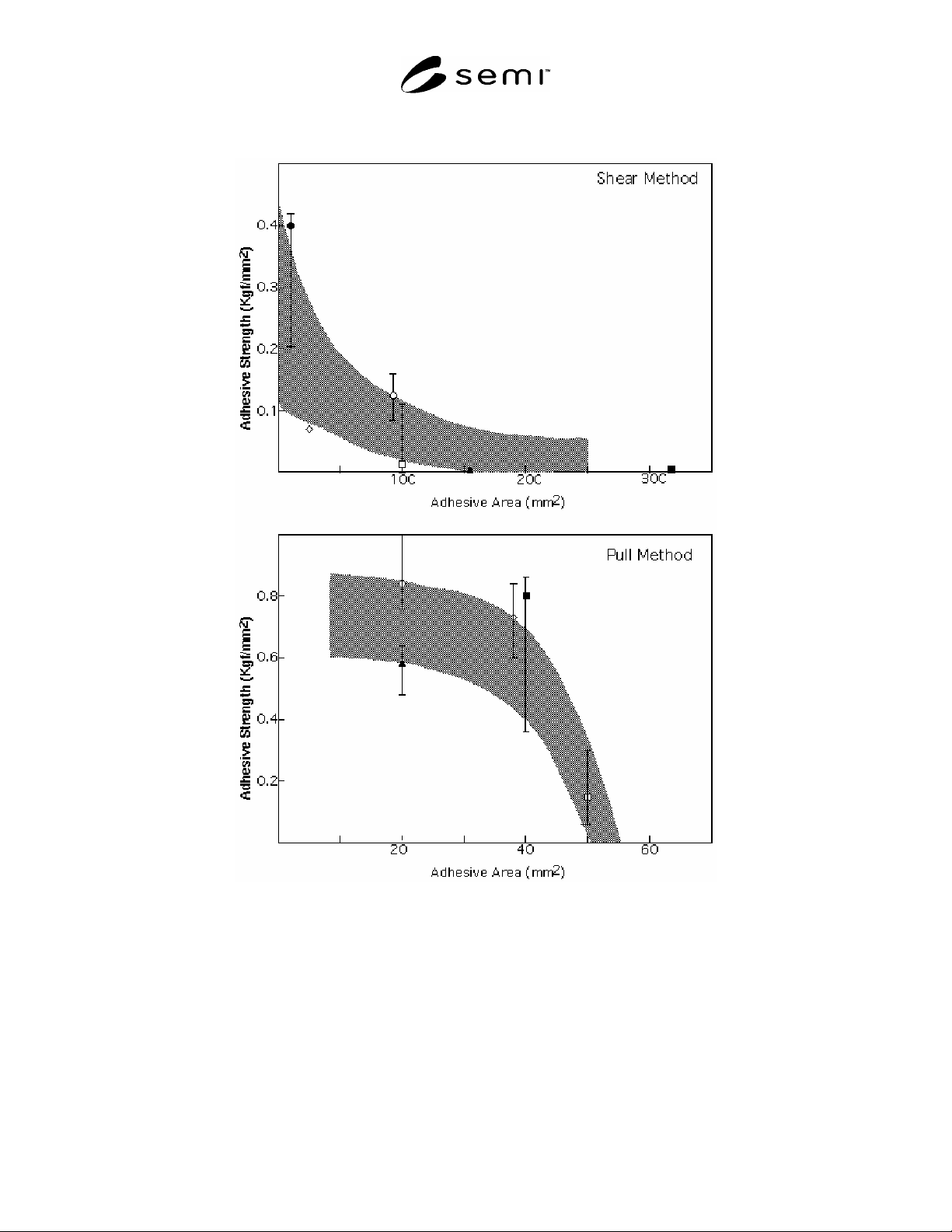
A1-2.3
Figure A1-2
Dependence of Measurement Results on Sample Size
13 SEMI G69-0996 © SEMI 1996, 2004
APPENDIX 3
EFFECTIVENESS OF RESIDUAL STRESS SEPARATION IN THREE-
POINT BENDING METHOD
NOTICE: The material in this appendix is an official part of SEMI G69 and was approved by full letter ballot
procedures.
A1-3
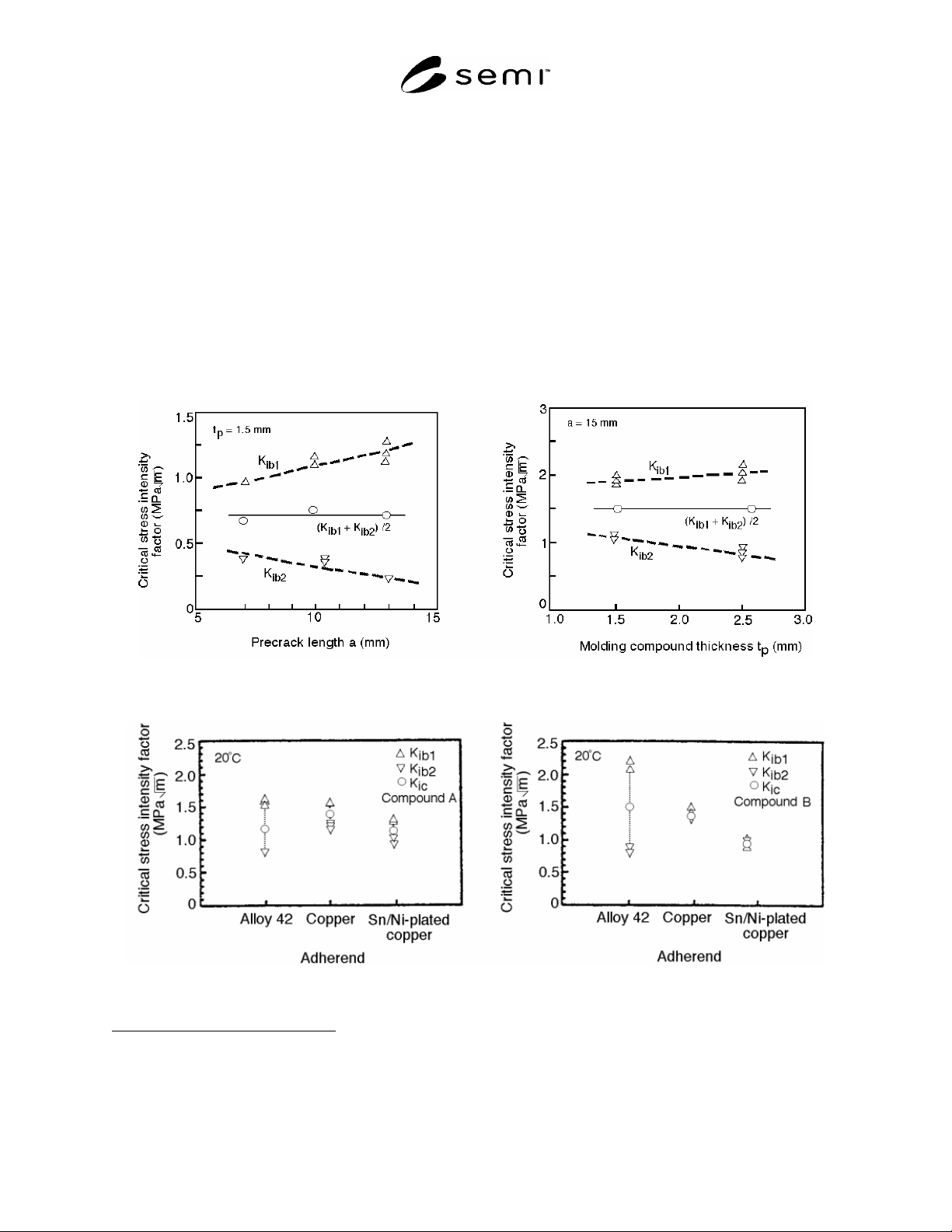
A1-3.1 Since the three-point bending method can eliminate the effect of residual stress and also that of stress
distribution on the interface (stress singularity at the adhering edges), the measurement results are almost
independent of sample dimensions (Figure A3-1
2
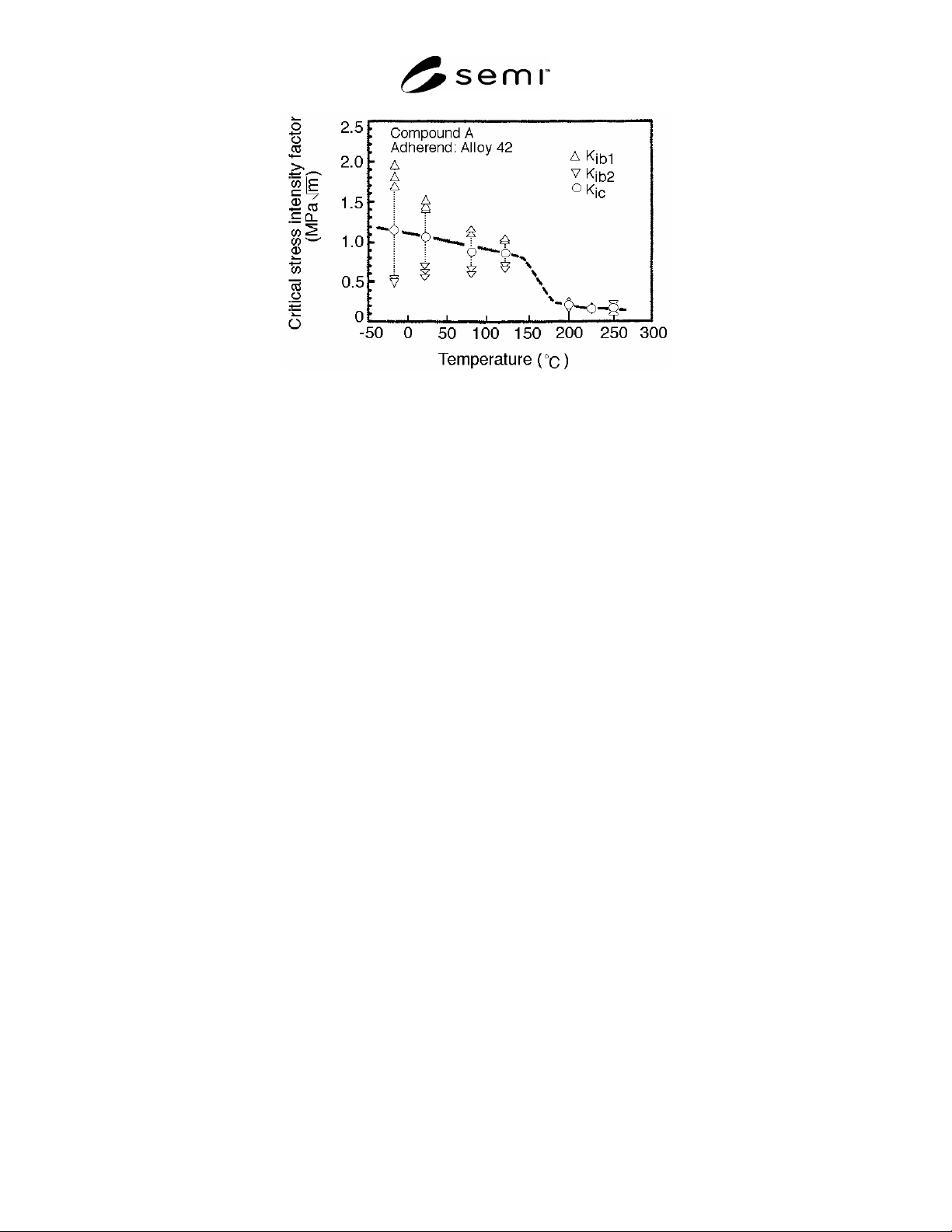
). This method can evaluate both the true adhesive strength and the
magnitude of residual stress; mainly due to the thermal expansion mismatch between materials, simultaneously
(Figures A3-2 and A3-3
3
).
Figure A3-1
Dependence of Measurement Results on Specimen Dimensions
Figure A3-2
Dependence of Adhesion Strengths on Adherend Material
2 A. Nishimura, I. Hirose, and N. Tanaka, “A New Method for Measuring Adhesion Strength of IC Molding Compounds”, ASME Journal of
Electronic Packaging, Vol. 114, pp. 407-412, 1992
3 A Nishimura amd N. Tanaka, “Measurement of IC Molding Compound Adhesion Strength and Prediction of Interface Delamination within
Package”, Advanced in Electronic Packaging, edited by T.R. Hsu et al., ASME, EEP-Vol. 10.2, pp. 765-773, 1995
SEMI G69-0996 © SEMI 1996, 2004 14
Figure A3-3
Temperature Dependence of Adhesion Strength