semi合集-English.pdf - 第1927页
SEMI E54.1-1000 © SEMI 1996, 2000 33 7.4.2.1 Sens or Class Att ributes — All r eq uired and “com m on optional” S class attributes are lis ted in Table 35 and described below . For an explanation of the table format, see…
SEMI E54.1-1000 © SEMI 1996, 2000 32
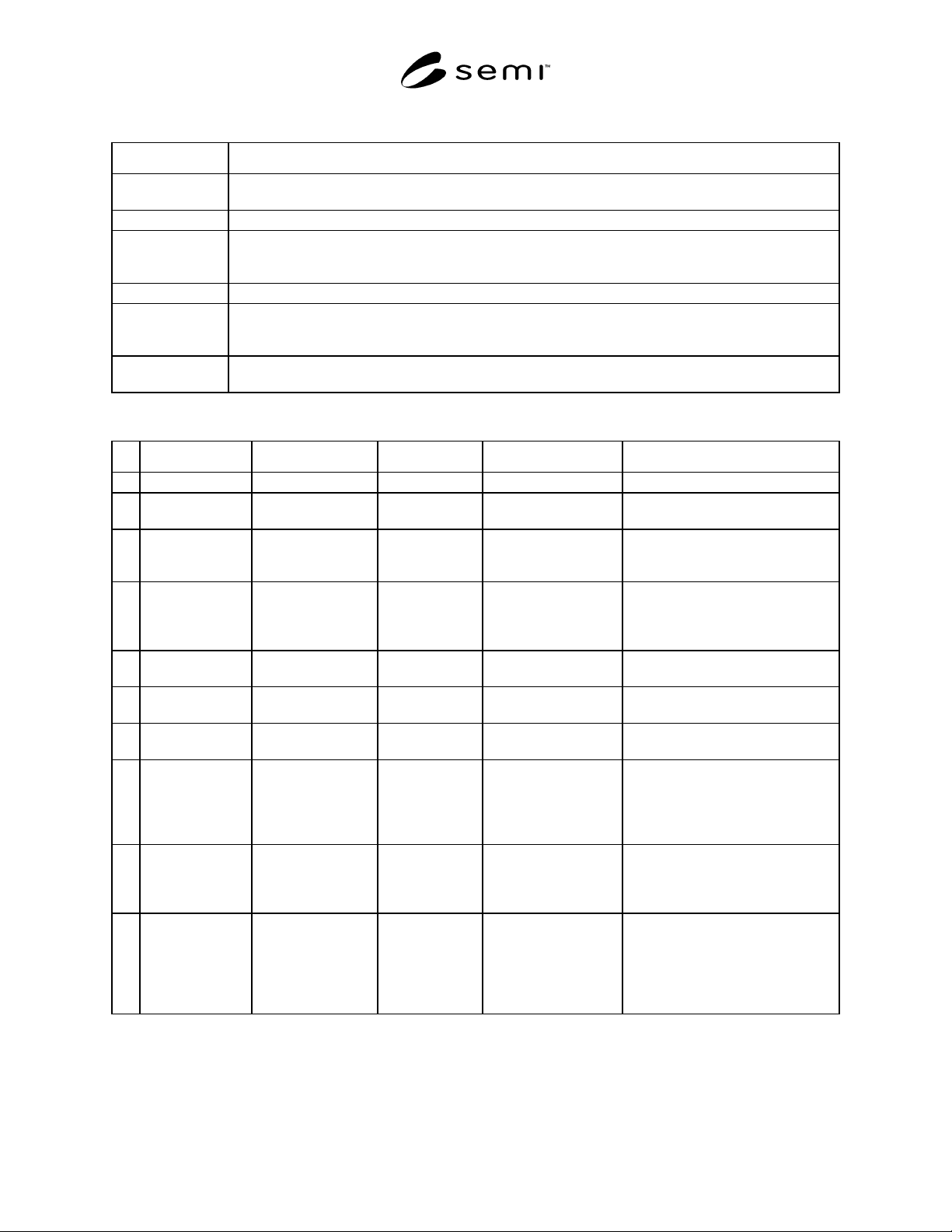
Table 33 AE Class Behavior State Description
State Description
NORMAL
OPERATING
Object instance exists. Object services can be processed.
RUNNING This is the entry sub-state to NORMAL OPERATING. Object instance is not in its ABORT state.
INITIALIZED This is the entry sub-state to NORMAL OPERATING and RUNNING. Object instance exists and has been
initialized. All attributes set to appropriate initial values (as indicated in an appropriate sensor/actuator
network specific device model specification).
RECOVERED Object instance is in an abort recovered state.
OPERATING This represents the entire collection of sub-states within RUNNING except INITIALIZED and
RECOVERED. The further delineation of this sub-state and transition into this sub-state is outside the scope
of this document.
ABORT Object instance is in an aborted state and is not running any application process; a detailed description of
this state is outside the scope of this document.
Table 34 AE Class Behavior State Transition Matrix*
# Current State Trigger New State Action Comment
1 RUNNING Abort request. ABORT Abort. Abort response. ABORT state is device-specific.
2 ABORT Recover request. RECOVERED Recover. Recover
response.
RECOVERED state is device-
specific.
3 NORMAL
OPERATING
Reset request. RUNNING Reset. Reset response. Valid for all sub-states of NORMAL
OPERATING. Move to RUNNING/
INITIALIZED.
4 NORMAL
OPERATING
GetAttribute,
SetAttribute,
RestoreDefault.
NORMAL
OPERATING
Get Attribute, Set
Attribute, Restore
Defaults. Appropriate
Response.
Valid for all sub-states of NORMAL
OPERATING.
5 NORMAL
OPERATING
Invalid service
request.
NORMAL
OPERATING
Error response. Valid for all substates of NORMAL
OPERATING.
6 ABORT Abort request,
Operate request.
ABORT Error response. Invalid request in this state.
7 RUNNING Recover request. RUNNING Error response. Recover service can only be invoked
while in ABORT state.
8 INITIALIZING Operate request. OPERATING Device-specific. Behavior associated with this
transition may be further specified in
an appropriate sensor/ actuator
network specific device model
specification.
9 RECOVERED Operate request. OPERATING Device-specific. Behavior associated with this
transition may be further specified in
an appropriate sensor/actuator
network specific device model.
10 OPERATING Operate request. OPERATING Operate response. Object remains in the OPERATING
state. Additional behavior associated
with this transition may befurther
specified in an appropriate
sensor/actuator network specific
device model.
* NOTE: Only generic behavior is indicated in this table.
7.4.2 Sensor (S) Class — The S class at the second level of the active element generalization hierarchy contains
structure and behavior common to all sensing element instances in a device.
SEMI E54.1-1000 © SEMI 1996, 200033
7.4.2.1 Sensor Class Attributes — All required and “common optional” S class attributes are listed in Table 35 and
described below. For an explanation of the table format, see Section 7.3.1. Note that the S class also inherits all AE
class attributes.
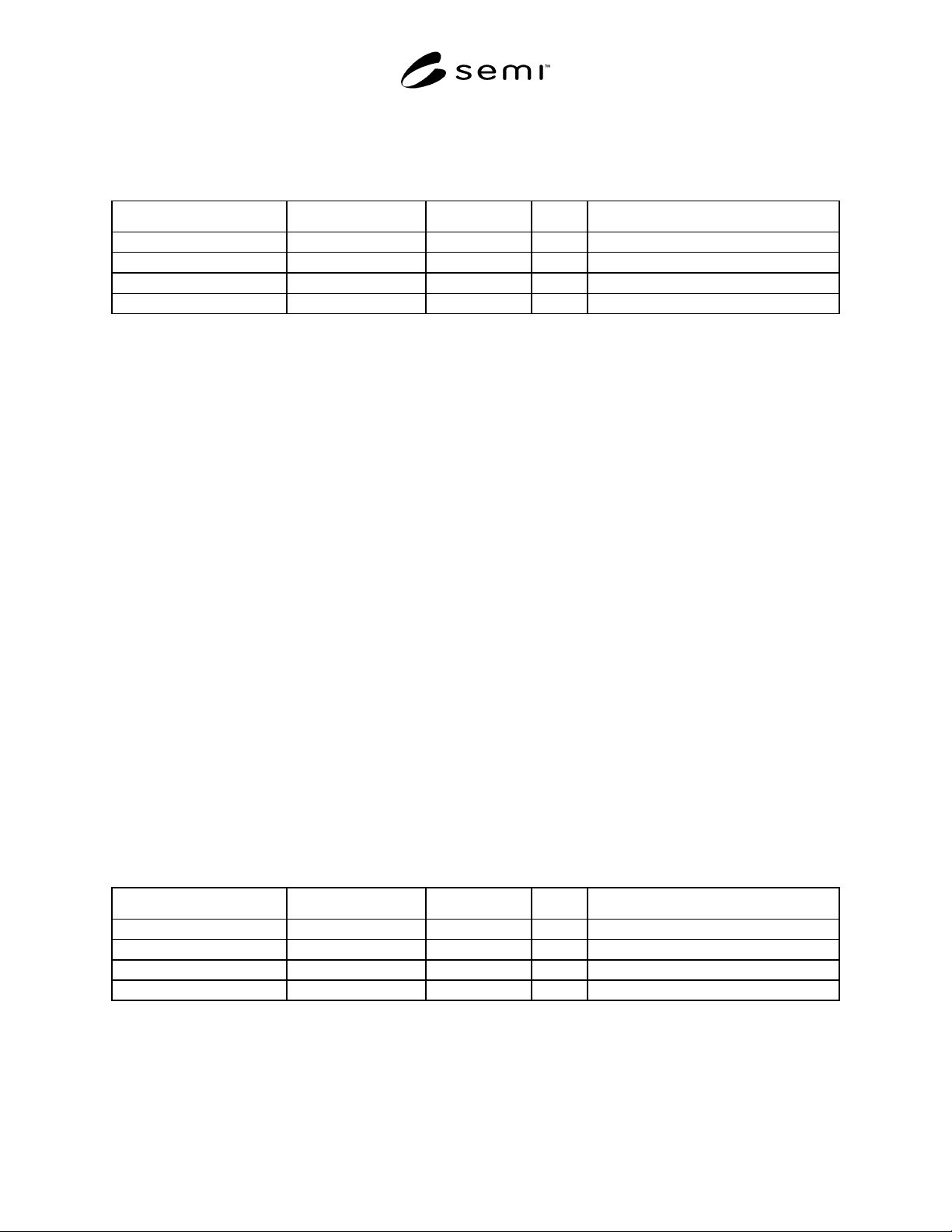
Table 35 S Class Attributes*
Attribute Name Attribute Identifier Access (Network) Rqmt Form
Value nA16** RO Y Context-Specific
ReportInhibitTimer nA17 RW N Context-Specific
EnableReportRate nA18 RW N Boolean
ReportRate nA19*** RW N Context-Specific
* A “Definition” column is not included. For attribute definitions, see text.
** Where ‘n’ is the type of the object instance to which the particular attribute is associated (e.g., Sai or Sbi), see Sections 7.4.4 through 7.4.8.
*** ID’s nA20 through nA63 are reserved for future S class attribute definition.
7.4.2.1.1 Value — The value of the sensor (associated with the object instance) that is to be conveyed. The form
and content of this attribute is context-specific.
7.4.2.1.2 ReportInhibitTimer — An attribute which is used to identify the absolute minimal time interval (i.e.,
maximum rate) for reporting the attribute “Value”; expressed in seconds. A value of zero indicates that there is no
minimal time interval.
7.4.2.1.3 EnableReportRate — An attribute which enables the reporting of the attribute “Value” based on the
“ReportingRate” attribute value; a value of TRUE signifies that the reporting at the “ReportingRate” is enabled.
7.4.2.1.4 ReportRate — An attribute which defines the time interval at which the attribute “Value” will be
reported; expressed in seconds.
7.4.2.2 Sensor Class Services — No S class common services are defined. Note that the S class inherits all AE
class services.
7.4.2.3 Sensor Class Behavior — The following applies to S class behavior:
Some form of measurement or other sensory activity is made by the active sensory element. This measurement is
converted into the appropriate data and becomes the value of the “Value” attribute. The method of conversion is
beyond the scope of this document.
No other S class common behavior is defined. Note that the S class inherits all AE class-defined behavior.
7.4.3 Actuator (A) Class — The A class at the second level of the active element generalization hierarchy contains
structure and behavior common to all actuator element instances in a device.
7.4.3.1 Actuator Class Attributes — All required and “common optional” A class attributes are listed in Table 36
and described below. For an explanation of the table format, see Section 7.3.1. Note that the A class also inherits all
AE class attributes.
Table 36 A Class Attributes*
Attribute Name Attribute Identifier Access (Network) Rqmt Form
Setting nA16** RW Y Context-Specific
SafeState nA17 RW N Context-Specific
WatchRate nA18 RW N Unsigned Integer < 65,536
WatchDog nA19*** RW N Boolean
* A “Definition” column is not included. For attribute definitions, see text.
** Where ‘n’ is the type of the object instance to which the particular attribute is associated (e.g., Aao or Ado), see Sections 7.4.4 through 7.4.8.
*** ID’s nA20 through nA63 are reserved for future A class attribute definition.
7.4.3.1.1 Setting — Specifies the value that is to be actuated by the actuator associated with the object instance.
The form and content of this attribute is context-specific.
SEMI E54.1-1000 © SEMI 1996, 2000 34
7.4.3.1.2 SafeState — Specifies the state in which the actuator will be placed for ABORT and INITIALIZING
states. Unless otherwise specified, this attribute is a Boolean type corresponding to Zero (or “no output”) or One (or
“full output”).
7.4.3.1.3 WatchRate — Specifies the rate at which the “Setting” attribute is to be refreshed (i.e., set externally). If
the “Setting” attribute is not refreshed at this rate, it reverts to its default value; expressed in (integer/100) hertz.
7.4.3.1.4 WatchDog — Enables or disables the capability of setting the “Setting” attribute to its default value due
to a refresh rate lower than specified by the “WatchRate” attribute value; a value of TRUE signifies that the
WatchRate functionality is enabled.
7.4.3.2 Actuator Class Services — No A class common services are defined. Note that the A class inherits all AE
class services.
7.4.3.3 Actuator Class Behavior — The following applies to A class behavior:
Some form of actuation activity is made by the active actuation element. The value of the “Setting” attribute is
converted into the appropriate signal to cause the desired actuation.
A class-defined behavior associated with the “WatchRate” and “WatchDog” attributes is defined in Section 7.4.3.1
(above). No other A class common behavior is defined. Note that the A class inherits all AE class-defined behavior.
7.4.4 Controller (C) Class — The C class at the second level of the active element generalization hierarchy
contains structure and behavior common to all controller element instances in a device. Note that, as discussed in
Section 7.4, since this is the lowest level of class description in the generalization hierarchy for this device type (see
Figure 7), object instances can be created as instances of this class type.
7.4.4.1 Controller Class Attributes — All required and “common optional” C class attributes are listed in Table 37
and described below. For an explanation of the table format, see Section 7.3.1. Note that the C class also inherits all
AE class attributes.
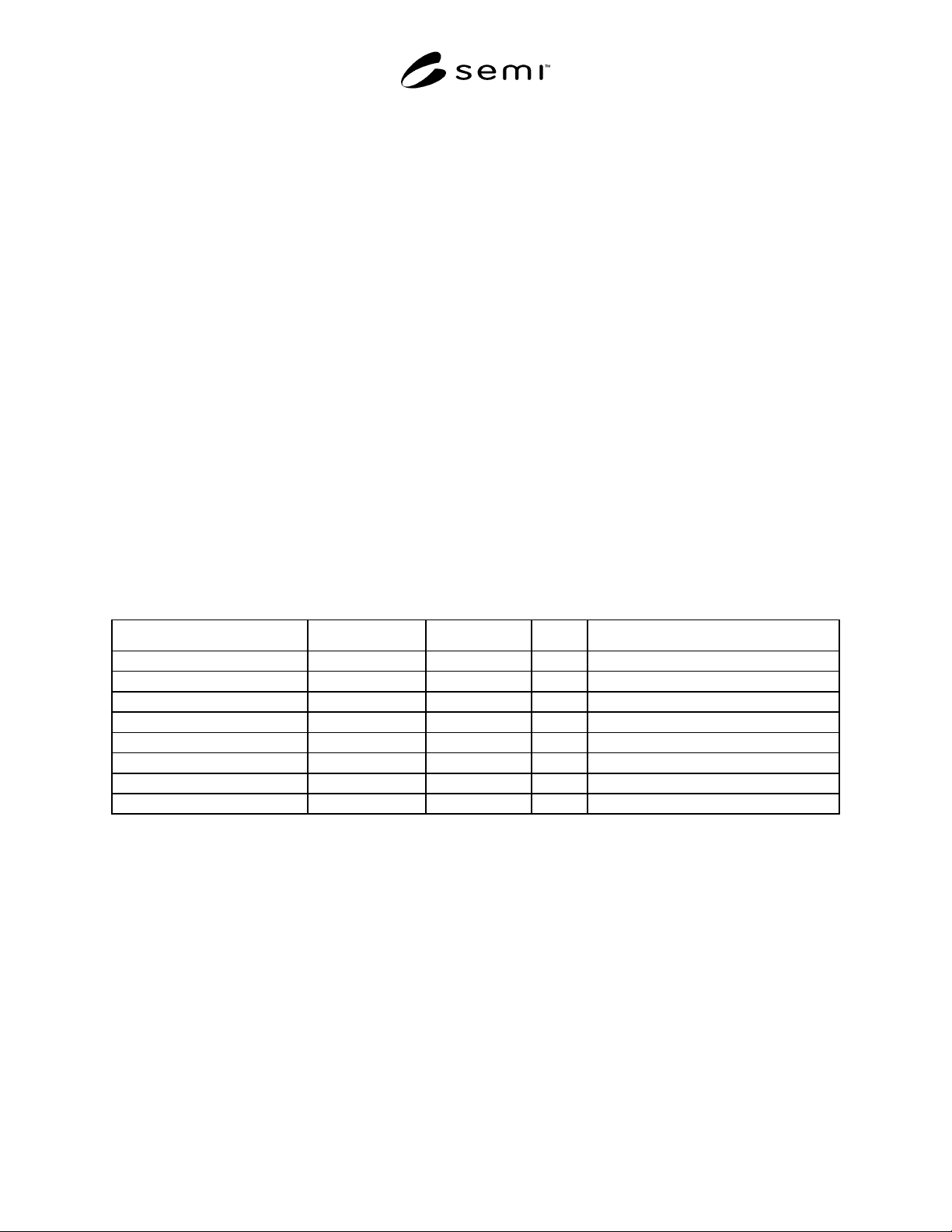
Table 37 C Class Attributes*
Attribute Name Attribute Identifier Access (Network) Rqmt Form
Setpoint CA16 RW Y Context-Specific
ProcessVariable CA17 RW N Context-Specific
ControlVariable CA18 RW N Context-Specific
DataType CA19 RW N Context-Specific
AlarmSettleTime CA21 RW N Context-Specific
AlarmErrorBand CA22 RW N Context-Specific
WarningSettleTime CA24 RW N Context-Specific
WarningErrorBand CA25 RW N Context-Specific
* A “Definition” column is not included. For attribute definitions, see text.
** ID’s CA27 through CA63 are reserved for future C class attribute definition.
7.4.4.1.1 Setpoint — This attribute specifies the value to which the Process Variable will be controlled via the
Control Variable. This is one of the inputs of a classic single-stage closed-loop controller. The setpoint attribute
value is expressed in units identified by the “DataUnits” attribute.
7.4.4.1.2 ProcessVariable — This attribute value is the measurement of the process being controlled. This is one of
the inputs of a classic single-stage closed-loop controller.
7.4.4.1.3 ControlVariable — This attribute value is the control signal being sent to the process controlling element.
This is the output of a classic single-stage closed-loop controller.
7.4.4.1.4 DataType — An attribute which defines the format of the data associated with “Value” attribute
(inherited) of the object instance.