semi合集-English.pdf - 第2757页
SEMI E98-1102 © SEMI 2000, 2002 22 10.4.4.7 SubstrateLoca tion Object — The S ubstrateLocation object i s defined in SEMI E90 (STS). STS defines SubstID as an attribute of SubstrateLocation. No te th is is identical to M…
SEMI E98-1102 © SEMI 2000, 2002 21
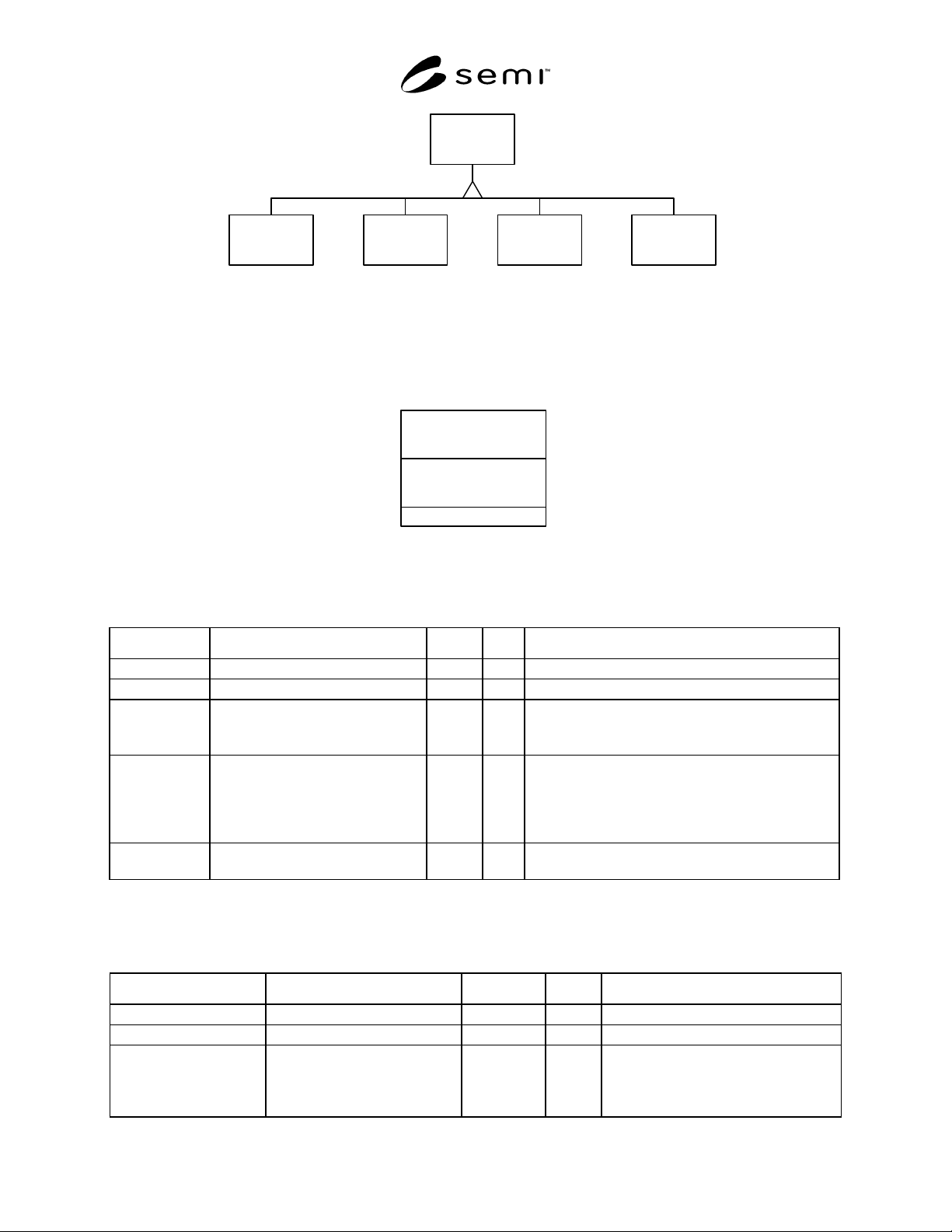
Material
Location
Consumables
Location
Substrate
Location
Carrier
Location
Process
Durable
Location
Figure 11
MaterialLocation Subtypes
10.4.4.5 MaterialLocation Object — Figure 12 shows the attributes of the MaterialLocation that are defined in
Table 6. Every subtype of MaterialLocation shall have, at a minimum, attributes showing its current state and the
ID of any material present.
LocationState
MaterialType
MaterialID
Material
Location
Figure 12
MaterialLocation Object Type
Table 6 MaterialLocation Attribute Definitions
Attribute Name Definition Access Reqd Form
ObjType Object type RO Y Text=“MatlLoc”
ObjID Object identifier RO Y Text
LocationState Current state. RO Y Enumerated:
Occupied
Unoccupied
MaterialType Type of material held. RO Y Enumerated: One of, or a subtype of, the following
Consumable
Carrier
Substrate
ProcessDurable
MaterialID Identifier of any material that
occupies the location.
RO Y Text. “Unknown” if identifier is not known. Null
(empty) string if location is unoccupied.
10.4.4.6 CarrierLocation Object — The CarrierLocation attribute LocationState may allow an additional
enumeration Not Aligned, as shown in Table 7.
Table 7 CarrierLocation Attribute Definitions
Attribute Name Definition Access Reqd Form
ObjType Object type RO Y Text=“CarrierLoc”
ObjID Object identifier RO Y Text
LocationState Current state. RO Y Enumerated:
Occupied
Unoccupied
Not aligned
SEMI E98-1102 © SEMI 2000, 2002 22
10.4.4.7 SubstrateLocation Object — The SubstrateLocation object is defined in SEMI E90 (STS). STS defines
SubstID as an attribute of SubstrateLocation. Note this is identical to MaterialID in the general case for
MaterialLocation.
10.4.5 AbstractEquipmentSubsystem Requirements
10.4.5.1 AbstractEquipmentSubsystems may or may not be able to hold material.
10.4.5.2 The AbstractEquipmentSubsystem owns all of the MaterialLocations that it provides or that are provided
by one of its components. Similarly, it owns all of the Material at those MaterialLocations.
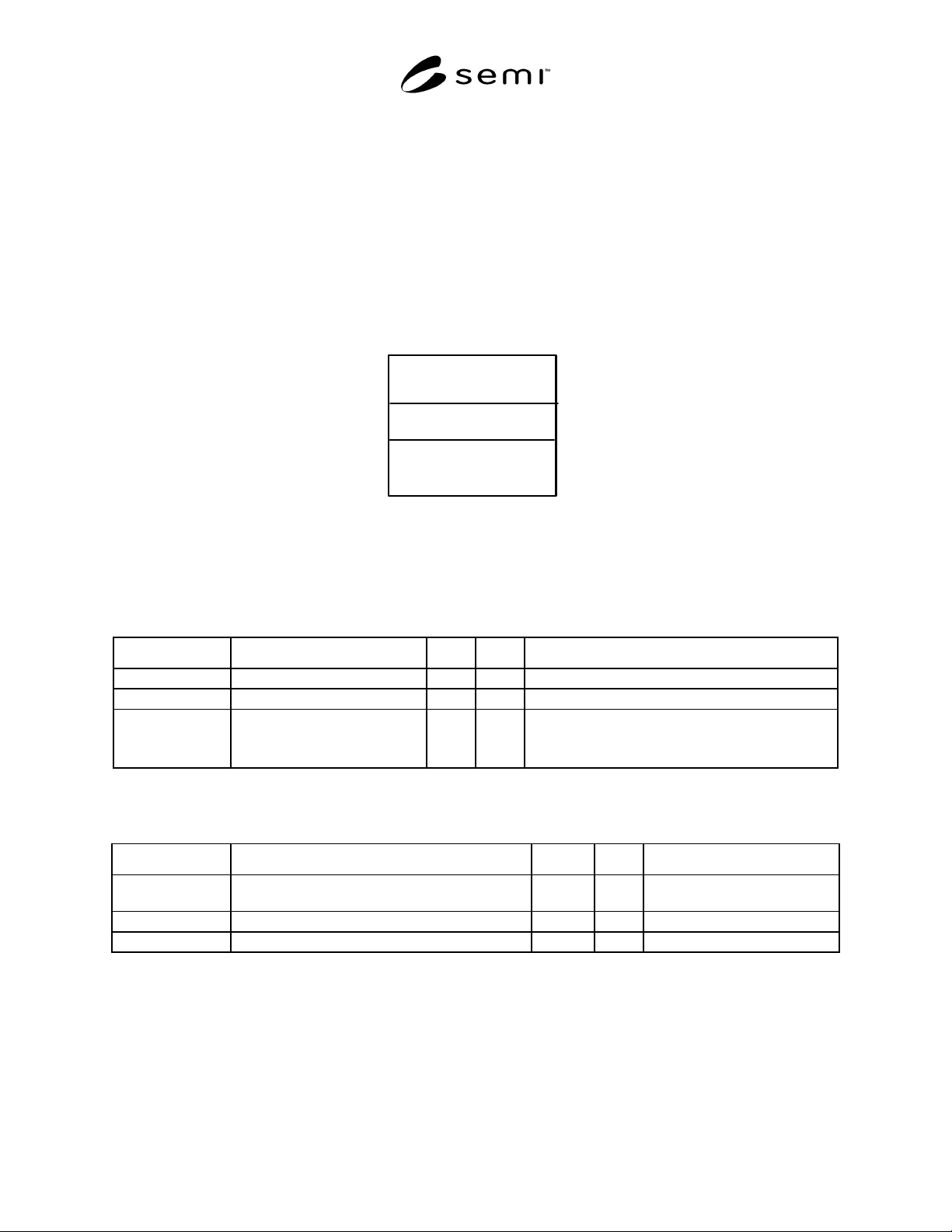
10.4.6 AbstractEquipmentSubsystem Type — Figure 13 shows the diagram for the AbstractEquipmentSubsystem
object.
Abstract Equipment
Subsystem
MaterialSummary
AddElement
RemoveElement
Figure 13
AbstractEquipmentSubsystem Object Type
10.4.7 AbstractEquipmentSubsystem Attributes
10.4.7.1 Table 8 defines the attributes of the AbstractEquipmentSubsystem.
Table 8 AbstractEquipmentSubsystem Attribute Definition
Attribute Name Definition Access Reqd Form
ObjType Object type RO Y Text=“AbstractEqpSubsystem”
ObjID Object identifier RO Y Text
MaterialSummary List of specifications of material
capacity and current status for
each type of material.
RO N List of
structure composed of
MaterialType, MaterialCapacity, and MaterialCount.
10.4.7.2 Table 9 defines individual elements of AbstractEquipmentSubsystem attributes.
Table 9 Definition of Elements of MaterialSummary Attribute
Element Name Definition Access Reqd Form
MaterialCapacity Number of units of material that can be held at one
time.
RO Y Unsigned integer.
MaterialCount Current number of units of material present. RO Y Unsigned integer.
MaterialType Specifies the type of material held. RO Y Text. Conforms to SEMI E5.
10.4.8 AbstractEquipmentSubsystem Services
10.4.8.1 Add Element
10.4.8.1.1 The user may be able to instruct the equipment to add a specific type of AbstractEquipmentElement. The
supplier may restrict this service to specific AbstractEquipmentElement subtypes, both in destination (the
AbstractEquipmentElement accepting the addition) and in the added element. This is an optional service.
SEMI E98-1102 © SEMI 2000, 2002 23
10.4.8.1.2 A typical kind of AbstractEquipmentElement that the user may want to add is an “add-on sensor”, a
SensorActuatorDevice on a Sensor/Actuator Network. If the Equipment knows the properties, it is possible for it to
read an added I/O device and to reference it within recipes.
10.4.8.2 Remove Element — The user may instruct the equipment to remove an AbstractEquipmentElement that
was added earlier. This service is required wherever the Add Element service is supported.
10.4.9 EquipmentSubsystem Object
10.4.9.1 The EquipmentSubsystem is a concrete subtype of AbstractEquipmentSubsystem. It inherits all of the
attributes, state models, and services of the AbstractEquipmentSubsystem and in addition defines the rules for
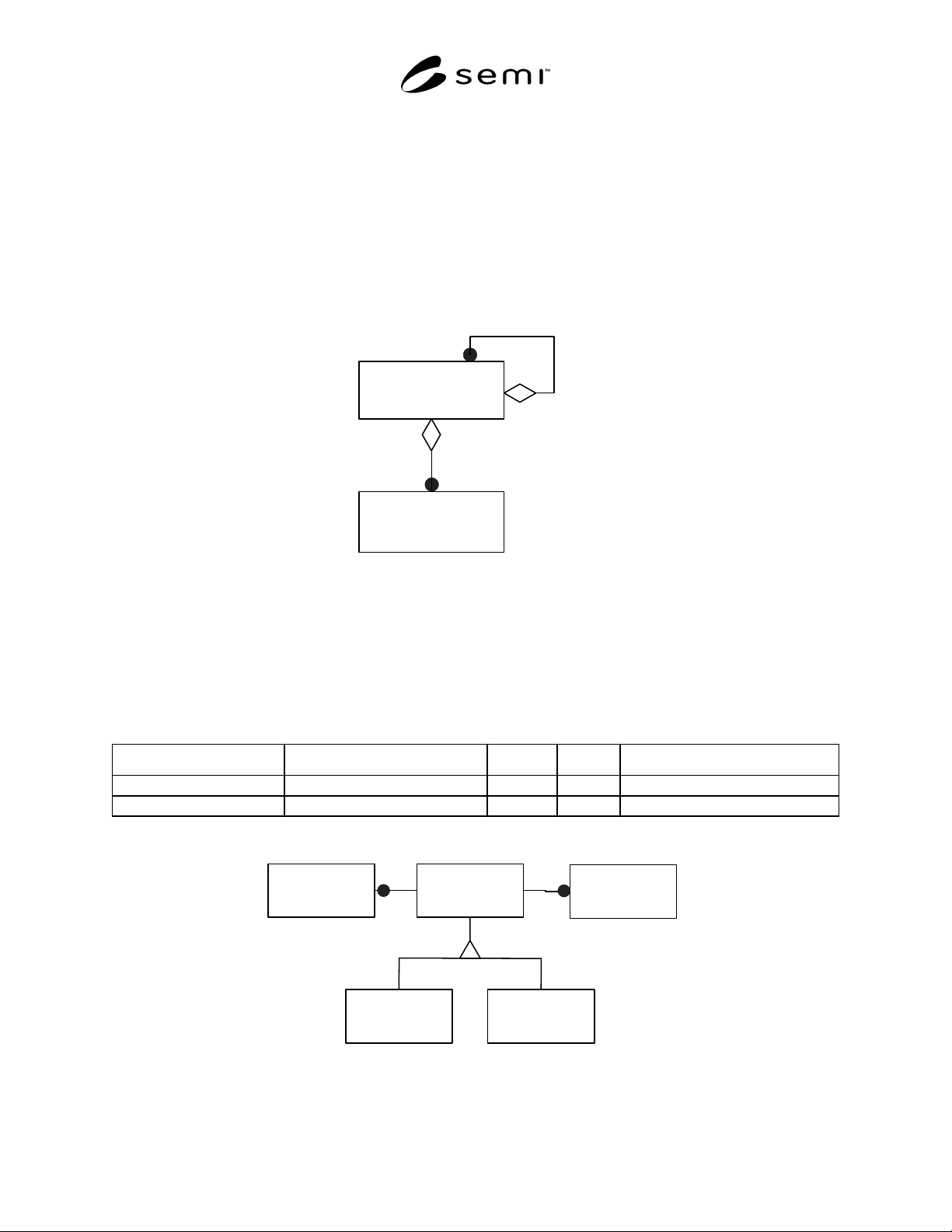
aggregation. These rules are illustrated in Figure 14.
M + N >= 1
Equipment
IODevice
Equipment
Subsystem
M
N
Figure 14
EquipmentSubsystem Aggregation
10.4.9.2 As shown in Figure 14, the EquipmentSubsystem may be made up of other, smaller EquipmentSubsystems
and/or EquipmentIODevices. It is required to have at least one of these two components.
Table 10 EquipmentSubsystem Attribute Definition
Attribute Name Definition Access Reqd Form
ObjType Object type RO Y Text = “EqpSubsystem”
ObjID Object identifier RO Y Text.
10.5 AbstractEquipmentModule Object
Equipment
Module
Recipe
Executor
Process
Matching
Abstract
Equipment
Module
Equipment
Figure 15
AbstractEquipmentModule Types