semi合集-English.pdf - 第3213页
SEMI E127-0705 © SEMI 2003, 2005 14 Attribute Name Definition Access Reqd Form EventList List of event name/event number pairs. RO Y List of text/integ er pairs. RetentionRules Retention Ru les supported by the IMM. RO Y…
SEMI E127-0705 © SEMI 2003, 2005 13
11.2.2 The IMM Service state model shows its availability for process jobs. It has two states, IN SERVICE and
NOT IN SERVICE. The IMM shall only accept or initiate process jobs while in the IN SERVICE state.
11.2.3 State Definitions
11.2.3.1 IN SERVICE — In this state, the IMM is capable of performing all its normal activities for measurement. It
is able to accept and execute a process job or may be currently executing a process job. No faults or exceptions exist
that would interfere with its capability of loading, measuring, and unloading a substrate.
11.2.3.2 NOT IN SERVICE — In this state, the IMM shall not accept new process jobs or initiate execution of
existing process jobs. It may be able to perform special services required for maintenance and diagnostics, including
calibration and associated loading/unloading activities. Either the external Control Client or the IMM may put it in
an NOT IN SERVICE state. Once put into NOT IN SERVICE, only the one who put it NOT IN SERVICE may
change the state back to IN SERVICE. This is reflected in the two substates, EXTERNAL SELECT and
INTERNAL SELECT.
11.2.3.3 EXTERNAL SELECT — The Control Client has placed the IMM out of service.
11.2.3.4 INTERNAL SELECT — The IMM has placed itself out of service due to a fault condition.
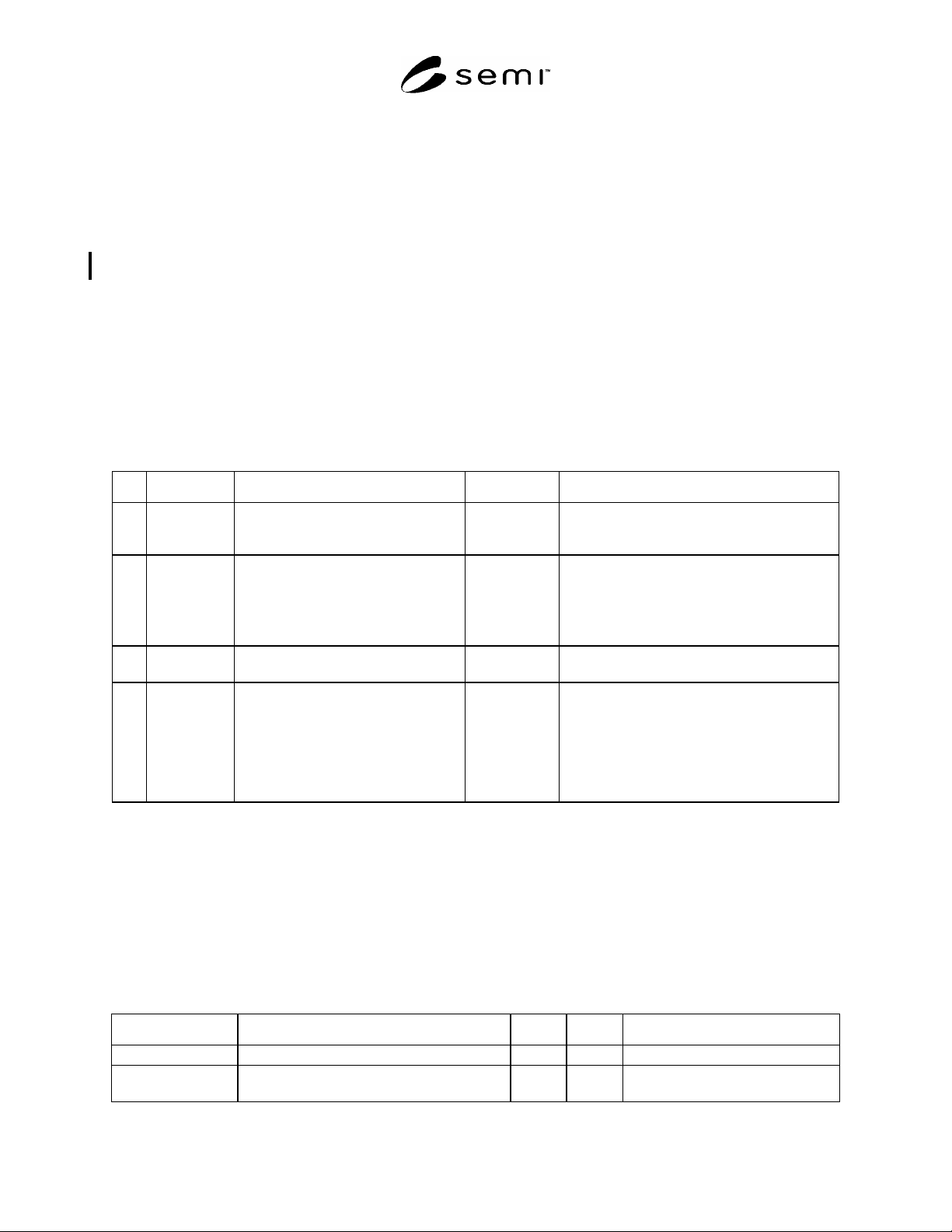
11.2.4 Service State Model Transitions — Transitions are defined for the Service State Model in Table 1.
Table 1 Service State Model Transitions
# Previous State Trigger New State Comment
1 (no state) IMM initialization. IN SERVICE
or NOT IN
SERVICE
Initial state is determined first by existence of
exceptions or alam conditions. If none, then
initial state shall be the last known state.
2 IN SERVICE The IMM detects one of the conditions
for NOT IN SERVICE
OR
The IMM client has issued a
ChangeService request.
NOT IN
SERVICE
Transitions 2 and 4 are combined for reporting
purposes.
3 NOT IN
SERVICE
The IMM or communications partner
has returned the IMM to IN SERVICE.
IN SERVICE
4 System
initialization
or
IN SERVICE
Entry into NOT IN SERVICE:
4-1 Following system initialization,
4-2 IMM initiated state change, and
4-3 Client requested state change.
EXTERNAL
SELECT
(trigger 4-3)
or INTERNAL
SELECT
(triggers 4-1 or
4-2)
Transitions 2 and 4 are combined for reporting
purposes.
11.2.5 The Control Client may request a state change through a Service request at any time.
11.2.6 A transition to OUT OF SERVICE shall not interrupt any process job currently executing. It is
recommended that all transitions to OUT OF SERVICE be delayed until such process jobs have completed, either
normally or abnormally. This avoids confusion or an unintended internally-generated abort of process jobs. Process
jobs must be aborted separately and deliberately when necessary.
11.3 Object Attributes
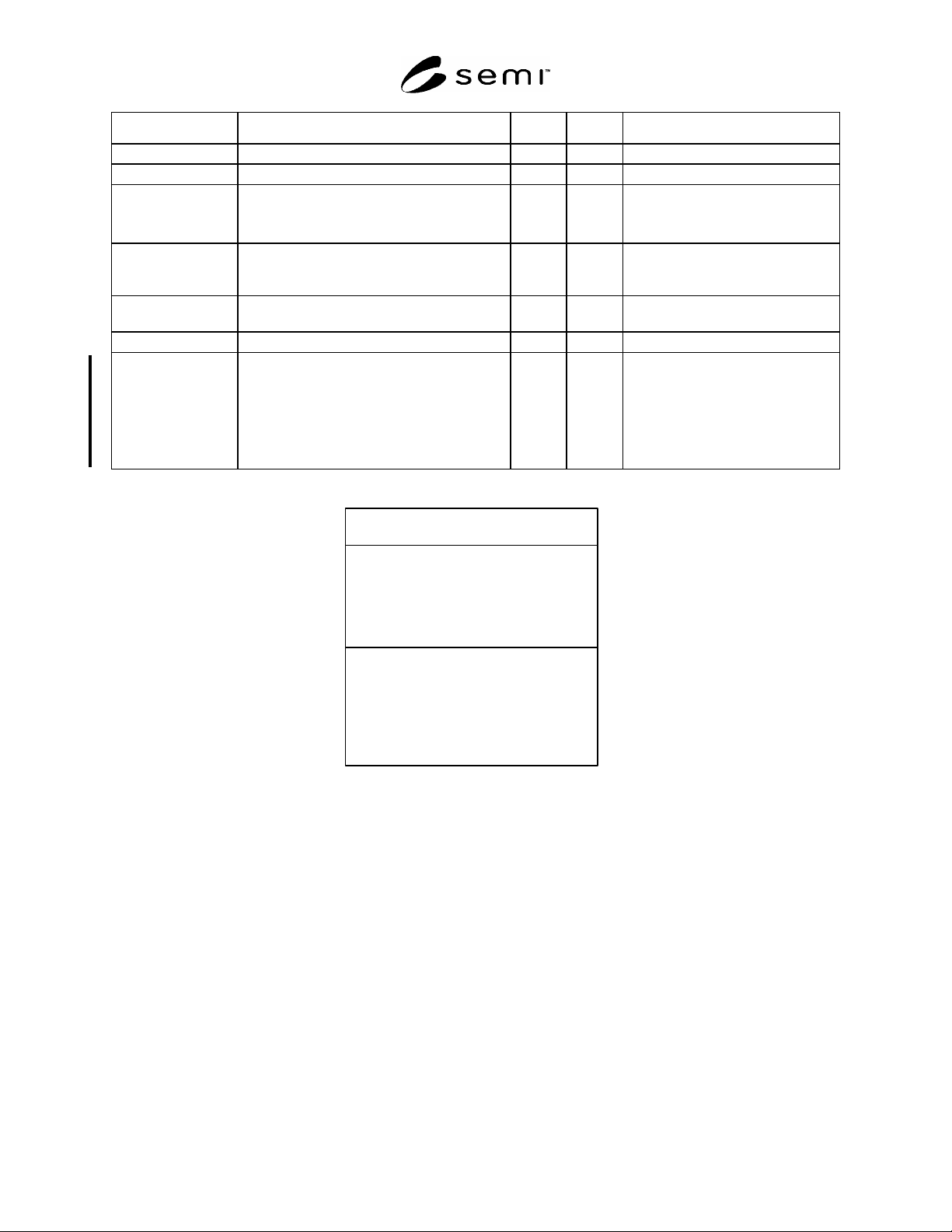
11.3.1 Table 2 defines the attributes of the IMM Object as shown in Figure 3.
Table 2 IMM Object Attribute Definitions
Attribute Name Definition Access Reqd Form
ObjType Defines object type. RO Y Text = “EquipmentModule”
ObjID Identifier of specific module. RO Y Conforms to requirement of ObjID
(SEMI E39).
SEMI E127-0705 © SEMI 2003, 2005 14
Attribute Name Definition Access Reqd Form
EventList List of event name/event number pairs. RO Y List of text/integer pairs.
RetentionRules Retention Rules supported by the IMM. RO Y List of 0+ conditions.
Service Current status of the Service State Model. RO Y Enumerated:
InService
NotInService
SubstrateList A list of zero or more ObjID for all substrates
currently within the IMM, regardless of
location.
RO Y List of 0+ text.
TableCapacity Indicates maximum number of tables that may
be stored.
RO Y Integer.
TableCount Indicates number of tables currently stored. RO Y Integer.
TableStorageAlert Remaining table storage capacity. Either the
number of additional tables that can be stored
(integer) or the remaining percentage of total
capacity (floating point) available. When
remaining capacity reaches this value, the
Table Storage Capacity Warning event
message is sent.
RO Y Integer or floating point
IMM
EventList: list of text/integer pairs
RetentionRules: list of retention rule
Service: enumeration
SubstrateList: list of text
TableCapacity: integer
TableCount: integer
TableStorageAlert: integer or float
ChangeService
ClientConnect
ClientDisconnect
RequestRetentionConditions
SetAutoTableSend
SetRetentionConditions
TableRequest
TableSend
Figure 3
IMM Object
11.3.2 The attribute EventList identifies all of the errors that may be generated by the IMM object. Each such event
shall have both a descriptive name and a numeric identifier, each of which shall be unique within the EventList list.
11.3.3 The attribute TableCapacity identifies the maximum number of tables that the IMM is capable of storing.
The client may use this information for determining its own retention rules.
11.3.4 Retention Conditions — A question of concern to the IMM is the method of determining when a data table is
no longer required. Each client is able to select individual conditions for retaining raw data and conversion tables.
These conditions are the client-selected RetentionRules.
11.3.4.1 The IMM has a RetentionRules attribute that lists the specific retention rule elements supported by the
IMM (see Table 3 for definitions of retention rule elements). An empty (null) list signifies that there are no
retention rules that can be met to cause the table to be either deleted or retained.
11.3.4.2 The IMM maintains a list of rules for each client. This is a single level or two level list of rules from the
RetentionRules list. This list is available on the RequestRetentionRules request by the client and is not publicly
available as an attribute.
SEMI E127-0705 © SEMI 2003, 2005 15
11.3.4.2.1 Once all retention rules have been satisfied for a given table for all clients, the IMM may delete the table
at its own discretion based on internal requirements that are outside the scope of this standard. The IMM is
responsible for managing both its storage space and those tables that do not need to be retained for any client.
11.3.4.2.2 As a single level list, when any item list is satisfied, the table may be deleted (a logical OR condition).
11.3.4.2.3 If one or more conditions need to be satisfied before a table may be deleted (a logical AND condition),
the items should appear as a list of RetentionRules that occupy one element of the top level list. For instance, if the
retention rule is that conditions A and B both need to be met, or condition C must be met, then the
DefaultDataRetention rule is a two element list with one element being a 2 item list of A and B and the other is just
condition C:
(A,B), C
11.3.4.2.4 An empty (null) list is equivalent to a “No Retention Rule” condition.
11.3.4.2.5 Actual representation of this list is dependent upon the communication protocol used.
11.3.4.3 Until or unless set by the client, the client’s retention rule is a zero element list, signifying that no retention
rule has been set.
11.3.4.4 Except when required by automatic rollover (¶11.3.5.2), no IMM Data Table Object shall be deleted until
all client retention rules have been satisfied.
11.3.4.5 The definitions of individual standard retention rule elements are provided in Table 3. Additional rules
may be defined in the future. All of the individual rules shall be integers, where a non-value indicates that this rule
is enabled. Otherwise it is disabled. The default value for each element is zero.
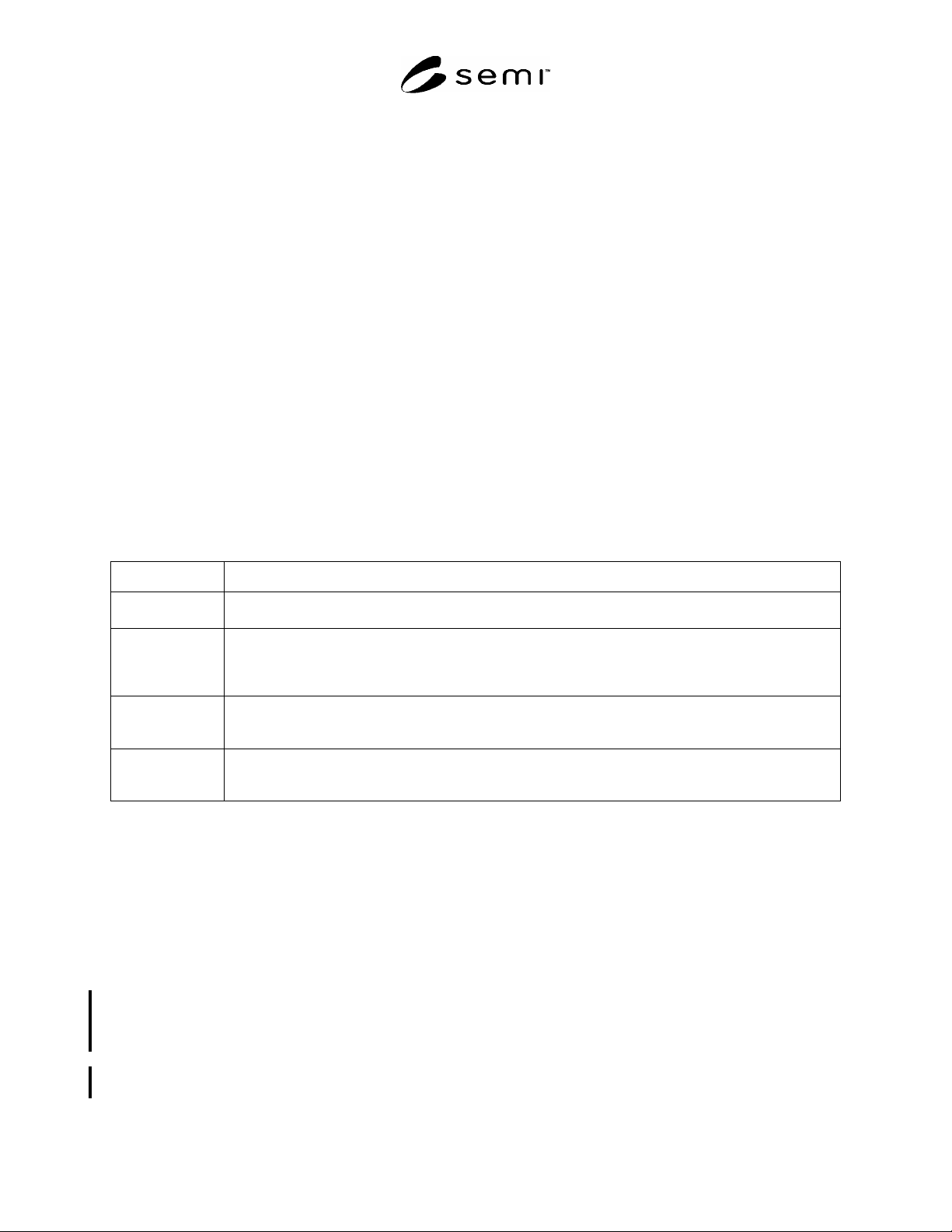
Table 3 Retention Rule Element Definitions
Retention Rule Definition
After Transfer The table may be deleted after it has been sent to the client. Any non-zero value indicates that this rule is
enabled. A value of zero disables it.
Client Delete If ClientDelete is non-zero, tables are retained until deleted by the client. However, each time the table
capacity drops below the value in ClientDelete, the TableStorageCapacityWarning event is generated and
sent to the client, so the client can then delete tables no longer needed. If the client fails to delete sufficient
tables, then the Automatic Rollover deletes the oldest tables as described below.
Maximum Tables
Stored
This rule sets a value for the maximum number of tables that should accumulated before Automatic Rollover
takes effect and the oldest table(s) are deleted when there is insufficient room to store a new table.
Maximum value for this rule is Table Capacity – 1.
RetentionTime The value in RetentionTime indicates the maximum length of time, in hours, that a table should be retained
in storage. The table may be deleted after this period of time has expired. Any internal timers used are not
visible to the client.
11.3.5 Table Storage Management — All tables shall be stored in non-volatile storage once they have been
completed.
11.3.5.1 Calibration Table — The latest instance of Calibration Table shall always be retained in storage.
11.3.5.2 Automatic Rollover — In the event that there is not enough storage capacity remaining to store a new table,
then the oldest tables of the same type as the new table (for either raw data or converted data) shall be deleted, one at
a time, until there is room to store the new table, regardless of the presence or absence of retention rules.
NOTE 4: The size of Raw Data Table Objects and Converted Data Table Objects may be significantly different.
11.3.5.3 TableStorageAlert is a constant determined by the supplier that represents either the approximate number
of tables (total) that may still be stored, or a percentage of total remaining storage capacity (TableCapacity). When
the remaining capacity drops to the level indicated by TableStorageAlert, a Table Storage Capacity Warning event is
sent (¶11.4.5).
11.4 System Initialization — Whenever the Integrated Measurement Module is powered on or reset, it goes through
a system initialization before it is acknowledges communications with, or establishes, any potential client.