semi合集-English.pdf - 第611页
SEMI E84-0305 © SEMI 1999, 2005 9 Signal Name P/A Description Specifies the load port used for carrier handoff. One PI/O device per Load Port. OFF: Not used One PI/O device per 2 load ports. ON: Use the right load port f…

SEMI E84-0305 © SEMI 1999, 2005 8
Signal Name P/A Description
HO_AVBL P -> A Indicates the passive equipment is not available for the handoff. It may also indicate error in the
passive equipment.
ON: handoff is available
OFF: handoff is unavailable with any error
This signal is ON while the passive equipment’s operation is normal. This signal shall be turned OFF
when the passive equipment detects an exception for the handoff. This signal might be kept OFF, when
other load ports of the passive equipment detect exceptions. The exceptions include:
- Carrier detection is not correct.
- The passive equipment has been changed to manual access mode.
- The passive equipment is in handoff unavailable state.
Examples of exceptions involving HO_AVBL are included in the Application’s notes.
This signal indicates the state of the passive equipment to the active equipment before the start of the
handoff.
See SEMI E87 for additional information and requirements about loadport access modes and
availability states.
ES P -> A Request to stop active equipment activity immediately.
ON: normal operation
OFF: request to stop
Normally active equipment may monitor the ES signal from VALID ON to VALID OFF.
This signal is turned OFF to stop the handoff operation immediately when a hazardous situation is
detected by the passive equipment. Hazardous situations include possible harm to material, product, or
operation. This signal is ON while the passive equipment’s operation is normal. It turns OFF when the
passive equipment needs to stop the activity of the active equipment. The passive equipment may turn
the ES signal off when the ES button is pressed or, a handoff interlock abnormal has occurred.
VA P -> A Notifies active entity of passive OHS vehicle arrival.
Indicates that the interface communication is valid when the vehicle has arrived at the load port.
ON: Vehicle has arrived and communication is valid.
OFF: Vehicle has not arrived and communication is not valid.
Before this signal is turned ON, the load port must be specified by the signal VS_0 and/or VS_1.
Note: This signal is for interbay passive OHS vehicle use only.
AM_AVBL A -> P Notifies passive OHS vehicle of handling arm availability.
Indicates the active stocker is not available for handoff operation.
It may also indicate error in the active stocker.
ON: Handoff is available.
OFF: Handoff is unavailable with any error.
This signal is ON while active stocker’s operation is normal. This signal is turned OFF, when the
active stocker detects some exceptions. This signal might be kept OFF, when loader’s of the active
stocker detects exceptions. The exceptions include:
- The active stocker has been changed to manual access mode.
- The active stocker is in handoff unavailable state.
- When the active stocker detected off the HO_AVBL signal of passive OHS.
This signal indicates the state of the active stocker to the passive OHS vehicle before the start of
handoff operation.
Note: This signal is for interbay passive OHS vehicle use only.
VS_0 P -> A Signal for the passive OHS vehicle to notify the active of the load or unload position.
Specifies the load port used for carrier handoff.
One PI/O device per Load Port.
ON: Use the load port for carrier handoff.
OFF: N/A
One PI/O device per 2 load ports; but vehicle does not move when accessing to 2 load ports.
ON: Use the left load port for handoff.
OFF: Do not use the left load port for handoff.
Note: This signal is for interbay passive OHS vehicle use only.
VS_1 P -> A Signal for the passive OHS vehicle to notify the active of the load or unload position.
SEMI E84-0305 © SEMI 1999, 2005 9
Signal Name P/A Description
Specifies the load port used for carrier handoff.
One PI/O device per Load Port.
OFF: Not used
One PI/O device per 2 load ports.
ON: Use the right load port for handoff.
OFF: Do not use the right load port for handoff.
Note: This signal is for interbay passive OHS vehicle use only.
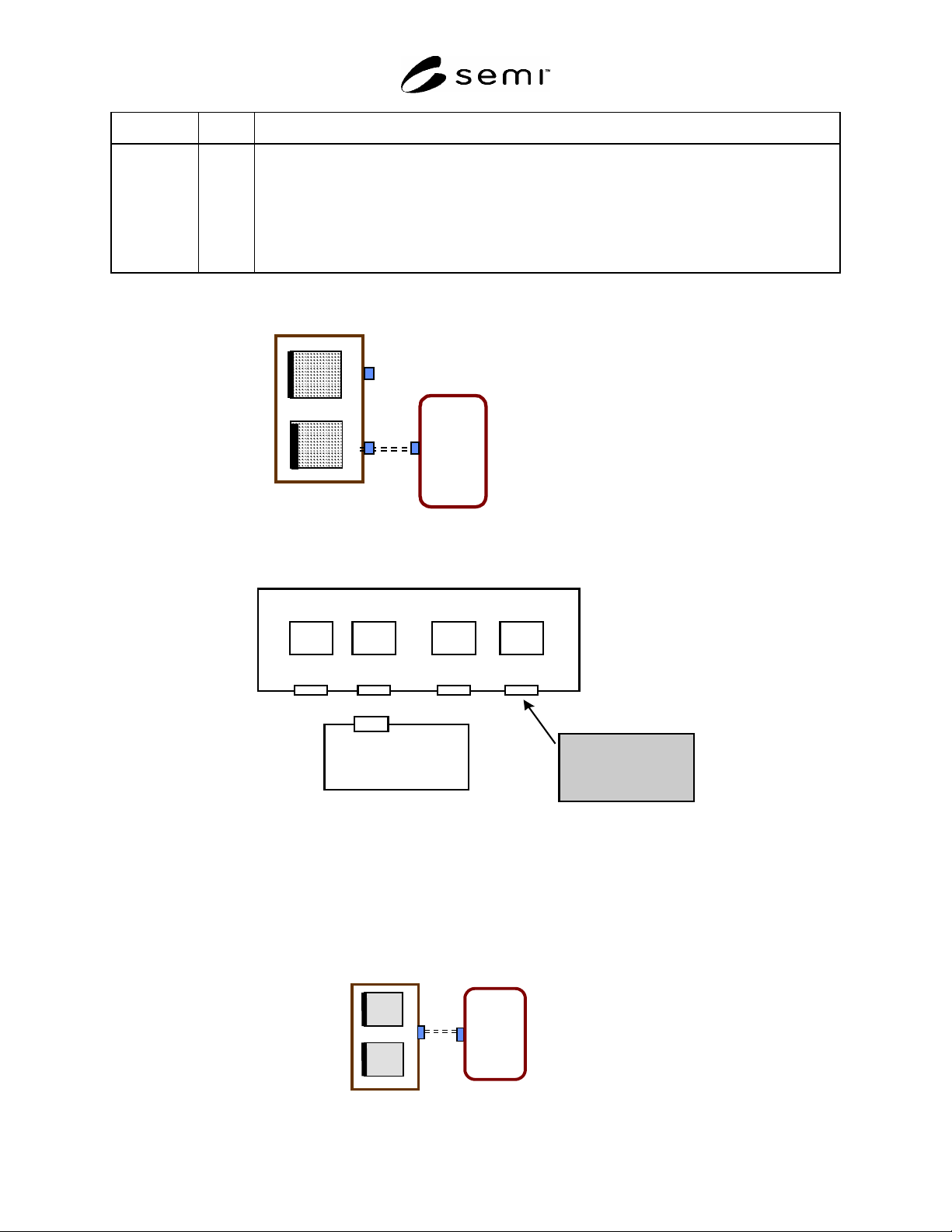
AGV / RGV / OHT / OHS(active type)
Passive
Equipment
PI/O
PI/O
Figure 4
One Parallel I/O Interface for Each Load Port
LP4
LP 3LP2LP1
Passive Equipment
PI/O #1 PI/O #2 PI/O #3 PI/O #4
A
GV/RGV/OHT/OHS(active type)
A
t each PI/O
CS_0 is ON
CS_1 is OFF
NOTE 1: This figure shows logical concept only. Physical location is not defined by this standard.
Figure 5
Example of Correspondence of CS_0/CS_1 and Load Ports (Top View) - Single PI/O Controls 1 Load Port
Passive Equipment
PI/O
AGV/RGV/OHT
L
R
SEMI E84-0305 © SEMI 1999, 2005 10
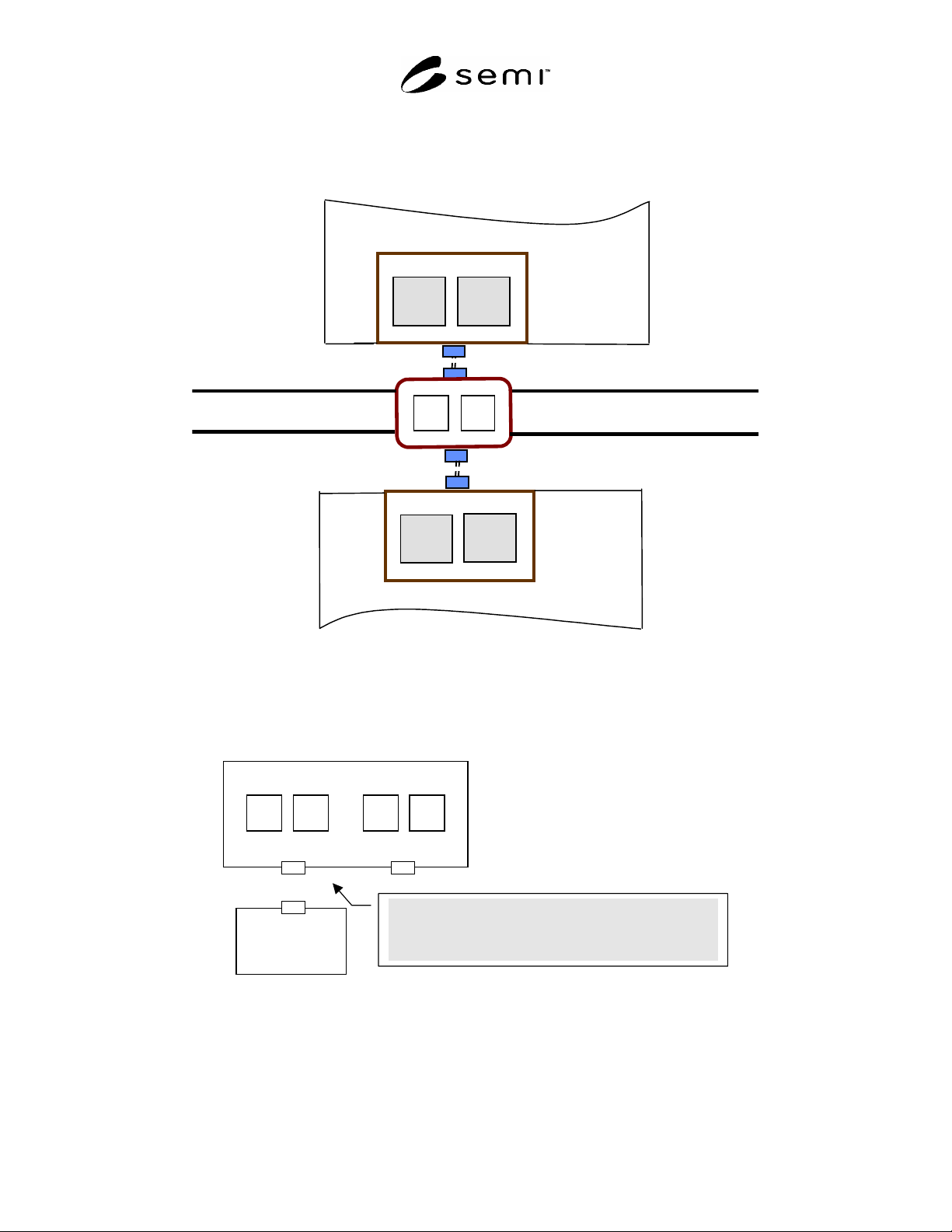
NOTE 1: This figure shows logical concept only. Physical location is not defined by this standard.
Figure 6
Common Parallel I/O for Two Load Ports
OHS (passive type)
PI/O
PI/O
active equipment
Left
Right
Left
Right
STOCKER
STOCKER
NOTE 1: This figure shows the logical concept only. Physical location is not defined by this standard.
NOTE 2: Decide the left side and right side according to the direction of the equipment from the vehicle.
Figure 7
Common Parallel I/O for Two Load Ports (Interbay AMHS Scenario)
LP1 LP3LP2
Passive Equipment
PI/O#1 PI/O#2
LP4
AGV/RGV/OHT
at PI/O#1 CS_0 specifies LP1 and CS_1 specifies LP2.
at PI/O#2 CS_0 specifies LP3 and CS_1 specifies LP4.
NOTE 1: This figure shows logical concept only. Physical location is not defined by this standard.
Figure 8
Example of Correspondence of CS_0/CS_1 and Load Ports (Top View) - Single PI/O Controls 2 Load Ports