semi合集-English.pdf - 第6704页
SEMI C37-0699 © SEMI 1981, 1999 4 11 Grade 3 P rocedur es 11.1 This section does not apply to t h i s chemical. 12 Grade 4 P rocedu res 12.1 This section does not apply to t h i s chemical. 13 Grade 5 P rocedu res 13.1 T…
PHOSPHORIC ETCHANTS SEMI C37-0699 © SEMI 1981, 19993
aspirating methyl isobutyl ketone. Then aspirate the
extract of the standard solution, solvent, and the extract
of the sample solution. Record the absorbances.
Proceed similarly for iron and nickel with measure-
ments at 248.3 and 232.0 nm, respectively. For each of
the three elements the absorbance of the sample extract
should not exceed that of the standard extract (see
SEMI C1, Section 3.6, Guidelines for Determination of
Trace Elements by Atomic Absorption Spectrometry).
9.10 Sodium, Lithium, Potassium, Calcium, Strontium,
and Magnesium
9.10.1 Sample Solutions for the Determination of
Sodium, Lithium, Potassium, Calcium, Strontium, and
Magnesium by Atomic Absorption Spectrometry —
Thoroughly clean four 100 mL volumetric flasks and
label them 1, 2, 3, 4, respectively. Transfer 20 mL (20
g) samples of stock solution into the four volumetric
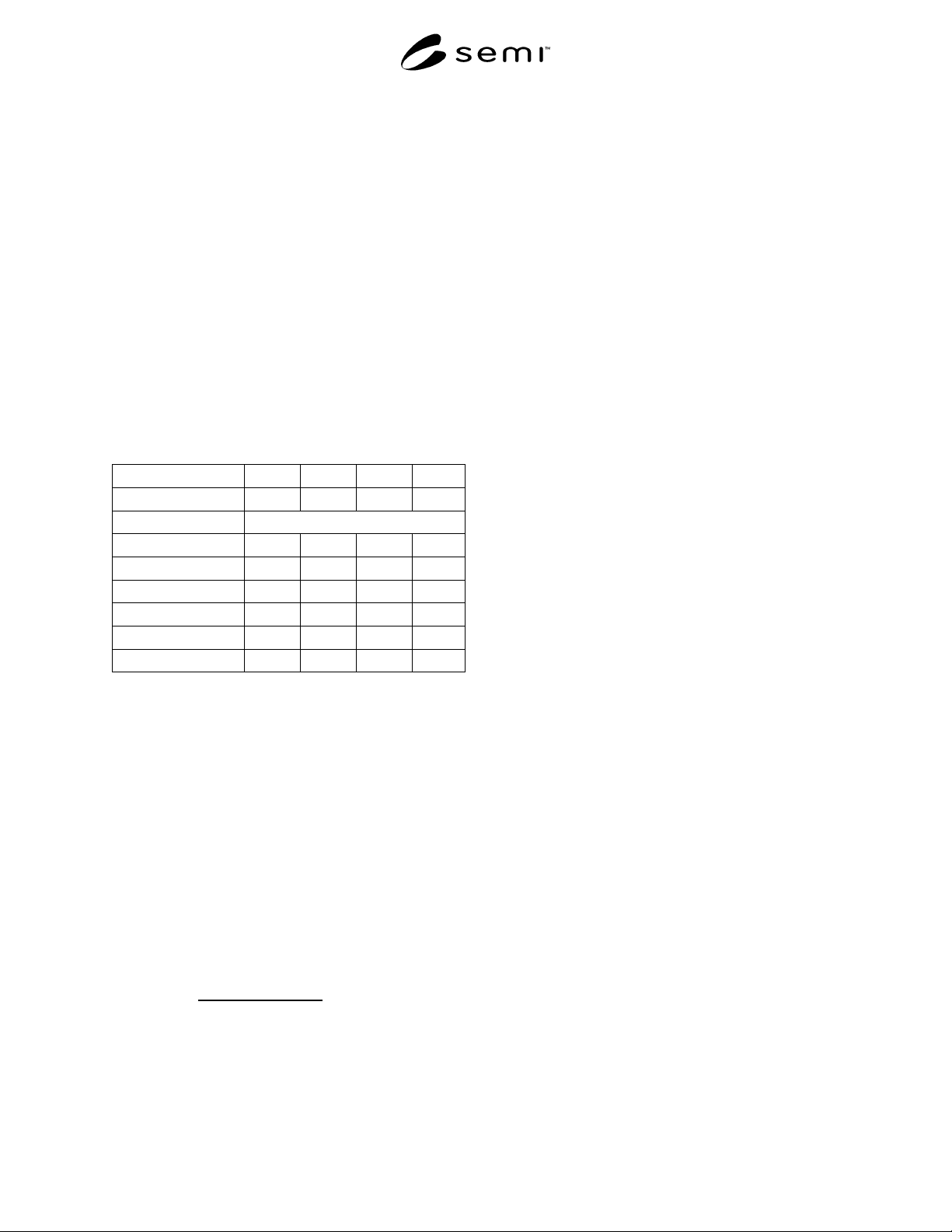
flasks. Add the quantities of cations as listed as follows:
CATION FLASK FLASK FLASK FLASK
1234
Milligrams of Cation
Sodium Ion (Na) 0.00 0.15 0.30 0.60
Lithium Ion (Li) 0.00 0.01 0.02 0.04
Potassium Ion (K) 0.00 0.10 0.20 0.40
Calcium Ion (Ca) 0.00 0.20 0.40 0.80
Strontium Ion (Sr) 0.00 0.05 0.10 0.20
Magnesium Ion (Mg) 0.00 0.05 0.10 0.20
9.10.2 General Instructions — Dilute each solution to
volume with water and mix thoroughly. Following the
manufacturer's directions, ready the atomic absorption
spectrometer for measurements in the absorbance mode
(see SEMI C1, Section 3.6, Guidelines for
Determination of Trace Elements by Atomic
Absorption Spectrometry). Determine each of the
elements, using the conditions specified in Sections
9.10.3 through 9.10.8.
9.10.2.1 For each element plot on linear coordinate
paper the absorbance versus the added quantity in
milligrams of the cation added. Draw a straight line
through the four points and extrapolate to zero
absorbance. This intercept corresponds to the absolute
amount, in milligrams, of the element being determined
in Solution 1.
ppm element
=
mg foun
d
×
1000
Weight of Sample g
()
9.10.3 Sodium — Using an air-acetylene flame and a
sodium hollow cathode lamp, set the wavelength to
589.0 nm and zero the absorbance with water. Aspirate,
and record the absorbances of each of the solutions,
zeroing the absorbance with water between aspiration
of the solutions. Calculate the amount of the sodium ion
(Na) in Solution 1; this should not exceed 0.30 mg.
9.10.4 Potassium — Using an air-acetylene flame and
a potassium hollow cathode lamp, set the wavelength to
766.5 nm and zero the absorbance using water.
Aspirate, and record the absorbances of each of the four
solutions, zeroing the absorbance with water between
aspiration of the solutions. Calculate the amount of
potassium ion (K) in Solution 1; this should not exceed
0.20 mg.
9.10.5 Lithium — Using an air-acetylene flame and a
lithium hollow cathod lamp, set the wavelength to
670.8 and zero the absorbance with water. Aspirate and
record the absorbances of each of the four solutions,
zeroing the absorbance with water between aspiration
of the solutions. Calculate the amount of lithium ion
(Li) in sample Solution 1; this should not exceed 0.02
mg.
9.10.6 Strontium — Using a nitrous oxide-acetylene
flame and a strontium cathode lamp, set the wavelength
to 460.7 nm and zero the absorbance with water.
Aspirate, and record the absorbances of each of the four
solutions, zeroing the absorbance with water between
aspiration of the solutions. Calculate the amount of
strontium ion (Sr) in Solution 1; this should not exceed
0.10 mg.
9.10.7 Calcium — Using a nitrous oxide-acetylene
flame and a calcium hollow lamp, set the wavelength to
422.7 nm and zero the absorbance with water. Aspirate,
and record the absorbances of each of the four solu-
tions, zeroing the absorbance with water between aspir-
ation of the solutions. Calculate the amount of calcium
ion (Ca) in Solution 1; this should not exceed 0.40 mg.
9.10.8 Magnesium — Thoroughly clean four 50 mL
volumetric flasks and label them 1a, 2a, 3a, and 4a.
Transfer 20 mL (4 g) from each of the four 100 mL vol-
umetric flasks into the corresponding 50 mL flasks. Di-
lute each to volume and mix thoroughly. Using an air-
acetylene flame, background corrections, and a magnes-
ium hollow lamp, set the wavelength to 285.2 nm and
zero the absorbance with water. Aspirate, and record
the absorbances of each of the four solutions, zeroing
the absorbance with water between aspiration of the
solutions. Calculate the amount of magnesium ion (Mg)
in Solution 1a; this should not exceed 0.02 mg.
10 Grade 2 Procedures
10.1 This section does not apply to this chemical.
SEMI C37-0699 © SEMI 1981, 1999 4
11 Grade 3 Procedures
11.1 This section does not apply to this chemical.
12 Grade 4 Procedures
12.1 This section does not apply to this chemical.
13 Grade 5 Procedures
13.1 This section does not apply to this chemical.
14 VLSI Grade Procedures
14.1 This section does not apply to this chemical.
15 Tier A Procedures
15.1 This section does not apply to this chemical.
16 Tier B Procedures
16.1 This section does not apply to this chemical.
17 Tier C Procedures
17.1 This section does not apply to this chemical.
18 Tier D Procedures
18.1 This section does not apply to this chemical.
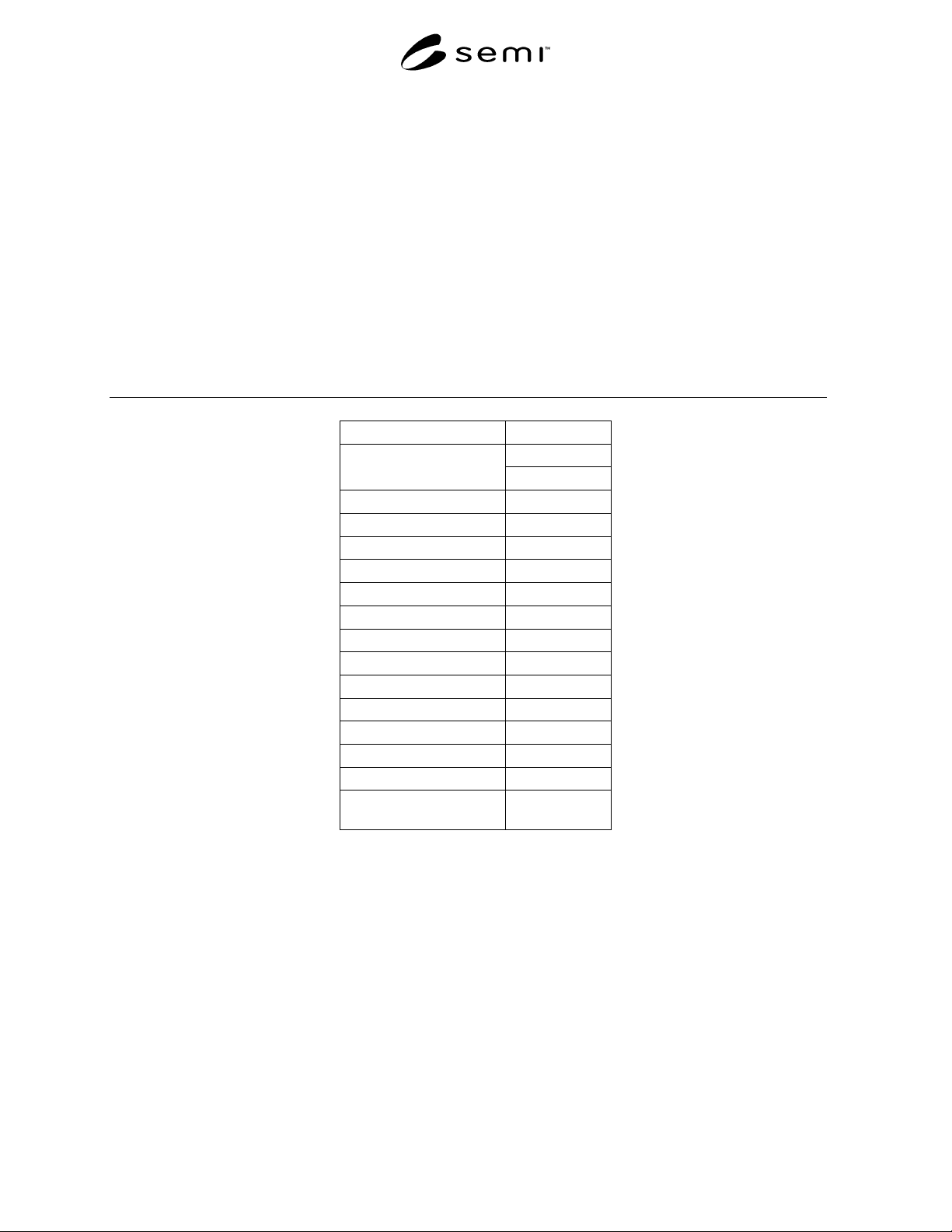
Table 1 Impurity Limits and Other Requirements for Phosphoric Etchants
Previous SEMI Reference # C2.3-95
Grade 1
(Specification)
Heavy Metals (as Pb) 5 ppm max
Antimony (Sb) 15 ppm max
Arsenic (As) 0.2 ppm max
Calcium (Ca) 15 ppm max
Copper (Cu) 1.2 ppm max
Iron (Fe) 6 ppm max
Lithium (Li) 0.3 ppm max
Magnesium (Mg) 2 ppm max
Manganese (Mn) 0.2 ppm max
Nickel (Ni) 1 ppm max
Potassium (K) 6 ppm max
Sodium (Na) 10 ppm max
Strontium (Sr) 2 ppm max
Particles in bottles:
size, #/mL
≥1.0 µm, 25 max
NOTICE: These standards do not purport to address
safety issues, if any, associated with their use. It is the
responsibility of the user of these standards to establish
appropriate safety and health practices and determine
the applicability of regulatory limitations prior to use.
SEMI makes no warranties or representations as to the
suitability of the standards set forth herein for any
particular application. The determination of the
suitability of the standard is solely the responsibility of
the user. Users are cautioned to refer to manufacturer’s
instructions, product labels, product data sheets, and
other relevant literature respecting any materials
mentioned herein. These standards are subject to
change without notice.
The user’s attention is called to the possibility that
compliance with this standard may require use of
copyrighted material or of an invention covered by
patent rights. By publication of this standard, SEMI
takes no position respecting the validity of any patent
rights or copyrights asserted in connection with any
item mentioned in this standard. Users of this standard
are expressly advised that determination of any such
patent rights or copyrights, and the risk of infringement
of such rights, are entirely their own responsibility.
Copyright by SEMI® (Semiconductor Equipment and Materials
International), 3081 Zanker Road, San Jose, CA 95134. Reproduction o
f
the contents in whole or in part is forbidden without express written
consent of SEMI.

PHOSPHORUS OXYCHLORIDE SEMI C38-0699 © SEMI 1991, 19991
SEMI C38-0699
GUIDELINE FOR PHOSPHORUS OXYCHLORIDE
This guideline was technically approved by the Global Process Chemicals Committee and is the direct
responsibility of the North American Process Chemicals Committee. Current edition approved by the North
American Regional Standards Committee on April 23, 1999. Initially available on SEMI OnLine May 1999;
to be published June 1999. This document replaces SEMI C7.12 in its entirety. Originally published in
1991.
1 Purpose
1.1 The purpose of this document is to standardize
requirements for phosphorus oxychloride used in the
semiconductor industry and testing procedures to
support those standards. Test methods have been shown
to give statistically valid results. This document also
provides guidelines for grades of phosphorus
oxychloride for which a need has been identified. In the
case of the guidelines, the test methods may not have
been statistically validated yet.
2 Scope
2.1 The scope of this document is all grades of
phosphorus oxychloride used in the semiconductor
industry.
3 Limitations
3.1 None.
4 Referenced Documents
4.1 None.
5 Terminology
5.1 None.
6 Physical Property (for information only)
6.1 Not applicable.
7 Requirements
7.1 The requirements for phosphorus oxychloride for
Tier A are listed in Table 1.
8 Grade 1 Procedures
8.1 This section does not apply to this chemical.
9 Grade 2 Procedures
9.1 This section does not apply to this chemical.
10 Grade 3 Procedures
10.1 This section does not apply to this chemical.
11 Grade 4 Procedures
11.1 This section does not apply to this chemical.
12 Grade 5 Procedures
12.1 This section does not apply to this chemical.
13 VLSI Grade Procedures
13.1 This section does not apply to this chemical.
14 Tier A Procedures
14.1 Standardized test methods are being developed
for all parameters at the purity levels indicated. Until
standardized test methods are published, test
methodology shall be determined by user and producer.
The Process Chemicals Committee considers a test
method to be valid only if there is a documented
recovery study showing a recovery of 75 - 125%.
Recovery is for a known sample spike at 50% of the
specified level.
15 Tier B Procedures
15.1 This section does not apply to this chemical.
16 Tier C Procedures
16.1 This section does not apply to this chemical.
17 Tier D Procedures
17.1 This section does not apply to this chemical.