semi合集-English.pdf - 第2576页
SEMI E90-0705 © SEMI 1999, 2005 16 10.5 Substr ate Location Object Attr ibutes 10.5.1 Table 5 defines attributes for substr ate location objects. These attribut es can be accessed by using GetAttr and SetAttr m e ssages …
SEMI E90-0705 © SEMI 1999, 2005 15
Data Identifier Description Form
SubstLocID Equipment substrate location on which the substrate has visited.
Must be copied from SubstLocID of which the substrate has
visited. (If batch process equipment, this data is not recorded
while the substrate belongs to a batch.)
Text
TimeIn Actual arrival time of the substrate on the substrate location. The format of the timestamp defined
by the protocol for implementation.
TimeOut Actual departure time of the substrate from the substrate location. The format of the timestamp defined
by the protocol for implementation.
10 Substrate Location Object Definition
10.1 A Substrate Location Object (SLO) provides a model for identifying substrate locations. Each SLO on an
equipment is assigned a substrate location ID to uniquely identify it. The assignment shall be documented by the
equipment supplier. There are two types of substrate locations: carrier substrate location, which is the location or
position (e.g., slot) in the carrier, and equipment substrate location, which is on the equipment resource. The
equipment substrate location is a persistent object, while the carrier substrate locations are dynamic objects that shall
be created or deleted by the placement or removal of carriers on the equipment.
10.1.1 Source substrate locations and Destination substrate locations are the points at which substrates transfer
to/from the equipment’s internal substrate locations (often locations at which processing occurs). A carrier substrate
location is the Source or Destination substrate location when a carrier is used to transfer the substrate. An equipment
substrate location can be the Source or Destination substrate location when the substrate is transferred directly
(without a carrier).
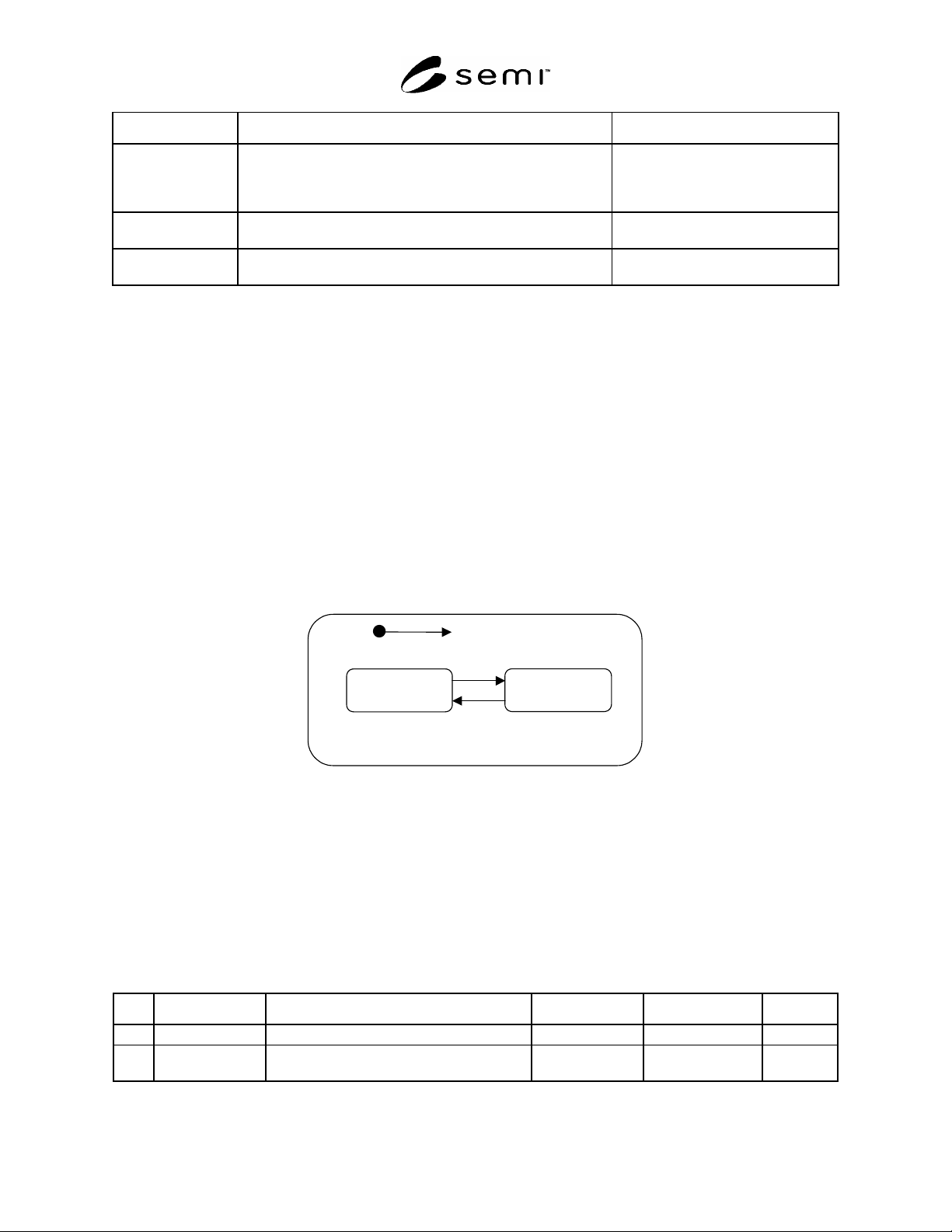
10.2 Substrate Location State Model
Figure 4 shows the dynamic behavior of the substrate location using the Harel state chart representation.
UNOCCUPIED
OCCUPIED
SUBSTRATE LOCATION
1
2
Figure 4
Dynamic Behavior Model of Substrate Location
A-1.1.1.2
10.3 Substrate Location State Definitions
10.3.1 SUBSTRATE LOCATION — the superstate of UNOCCUPIED and OCCUPIED.
10.3.2 UNOCCUPIED — the state in which the substrate location does not hold or have a substrate.
10.3.3 OCCUPIED — the state in which the substrate location holds a substrate.
10.4 Substrate Location State Transition
Table 4 Substrate Location State Model Transition Table
No. Current State Trigger New State Action Comment
1 UNOCCUPIED Substrate moves onto the substrate location. OCCUPIED None.
2 OCCUPIED Substrate moves off the location. UNOCCUPIED Update substrate
tracking history.
SEMI E90-0705 © SEMI 1999, 2005 16
10.5 Substrate Location Object Attributes
10.5.1 Table 5 defines attributes for substrate location objects. These attributes can be accessed by using GetAttr
and SetAttr messages as defined in SEMI E39 (OSS).
Table 5 Substrate Location Object Attribute Table
Attribute Name Definition Access Reqmt Format
DisableEvents When set to TRUE, the transitions for this
substrate location do not generate events to
the host.
RW Y Boolean
TRUE = Disable
FALSE = Enable
ObjID Object Identifier. RO Y Text equal to the Substrate Location ID
ObjType Object type. RO Y Text = “SubstLoc”
SubstID Substrate Identifier relevant to the location. RO Y Text
SubstLocState Substrate Location state. RO Y Enumerated:
UNOCCUPIED, OCCUPIED
11 Batch Location Object
11.1 A Batch Location Object (BLO) provides a model for identifying a group of substrates (e.g., batch) locations.
Each BLO on an equipment is assigned a batch location ID to uniquely identify it. The assignment shall be
documented by the equipment supplier. The batch location is a persistent object.
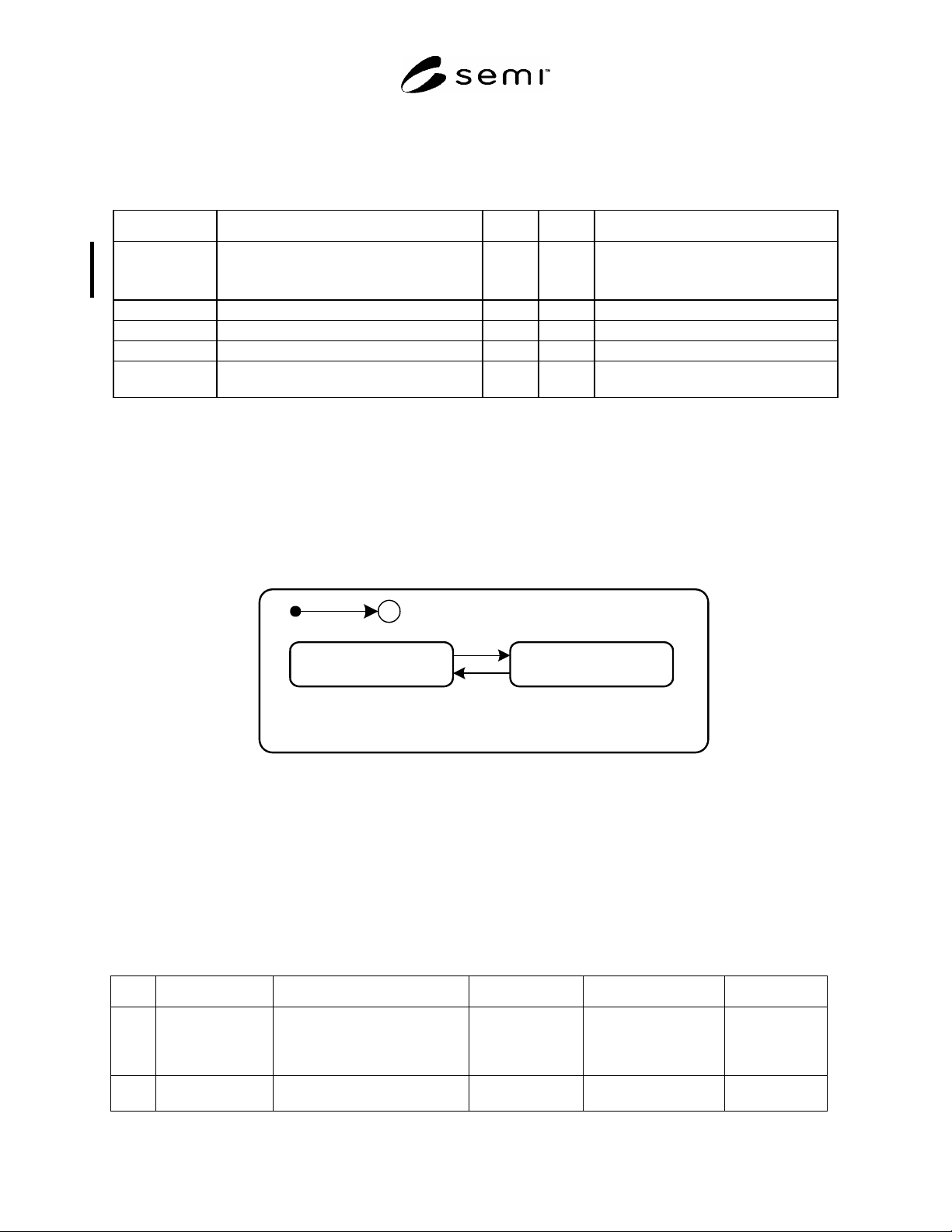
11.2 Batch Location State Model
11.2.1 Figure 5 shows the dynamic behavior of the batch location using the Harel state chart representation.
OCCUPIEDUNOCCUPIED
BATCH LOCATION
C
2
1
Figure 5
Dynamic Behavior Model of Batch Location
11.3 Batch Location State Definitions
11.3.1 BATCH LOCATION — the superstate of UNOCCUPIED and OCCUPIED.
11.3.2 UNOCCUPIED — the state in which the batch location does not hold or have any substrate of batch.
11.3.3 OCCUPIED — the state in which the batch location holds one or more substrates of batch.
11.4 Batch Location State Transition
Table 6 Batch Location State Model Transition Table
No. Current State Trigger New State Action Comment
1 UNOCCUPIED A group of substrates (e.g.,
batch), even if they are a part of
group, moves onto the batch
location.
OCCUPIED None.
2 OCCUPIED All substrates of the group (e.g.,
batch) moves off the location.
UNOCCUPIED Update substrate
tracking history.
SEMI E90-0705 © SEMI 1999, 2005 17
11.5 Batch Location Object Attributes
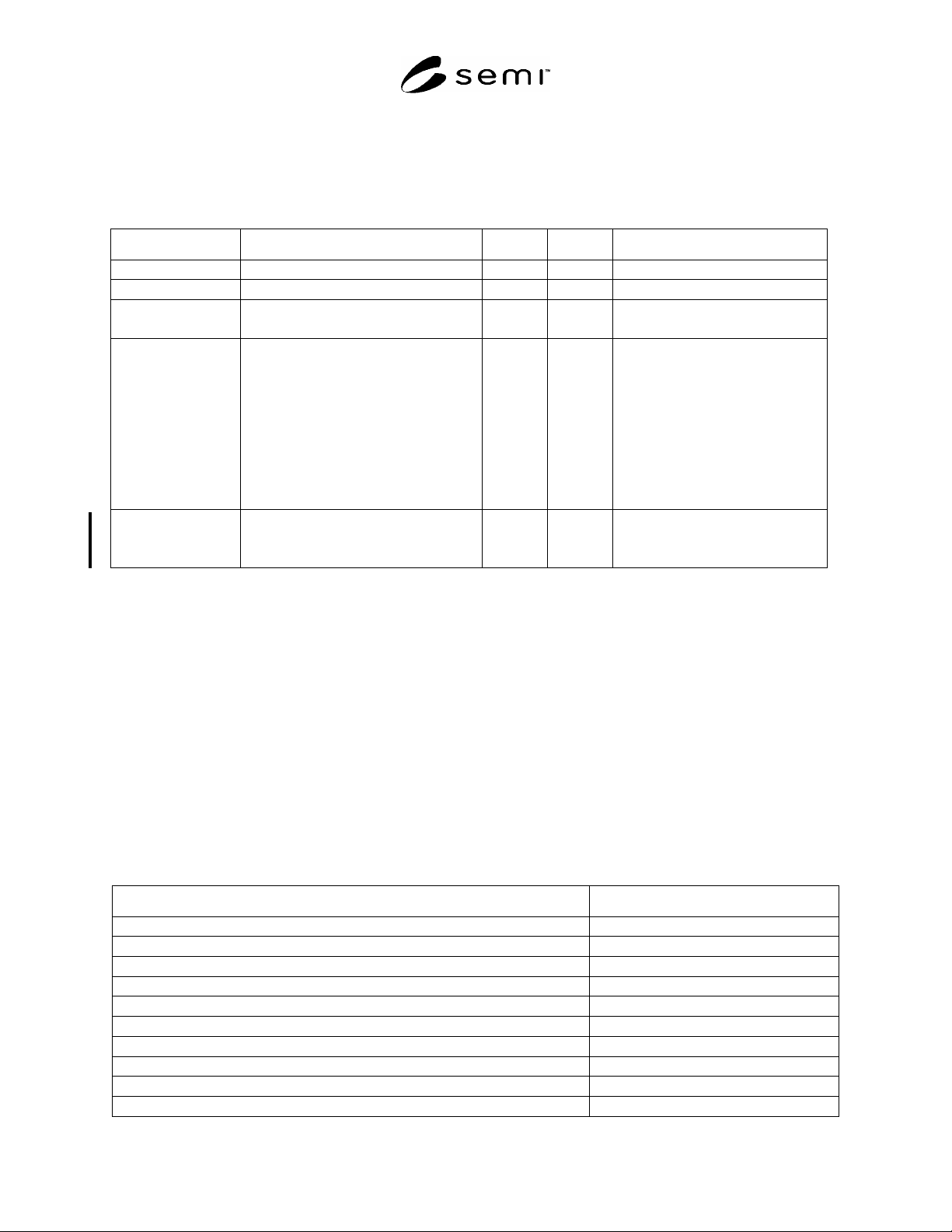
11.5.1 Table 7 defines attributes for batch location objects. These attributes can be accessed by using GetAttr and
SetAttr messages as defined in SEMI E39 (OSS).
Table 7 Batch Location Object Attribute Table
Attribute Name Definition Access Reqmt Format
ObjID Object Identifier. RO N Text equal to the Batch Location ID
ObjType Object type. RO N Text = “BatchLoc”
BatchLocState Batch Location state. RO N Enumerated:
UNOCCUPIED, OCCUPIED
BatchSubstIDMap Ordered list of substrate identifiers
corresponding to the positions in a batch
(e.g., slot positions of a batch container or
a process carrier).
RO N Ordered list of SubstID
(Ordered list indicates position in the
batch and SubstID can be actual
substrate identifier, blank “” when
location is empty or “filler” when
such substrate is used.)
This attribute is updated each time a
substrate is moved into or out of the
batch or as soon as the equipment
has the information.
DisableEvents When set to TRUE, the transitions for this
substrate location do not generate events
to the host.
RW Y Boolean
TRUE = Disable
FALSE = Enable
12 Substrate Tracking Services
12.1 Creating and Deleting Substrate Objects
12.1.1 Equipment may create substrate objects as appropriate during equipment operation. On some equipment (at
the option of the equipment designer), substrate objects may also be registered (created) at the equipment through
the host-initiated Create service defined in SEMI E39. Equipment is not required to provide host-initiated Register
(Create) Substrate or Remove Substrate services for fundamental compliance to STS. Table 8 defines the attribute
settings that may be initialized through this service.
12.1.2 In general, it depends on the application whether or not attributes are initialized by the user of the create
service. In some situation, it may be necessary to match the new substrate with a location, for example, while in
other situations it would be unnecessary. Each application must specify its own requirements.
12.1.3 ObjType is a required argument of the Create service and should not be reset by including it as an attribute
setting. In the table, M indicates Mandatory, O indicates Optional, and R specifies Restricted (shall be ignored if
used).
Table 8 Substrate Attributes Settable through Create
Substrate Attribute Name Use as AttrSetting in Create Service
LotID O
MaterialStatus O
ObjID M
ObjType R
SubstDestination O
SubstHistory O
SubstLocID O
SubstProcState O
SubstSource O
SubstState O