semi合集-English.pdf - 第4641页
SEMI C3.51-11 01 © SEMI 1995 , 2001 1 SEMI C3.51-1101 SPECIFICA TION FOR BORON TRICHLORIDE (BCl 3 ), 9 9.98% QU A LITY This specif ication was technic ally approved by the Global Ga ses Committee and is the direct respon…
SEMI C3.33-92 © SEMI 1987, 2003 1
SEMI C3.33-92 (Reapproved 0303)
STANDARD FOR BORON TRICHLORIDE (BCl
3
) (PROVISIONAL)
This standard was technically reapproved by the Global Gases Committee and is the direct responsibility of
the North American Gases Committee. Current edition approved by the North American Regional Standards
Committee on October 25, 2002. Initially available at www.semi.org December 2002; to be published March
2003. Originally published in 1987; previously published in 1992.
1 Description
1.1 Boron trichloride is a colorless gas at room
temperature and atmospheric pressure which fumes in
the presence of moist air. It has a choking odor.
2 Scope
NOTICE: This standard does not purport to address
safety issues, if any, associated with its use. It is the
responsibility of the users of this standard to establish
appropriate safety and health practices and determine
the applicability of regulatory or other limitations prior
to use.
3 Specifications
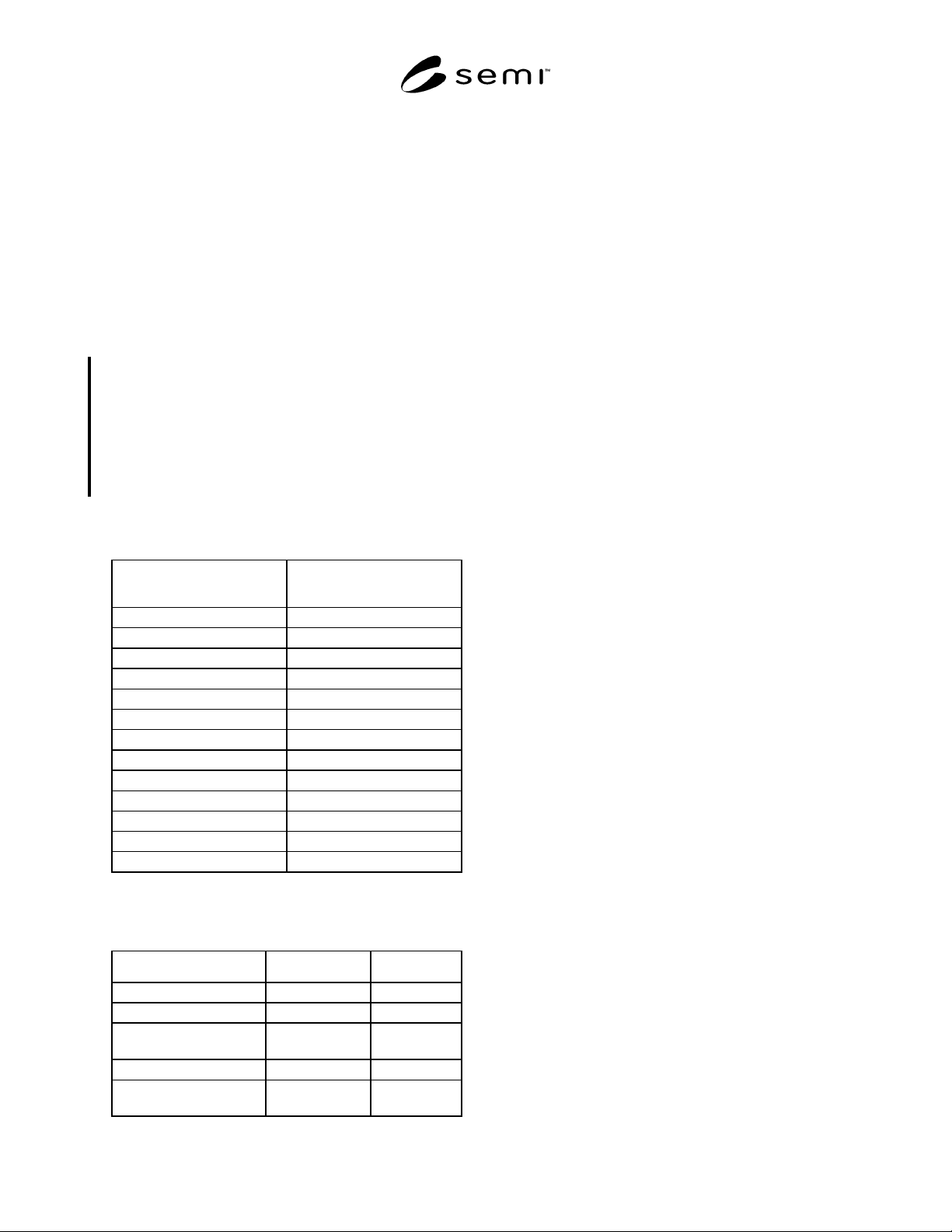
QUALITY: 99.9995% by wt. Liquid Phase
Impurities
Maximum Acceptable Level
(ppm)*
Chlorine (Cl
2
) 10 Vapor Phase
Hydrogen Chloride (HCl) 1 Vapor Phase
Phosgene (COCl
2
) 1 Vapor Phase
Aluminum (Al) 0.5 by wt. Liquid Phase
Calcium (Ca) 0.5 by wt. Liquid Phase
Copper (Cu) 0.5 by wt. Liquid Phase
Iron (Fe) 0.5 by wt. Liquid Phase
Magnesium (Mg) 0.5 by wt. Liquid Phase
Nickel (Ni) 0.5 by wt. Liquid Phase
Potassium (K) 0.5 by wt. Liquid Phase
Silicon (Si) 1 by wt. Liquid Phase
Sodium (Na) 0.5 by wt. Liquid Phase
TOTAL IMPURITIES 5 by wt. Liqiud Phase
* An analysis of significant figures has not been considered. The
number of significant figures will be based on analytical accuracy and
the precision of the provided procedure.
4 Physical Constants (for information only)
Metric Units US Units
Molecular weight 117.17 117.17
Boiling point at atm 12.4° C 54.3° F
Density of gas at 20° C
and 1 atm
5.326 kg/m
3
0.3325 lb/ft
3
Specific gravity 4.12 4.12
Density of liquid at
–118° C
1372.8 kg/m
3
85.76 lb/ft
3
NOTICE: SEMI makes no warranties or
representations as to the suitability of the standards set
forth herein for any particular application. The
determination of the suitability of the standard is solely
the responsibility of the user. Users are cautioned to
refer to manufacturer' s instructions, product labels,
product data sheets, and other relevant literature,
respecting any materials or equipment mentioned
herein. These standards are subject to change without
notice.
By publication of this standard, Semiconductor
Equipment and Materials International (SEMI) takes no
position respecting the validity of any patent rights or
copyrights asserted in connection with any items
mentioned in this standard. Users of this standard are
expressly advised that determination of any such patent
rights or copyrights, and the risk of infringement of
such rights are entirely their own responsibility.
Copyright by SEMI® (Semiconductor Equipment and Materials
International), 3081 Zanker Road, San Jose, CA 95134. Reproductio
n
of the contents in whole or in part is forbidden without express writte
n
consent of SEMI.
SEMI C3.51-1101 © SEMI 1995, 20011
SEMI C3.51-1101
SPECIFICATION FOR BORON TRICHLORIDE (BCl
3
), 99.98% QUALITY
This specification was technically approved by the Global Gases Committee and is the direct responsibility of
the North American Gases Committee. Current edition approved by the North American Regional Standards
Committee on August 27, 2001. Initially available at www.semi.org September 2001; to be published
November 2001. Originally published in 1995.
1 Purpose
1.1 To define the specification and analytical methods
and validate the specifications for BCl
3
.
2 Scope
2.1 This specification relates to a geometry of 0.5 µ or
less (0.35 to 0.5 range) and describes analytical
techniques using gas phase analysis.
3 Description
3.1 Boron trichloride is a colorless toxic and corrosive
gas at room temperature and atmospheric pressure
which fumes in the presence of moist air. It has a
choking odor.
4 Referenced Standards
4.1 ISO Standards
1
ISO 6145-1 — Preparation of calibration gas mixtures –
Dynamic volumetric methods – Part 1: Methods of
calibration
NOTE 1: Unless otherwise indicated, all documents cited
shall be the latest published versions.
5 Specifications
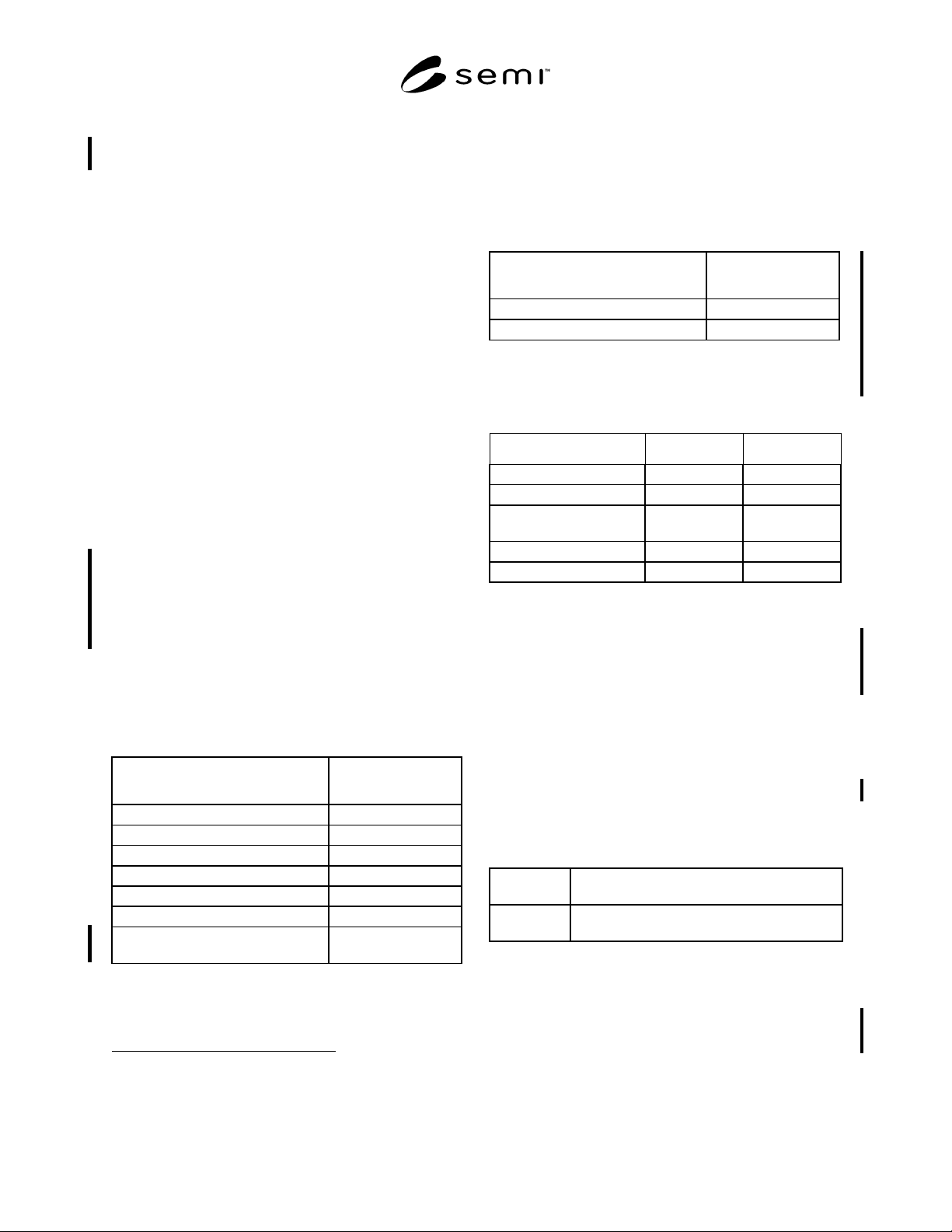
Quality: 99.98% vapor phase
Impurities
Maximum Acceptable
Level (ppm)*
Nitrogen (N
2
)5
Carbon Dioxide (CO
2
)2
Chlorine (Cl
2
)10
Hydrogen Chloride (HCl) 100
Phosgene (COCl
2
)1
Silicon Tetrachloride (SiCl
4
)2
* TOTAL LISTED IMPURITIES
(excluding metals)
120
1 International Organization for Standardization, ISO Central
Secretariat, 1, rue de Varembé, Case postale 56, CH-1211 Geneva 20,
Switzerland. Telephone: 41.22.749.01.11; Fax: 41.22.733.34.30
Website: www.iso.ch
Impurities
Maximum Acceptable
Level (ppm)*
Iron (Fe) 0.5 wt.
Nickel (Ni) 0.5 wt.
* An analysis of significant figures has not been considered. The
number of significant figures will be based on analytical accuracy and
precision of the provided procedure.
6 Physical Constants (for information only)
Metric Units US Units
Molecular weight 117.17 117.17
Boiling point at atm 12.4°C 54.3°F
Density of gas at 20°C and
1 atm
5.326 kg/m
3
0.3325 lb/ft
3
Specific gravity 4.12 4.12
Density of liquid at –18°C 1372.8 kg/m
3
85.76 lb/ft
3
7 Analytical Procedures
NOTE 2: The boiling point of boron trichloride is 12.4°C. It
is recommended that, prior to the sampling operation, the
cylinder should be allowed to reach room temperature to
prevent the possibility of any suck-back.
7.1 Nitrogen — This procedure is for the determination
of nitrogen in boron trichloride using a gas
chromatograph fitted with a backflush valve and a
thermal conductivity detector.
7.1.1 Detection Limits — 0.5 ppm nitrogen.
7.1.2 Instrument Parameters
7.1.2.1 Columns:
Column 1: Porapak QS 60/80 mesh 2 m (6 ft) × 3.2 mm
(1/8") OD SS or equivalent.
Column 2: Molecular sieve 5A 60/80 mesh 2 m (6 ft) × 3.2
mm (1/8") OD SS or equivalent.
7.1.2.2 Carrier Gas Flow — Helium N6.0 Flow 25
mL/min
NOTE 3: The helium carrier gas should contain less than 10
ppb of the impurities it is desired to measure. This is best
achieved by using a commercial helium gas purifier.
7.1.2.3 Sample Volume — 2.5 mL.
SEMI C3.51-1101 © SEMI 1995, 2001 2
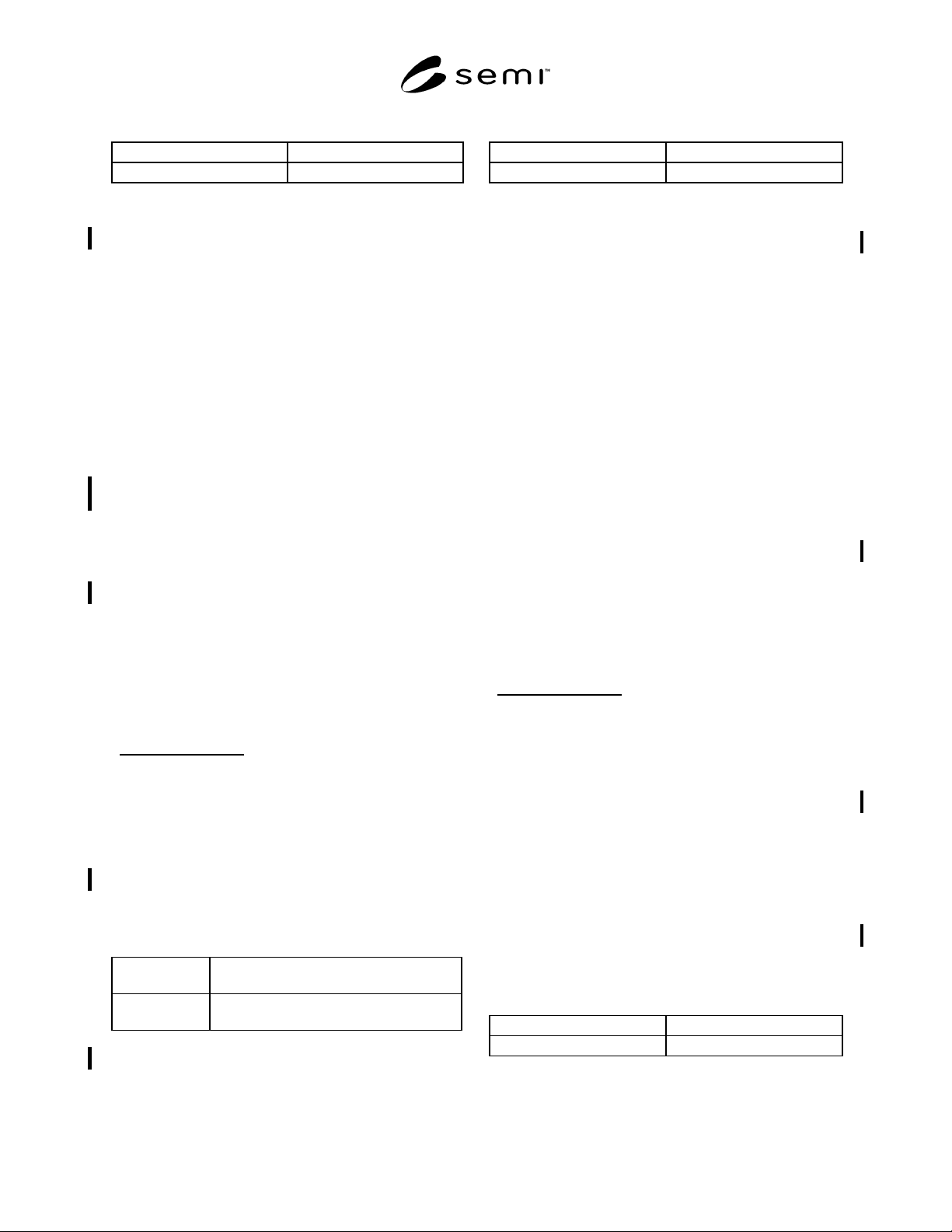
7.1.2.4 Temperatures:
Column Temperature 100°C
Detector Temperature 100°C
7.1.2.5 Bridge Current — 200 mA.
7.1.3 Calibration Standard — 1–10 ppm nitrogen in
helium.
7.1.3.1 Calibration — Construct a calibration curve in
the range of interest. Verify the standards employed
independently by established traceability to recognized
national or international standards.
7.1.4 Operating Procedure
7.1.4.1 Inject the calibration standard into the column
using a gas sampling valve. Adjust the backflush valve
operation sequence to present the nitrogen. Record the
retention time and peak area. A sample chromatogram
is shown in Figure 1.
NOTE 4: Introduce the calibration standard as many times as
necessary to achieve the desired precision.
7.1.4.2 Inject the sample to be tested in the same
manner as the calibration standard. Record the retention
time and peak areas (see Note 2).
7.1.4.3 Repeat Section 7.1.4.1.
7.1.4.4 Compare the average peak areas of the nitrogen
in the calibration standard to that of the boron
trichloride sample being tested. Calculate the
concentration of nitrogen using the formula below. The
results may not exceed the specification in Section 5 of
this standard.
Sample Pea
k
Are
a
Standard Peak Are
a
×
Concentratio
n
of Standard
=
Concentratio
n
of Sample
7.2 Carbon Dioxide — This procedure is for the
determination of carbon dioxide in boron trichloride
using a gas chromatograph fitted with a backflush and a
thermal conductivity detector.
7.2.1
Detection Limits — 0.5 ppm carbon dioxide.
7.2.2 Instrument Parameters
7.2.2.1 Columns:
Column 1 Porapak QS 60/80 mesh 3m (10 ft.) by 3.2
mm (1/8") OD SS or equivalent
Column 2 Porapak QS 60/80 mesh 2.5 m (8 ft.) by 3.2
mm (1/8") OD SS or equivalent
7.2.2.2 Carrier Gas Flow — Helium N6.0 flow 25
mL/mm (See Note 3.)
7.2.3
Sample Volume — 2.5 mL.
7.2.4
Temperatures:
Column Temperature 60°C
Detector Temperature 110°C
7.2.5 Bridge Current — 200 mA.
7.2.6 Calibration Standard — 1–5 ppm carbon dioxide
in helium.
7.2.6.1
Calibration — Construct a calibration curve in
the range of interest. Verify the standards employed
independently by established traceability to recognized
national or international standards.
7.2.7
Operating Procedure
7.2.7.1 Inject the calibration standard into the column
using a gas sampling valve. Adjust the backflush valve
operation sequence to present the carbon dioxide peak.
Record the retention time and peak area. A sample
chromatogram is shown in Figure 2 (see Note 4).
7.2.7.2
Inject the sample to be tested in the same
manner as the calibration standard (see Note 2). Record
the retention time and peak areas.
7.2.7.3
Repeat Section 7.2.7.1.
7.2.7.4 Compare the average peak areas of the carbon
dioxide in the calibration standard to that in the boron
trichloride sample being tested. Calculate the
concentration of carbon dioxide using the formula
below.
Sample Peak Are
a
Standard Peak Are
a
×
Concentratio
n
of Standard
=
Concentratio
n
of Sample
7.3 Chlorine — This procedure is for the analysis of
chlorine in boron trichloride using a gas chromatograph
with a thermal conductivity detector.
7.3.1
Detection Limits — 5 ppm chlorine.
7.3.2 Instrument Parameters
7.3.2.1 Column 60 m (200 ft.) 0.53 mm (1/32") ID
Dimethyl silicone megabore capillary column (Ristek
RTxi)
7.3.2.2
Carrier Gas — Helium: N6.0 25–30 mL/min
(See Note 3.)
7.3.2.3 Sample Volume — 2.0 mL.
7.3.2.4 Temperatures:
Column Temperature 100°C
Detector Temperature 110°C
7.3.2.5 Bridge Current — 200 mA.