semi合集-English.pdf - 第150页
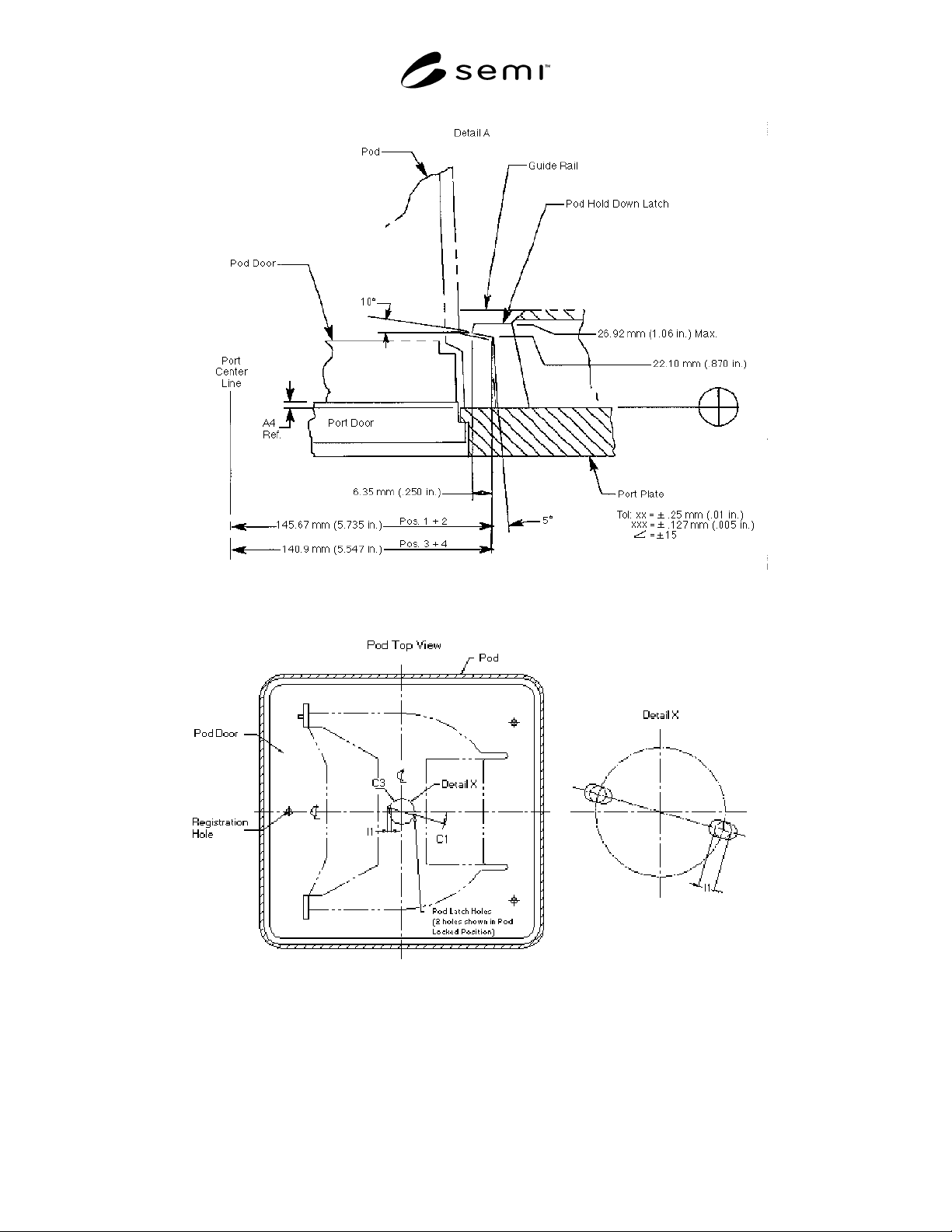
SEMI E19.4-0998 E © SEMI 1992, 2003 6 Figure 3 Dimensions of Pod Hold Down Latches Figure 4 Dimensions of Pod Latch Hole
SEMI E19.4-0998
E
© SEMI 1992, 2003 5
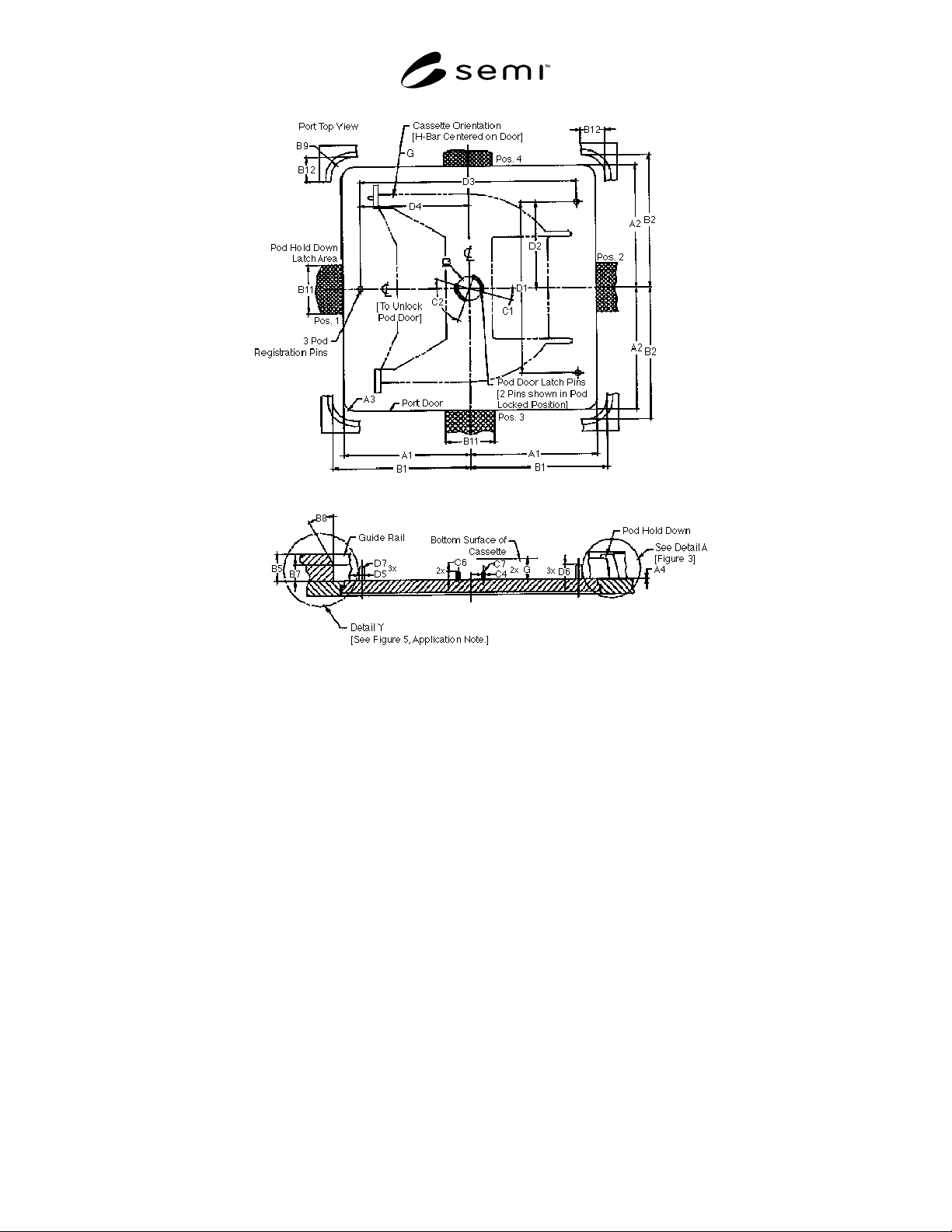
Figure 2
Port Dimensions
SEMI E19.4-0998
E
© SEMI 1992, 2003 6
Figure 3
Dimensions of Pod Hold Down Latches
Figure 4
Dimensions of Pod Latch Hole
SEMI E19.4-0998
E
© SEMI 1992, 2003 7
APPENDIX 1
APPLICATION NOTES
NOTICE: This appendix was approved as an official part of SEMI E19.4 by full letter ballot procedure, but the
recommendations in this appendix are optional and are not required to conform to this standard.
A1-1 Notes
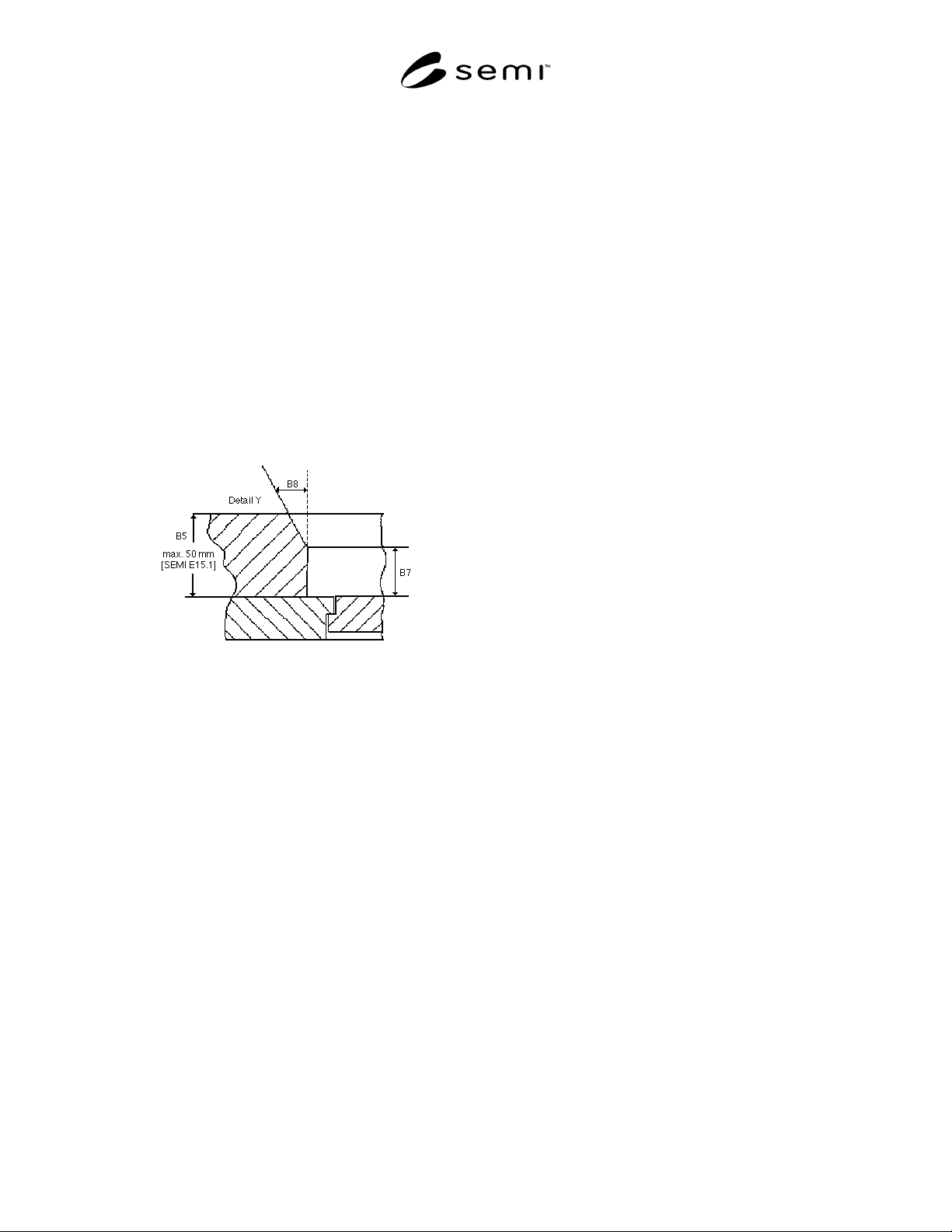
A1-1.1 Automated pod transfer between load port and
automated material handling system (AMHS) might
require a lead-in capability of more than 5 mm. This
can be achieved by increasing the height of the guide
rails (dimension B5). SEMI standard E15 limits this
height to 50 mm (1.97 inches) maximum (see Figure
A1-1). The capture range can be increased to more than
15 mm (0.6 inches) if supplier and customer agree to
increase the guide rail height without violating SEMI
E15.
Figure A1-1
Optional Rail Dimensions
A1-1.2 The dimensions of the pod bottom are not
specified in this standard (see Section 6.2.5.1). It is
recommended that these dimensions should not exceed
282.0 mm (11.14 inches) in one direction and 292.6
mm (11.52 inches) in the other direction. These
maximum outer dimensions ensure a sufficient gap
around the pod and the guide rails in relation to B1 and
B2 to allow a reliable motion of the pod onto the port
plate.
A1-1.3 It is important that the external top of the pod
does not exceed the top of the cassette by more than 50
mm (1.97 inches). This is to prevent possible
interference between the pod and the equipment.
NOTICE: By publication of these standards,
Semiconductor Equipment and Materials International
(SEMI) takes no position respecting the validity of any
patent rights or copyrights asserted in connection with
any item mentioned in these standards. Under the
current law of the United States and numerous other
countries, the use of a copyright notice is not necessary
in order for a work to have copyright protection. Such
protection is available to all subject matter entitled to
copyright protection from the moment it is “fixed in a
tangible medium of expression.” Therefore, unless the
work has been published with a statement from the
author that it may be freely reproduced, it should be
assumed that all referenced works have copyright
protection. Users of these standards are expressly
advised that determination of any such patent rights or
copyrights, and the risk of infringement of such rights
are entirely their own responsibility.
SEMI makes no warranties or representations as to the
suitability of the standards set forth herein for any
particular application. The determination of the
suitability of the standard is solely the responsibility of
the user. Users are cautioned to refer to manufacturer’s
instructions, product labels, product data sheets, and
other relevant literature respecting any materials
mentioned herein. These standards are subject to
change without notice.
Copyright by SEMI® (Semiconductor Equipment and Materials
International), 3081 Zanker Road, San Jose, CA 95134. Reproduction o
f
the contents in whole or in part is forbidden without express written
consent of SEMI.