semi合集-English.pdf - 第3574页
SEMI E138-0305 © SEMI 2005 1 SEMI E138-0305 XML SEMICONDUCTOR CO MMON COMPONENTS This standard was technically approved by the Global Information and Control Co m mittee and is the direct responsibility of the North Amer…
SEMI E134.1-0305 © SEMI 2005 60
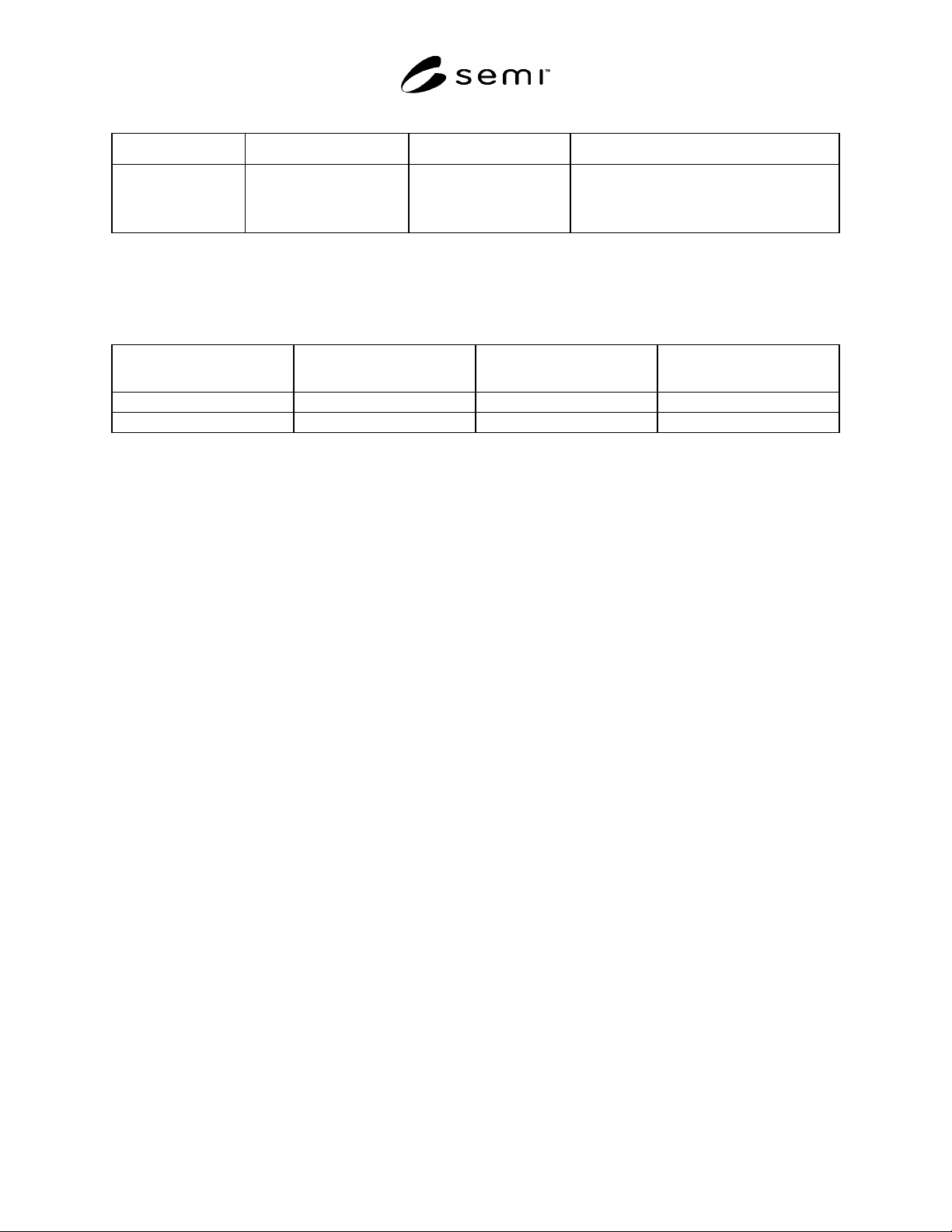
Table 132 Translation Table for Input Arguments for the DCPHibernation Operation
Argument Name Format XML Element or Attribute XML Name/Type
hibernatingPlans List of one or more
structured data elements,
each of type
DCPHibernated
Element HibernatingPlan: dcm:DCPHibernatedType
7.3.9.4.2 DCPHibernatedType — This global complexType is the XML Schema representation of the SEMI E134
DCPHibernated class. The following table describes the mapping of the UML class to this XML Schema
complexType
Table 133 Translation Table for DCPHibernatedType
Attribute or Role Name UML Type
XML Element or Attribute
(or Reference)
XML Name/Type
planId Text Attribute planId: xsd:string
timeHibernated Text Attribute timeHibernated: xsd:dateTime
NOTICE: SEMI makes no warranties or representations as to the suitability of the standards set forth herein for any
particular application. The determination of the suitability of the standard is solely the responsibility of the user.
Users are cautioned to refer to manufacturer's instructions, product labels, product data sheets, and other relevant
literature, respecting any materials or equipment mentioned herein. These standards are subject to change without
notice.
By publication of this standard, Semiconductor Equipment and Materials International (SEMI) takes no position
respecting the validity of any patent rights or copyrights asserted in connection with any items mentioned in this
standard. Users of this standard are expressly advised that determination of any such patent rights or copyrights, and
the risk of infringement of such rights are entirely their own responsibility.
Copyright by SEMI® (Semiconductor Equipment and Materials
International), 3081 Zanker Road, San Jose, CA 95134. Reproduction of
the contents in whole or in part is forbidden without express written
consent of SEMI.

SEMI E138-0305 © SEMI 2005 1
SEMI E138-0305
XML SEMICONDUCTOR COMMON COMPONENTS
This standard was technically approved by the Global Information and Control Committee and is the direct
responsibility of the North American Information and Control Committee. Current edition approved by the
North American Regional Standards Committee December 10, 2004. Initially available at www.semi.org
January 2005; to be published March 2005.
1 Purpose
1.1 This document is a central location for the definition of common XML elements that are not specific to a single
standard, but common across multiple standards.
2 Scope
2.1 This document currently defines the representation of Error. This common component is used in association
with other XML documents or schemas generated as part of a SEMI standard interface specification for
communication between software entities.
NOTICE: This standard does not purport to address safety issues, if any, associated with its use. It is the
responsibility of the users of this standard to establish appropriate safety and health practices and determine the
applicability of regulatory or other limitations prior to use.
3 Limitations
3.1 The purpose of this document is to define basic components and to allow for future additions as common
components are discovered and required. Only one component (Error) is being defined at this time.
4 Referenced Standards
4.1 SEMI Standards
SEMI E5 — SEMI Equipment Communications Standard 2 Message Content (SECS-II)
SEMI E87 — Specification for Carrier Management (CMS)
SEMI E121 — Guide for Style and Usage of XML for Semiconductor Manufacturing Applications
SEMI E125 — Specification for Equipment Self Description (EqSD)
SEMI E132 — Specification for Equipment Client Authentication and Authorization
4.2 Other References
Extensible Markup Language (XML) 1.0 (Second Edition) — W3C Recommendation, 6 October 2000
(http://www.w3.org/TR/2000/REC-xml-20001006)
XML Schema Part 1: Structures — W3C Recommendation, 2 May 2001 (http://www/w3/org/TR/xmlschema-1)
XML Schema Part 2: Datatypes — W3C Recommendation, 2 May 2001 (http://www/w3/org/TR/xmlschema-2)
NOTICE: Unless otherwise indicated, all documents cited shall be the latest published versions.
5 Terminology
5.1 Abbreviations and Acronyms
5.1.1 W3C — World Wide Web Consortium
5.1.2 WWW — World Wide Web
5.1.3 XML — Extensible Markup Language
SEMI E138-0305 © SEMI 2005 2
6 Resources, Organizations, and Standards
6.1 Important resources and organizations used in the generation and definition of this document are found in:
6.1.1 XML Schema Part 2: Datatypes — W3C Recommendation
7 XML Type Definitions
7.1 XML Schema — This specification includes an XML schema file, “CommonComponents-V0305-Schema.xsd”,
and should be provided with this document. That XML schema file provides the normative definitions of the types
described here.
7.2 Data Type for Error Handling — Error handling in most cases even with standard interface specifications is
implementation-specific. It is not practical for one specification to define all possible error conditions, error codes,
descriptions and supplementary information that is needed to properly recover from the error. Regardless, a
common approach to communicating error conditions can simplify error management for standards implementers
and application developers.
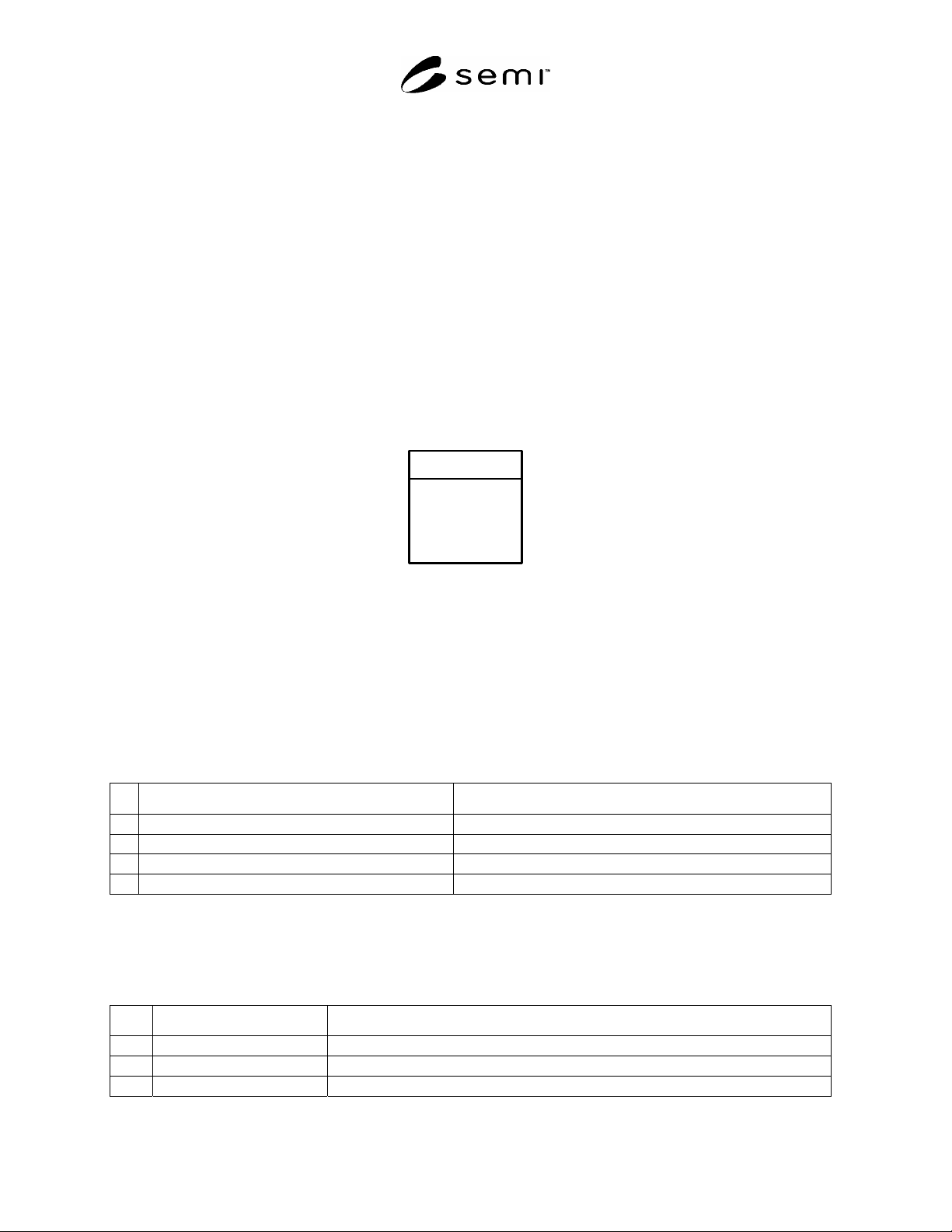
7.3 Error Data Structure — The following data structure defines a common error structure that can be extended
with additional implementation-specific information that can be used by other standards or suppliers.
Error
Source
Code
Description
Extension
Figure 1
Error Structure
7.3.1 Source — The “Source” attribute represents the document from where the attribute code value is defined. For
error codes defined by SEMI standards, the content of Source is the urn representation of the standard number. For
error codes defined by a supplier, it is the urn representation of the supplier’s name. (i.e. For SEMI E132 errors, the
content of “Source” is: urn:semi-org:E132; for supplier ACME errors the content is: urn:ACME-com) Additional
information may be included by the supplier by adding such information after the “:” colon symbol and separating
the fields with a “.” period symbol.
Table 1 Example of Error Sources
# Source Comment
1 urn:semi-org:E005 Standard Error Codes for Equipment - SEMI E5.
2 urn:semi-org:E087 Standard Error Codes from Carrier Management.
3 urn:semi-org:E125 Standard Error Codes from Equipment Self Description.
4 urn:<Supplier>-com[:<SupplierFields>] Identification of the source of error codes.
7.3.2 Code — Error code is an integer value that directly maps to a particular specification error code list. The
following is an example of a list of code ranges. This specification does not require the allocation of any code range
by other specification. The following is just an example of codes.
Table 2 Example of Error Code Range
# Code Range Comment
1 1–63, 32768–65535 Standard Error Codes for Equipment - SEMI E5.
2 10000 – 10500 Equipment Supplier Specific enumerated error codes (Example).
3 5000 – 5999 Common Standardized Core Components Errors.