semi合集-English.pdf - 第3457页
SEMI E134-0305 © SEMI 2004, 2005 10 visualization of the equipment to an end user who relies on the application to call attentio n to problem conditions on the equipment. 8.7.2 This document specifies a m e chanism for c…

SEMI E134-0305 © SEMI 2004, 2005 9
of the event. Such variables can include process data such as pressures, temperatures, or voltages, or context data
such as job related data, recipe ID’s, equipment configuration or offset values. Typical consumers need to be able to
specify which variables are to be provided with the event when it is communicated.
8.3.2 This specification defines a mechanism for identifying events and parameters to be included in data collection.
Consumers can use any naming convention that is supported by the equipment, provided that such convention can
support the concept of event sources and event id’s, and parameter sources and parameter names, each represented
as text fields (see Sections 11.1.3 and 14.1.3).
8.3.3 This specification defines a mechanism to support on-tool buffering of events, allowing a periodic report of
any events that occurred during a specified interval to be sent off-tool (see Section 11.1.2.3).
8.4 Exceptions
8.4.1 Exceptions allow data acquisition consumers to know when errors, warnings, or alarms occur on the
equipment. These may indicate conditions which affect processing, safety, or the proper operation of the equipment.
Exceptions may have data variables associated with the occurrence of the exception. The list of these variables will
be fixed by the equipment implementation.
8.4.2 This specification defines a mechanism for identifying exceptions to be included in data collection.
Consumers can use any naming convention that is supported by the equipment, provided that such convention can
support the concept of exception sources and exception id’s, each represented as text fields (see Sections 11.1.4 and
14.1.4).
8.4.3 This specification defines a mechanism to support on-tool buffering of exceptions, allowing a periodic report
of any exceptions that occurred during a specified interval to be sent off-tool (see Section 11.1.2.3).
8.5 Data Collection Plans
8.5.1 A data collection plan assembles all of the related trace, event, and exception data that may be required for a
specific consumer’s purpose. For example, a consumer interested in tracking the utilization of the equipment may
only be interested in specific events that mark actions the equipment takes that indicate how it is being exercised,
certain exceptions that may interrupt the equipment, and no trace data. Such a data collection plan might be in effect
at all times the equipment is running.
8.5.2 A fault detection consumer may be interested in trace, event, and exception data for a specific processing run,
and may change the collected data depending on the recipe used. Such data collection plans may only be in effect
while specific jobs are in process on the equipment. Coordination of data collection plan activation with job activity
on the equipment is the consumers’ responsibility, and is not specified in this document.
8.5.3 This document specifies a mechanism for consumers to define one or more data collection plans off-tool and
submit those definitions to the equipment (see Sections 9.1.2.2 and 11). This document specifies a mechanism for
determining what plans have been created on the equipment, how they are defined, and whether or not they are
activated (see Sections 9.1.2.3, 9.1.2.4, and 9.1.2.6). A mechanism for activating, deactivating, and deleting
individual plans is also specified (see Sections 9.1.2.5, 9.1.2.7, and 9.1.2.8). The required behavior of data
collection plans is specified in Section 12.
8.6 Equipment Operational Performance Monitoring
8.6.1 It is possible for consumers to submit data collection requests which, when executing together, significantly
tax the equipment’s computing resources, in addition to any load placed on the equipment by jobs that are in
progress. This document specifies a mechanism for notifying all DCP consumers when such a condition has been
detected, to identify what DCPs and jobs are in progress at the time, and to identify the specific equipment
components that are being adversely affected (see Sections 9.1.2.11, 13, 15.1.5, and 15.1.6).
8.7 Ad-hoc Data Requests
8.7.1 Ad-hoc data requests are used in cases where the value of some data items is needed at a specific instance in
time, and which may not be associated with a specific event or exception. As a simple example, consider an
application that monitors equipment utilization. Such an application may have an initialization procedure that
includes determining the current state of each monitored component on the equipment. Without a mechanism for
requesting this information at initialization, the application would instead have to wait for state change events from
each component before it could determine their state. This may not be acceptable if the application provides a
SEMI E134-0305 © SEMI 2004, 2005 10
visualization of the equipment to an end user who relies on the application to call attention to problem conditions on
the equipment.
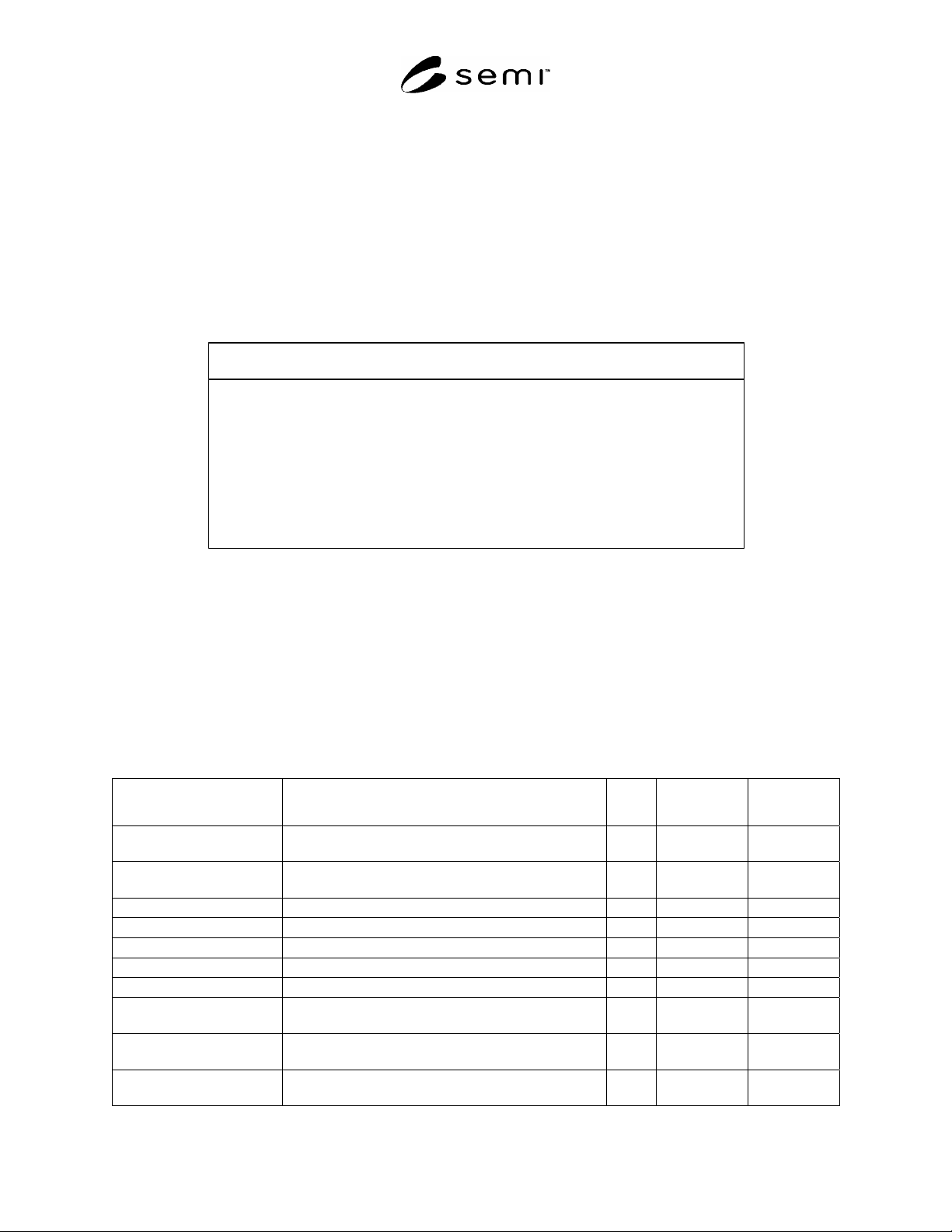
8.7.2 This document specifies a mechanism for consumers to issue ad-hoc requests for data in order to support these
uses, through the GetObjectInstanceIds and GetParameterValue operations of the DataCollectionManager interface
(see Sections 9.1.2.9 and 9.1.2.10).
9 Data Collection Plan Management
9.1 DataCollectionManager Interface
9.1.1 Figure 6 shows the interface used to manage data collection plans on the equipment, as well as making ad-hoc
requests for specific data, and for determining the current performance conditions on the equipment.
DefinePlan(in newPlan : DataCollectionPlan) : DCPDefined
GetDefinedPlanIds() : DCPDefined[]
GetPlanDefinition(in dc pId : String) : DataCollec tionPlan
Ac tivatePlan(in dc pI d : String) : D C PAct ivated
GetActivePlanIds() : DCPActivated[]
DeactivatePlan(in dcpId : String, in terminate : boolean) : DCPDeactivated
DeletePlan(in dcpId : DCPIdentifier) : DCPDeleted
GetParameterValues(in parameterRequest : ParameterRequest[]) : ParameterValu
e
GetObjT ypeIns tanceIds (in request : ObjT ypeReques t[ ] ) : ObjTypeResult[]
GetCurrentPerformanceStatus() : PerformanceStatus
«interface»
DataCollectionManager
Figure 6
The Data CollectionManager Interface
9.1.2 DataCollectionManager — The DataCollectionManager interface provides consumers with operations to
manage data collection activities on the equipment. The interface provides operations for consumers to submit new
DCP’s, activate and deactivate them, look up existing plans, and delete defined plans. The DataCollectionManager
interface also provides operations to request the current equipment performance status as well as requesting ad-hoc
data on demand.
9.1.2.1 DataCollectionManager Operations
Table 5 DataCollectionManager Operation Definition
Operation Description Type Requestor/Sen
der
Responder/Rec
eiver
DefinePlan Submit a new plan definition to the equipment for
validation.
RR Consumer Equipment
GetDefinedPlanIds Retrieve a list of all valid DCP id’s known to the
equipment.
RR Consumer Equipment
GetPlanDefinition Retrieve the definition of a specific DCP. RR Consumer Equipment
ActivatePlan Activate a defined DCP. RR Consumer Equipment
GetActivePlanIds Retrieve a list of all currently active DCPs. RR Consumer Equipment
DeactivatePlan Deactivate an active DCP. RR Consumer Equipment
DeletePlan Delete a DCP. RR Consumer Equipment
GetParameterValues Retrieve the most recent values of one or more
Parameters.
RR Consumer Equipment
GetObjTypeInstanceIds Retrieve a current list of the unique instance id’s for one
or more E39 ObjTypes.
RR Consumer Equipment
GetCurrentPerformanceStatu
s
Retrieve the most recent equipment performance status. RR Consumer Equipment
SEMI E134-0305 © SEMI 2004, 2005 11
9.1.2.2 DefinePlan — Upon receiving this request, the equipment shall first verify that the consumer has sufficient
privilege (see Section 10) to define a new DCP. If so, the equipment shall then validate the plan name for
uniqueness and all referenced events, exceptions, parameters, and trace reports for existence and correctness. The
equipment shall place no a-priori limitation on the number of plans that can be defined.
9.1.2.2.1 Any hard limitations imposed by constraints on available storage capacity shall be documented by the
equipment supplier. If such limitations are encountered at runtime, the equipment shall return an equipment-defined
error indicating that the DCP was not successfully defined, and a human-readable description of the reason. The
mechanism for supporting such errors shall be fully specified in implementation mappings provided for this
specification.
9.1.2.2.2 If there are any issues with the submitted plan, the equipment shall return a description of all problems
detected with the plan (see Section 9.1.2.2.6 for a description of possible DCP definition problems), and the plan
shall not be defined on the equipment.
9.1.2.2.3 If there are no issues with the submitted plan, the equipment shall record the date and time at which the
plan definition was submitted and the id of the consumer that submitted the plan. The equipment shall store this
information and the plan definition in non-volatile storage. It shall thereafter be legal for DCP requests to refer to
the submitted plan by its id field.
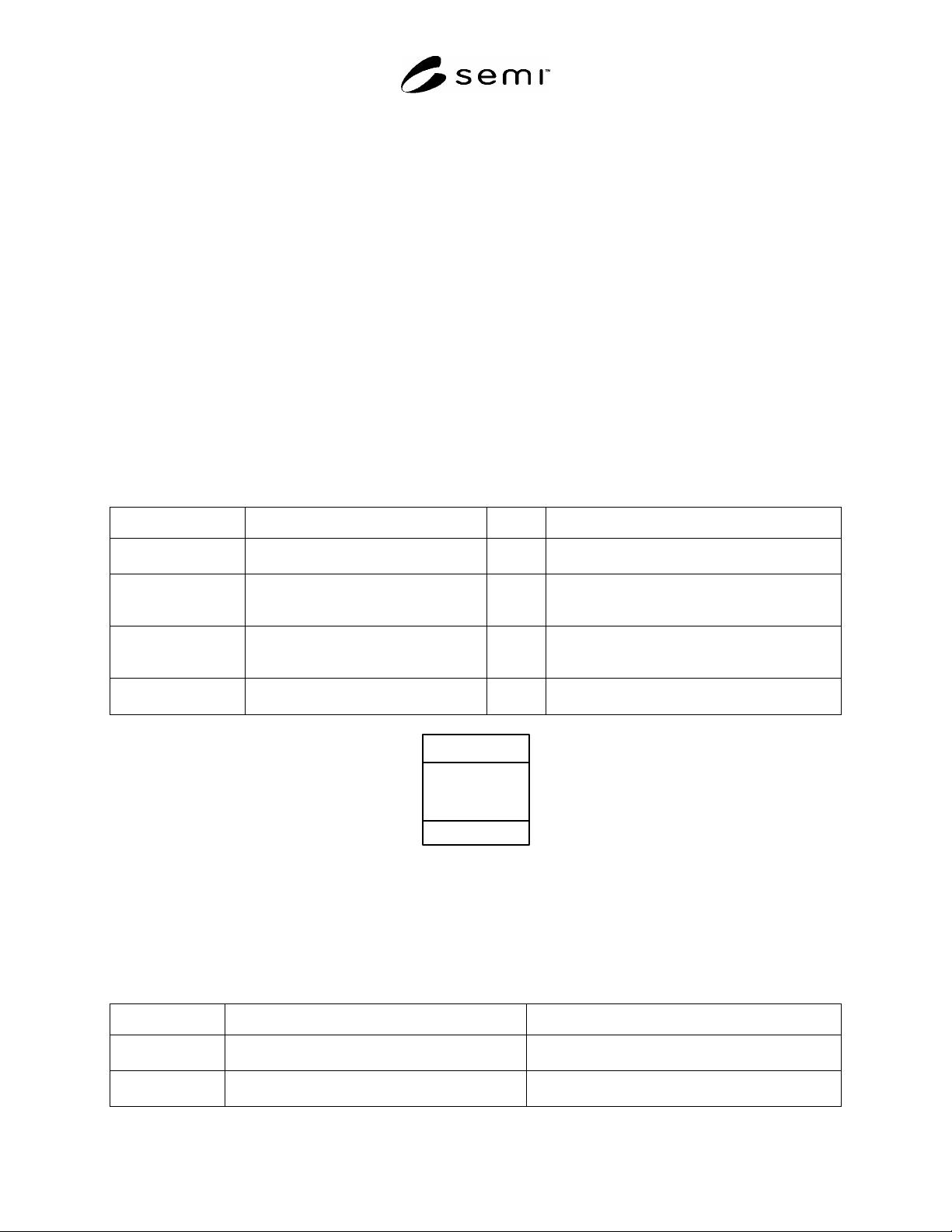
9.1.2.2.4 DefinePlan Operation Arguments
Table 6 DefinePlan Argument Definitions
Argument Description Kind Form
newPlan The definition of a new DCP. in Structured data, of type DataCollectionPlan,
described in Section 11.1.2 .
planDefined An acknowledgement that the new DCP
definition was well-formed, correct, and
supportable.
out Structured data, of type DCPDefined, described in
Section 9.1.2.2.4 .
error The consumer submitting the DCP does
not have sufficient privilege to define
DCPs.
error Structured data, of type UnauthorizedOperation,
described in Section 9.1.2.2.5 .
error The DCP definition is invalid. error Structured data, of type InvalidPlan, described in
Section 9.1.2.2.6 .
planI d
timeDef ined
definedBy
DCPDefin ed
Figure 7
DCP Defined Class
9.1.2.2.5 DCPDefined — This class describes a DCP that has been successfully defined on the equipment.
9.1.2.2.5.1 DCPDefined Attribute Definition Table
Table 7 DCPDefined Attribute Definition
Attribute Name Definition Form
planId Identifies a defined DCP. Text, equal to the ‘id’ attribute of the
DataCollectionPlan defined on the equipment.
timeDefined The date and time at which the DCP was originally
defined.
Text, formatted according to Section 14.5 For built-in
plans (see Section 11.1.2.1), this field shall be equal to