semi合集-English.pdf - 第3081页
SEMI E123.1-0703 © SEMI 2003 4 Service SECS-II Field Values Req. Description RCMD “PP-SELECT” Y CPNAME 1 “PPID” Y ProcessPr ogramID parameter. CPVAL 1 A[80] Y The ID of the program to be loaded. CPNAME 2 “PROCESSSITEID” …
SEMI E123.1-0703 © SEMI 2003 3
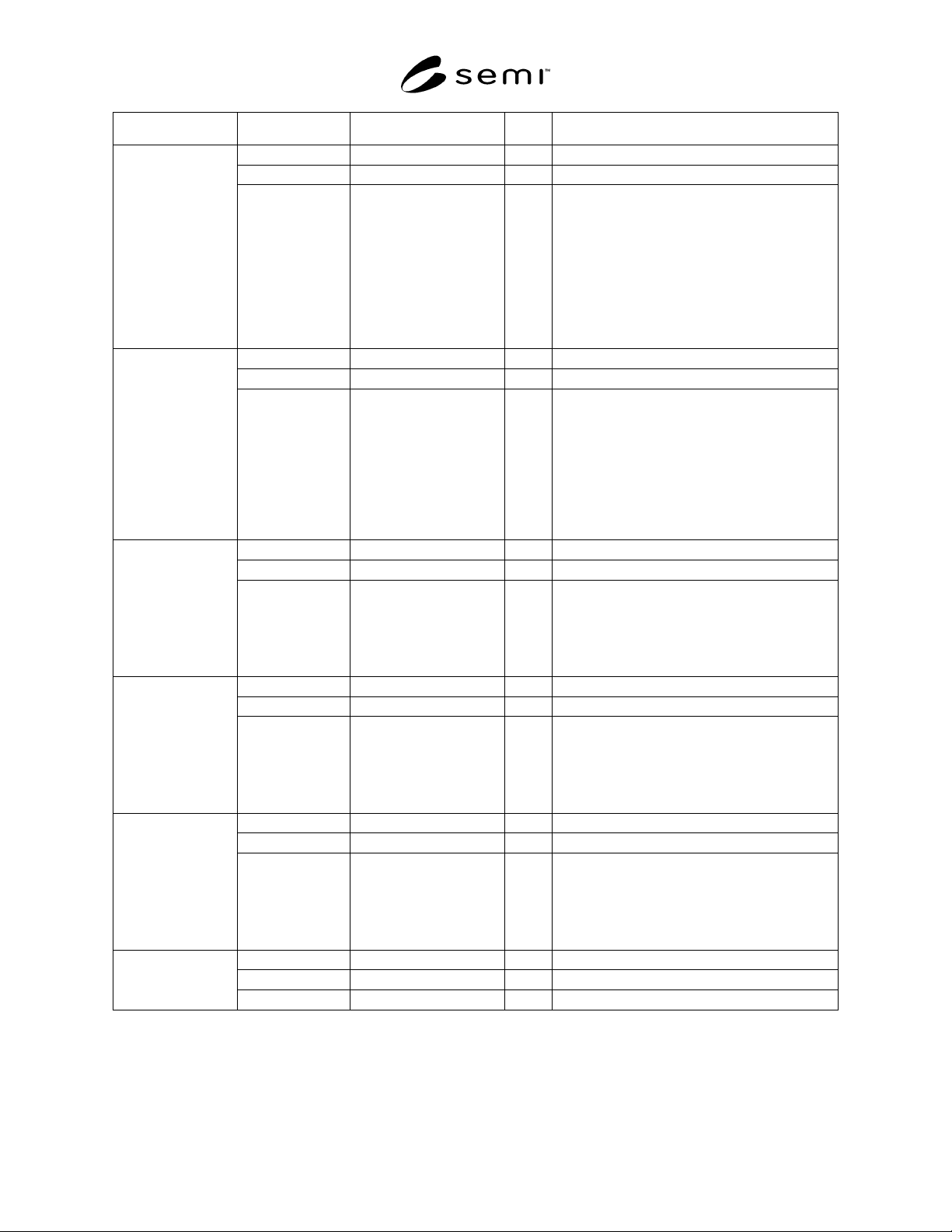
Service SECS-II Field Values Req. Description
RCMD “BIN-UNITS” Y
CPNAME
1
“BINS” Y Bins parameter.
BIN-UNITS
CPVAL
1
L, n
1. U4
2. U4
:
n. U4
Y Bins value. List of bin results for current
processed units, one bin value per process site
beginning with site 1. Bin values for disabled or
empty sites are to be ignored.
L, n (n = total number of sites)
1. Site 1 Bin Value
2. Site 2 Bin Value
3. …
n. Site n Bin Value
RCMD “BREAK-CONTACT” Y
CPNAME
1
“SITES” Y Sites parameter.
BREAK-CONTACT
CPVAL
1
L, n
1. U4
2. U4
:
n. U4
Y Sites value. List of sites to break contact. Zero-
length list indicates all sites.
Ex.
L, n (n = number of sites selected)
1. ID of 1
st
site
2. ID of 2
nd
site
3. …
n. ID of nth site
RCMD “DISABLE-SITE” Y
CPNAME
1
“SITES” Y Sites parameter.
DISABLE-SITE
CPVAL
1
L, n
1. U4
2. U4
:
n. U4
Y Sites value. List of sites to disable. Zero-length
list indicates all sites.
RMCD “ENABLE-SITE” Y
CPNAME
1
“SITES” Y Sites parameter.
ENABLE-SITE
CPVAL
1
L, n
1. U4
2. U4
:
n. U4
Y Sites value. List of sites to enable. Zero-length
list indicates all sites.
RCMD “MAKE-CONTACT” Y
CPNAME
1
“SITES” Y Sites parameter.
MAKE-CONTACT
CPVAL
1
L, n
1. U4
2. U4
:
n. U4
Y Sites value. List of sites to make contact after a
break contact command. Zero-length list
indicates all sites.
RCMD “PAUSE” Y
CPNAME
1
“PROCESSSITEID” N ProcessSiteID parameter.
PAUSE
CPVAL
1
U4 N ProcessSiteID value. ID of handler process site.
SEMI E123.1-0703 © SEMI 2003 4
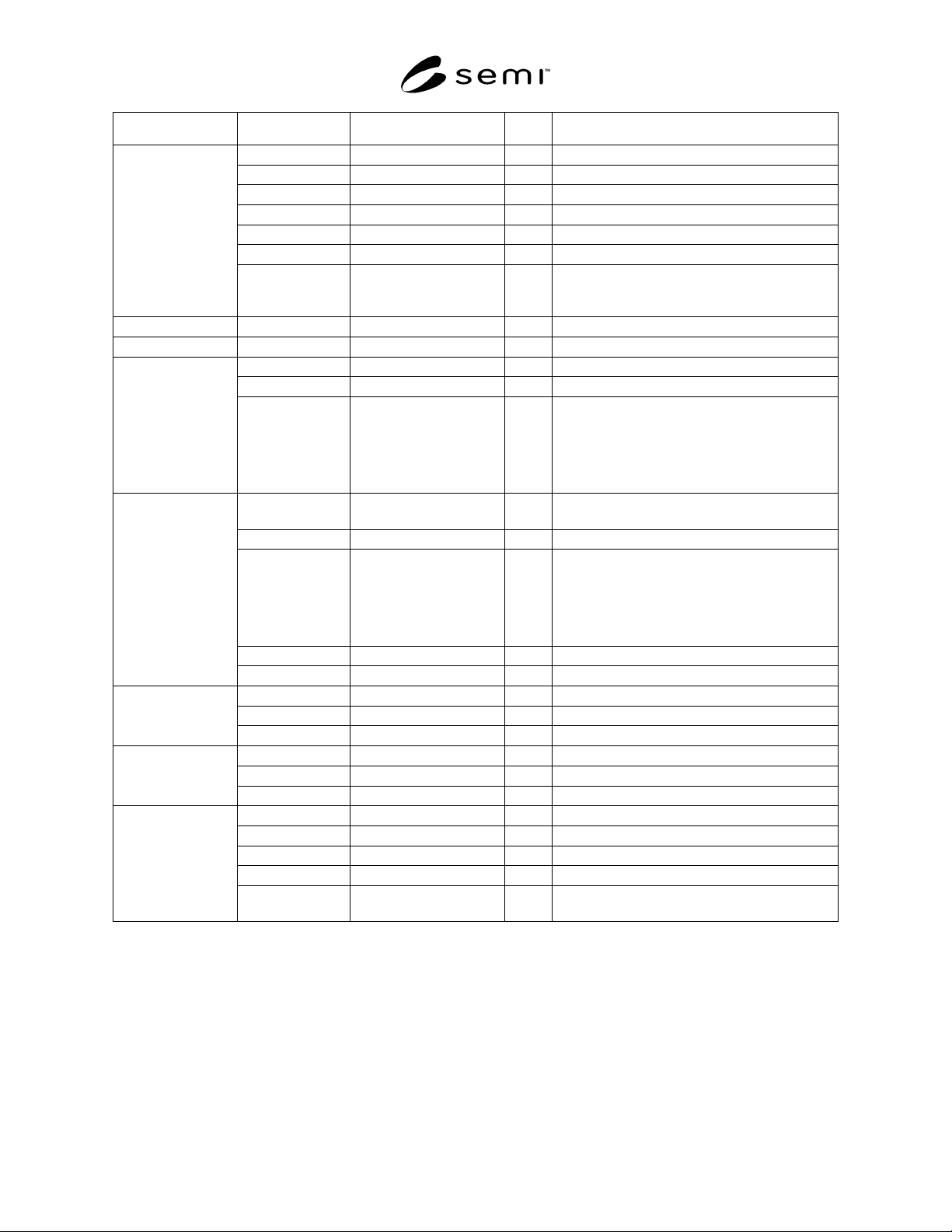
Service SECS-II Field Values Req. Description
RCMD “PP-SELECT” Y
CPNAME
1
“PPID” Y ProcessProgramID parameter.
CPVAL
1
A[80] Y The ID of the program to be loaded.
CPNAME
2
“PROCESSSITEID” N ProcessSiteID parameter.
CPVAL
2
U4 N ProcessSiteID value. ID of handler process site.
CPNAME
3
“LOTID” N LotID parameter.
PP-SELECT
CPVAL
3
A[1..40] N LotID value. ID of lot to be processed with this
program. This is an optional parameter that has
implementation specific meanings.
PRELOAD-UNITS RCMD “PRELOAD-UNITS” Y
PURGE RCMD “PURGE” Y
RCMD “RECONTACT” Y
CPNAME
1
“SITES” Y Sites parameter.
RECONTACT
CPVAL
1
L, n
1. U4
2. U4
:
n. U4
Y Sites value. List of sites to re-contact. Zero-
length list indicates all sites.
RCMD “RESET-TOOL-
COUNTS”
Y
CPNAME
1
“SVIDLIST” Y StatusVariableList parameter.
CPVAL
1
L, n
1. U4
2. U4
:
n. U4
Y StatusVariableList value. List of status variables
to reset, list by SVID.
CPNAME
2
“PROCESSSITEID” N ProcessSiteID parameter.
RESET-TOOL-
COUNTS
CPVAL
2
U4 N ProcessSiteID value. ID of handler process site.
RCMD “RESUME” Y
CPNAME
1
“PROCESSSITEID” N ProcessSiteID parameter.
RESUME
CPVAL
1
U4 N ProcessSiteID value. ID of handler process site.
RCMD “START” Y
CPNAME
1
“PROCESSSITEID” N ProcessSiteID parameter.
START
CPVAL
1
U4 N ProcessSiteID value. ID of handler process site.
RCMD “STOP” Y
CPNAME
1
“PROCESSSITEID” N ProcessSiteID parameter.
CPVAL
1
U4 N ProcessSiteID value. ID of handler process site.
CPNAME
2
“CLOSELOT” N CloseLot parameter.
STOP
CPVAL
2
BOOLEAN N CloseLot value. This is an optional parameter
that has implementation specific meanings.
SEMI E123.1-0703 © SEMI 2003 5
6 Variable Data Item Mapping
The purpose of this section is to define the list of variable items required by the HSEM. Values of these variables
will be available to the host through collection event reports and host status queries.
6.1 Requirements
6.1.1 Any supplier-defined variables shall be documented in the same format used by this document. The following
minimum information is required:
<variable name> Class: <ECV, SV, or DVVAL> Format: <SML>
Description: <If class = DVVAL, description must contain statement of when data is valid.>
<If format = ASCII, then a length is required. It is assumed to be left-justified unless otherwise noted.>
6.2 Data Types
6.2.1 Equipment Constants (ECVs) can be changed by the host using S2,F15 (New Equipment Constant Send). The
operator may be able to change some values, but the equipment does not change the values on its own. The value of
an equipment constant may be queried by the host at any time, using the S2,F13/14 transaction. They reside in non-
volatile memory of the equipment. Equipment constants remain in effect until they are overwritten either by manual
entry or by a S2,F15.
6.2.2 Status Variables (SVs) are valid at all times. An SV may not be changed by the host but may be changed by
the equipment or operator. The value of status variables may be queried by the host at anytime using the S1,F3/4 or
S6,F19/20 transactions.
6.2.3 DVVALs are variables that are valid only upon the occurrence of specific collection events. An attempt to
read a variable item at the wrong time does not generate an error, but the data reported may not have relevant
meaning.
6.3 For multiple sites scenarios, if a variable is described as List by number of sites, then a list is expected, one
value for each site.
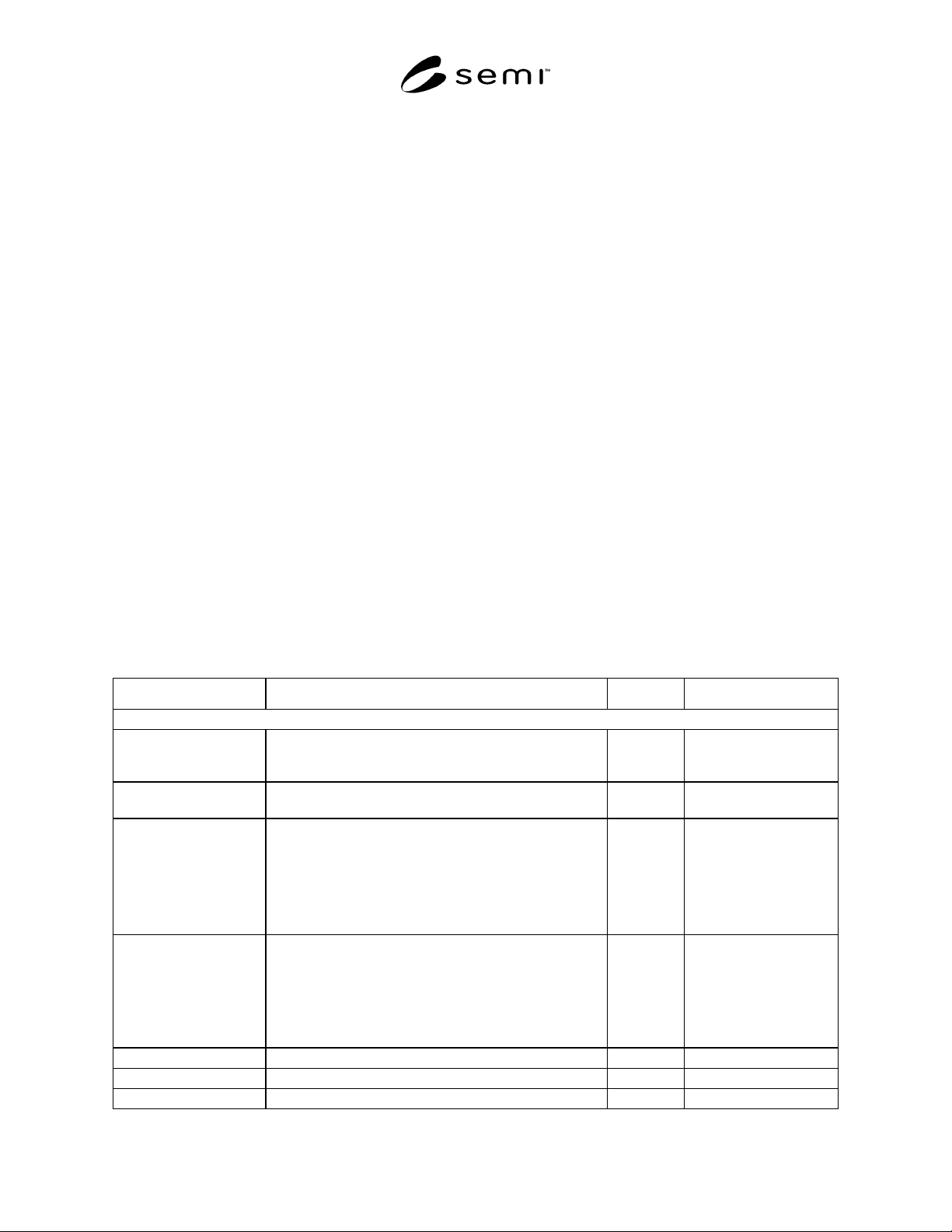
Table 4 Variable Item Mapping Table
Variable Name Description Class SECS-II Type
Physical Handler Group
BufferID Identifier of the buffer. This is implementation specific
depending if handler supports any input, sort or output
buffers.
DVVAL A[1..16]
BufferType Supplier defined buffer type. This is implementation
specific, and may include input, output or sort buffers.
DVVAL Enumerated value for
each buffer type.
CategoryID List of sort category IDs currently configured in handler. ECV L, n
1. A[1..16]
2. A[1..16]
:
n. A[1..16]
CategoryCount Count of units in each sort category. List by number of
categories.
L,n # n=number of categories
L, 2
1. CategoryID
2. Count of units in this category
SV L, n
L,2
1. A[1..16]
2. U4
EquipSerialID Identification of Equipment. SV A[1..16]
KitID ID of unique tooling unit. SV A[1..24]
LightPoleStatus Color/status (i.e., Red/flash). SV A[1..16]