semi合集-English.pdf - 第3963页
SEMI F40-0699 © SEMI 1999 7 Table 2 Material Requirements for Bulk Analy sis Inorga nics FTIR Therma l Ana l ysi s Wat er Absorption Weig ht (gms) 1–2 < 5 0.007–0.01 10 Detection Limi t 0.1 ppm N/A N/A 0.1% Table 3 Re…
SEMI F40-0699 © SEMI 1999 6
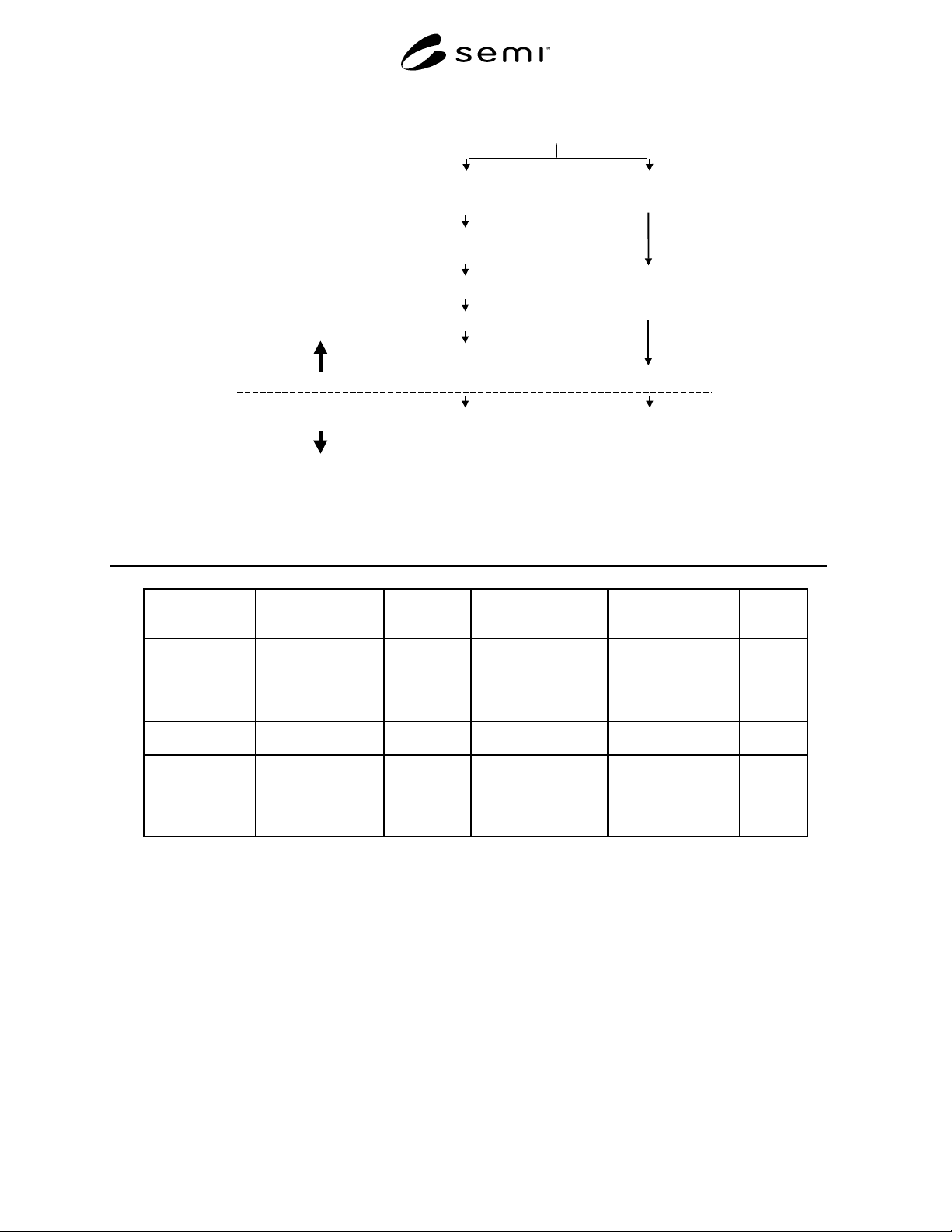
Polymer
material sample
to be tested
Surface Contamination
Extraction Analysis
Component
Bulk Polymer
Analysis
Clean if required
Component and blank
extraction fluid
samples to be tested
Flush
Analytical
test method
Soak
Pre-clean
caps and containers
covered in this practice
covered in test methods
(see Table 3 and Related
Documents)
Analytical
test method
Figure 1
Summary of Practice
Table 1 Component Handling for Extraction Test Preparation
Component No. of Flushes
x
Flush Time (min.)
Soak Time Capped Component
or
Container
Container Material Section
Tubing,
Piping
10 x 2 min. 1 week capped component N/A 9.5.4
Valves,
Regulators,
Fittings
10 x 2 min. 1 week capped component N/A 9.5.5
Filter Housings 10 x 2 min. 1 week capped component N/A 9.5.6
O-rings,
Gaskets
10 x 2 min. 1 week container PFA
FEP
PP
glass
(see NOTE*)
9.6.4
* NOTE: The container and transfer vessel materials used depend on the test to be performed. Use the following
materials for the noted test methods.
Test Method Material
TOC, NVR glass
anions PP, glass
inorganics, resistivity, silica PFA, FEP
SEMI F40-0699 © SEMI 19997
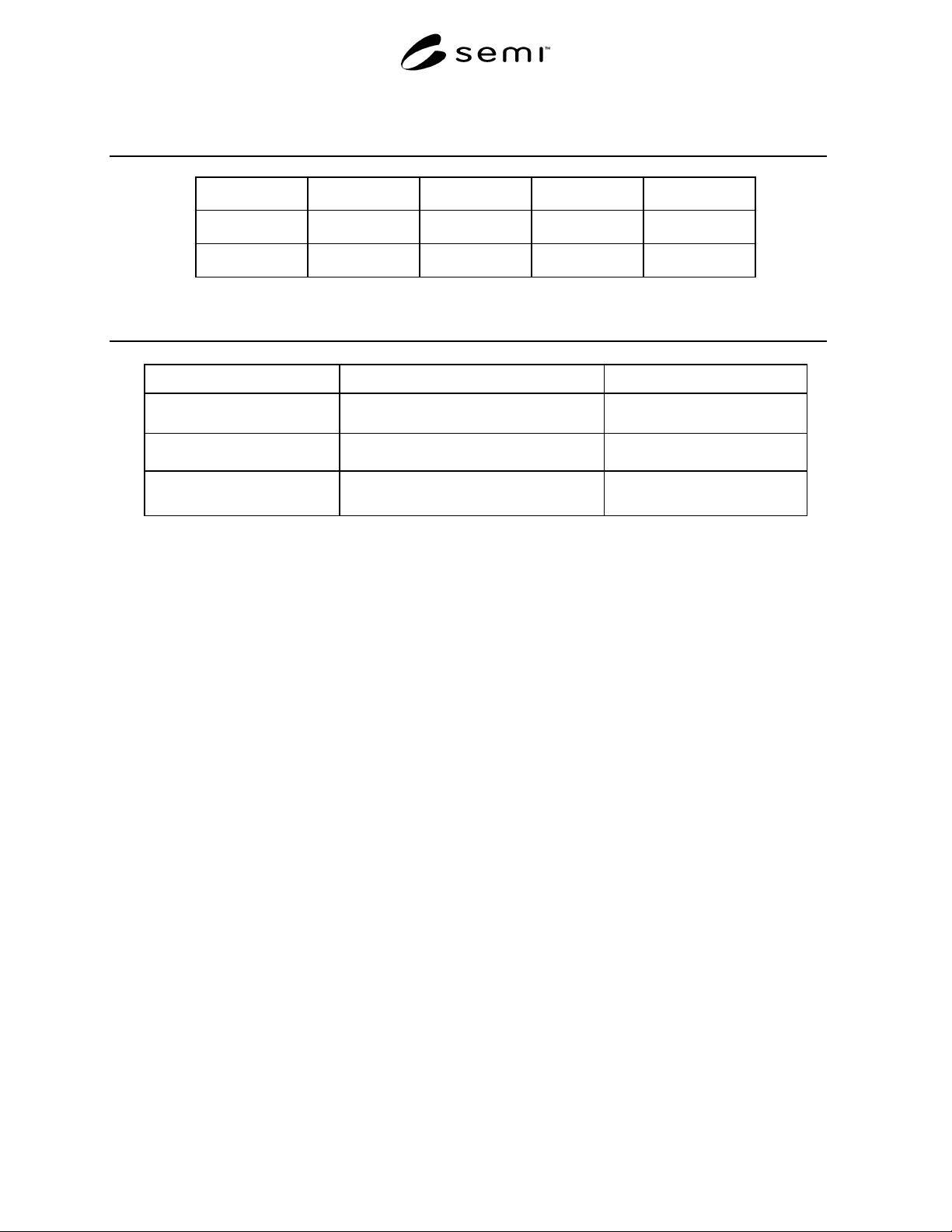
Table 2 Material Requirements for Bulk Analysis
Inorganics FTIR Thermal
Analysis
Water
Absorption
Weight (gms) 1–2 < 5 0.007–0.01 10
Detection
Limit
0.1 ppm N/A N/A 0.1%
Table 3 Reporting Units for Aqueous Liquid Components
Test Method Aqueous Liquid Component Reporting Units
Leachable Trace Inorganics,
Anions, TOC
tubing, piping, valves, regulators, fittings,
gaskets, O-rings, filter housings
µg/cm
2
Bulk Trace Inorganics
tubing, piping, valves, regulators, fittings,
gaskets, O-rings, filter housings
µg/cm
2
Nonvolatile Residue tubing, piping, valves, regulators, fittings,
gaskets, O-rings, filter housings
µg/cm
2
NOTICE: These standards do not purport to address
safety issues, if any, associated with their use. It is the
responsibility of the user of these standards to establish
appropriate safety and health practices and determine
the applicability of regulatory limitations prior to use.
SEMI makes no warranties or representations as to the
suitability of the standards set forth herein for any
particular application. The determination of the
suitability of the standard is solely the responsibility of
the user. Users are cautioned to refer to manufacturer’s
instructions, product labels, product data sheets, and
other relevant literature respecting any materials
mentioned herein. These standards are subject to
change without notice.
The user’s attention is called to the possibility that
compliance with this standard may require use of
copyrighted material or of an invention covered by
patent rights. By publication of this standard, SEMI
takes no position respecting the validity of any patent
rights or copyrights asserted in connection with any
item mentioned in this standard. Users of this standard
are expressly advised that determination of any such
patent rights or copyrights, and the risk of infringement
of such rights, are entirely their own responsibility.
Copyright by SEMI® (Semiconductor Equipment and Materials
International), 3081 Zanker Road, San Jose, CA 95134. Reproduction o
f
the contents in whole or in part is forbidden without express written
consent of SEMI.

SEMI F41-0699 © SEMI 19991
SEMI F41-0699
GUIDE FOR QUALIFICATION OF A BULK CHEMICAL DISTRIBUTION
SYSTEM USED IN SEMICONDUCTOR PROCESSING
This Guide was technically approved by the Global Facilities Committee and is the direct responsibility of
the North American Facilities Committee. Current edition approved by the North American Regional
Standards Committee on December 18, 1998. Initially available on www.semi.org January 1999; to be
published June 1999.
1 Purpose
1.1 This Guide sets forth a logical and systematic
approach to the qualification of a Bulk Chemical
Distribution System that may be used by users and
suppliers as a basis for developing site-specific BCDS
specifications and performance criteria.
2 Scope
2.1 The qualification process includes evaluation of
chemical from the chemical source, the fluid transfer
system, the distribution piping, the day tank, as well as
other intermediary points of transfer and storage that
may be included in the qualification plan.
2.2 This guide assumes that the BCDS has been
installed per the BCDS manufacturer's
recommendations and the customer's specifications, and
has been appropriately leak tested and shown to meet
all requirements of mechanical and physical integrity up
to the POU.
2.3 BCDS are typically tested for particle levels and
trace metal impurities according to specified levels
agreed upon in advance. For certain applications or
specific chemicals, other testing may become
incorporated in the qualification process. These other
tests may include assay analysis, anion analysis, TOC
analysis, moisture analysis, etc.
3 Limitations
3.1 This guide does not define the test methods that
should be used for evaluation of samples taken during
the qualification process, or distinguish test methods
that will generate accurate and reliable results from
those that will not generate accurate or reliable results.
3.2 This guide does not define or describe the
sampling methodologies that are required in order to
physically take a representative and a non-contaminated
batch sample. However, appropriate sampling
procedures and equipment must be used consistent with
the actual specifications.
3.3 This guide does not define the type of containers
that should be used for sampling. Pretreatment of
containers is necessary to assure that the data generated
by testing actually measures the chemical being
delivered to the process tool and not the impurities in
the container itself, from the environment, or from
human handling.
3.4 This guide does not address the type, level, or
frequency of testing necessary and appropriate for
ongoing monitoring of a BCDS.
3.5 This guide does not address the special case of a
system designed and used for the generation and
distribution of high purity water used in semiconductor
processing.
3.6 This guide does not address the testing and
prequalification of materials, subassemblies, or
components used in a BCDS.
3.7 This guide does not address the protocols and
requirements defined by the manufacturer concerning
the installation of the BCDS.
3.8 This guide does not define the actual specifications
generally negotiated between the user and the
manufacturer of the BCDS, against which chemical
samples are tested and qualification is passed.
3.9 This guide does not address the qualification
process for chemicals through the process tool. While
the sampling considerations and timing make the initial
tool qualification a natural adjunct to the BCDS
qualification, the responsibility for this task generally
falls within a different jurisdiction and is generally
handled separately.
4 Referenced Documents
4.1 SEMI Documents
4.1.1 SEMI S-2 — Safety Guideline for
Semiconductor Manufacturing Equipment
4.1.2 SEMI E-4 — Guide for Standard Performance,
Practices, and Sub-Assembly for High Purity Piping
Systems and Final Assembly for Semiconductor
Manufacturing Equipment
4.1.3 SEMI F31 — Guide for Bulk Chemical
Distribution Systems
4.2 Other Document