semi合集-English.pdf - 第6580页
SEMI C1-0705 © SEMI 1978, 2005 6 5.16 Lead Standard Solution — Dissolve 0.160 g of lead nitrate, Pb(NO 3 ) 2 , in 100 mL of dilute nitric acid (1 + 99) and dilute to 1000 mL with water. Dilute 10 mL of this solution with…

SEMI C1-0705 © SEMI 1978, 2005 5
4.24 Water Content by Karl Fischer Titration — The Karl Fischer method for the determination of water involves a
titration with the so-called Karl Fischer reagent, consisting of iodine, sulfur dioxide, pyridine, and methanol. Details
of this method are provided in the ASTM Standard Test Method E 203 and in Reagent Chemicals, published by the
American Chemical Society
4.25 Water and Steam Baths — A water bath, unless otherwise stated, shall imply a bath of vigorously boiling
water. A steam bath (at 1 atmosphere pressure), unless otherwise qualified, shall imply either exposure to flowing
steam or to another source of heat at the temperature of flowing steam.
4.26 Weights and Measures — The weights and measures used shall be those of the International System (SI)
6
.
5 Reagent and Standard Solutions
5.1 The purity of reagents used in each analytical procedure should be concomitant with the grade of liquid
chemical being analyzed.
5.2 Ammonium Molybdate Reagent Solution — Dissolve 50 g of ammonium molybdate, (NH
4
)
6
Mo
7
O
24
•4H
2
O, in 1
N sulfuric acid and dilute with 1 N sulfuric acid to 1000 mL.
5.3 Ammonium Thiocyanate Reagent Solution — Dissolve 150 g of ammonium thiocyanate, NH
4
SCN, in water and
dilute with water to 500 mL.
5.4 Antimony Standard Solution — Dissolve and dilute 0.275 g of potassium antimony KSbO(C
4
H
4
O
6
)• 1/2H
2
O
with water to 1000 mL (1.0 mL = 0.1 mg of antimony (Sb)).
5.5 Arsenic Stock and Working Solution — See ¶7.6.3.1.
5.6 Barium Chloride Solution — Dissolve 60 g of barium chloride dihydrate, BaCl
2
•2H
2
O, in water and dilute with
water to 500 mL.
5.7 Boron Standard Solution — Dissolve 0.572 g of boric acid, H
3
BO
3
, in water and dilute to 1000 mL with water.
Then dilute 10 mL of this solution with water to 1000 mL (1.0 mL = 0.001 mg of boron (B)).
5.8 “Bromine Water” Reagent Solution — Add sufficient liquid bromine to water in a bottle so that undissolved
bromine remains as a separate phase when the mixture is shaken.
5.9 Brucine Sulfate Solution — Dissolve 0.6 g of brucine sulfate, (C
23
H
26
N
2
O
4
)
2
•H
2
SO
4
•7H
2
O, in dilute sulfuric
acid (2 + 1), previously cooled to room temperature, and dilute to 1000 mL with the dilute acid. The sulfuric acid
should be nitrate-free acid prepared as follows: Dilute the concentrated sulfuric acid (about 96% H
2
SO
4
) to about
80% H
2
SO
4
by adding it to water, heat to dense fumes of sulfur trioxide, and cool. Repeat the dilution and fuming
three or four times.
5.10 Carminic Acid Reagent Solution — Dissolve 0.05 g of carminic acid in 100 mL of sulfuric acid and shake until
dissolution is complete.
5.11 Chloride Standard Solution — Dissolve 0.165 g of sodium chloride, NaCl, in water and dilute with water to
100 mL. Then dilute 10 mL of this solution with water to 1000 mL (1.0 mL = 0.010 mg of chloride (Cl) ion).
5.12 Dimethylglyoxime Reagent Solution — Dissolve 1.0 g of dimethylglyoxime in 100 mL of 95% EtOH (ethanol)
reagent alcohol.
5.13 Hydrogen Sulfide Water — Immediately before use, saturate water with hydrogen sulfide gas.
5.14 Hydroxylamine Hydrochloride Reagent Solution — Dissolve 10 g of hydroxylamine hydrochloride,
NH
2
OH•HCl, in water and dilute with water to 100 mL.
5.15 Iron Standard Solution — Dissolve 0.702 g of ferric ammonium sulfate hexahydrate, Fe(NH
4
)
2
(SO
4
)
2
•6H
2
O,
in 10 mL of 10% sulfuric acid and dilute with water to 100 mL. Then to 10 mL of this solution, add 10 mL of 10%
sulfuric acid and dilute with water to 1000 mL (1.0 mL = 0.010 mg of iron (Fe) ion).
6 http://www.bipm.fr/enus/3_SI/, Bureau International des Poids et Mesures, Pavillon de Breteuil, 92312 Sèvres cedex, France, Phone: +33 1 45
07 70 70, Fax: +33 1 45 34 20 21, Website: http://www.bipm.fr/

SEMI C1-0705 © SEMI 1978, 2005 6
5.16 Lead Standard Solution — Dissolve 0.160 g of lead nitrate, Pb(NO
3
)
2
, in 100 mL of dilute nitric acid (1 + 99)
and dilute to 1000 mL with water. Dilute 10 mL of this solution with water to 100 mL immediately before use (1.0
mL = 0.010 mg of lead (Pb) ion).
5.17 Methyl Orange Indicator Solution — Dissolve 0.1 g of methyl orange in 100 mL of water.
5.18 Methyl Red Indicator Solution — Dissolve 0.1 g of the hydrochloride salt form of methyl red in 100 mL of
95% EtOH (ethanol) reagent alcohol.
5.19 p-(Methylamino)phenol Sulfate Reagent Solution — Dissolve 0.2 g of p-(methylamino)phenol sulfate in 100
mL of water and add 20 g of sodium bisulfite. The performance of the resulting reagent solution in the
determination of trace phosphate can be verified by the following test:
5.19.1 Place 25 mL of 0.5 N sulfuric acid and 1 mL of ammonium molybdate reagent solution in each of four test
tubes. Add 1 mL of the reagent solution to each of the tubes. To the tubes add, respectively, zero, 0.005, 0.010, and
0.020 mg of phosphate ion (PO
4
). After two hours at room temperature, an increasing intensity of blue color should
be visible in the series.
5.20 Nickel Standard Solution — Dissolve 0.448 g of nickel sulfate hexahydrate, NiSO
4
•6H
2
O, in water and dilute
with water to 100 mL. Then dilute 10 mL of this solution with water to 1000 mL (1.0 mL = 0.010 mg of nickel (Ni)
ion).
5.21 Nitrate Standard Solution — Dissolve 0.163 g of potassium nitrate, KNO
3
, in water and dilute with water to
100 mL. Then dilute 10 mL of this solution with water to 1000 mL (1.0 mL = 0.010 mg of nitrate (NO
3
) ion).
5.22 Nitrogen Standard Solution — Dissolve 0.382 g of ammonium chloride, NH
4
Cl, in water and dilute with water
to 100 mL. Dilute 10 mL of this solution with water to 1000 mL (1.0 mL = 0.010 mg of nitrogen (N)).
5.23 Phenolphthalein Indicator Solution — Dissolve 1 g of phenolphthalein in 100 mL of 95% EtOH (ethanol)
reagent alcohol.
5.24 Phosphate Standard Solution — Dissolve 0.143 g of monobasic potassium phosphate, KH
2
PO
4
, in water and
dilute to 100 mL with water. Then dilute 10 mL of this solution with water to 1000 mL (1.0 mL = 0.010 mg of
phosphate (PO
4
) ion).
5.25 Platinum-Cobalt Stock Solution (APHA 500) — (See ¶7.3.2.)
5.26 Potassium Iodide Reagent Solution — Dissolve 10 g of potassium iodide, KI, in 100 mL of water. Prepare
immediately before use.
5.27 Potassium Standard Solution — Dissolve 0.191 g of potassium chloride, KCl, in water and dilute with water to
1000 mL. Dilute 100 mL of this solution with water to 1000 mL (1 mL = 0.010 mg of potassium (K) ion).
5.28 Silver Nitrate Reagent Solution — Dissolve 1.7 g of silver nitrate, AgNO
3
, in water and dilute with water to
100 mL.
5.29 Sodium Carbonate Reagent Solution — Dissolve 1.0 g of anhydrous sodium carbonate, Na
2
CO
3
, in water and
dilute with water to 100 mL.
5.30 Sodium Arsenite Reagent Solution (5%) — Dissolve 1.0 g of anhydrous sodium arsenite, NaAsO
2
, in water and
dilute with water to 100 mL.
5.31 Sodium Hydroxide Reagent Solution — Dissolve 50 g of sodium hydroxide, NaOH, pellets in water and dilute
with carbon dioxide-free water to 500 mL.
5.32 Sodium Standard Solution — Dissolve 0.254 g of sodium chloride, NaCl, in water and dilute with water to
1000 mL. Then dilute 100 mL of this solution with water to 1000 mL (1 mL = 0.010 mg of sodium (Na) ion).
5.33 Stannous Chloride Reagent Solution — Dissolve 20 g of stannous chloride dihydrate, SnCl
2
•2H
2
O, in
hydrochloric acid and dilute with hydrochloric acid to 100 mL.
5.34 Starch Indicator Solution — Mix 1 g of soluble starch for iodometry with a starch indicator and enough cold
water to form a thin paste. Add 200 mL of boiling water and boil for 1 minute with stirring. Cool and transfer to a
storage bottle that has been well rinsed with hot water.
SEMI C1-0705 © SEMI 1978, 2005 7
5.35 Sulfate Standard Solution — Dissolve 0.148 g of anhydrous sodium sulfate, Na
2
SO
4
, in water and dilute with
water to 100 mL. Then dilute 10 mL of this solution with water to 1000 mL (1.0 mL = 0.010 mg of sulfate (SO
4
)
ion).
5.36 Thymolphthalein Indicator Solution — Dissolve 0.10 g of thymolphthalein in 100 mL of 95% EtOH (ethanol)
reagent alcohol.
6 Method Validation
6.1 Method Validation — Analytical methods for trace metals, trace anions, moisture and assays require that
performance parameters be assessed and compared to the standard and guideline requirements. The accuracy,
precision of the measurement and interferences should be reviewed and reported with each method.
6.1.1 Accuracy for Trace Metals, Trace Anions, and Moisture
6.1.1.1 Method accuracy is a figure of merit that compares the data generated from the determined concentration of
a sample to its “known” concentration. In some cases, a traceable standard may not be available and a “best
available standard” may be substituted.
6.1.1.2 Determine the accuracy of a test method by utilizing a standard reference material as a sample and analyze it
using the proposed test method. Report the test method accuracy as percent (%) bias:
100 x
X
XX
bias %
value"true"
value"true""found"
6.1.1.3 If no suitable traceable standard exists for the “true value,” describe the procedures used to qualify the “best
available standard.”
6.1.1.4 Spiked recovery determinations are used to make a limited assessment of accuracy. Method validation is
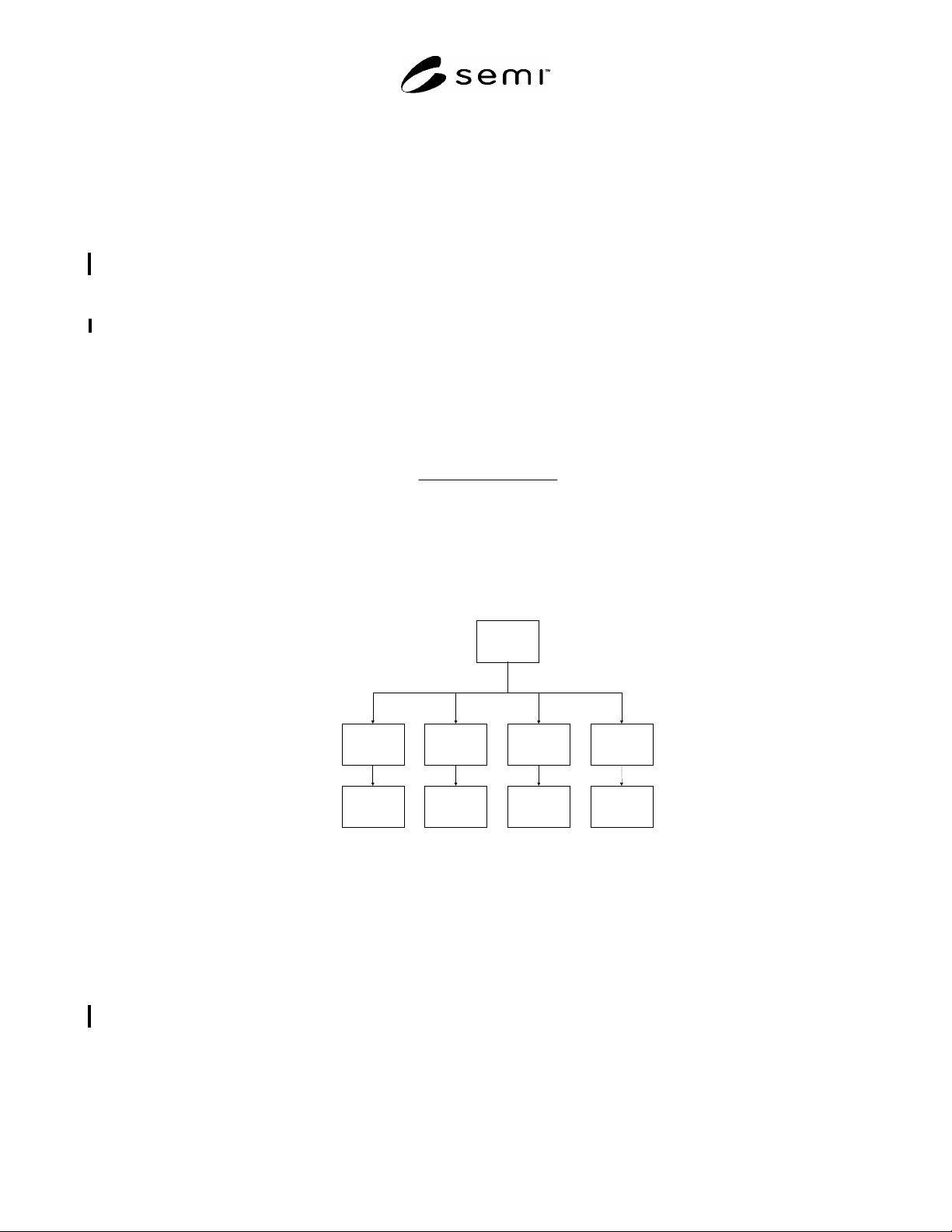
based on the analysis of a minimum of two samples and a minimum of two spiked samples (Figure 1).
Initial
Product
Sample
A
Sample B
Spiked
Sample C
Spiked
Sample D
Result A Result B Result C Result D
NOTE: Samples A, B, C, and D are originally from the same initial product.
Figure 2
Data Collection Structure
6.1.2 Measurement of Precision
6.1.2.1 Typically a repeatability and reproducibility study is done, where samples are analyzed over a period of
multiple days.
6.1.2.2 Measures of method precision incorporate all applicable method variability sources (such as sample
preparation, calibration, and instrumental performance) into their definitions. An assessment of method precision
for trace metals, trace anions, and moisture is detailed in Tables 2 and 4.