semi合集-English.pdf - 第983页
SEMI E129-1103 © SEMI 2003 21 additional requ irements to the ESD-protective packaging properties. Some of these cons iderations may actually pr eclude the ability to prov ide ESD protection. Therefore, there m ay often …

SEMI E129-1103 © SEMI 2003 20
R2-6 Neutralizing Charge on Insulators
R2-6.1 Static charge on a conductive or static-
dissipative object can be controlled if the object is
provided with a path for the charge to flow to earth
ground. Unfortunately, grounding methods do not
provide complete protection from static-related
problems. Even when earth grounding is an option, it is
subject to human error. In applications where
contamination is an issue, additives and carbon particles
used in static-dissipative materials may become sources
of contamination themselves.
R2-6.2 While charge is mobile in a conductor (or in a
static-dissipative material), in insulators charge is not
mobile, and earth grounding is not an effective means
of eliminating the static charge. More often than not,
the product itself uses insulating materials, making
earth grounding unavailable as an option. While silicon
is a semiconductor, its oxide coating transforms it into
an insulator. Polytetrafluoroethylene (PTFE) is used in
many chemical processes, and quartz in high-
temperature processes. Epoxy and ceramic packages
are used for integrated circuits. Insulators are easily
charged, retain their charge for long periods of time,
and are often close to the product.
R2-6.3 Dealing with static charge on insulators and
isolated conductors will often require the use of some
type of ionization or surface-resistance modification.
Ionizers are the most effective means of dealing with
static charges on insulators and isolated conductors if
the surface cannot be modified by coating or treatment
with some form of surface-dissipative or low-charging
“antistatic” agent.
R2-7 Ionization
R2-7.1 For purposes of static charge control, ions are
molecules of the gases in air (i.e., nitrogen, oxygen,
water vapor, carbon dioxide) that have lost or gained an
electron. Ions are present in normal outside air but are
removed when air is subjected to filtration and air
conditioning. Ionization systems work by increasing
the conductivity of the air by supplying ionized gas
molecules. Another way of looking at the application
of ionization is to interpret the function as supplying
opposite polarity charge from the air to surfaces
charged to the opposite polarity. When ionized air
comes in contact with a charged surface, the charged
surface attracts ions of the opposite polarity. As a
result, the static charge that has built up on products,
equipment and surfaces is neutralized.
R2-7.2 The most common methods of producing air
ions are radioisotopes and “corona discharge” resulting
from the electric field created when high voltage is
applied to a sharp point.
R2-7.3 The radioisotope most commonly used to
produce ionization is polonium-210, an alpha particle
emitter. The alpha particle collides with the
surrounding gas molecules, dislodging electrons. Gas
molecules that lose an electron become positive ions.
The free electron is quickly captured by another neutral
gas molecule, creating a negative air ion. Note that the
process always creates pairs of positive and negative
ions.
R2-7.4 The corona discharge method produces a very
high electric field that interacts with the electrons in the
surrounding gas. The polarity of the ions depends on
the polarity of the high voltage on the emitter point.
Ionizers using the corona discharge method will often
include some type of monitoring and feedback circuitry
to assure that equal numbers of positive and negative
ions are created.
R2-7.5 Ions of opposite polarity to the charged surface
are required. Either polarity of static charge may be
created on facility and equipment surfaces, or on the
product. Ionizers may be installed on the ceiling of the
room or may be hung from the ceiling using appropriate
mounting methods. Ionizers are installed in
minienvironments, particularly in the product load and
unload areas. Ionizers may also be installed in the
interior of process equipment. No single ionizer type or
installation location is sufficient to solve all the static
problems in the semiconductor facility.
R2-7.6 Ionizers should deliver ionization over a wide
range of humidity and temperature conditions. Back-
end assembly and test areas often do not have the level
of temperature and humidity control found in front-end
wafer production. Ionizers installed in the cramped
spaces of production equipment will be close to the
product, in areas surrounded by grounded metal parts.
Ionizers should isolate the emitter points from both the
product and adjacent grounded surfaces. Ionizers
should produce sufficient ions to discharge static on
surfaces and on products moving at high speeds despite
losses to ground. Most ionizers require maintenance
and periodic verification of their performance. The
appropriate ionizer installation will need to be
engineered for each specific application.
R2-8 Packaging Materials
R2-8.1 Types of Packaging
R2-8.1.1 Many forms of flexible and rigid packaging
are used to protect ESD-susceptible items. Bags,
boxes, wraps, tape and reel, pouches, cushioning foams,
totes, tubes and numerous other forms of containers are
available for any imaginable application. Each of these
container forms is available in an ESD-protective
version. Application in cleanroom environments adds
SEMI E129-1103 © SEMI 2003 21
additional requirements to the ESD-protective
packaging properties. Some of these considerations
may actually preclude the ability to provide ESD
protection. Therefore, there may often be a tradeoff
between ESD protection, cleanliness, and other required
material properties.
R2-8.1.2 The dissipative property for ESD protection
requires some type of chemical, metallic or elemental
additive to the bulk of the material or the surface of an
ESD-protective item. Adding a highly conductive layer
within the structure of the material or item provides the
electrostatic-shielding property. Any additive or
treatment may contribute to contamination concerns for
application in cleanrooms.
R2-8.1.3 Making a material low charging (“antistatic”)
requires modification of the surface to decrease surface
resistance and reduce friction. Often, low charging
materials allow a transfer of materials to contacting
surfaces to make the actual surfaces similar in
chemistry. Materials with chemically similar surfaces
usually do not show high levels of charge generation
when placed into contact and then separated from each
other. A downside to this process is the potential
contamination issue that may be involved if the
materials are used in clean areas. Take care in selecting
low-charging materials if cleanliness is a major issue.
This concern includes ionic contamination, non-
volatile-residue and outgassing.
R2-8.2 Material Guidelines
R2-8.2.1 Physical Guidelines — The required material
physical properties depend on the application involved.
The selection process for a packaging material or
system should consider all of the physical attributes
generally associated with protecting an item during
transit or storage. The physical requirements normally
evaluated for any packaging system and associated test
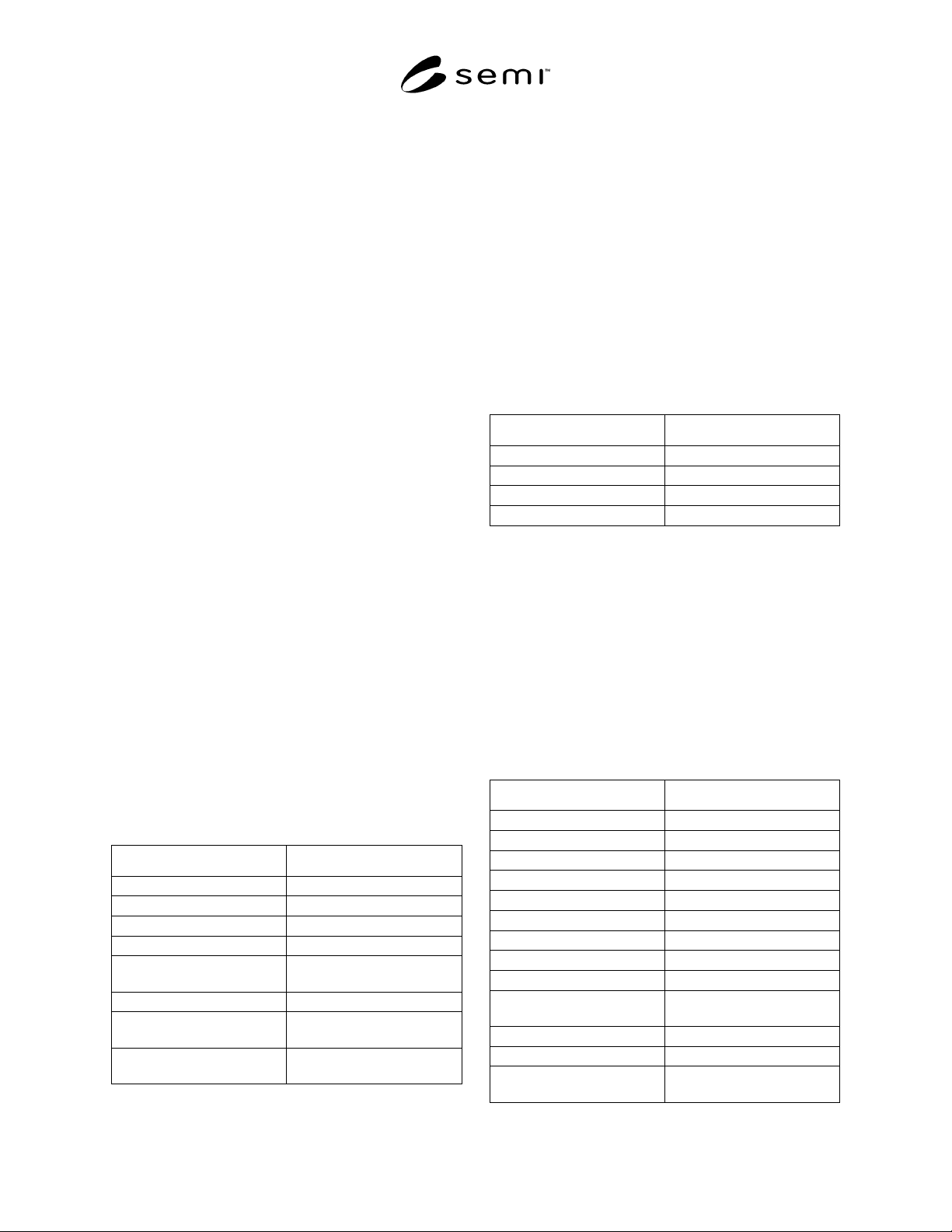
methods are shown in Table R2-1.
Table R2-1 Packaging System Physical Properties
Physical Properties Test Method
Tensile Strength ASTM D882
Elongation ASTM D882
Tear Strength ASTM D1922
Puncture Resistance FED-STD-101/2065
Seam Seal Strength (if
applicable)
ASTM F88
Light Transmission ASTM F1003
Moisture Vapor Transmission
(if applicable)
ASTM F1249
Light Transmission Rate (if
applicable)
ASTM D1003
R2-8.2.2 ESD-Protective Packaging Guidelines — The
type of packaging required for ESD-susceptible items
depends on where the item is going. Packaging
materials used inside of an ESD-protected work area
are static dissipative or low charging. When sensitive
items are moved outside of the protected area, the level
of protection should increase to include electrostatic
discharge shielding. Some extremely sensitive items
may require additional EMI or RFI protection provided
by heavier layers of shielding. Materials that provide
increased shielding may also provide moisture barrier
protection for enclosed items. The necessary electrical
properties for packaging materials that are normally
evaluated are shown with their associated test methods
in Table R2-2.
Table R2-2 ESD-Protective Packaging Properties
Electrical Properties Test Method
Surface Resistance ESD STM11.11
Volume Resistance ANSI ESD STM11.12
Shielding ANSI ESD S11.31
Static Decay FED-STD-101/4046
R2-8.2.3 Contamination Control Guidelines —
Contamination issues are not limited to particles.
Plastic processing additives to plastic packaging and
handling materials, chemical and molecular
compatibility should also be of concern. Users can
evaluate plastic packaging and handling materials using
published standard test methods. There are multiple
test methods and procedures to identify contamination
properties, as shown in Table R2-3. The user is advised
to select the method best suited to their products that
require protection.
Table R2-3 Contamination Control Properties
Contamination Properties Test Method
Particles ISO Std 14644
IEST-STD-CC1246D
IDEMA M9
ARP 598
KSC-C-123
Non-Volatile Residue IDEMA M7
ASTM E1235
ASTM F331
IPA extraction method
Outgassing IDEMA M11 Dynamic
Headspace Analysis
ASTM E595
Ionics IDEMA M12
Extractable/leachable cation
levels by ion chromatography

SEMI E129-1103 © SEMI 2003 22
R2-9 Problem of Controlling Static Charge in
Manufacturing Equipment
R2-9.1 The interior of high-speed production
equipment is a challenge to static control methods. The
high cost of production space requires equipment
occupying the space to be compact and operate at as
high a speed as practical. Product moves through small
spaces at high speed by a variety of robotic and other
mechanisms. Triboelectric charging (i.e., charge
generation due to friction or contact and separation of
dissimilar materials) and contact with ground are
almost unavoidable.
R2-9.2 Grounding of equipment parts that contact the
product presents added difficulties when the equipment
parts are moving at high speeds. Dissipating charge
from insulating surfaces and integrated circuit (IC)
packages may be difficult if the charged surfaces are
not accessible. Using ionizers in these confined spaces
presents challenges.
R2-9.3 Measuring the effectiveness of static control
methods in equipment will take some ingenuity. Test
methods are contained in SEMI E78 as well as ESD
SP10.1.
R2-10 Measurement of Charge and Potential
on Moving Objects
R2-10.1 The fundamental problem in measuring
accumulated charge on moving items in-situ is that only
the static voltage or electrostatic field can be measured
and not the actual charge. Direct measurements of
static charge can be made with a coulombmeter or
Faraday Cup (Pail), but only on stationary objects.
Therefore, any measurements or alarm limits for
moving objects can be set only in terms of accumulated
static voltage or electric field.
R2-10.2 Another difficulty in measuring the static
voltage or electric field from accumulated charge on
moving items in a manufacturing process is the
response time of the instrumentation. Non-contact
instruments measure the electric field emanating from
the surface of a charged object and this takes a finite
amount of time. While some instrument technologies
are faster than others, the measurement tools selected
for any application should consider the speed of the
process. A similar situation occurs in selection of
mitigation techniques, in particular ionizers, as speed of
neutralization depends solely on the number of ions
present in the immediate environment.
R2-10.3 Electrostatic charge on an object (has to be a
conductor to be accurate) is related to the electrical
potential between the object and ground and the
capacitance of the object relative to ground and the
surroundings. There is a measurable relationship
between an electric field measurement and the potential
of the conductive object. For insulators, electrostatic
charge cannot be determined by measuring electric
fields. The electric field measurement on an insulator
does not directly relate to electrostatic charge so
therefore it cannot be used to determine the level of
electrostatic hazard directly. A charged insulator can
only discharge from a very small area upon contact.
The electric field from a charged insulator causes
damage only when it is of sufficient strength and the
ESD-susceptible item is grounded while in the presence
of that electric field.
R2-10.4 ESD-instrument manufacturers are developing
new instruments that have improved response time over
earlier offerings. Much of this effort supports ESD
SP10.1, which describes measurement of voltage and
charge in Automated Handling Equipment. These
instruments will enable static measurements, even in
high-speed automated equipment.
R2-10.5 Non-contact voltmeters are an important
instrument type for measuring the electric field from
charged objects. Reducing the response time for this
class of instruments has been of major importance to
allow meaningful measurement in moving systems.
R2-10.6 Although the coulombmeter and Faraday Cup
can only be used to measure static charge on stationary
objects, they can still be useful in understanding the
charge generation characteristics of parts traveling
through process paths in component handling
equipment. Direct charge measurements combined
with estimates of electrical potential from the electric
field from a charged object can be used to determine
appropriate ionization levels, surface treatment needs,
grounding faults and provide insight into ESD risks
associated with component movement.
R2-11 Standards and Process Control
R2-11.1 Without any doubt, the most important aspect
of electrostatic control today is the advance made in
standardization and process control. Several industry
standards that cover the development and
implementation of an ESD Control Program were
released in the years since 1999. The four most
important standards are as follows:
• IEC 61340-5-1 — This document is a result of
international cooperation at the International
Electrotechnical Commission - Technical
Committee TC 101 – Electrostatics. The
companion User Guide IEC 61340-5-2 offers
considerable guidance that may assist the new
practitioner in ESD control.