semi合集-English.pdf - 第4421页
SEMI F98-0305 © SEMI 2005 4 analyzers at a sufficient distance upstr eam of the central diverter point, or provide a sufficient buffer/quarantin e volume. 8.3 Temperat ure — Hot wate r effluent from rinse tanks on wet be…

SEMI F98-0305 © SEMI 2005 3
ultimately through a semipermeable membrane that isolates the feed water channel from adjacent circulating water
flows (“concentrate channels”) that sweep away the impurities entering through the semipermeable membranes.
This continuous regeneration action eliminates the need to take ion exchange columns off-line for resin regeneration
and also eliminates the need for storing regeneration chemicals on site.
6.2.4 Reverse Osmosis Membrane Treatment provides extremely high rejection of dissolved ions (charged atoms
and molecules), organic (carbon containing) compounds, silica (silicon containing) compounds, and virtually
complete rejection of suspended contaminants, but will not reject dissolved gases and volatile organic compounds as
well. For reclaim systems, special types of high rejection or low fouling RO membranes may be selected.
6.2.5 Often RO Systems are combined with ion exchange processes either with the purpose of increasing the
recovery rate of the RO or by combining the high efficiency of a membrane process with the lower fouling potential
of ion exchange resins, e.g. Weakly Acidic Cation Resin (WAC) is designed to remove Ca and Mg ions in the
water. The system design should reflect that most of the contaminants of rinse waters are anionic in nature and may
foul RO membranes, but recycling water may be mixed with other water qualities and may therefore contain
hardness, which can react with the Fluoride of the recycling water.
6.2.6 Biological processes are used to treat water with higher organic contents. They can be either fixed bed
systems or fluidized bed systems. These processes typically require both upstream and downstream processes, such
as neutralization, and maintaining a stable feed concentration for the biological process upstream and removal of
bacteria downstream. The operation of such systems is quite sensitive, but most of the organics used in
semiconductor manufacturing can be treated by such systems, including TMAH and chemicals used for lithography
and stripping.
6.2.7 Other Treatment — Includes microfiltration, ultrafiltration, and other types of water treatment typically used
to protect RO Membranes. Pretreatment equipment may include media filtration (bulk suspended solids removal),
1–5 micron cartridge filtration (polishing step for suspended solids removal), sodium-cycle cation exchange
(softening, to remove scale-forming cations), acid injection (to minimize cellulose acetate membrane damage and/or
to control carbonate scales), scale inhibitor injection (to control scaling), and sulfite ion injection (to remove
oxidizing agents).
6.3 Monitoring — TOC, pH, conductivity, and temperature are typical parameters that can be monitored on-line
and tracked over time to optimize performance. The set points and level of monitoring depends on the chemistries
being used and what the ionic and organic loads are in each waste stream after the application and the treatment. To
ensure the accuracy of certain on-line measurements, a minimum residence time and volume of sample is required
and can be provided through the use of a buffer station and separate sample tanks. Other parameters such as fluoride
levels, specific organics, and oxidants from undeveloped ammonia must be measured in the laboratory.
7 Grades of Water Effluent
7.1 Rinse Water — The second and third rinses from wafer cleaning processes are sufficiently high quality to be
reused without further treatment either for make-up water in a UPW system, or directly for use in a lower grade
application such as CMP cleaning.
7.2 Non-treated Reclaim Water — Is a lower grade of water with possible applications including fab air pollution
abatement scrubbers, fab point-of-use hazardous gas burn boxes, and drain flushing for CMP drains.
8 Special Issues
8.1 Difficulty of Identifying and Treating Organics — It is difficult to evaluate rinse waters after solvent use. Real
time, on-line instruments are not available to easily quantify and identify the complete composition of the organic
molecules for proper segregation. In addition, treatment of waste water containing organics is more difficult in
some cases, depending on the organic molecules being removed or converted.
8.2 Managing Excursions — Excursions in reuse water quality can occur due to various reasons such as human
error in operating non-automated manufacturing equipment.
8.2.1
It is important to detect and redirect such water before it can contaminate the system for which it directed for
reuse or possibly even damage the treatment equipment. Excursions from organics are particularly difficult because
they cannot be detected in real time. Two methods have been used to compensate for this delay: locate the
SEMI F98-0305 © SEMI 2005 4
analyzers at a sufficient distance upstream of the central diverter point, or provide a sufficient buffer/quarantine
volume.
8.3 Temperature — Hot water effluent from rinse tanks on wet benches can provide a challenge in recycling
treatment systems, as temperature can be an important variable to water recycling system performance and can cause
an increase in bacteria growth. This issue is influenced by seasonal variations in ambient temperature. Heat
exchangers for process waters can be added to a recycle system in order to keep the system at a steady state.
8.4 Discharge Permits — One aspect of water reuse that can have significant economic impact relates to site
effluent and local discharge permits. As water reuse increases, contaminant concentrations in the site effluent will
also increase due to the reduced volume of the wastewater. If site water reuse is great enough, these higher
concentrations may approach the limits of the local wastewater discharge permits and need to be closely monitored.
9 Economic Considerations
9.1 General — Potential cost savings are available from the introduction of reuse water systems. One type of
savings can be measured from the actual cost of the water being replaced. The cost savings depends on the grade of
water being replaced and the original cost of producing that grade of water at that location. Additional savings can
often be realized in maintenance costs (e.g. membrane cleaning) given that the reclaim water is generally of better
quality than incoming water. Models for evaluating the economics of a reclaim or recycle water application have
been developed in the industry.
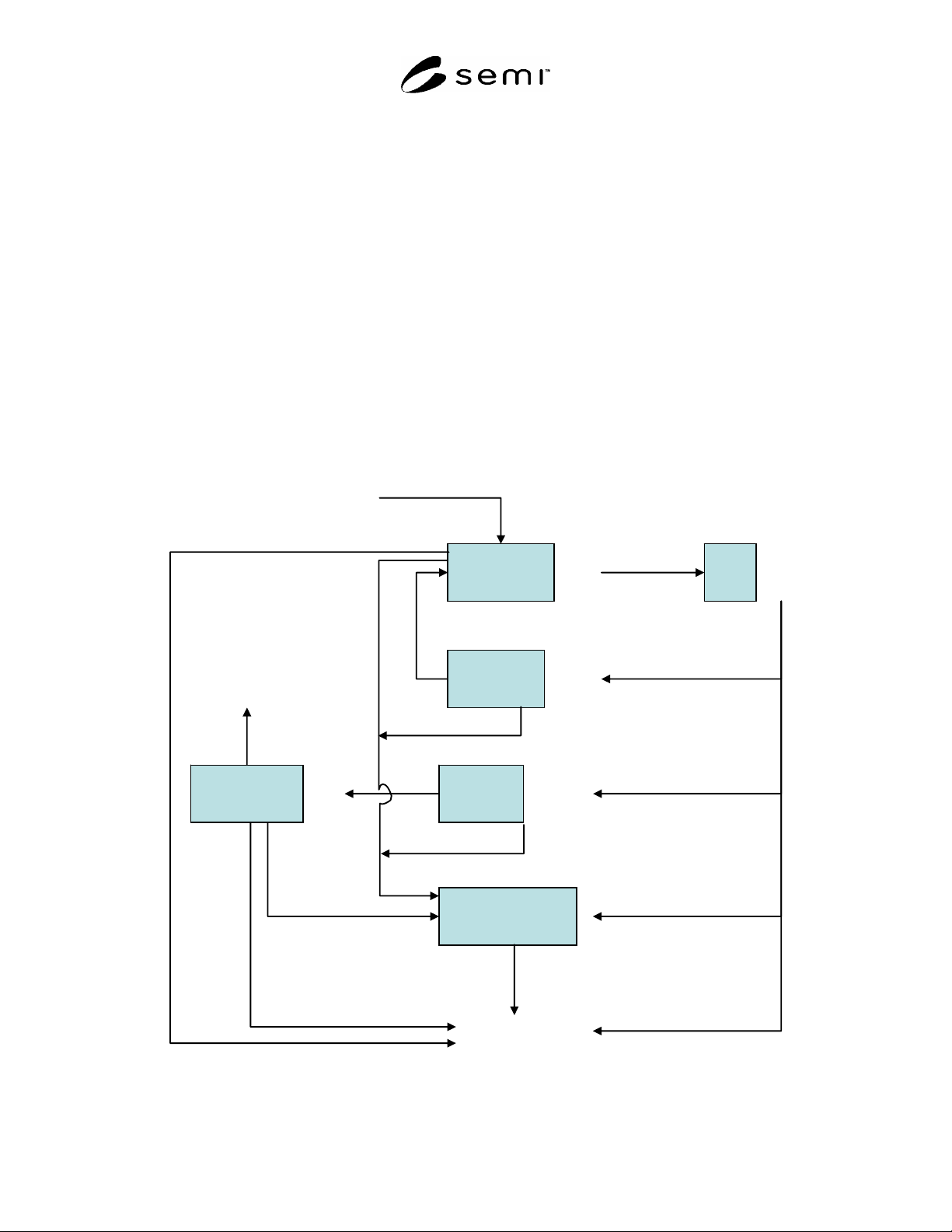
UPW Plant
Recycling
Plant
Fab
Reclaim
Plant
Other users
Waste water
treatment plant
Waste water
Lightly
contaminated
Contaminated
Very
contaminated
Raw water
NOTE: Courtesy of German UPW standard VDI 2083 Part 13
Figure 1
Schematic of Basic Reclaim Water System

SEMI F98-0305 © SEMI 2005 5
NOTICE: SEMI makes no warranties or representations as to the suitability of the standards set forth herein for any
particular application. The determination of the suitability of the standard is solely the responsibility of the user.
Users are cautioned to refer to manufacturer's instructions, product labels, product data sheets, and other relevant
literature, respecting any materials or equipment mentioned herein. These standards are subject to change without
notice.
By publication of this standard, Semiconductor Equipment and Materials International (SEMI) takes no position
respecting the validity of any patent rights or copyrights asserted in connection with any items mentioned in this
standard. Users of this standard are expressly advised that determination of any such patent rights or copyrights, and
the risk of infringement of such rights are entirely their own responsibility.
Copyright by SEMI® (Semiconductor Equipment and Materials
International), 3081 Zanker Road, San Jose, CA 95134. Reproduction of
the contents in whole or in part is forbidden without express written
fS