semi合集-English.pdf - 第6648页
HEXAMETHYLDISILAZANE SEMI C26-0699 E © SEMI 19 83, 2000 3 12 Grade 5 P rocedu res 12.1 This section does not apply to t h i s chemical. 13 VLSI G rade Pro cedures 13.1 This section does not apply to t h i s chemical. 14 …

SEMI C26-0699
E
© SEMI 1983, 2000 HEXAMETHYLDISILAZANE2
8.6 UV Absorbance — A UV scan is obtained on all
HMDS electronic grade material to determine if any
UV absorbing impurities are present: specifically
toluene.
8.6.1 Equipment — Bausch and Lomb Spectronic
2000 Spectrophotometer or other double beam
instrument capable of measurements at 270 nm. Cells -
1 cm path length.
8.6.2 Reagents — FC-113 and methanol for UV cell
cleaning.
8.6.3 Procedure — Using water as the reference and
sample cells, establish the baseline between 300 and
270 nm. Remove the water sample from the sample
path and replace it with the HMDS sample. Read the
absorbance between 300 and 270 nm. The absorbance
at 270 nm should read 0.07 to 0.25.
NOTE 1: Oxygen will contribute to the UV absorbance.
NOTE 2: The sample must be at ambient temperature.
NOTE 3: The UV absorbance will increase or decrease with
time.
NOTE 4: HMDS is flammable and corrosive.
8.7 Chloride — To a 500 mL separatory funnel, add
260 mL (200 g) of sample, 20 mL of water, and 1 mL
of sodium hydroxide reagent solution. Shake well for
30 seconds and allow the two layers to separate.
Carefully draw off the aqueous (lower) layer into a 250
mL beaker. Repeat the extraction five times and
combine the six aqueous extracts. Add 2 mL of nitric
acid to acidify the solution and arrange the beaker for
magnetic stirring.
8.7.1 Using a pH meter fitted with a silver billet
electrode (Beckman #89261, Corning #476065, or
equivalent) and a silver/silver chloride reference
electrode, determine the apparent pH versus mL
readings while titrating the continuously stirred sample
solution with 0.01 M methanolic silver nitrate solution.
Add the silver nitrate solution in 0.1-0.2 mL increments
from a 10 mL buret. Run a total blank. Plot the titration
data on linear graph paper or use the second-derivative
method to establish the endpoint.
ppm Chloride Cl
()
=
mL sample - mL blank(
)
×
M of AgNO
3
×
35,460
Weight of sample g
()
8.7.2 Standard Silver Nitrate in Methanol Solution —
Dissolve 1.700 grams of silver nitrate in absolute
methanol and dilute to 1000 mL. Store this solution in
an amber bottle and standardize immediately before use
against a standard sodium chloride (NaCl) solution
using the above second-derivative method.
8.8 Heavy Metals (as Pb) — Evaporate 130 mL (100
g) of sample to dryness in a hood. Dissolve the residue
in 3 mL of dilute hydrochloric acid (1 + 1) and dilute
with water to 15 mL. If necessary, filter through a small
filter, washing the evaporating dish and filter with 10
mL of water. Dilute to 25 mL with water. For the
standard, dilute a solution containing 0.01 mg of lead
ion (Pb) and 3 mL of dilute hydrochloric acid (1 + 1) to
25 mL with water. Adjust the pH of both solutions to
between 3 and 4 (using a pH meter) with dilute
ammonium hydroxide (10% NH
3
) or with 1 N acetic
acid, and dilute with water to 40 mL. To each solution,
add 10 mL of freshly prepared hydrogen sulfide water
and compare. The sample solution should be no darker
than the standard.
8.9 Arsenic and Antimony (as As) — To a 500 mL
separatory funnel, add 260 mL (200 g) of sample, 20
mL of water, and 1 mL of sodium hydroxide reagent
solution. Shake well for 30 seconds and allow the two
layers to separate. Carefully draw off the aqueous
(lower) layer into a 150 mL beaker. Repeat the
extraction twice more, combining the three aqueous
extracts.
8.9.1 Add 15 mL of nitric acid and 5 mL of sulfuric
acid and evaporate to dense fumes of sulfur trioxide.
Cool, cautiously add 10 mL of water, and re-evaporate
to dense fumes of sulfur trioxide. Cool and cautiously
wash into a generator flask with water to make a
volume of 35 mL. Proceed as described in the General
Method for Arsenic (and Antimony) under SEMI C1,
Section 3.4.5, starting with the sentence which begins
"Swirl the flask...." Any red color in the silver
diethyldithiocarbamate solution of the sample should
not exceed that for the standard containing 0.002 mg of
arsenic (As).
8.10 Trace Elements — By a suitable emission
spectrographic procedure, determine for each of the
specified trace elements that its content is not greater
than the stated specification limit (see SEMI C1,
Section 3.5, Guidelines for Determination of Trace
Elements by Emission Spectrography).
9 Grade 2 Procedures
9.1 This section does not apply to this chemical.
10 Grade 3 Procedures
10.1 This section does not apply to this chemical.
11 Grade 4 Procedures
11.1 This section does not apply to this chemical.
HEXAMETHYLDISILAZANE SEMI C26-0699
E
© SEMI 1983, 20003
12 Grade 5 Procedures
12.1 This section does not apply to this chemical.
13 VLSI Grade Procedures
13.1 This section does not apply to this chemical.
14 Tier A Procedures
14.1 Standardized test methods are being developed
for all parameters at the purity levels indicated. Until
standardized test methods are published, test
methodology shall be determined by user and producer.
The Process Chemicals Committee considers a test
method to be valid only if there is a documented
recovery study showing a recovery of 75 - 125%.
Recovery is for a known sample spike at 50% of the
specified level.
15 Tier B Procedures
15.1 This section does not apply to this chemical.
16 Tier C Procedures
16.1 This section does not apply to this chemical.
17 Tier D Procedures
17.1 This section does not apply to this chemical.
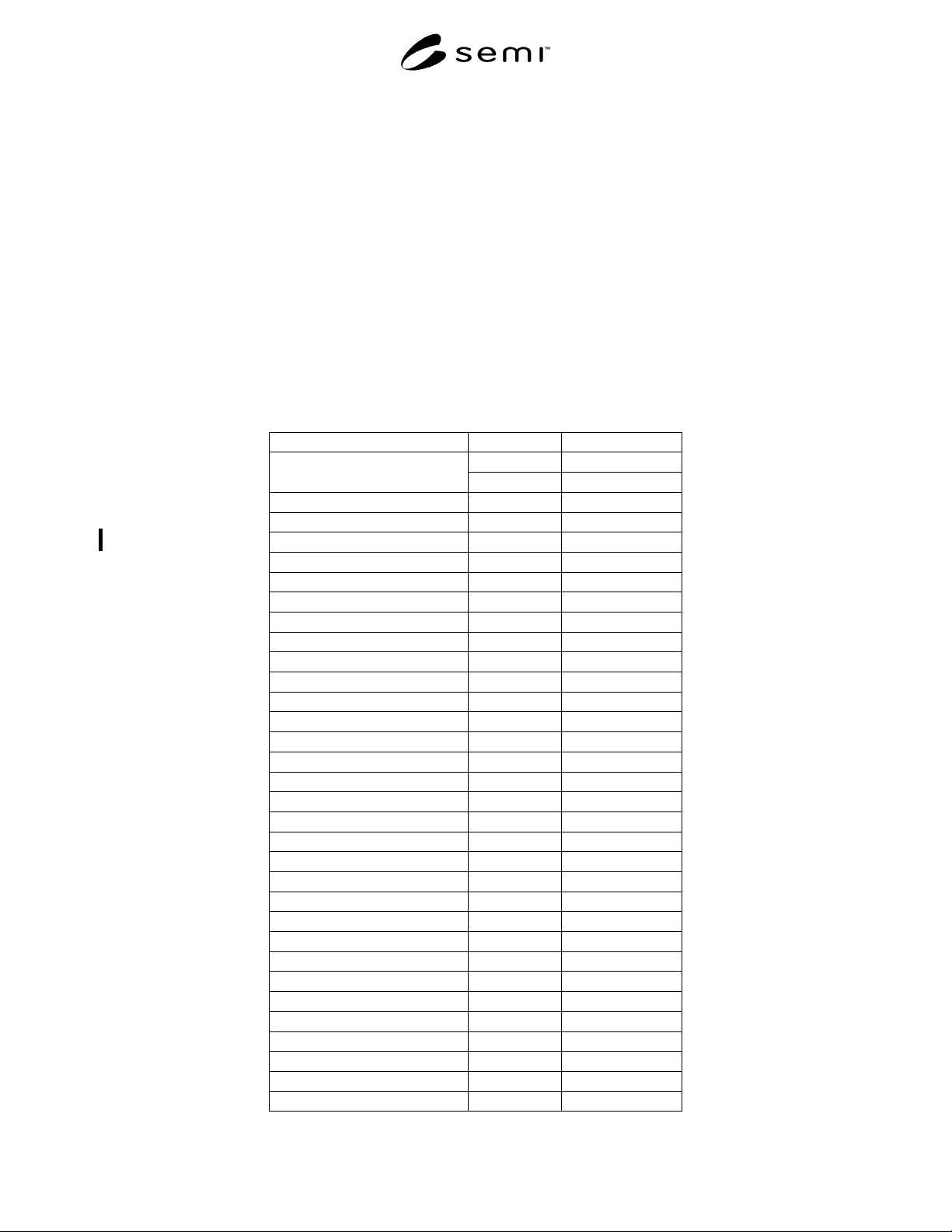
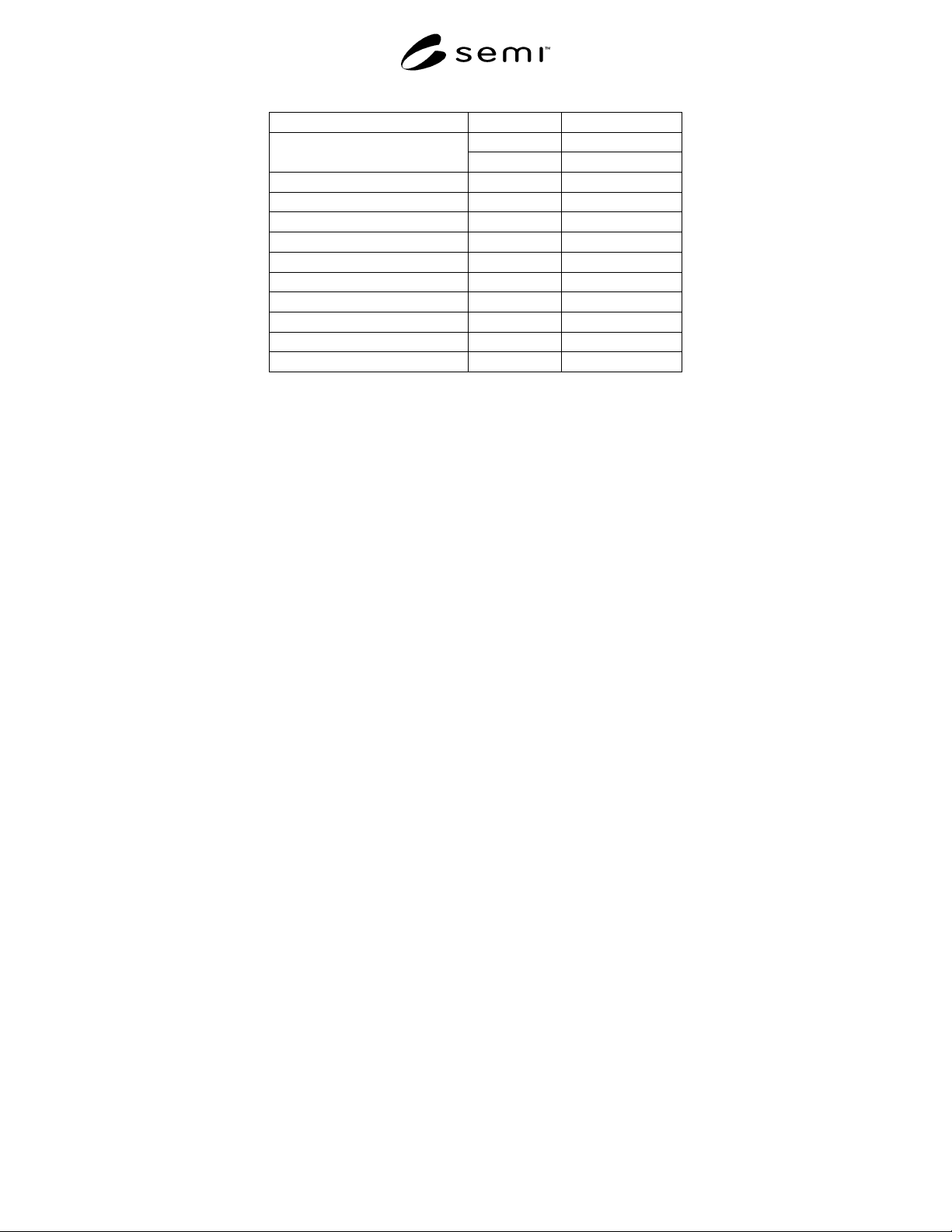
Table 1 Impurity Limits and Other Requirements for Hexamethyldisilazane
Previous SEMI Reference # C1.23-94 C7.10-94
Grade 1 Tier A
(Specification) (Guideline)
Assay 99.0% 99.5% min
Color (APHA) 10 max 10 max
Trailing Impurities (area % max) 0.1% 0.2%
Residue after Evaporation 10 ppm max 10 ppm max
UV absorbance units at 270 nm 0.25 max 0.25 max
Turbidity 1.0 NTU units 1.0 NTU units max
Chloride (Cl) 2 ppm max 0.3 ppm max
Aluminum (Al) 0.1 ppm max 10 ppb max
Antimony (Sb) -- 10 ppb max
Arsenic (As) -- 10 ppb max
Arsenic and Antimony (as As) 10 ppb max --
Barium (Ba) -- 10 ppb max
Beryllium (Be) -- 10 ppb max
Bismuth (Bi) -- 10 ppb max
Boron (B) 0.1 ppm max 10 ppb max
Cadmium (Cd) -- 10 ppb max
Calcium (Ca) 0.1 ppm max 10 ppb max
Chromium (Cr) -- 10 ppb max
Cobalt (Co) -- 10 ppb max
Copper (Cu) 0.1 ppm max 10 ppb max
Gallium (Ga) 0.1 ppm max 10 ppb max
Germanium (Ge) 0.1 ppm max 10 ppb max
Gold (Au) 0.1 ppm max 10 ppb max
Iron (Fe) 0.05 ppm max 10 ppb max
Lead (Pb) 0.1 ppm max 10 ppb max
Lithium (Li) 0.1 ppm max 10 ppb max
Magnesium (Mg) 0.1 ppm max 10 ppb max
Manganese (Mn) -- 10 ppb max
Molybdenum (Mo) -- 10 ppb max
Nickel (Ni) 0.1 ppm max 10 ppb max
Potassium (K) 0.1 ppm max 10 ppb max
SEMI C26-0699
E
© SEMI 1983, 2000 HEXAMETHYLDISILAZANE4
Previous SEMI Reference # C1.23-94 C7.10-94
Grade 1 Tier A
(Specification) (Guideline)
Silver (Ag) 0.1 ppm max 10 ppb max
Sodium (Na) 0.5 ppm max 10 ppb max
Strontium (Sr) 0.1 ppm max 10 ppb max
Tantalum (Ta) 0.1 ppm max 10 ppb max
Thallium (Tl) -- 10 ppb max
Tin (Sn) -- 10 ppb max
Titantium (Ti) -- 10 ppb max
Vanadium (V) -- 10 ppb max
Zinc (Zn) -- 10 ppb max
Zirconium (Zr) -- 10 ppb max
NOTICE: These standards do not purport to address safety issues, if any, associated with their use. It is the
responsibility of the user of these standards to establish appropriate safety and health practices and determine the
applicability of regulatory limitations prior to use. SEMI makes no warranties or representations as to the suitability
of the standards set forth herein for any particular application. The determination of the suitability of the standard is
solely the responsibility of the user. Users are cautioned to refer to manufacturer’s instructions, product labels,
product data sheets, and other relevant literature respecting any materials mentioned herein. These standards are
subject to change without notice.
The user’s attention is called to the possibility that compliance with this standard may require use of copyrighted
material or of an invention covered by patent rights. By publication of this standard, SEMI takes no position
respecting the validity of any patent rights or copyrights asserted in connection with any item mentioned in this
standard. Users of this standard are expressly advised that determination of any such patent rights or copyrights, and
the risk of infringement of such rights, are entirely their own responsibility.
Copyright by SEMI® (Semiconductor Equipment and Materials
International), 3081 Zanker Road, San Jose, CA 95134. Reproduction o
f
the contents in whole or in part is forbidden without express written
consent of SEMI.