semi合集-English.pdf - 第2322页
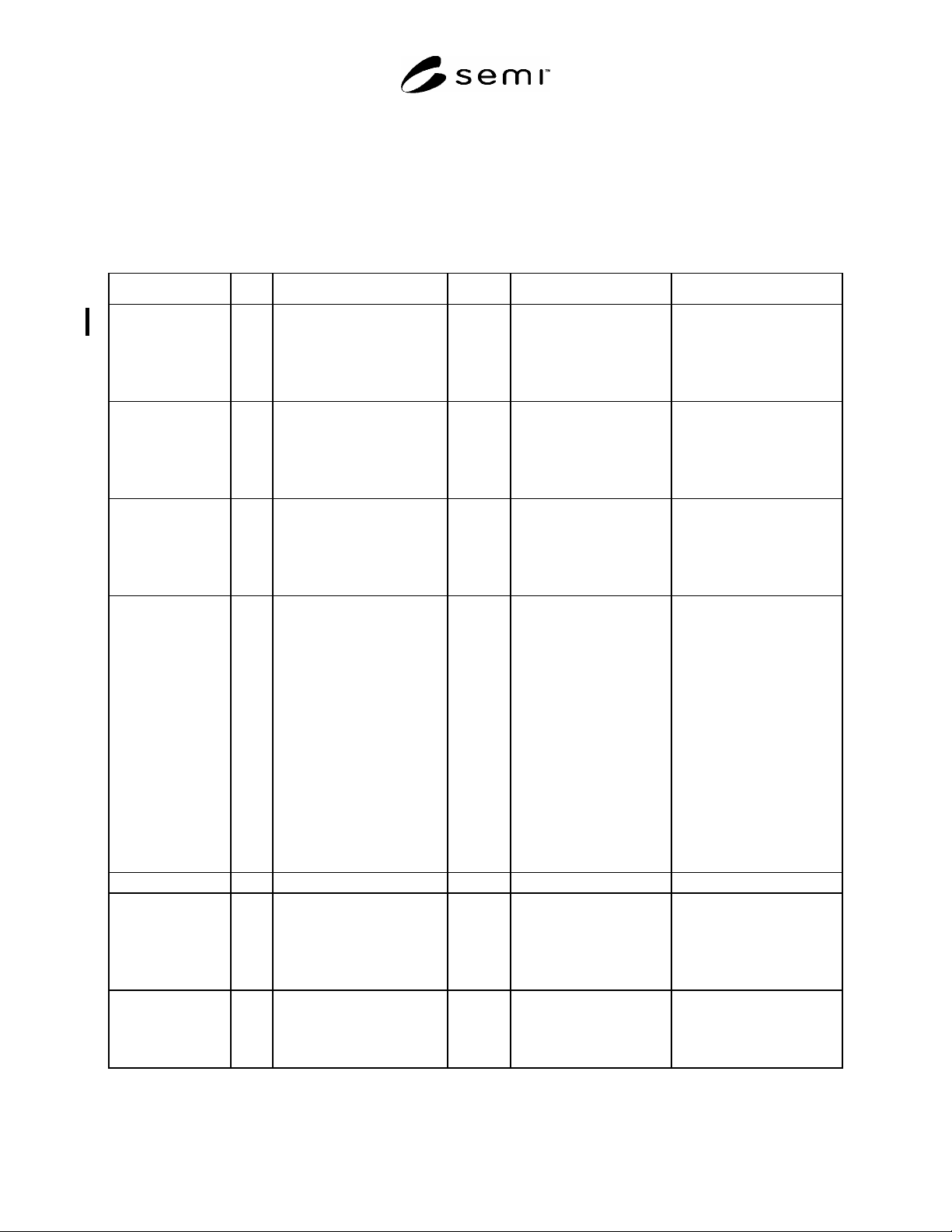
SEMI E82-0705 © SEMI 1999, 2005 18 Variable Name Type Description Class Format Comment CarrierInfo i CV All database information associated with t he i th carrier. SV L,3 1. <CarrierID i > 2. <VehicleID i > 3…
SEMI E82-0705 © SEMI 1999, 2005 17
9.3.3 Data Variables (DVVAL) — These are variables which are valid upon the occurrence of a specific collection
event, and may or may not be valid at other times depending upon the equipment. An attempt to read a variable data
item when it’s invalid will not result in an error, but the data reported may not have relevant meaning.
9.3.4 Variable Data (V) — This is a class of variable data which includes all the previously defined types of
variables.
9.4 Variable Data Item Dictionary
Table 8 Variable Data Item Dictionary
Variable Name Type Description Class Format Comment
ActiveCarriers CV List current status of all
INSTALLED carriers.
SV L,n
1. <CarrierInfo
1
>
.
.
n. <CarrierInfo
n
>
ActiveTransfers CV List current status of all
ACTIVE TRANSFER
commands.
SV L,n
1. <TransferCommand
1
>
.
.
n. <TransferCommand
n
>
ActiveVehicles CV List current status of all
vehicles available or being
used for TRANSFER
commands.
SV L,n
1. <VehicleInfo
1
>
.
.
n. <VehicleInfo
n
>
CarrierID CV ID of the carrier being moved.
CarrierID must be unique for
each carrier within the TSC.
DVVAL A[1–64] If an Id is created by the
equipment (not obtained via
an id reader, the host
interface, or the user
interface) it must be of the
following format:
UNKNOWNEqpNameSeq
Where:
UNKNOWN are the exact
characters “UNKNOWN”
EqpName is the value of the
EqpName ECV (truncated if
required)
Seq is a unique sequence
identifier determined by the
vendor.
CarrierID
i
CV ID of the i
th
carrier. SV A[1–64] See comment for CarrierID.
CarrierIDList CV The Ids of the Carriers being
moved.
DVVAL L,n
1.<CarrierID
1
>
.
.
n.<CarrierID
n
>
‘n’ is the number of carriers
being simultaneously
transferred.
CarrierInfo CV All database information
associated with a particular
carrier generating an event.
DVVAL L,3
1. <CarrierID>
2. <VehicleID>
3. <CarrierLoc>

SEMI E82-0705 © SEMI 1999, 2005 18
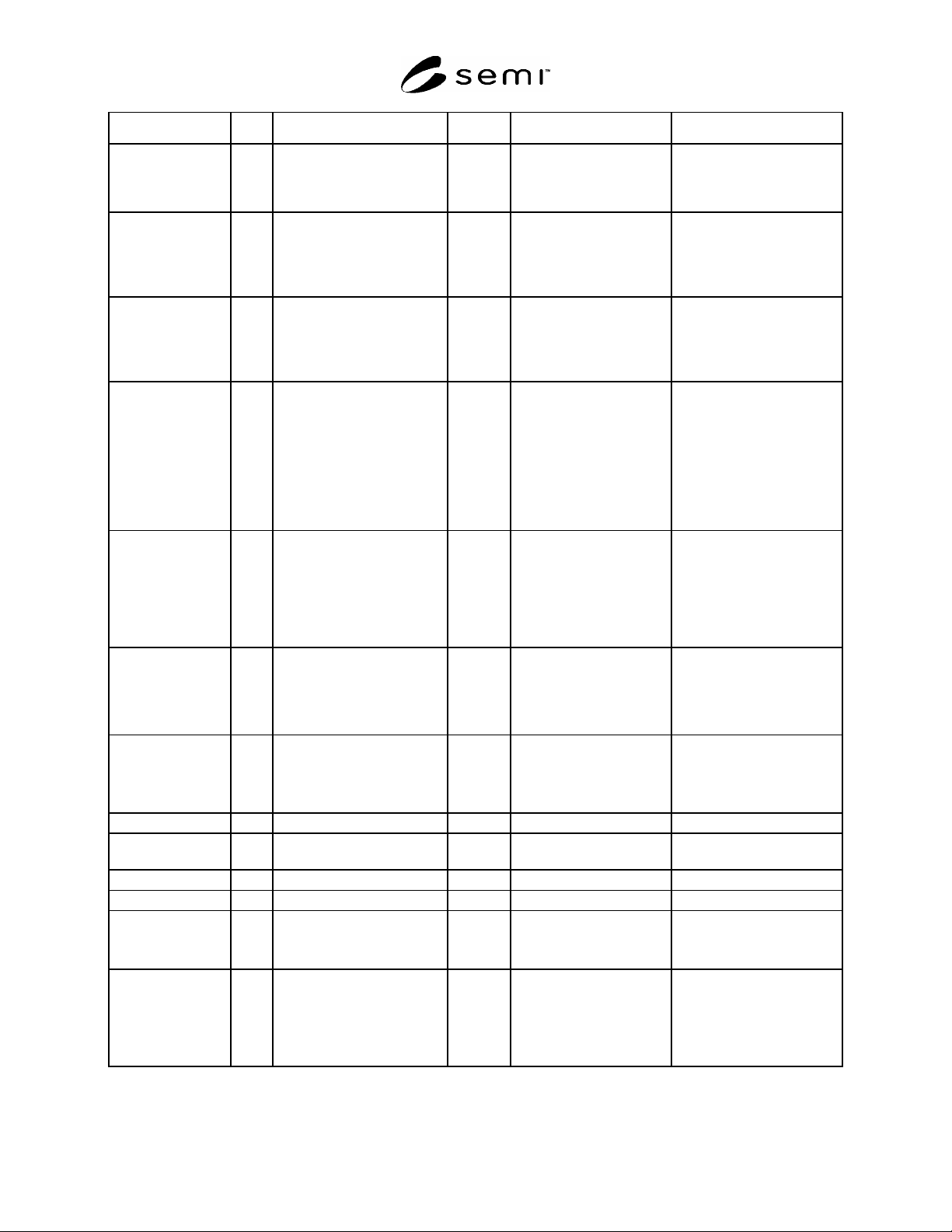
Variable Name Type Description Class Format Comment
CarrierInfo
i
CV All database information
associated with the i
th
carrier.
SV L,3
1. <CarrierID
i
>
2. <VehicleID
i
>
3. <CarrierLoc
i
>
CarrierLoc CSV Unique location of the carrier
within ITS as reported by the
TSC.
DVVAL A[1–64] For multiple position
vehicles, the “CarrierLoc”
must be unique for each
position on the vehicle and
must be distinct from a
location on any other vehicle.
CarrierLoc
i
CSV Unique Location of the ith
carrier within ITS as reported
by the TSC.
SV A[1–64]
CommandID CV Remote Command ID
Command ID generated by
TSC.
DVVAL A[1–64] Used to subsequently refer to
a specified remote command
(e.g., to cancel a remote
command).
If a command is generated by
the Transport System
Controller using Non-
Transition Collection Event
“OperatorInitiatedAction”,
the commandId must begin
with the string ‘MANUAL’
followed by any arbitrary
sequence identifier.
CommandID
i
CV The i
th
Remote Command ID.
The i
th
Command ID
generated by TSC.
SV A[1–64] Used to subsequently refer to
a specified remote command
(e.g., to cancel a remote
command).
CommandInfo CV Command information
associated with a particular
transfer command.
DVVAL L,3
1. <CommandID>
2. <Priority>
3. <Replace>
CommandInfo
i
CV Command information
associated with the i
th
transfer
command.
SV L,3
1. <CommandID
i
>
2. <Priority
i
>
3. <Replace
i
>
CommandName CV Host command issued to
controller.
DVVAL A[1–20]
CommandType CV The type of Command being
initiated.
DVVAL A[1-20]
Valid Values are
‘TRANSFER’
‘CANCEL’
‘ABORT’
CurrentPortStates CV Current State of all the ports. SV L,n
1. <PortInfo
1
>
.
.
n. <PortInfo
n
>
DestPort CV Destination port unique
identifier.
DVVAL A[1–64] Must be the name of the port
not the corresponding
transport system node name
or number.
SEMI E82-0705 © SEMI 1999, 2005 19
Variable Name Type Description Class Format Comment
DestPort
i
CV The i
th
Destination port
unique identifier.
SV A[1–64] Must be the name of the port
not the corresponding
transport system node name
or number.
EnhancedCarriers CV List Current status of all
carrier information in the TSC
database. This includes all
carriers for which there are
Transfer commands.
SV
L,n
1. <EnhancedCarrierInfo
1
>
.
.
n. <EnhancedCarrierInfo
n
>
EnhancedCarrier-
Info
i
CV All database information
associated with a particular
carrier.
SV
L,4
1. <CarrierID
i
>
2. <VehicleID
i
>
3. <CarrierLoc
i
>
4. <InstallTime
i
>
EnhancedTransfers CV List current status of ALL
transfer commands.
SV
L,n
1.
<EnhancedTransferComma
nd
1
>
.
.
n.
<EnhancedTransferComma
nd
n
>
EnhancedTransfer
Command
i
CV Information associated with a
particular Transfer command.
SV
L,3
1. <CommandInfo
i
>
2. <TransferState
i
>
3. L,n
1. <TransferInfo
1
>
.
n. <TransferInfo
n
>
EnhancedVehicles CV List current status of all
vehicles available or being
used for TRANSFER
commands.
SV L,n
1. <EnhancedVehicle
1
Info>
.
.
n.<EnhancedVehicleInfo
n
>
EnhancedVehicle-
Info
i
CV Information associated with a
particular vehicle.
SV L,3
1. <VehicleID>
2. <VehicleState>
3. <VehicleLocation>
EqpName CV Unique ID of the TSC. ECV A[1–80] Like a device name.
InstallTime
i
CV Time the carrier was created
in the TSC database.
SV TIME (A16) yyyymmddhhmmsscc
PortID CV ID of the port. DVVAL A[1–64]
PortID
i
CV ID of the port. SV A[1–64]
PortInfo
i
CV Port information associated
with a particular port.
SV L,2
1. <PortID
i
>
2. <PortTransferState
i
>
PortTransferState
i
CV Port Transfer State. SV U2 1 – OutOfService
2 – InService
3 – TransferBlocked
4 – ReadyToLoad
5 – ReadyToUnload