semi合集-English.pdf - 第2945页
SEMI E109-0305 © SEMI 2001, 2005 55 Parameter Name Req/Ind Rsp/Conf Description CMStatus — M Information concerni ng the result of the service. 18.5.17 Re-QualifyReticle 18.5.17.1 The Re-Qu alifyReticle service is sent b…
SEMI E109-0305 © SEMI 2001, 2005 54
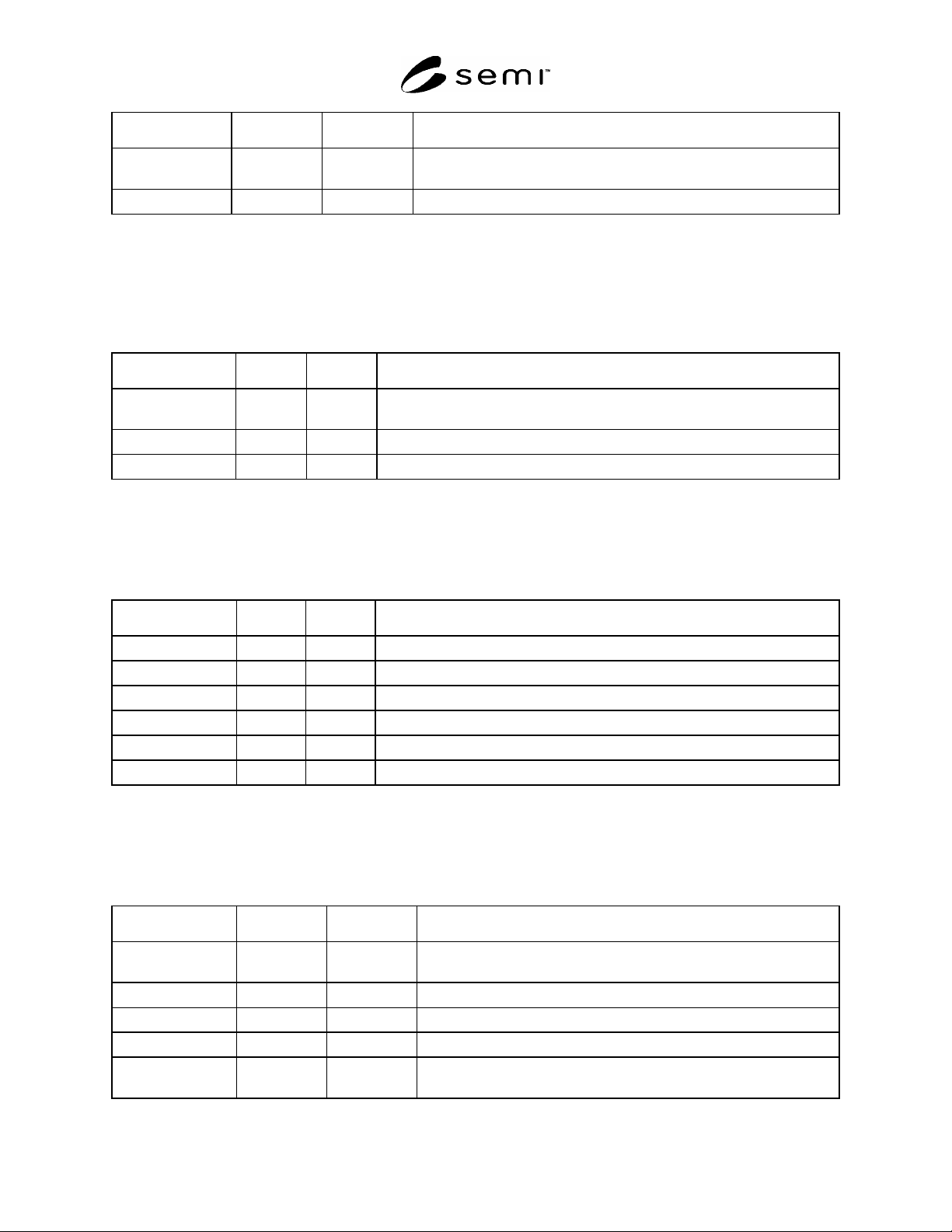
Parameter Name Req/Ind Rsp/Conf Description
PortID C — If omitted, the production equipment shall select an appropriate port at the
time the pod is ready to be moved.
CMStatus — M Information concerning the result of the service.
18.5.14 PodRelease
18.5.14.1 PodRelease request is used to tell the equipment that the pod is ready to be moved away from the read or
write position. Equipment shall deny the request if LocationID and PodID are mismatched. ReticlePodLocationID
is a ReticlePod attribute.
Table 49 PodRelease Service Parameter Definitions
Parameter Name Req/Ind Rsp/Conf Description
ReticlePod-
LocationID
C — The ID for the location of the pod. Either ReticlePodLocationID or PodID must
be used.
PodID C — The PodID of the pod. Either ReticlePodLocationID or PodID must be used.
CMStatus — M Information concerning the result of the service.
18.5.15 PodTagReadData
18.5.15.1 PodTagReadData is used to request a block of data from the PodID tag. Equipment shall deny the request
if LocationID and PodID are mismatched.
Table 50 PodTagReadData Service Parameter Definitions
Parameter Name Req/Ind Rsp/Conf Description
LocationID C — The ID for the location of the pod. Either LocationID or PodID must be used.
PodID C — The PodID of the pod. Either LocationID or PodID must be used.
DataSeg C — Indicates a specific section of data.
DataSize C — Indicates the number of bytes to read.
Data — C Data from the PodID tag. May be NULL if no data exists for the given section.
CMStatus — M Information concerning the result of the service.
18.5.16 PodTagWriteData
18.5.16.1 PodTagWriteData is used to request that a block of data be written to the PodID tag. Equipment shall
deny the request if LocationID and PodID are mismatched.
Table 51 PodTagWriteData Service Parameter Definitions
Parameter Name Req/Ind Rsp/Conf Description
LocationID C — The ID for the location of the pod. Either LocationID or PodID must be
used.
PodID C — The PodID of the pod. Either LocationID or PodID must be used.
DataSeg C — Indicates a specific section of data.
DataSize C — Indicates the number of bytes to read.
Data M — Data from the PodID tag. May be NULL if no data exists for the given
section.
SEMI E109-0305 © SEMI 2001, 2005 55
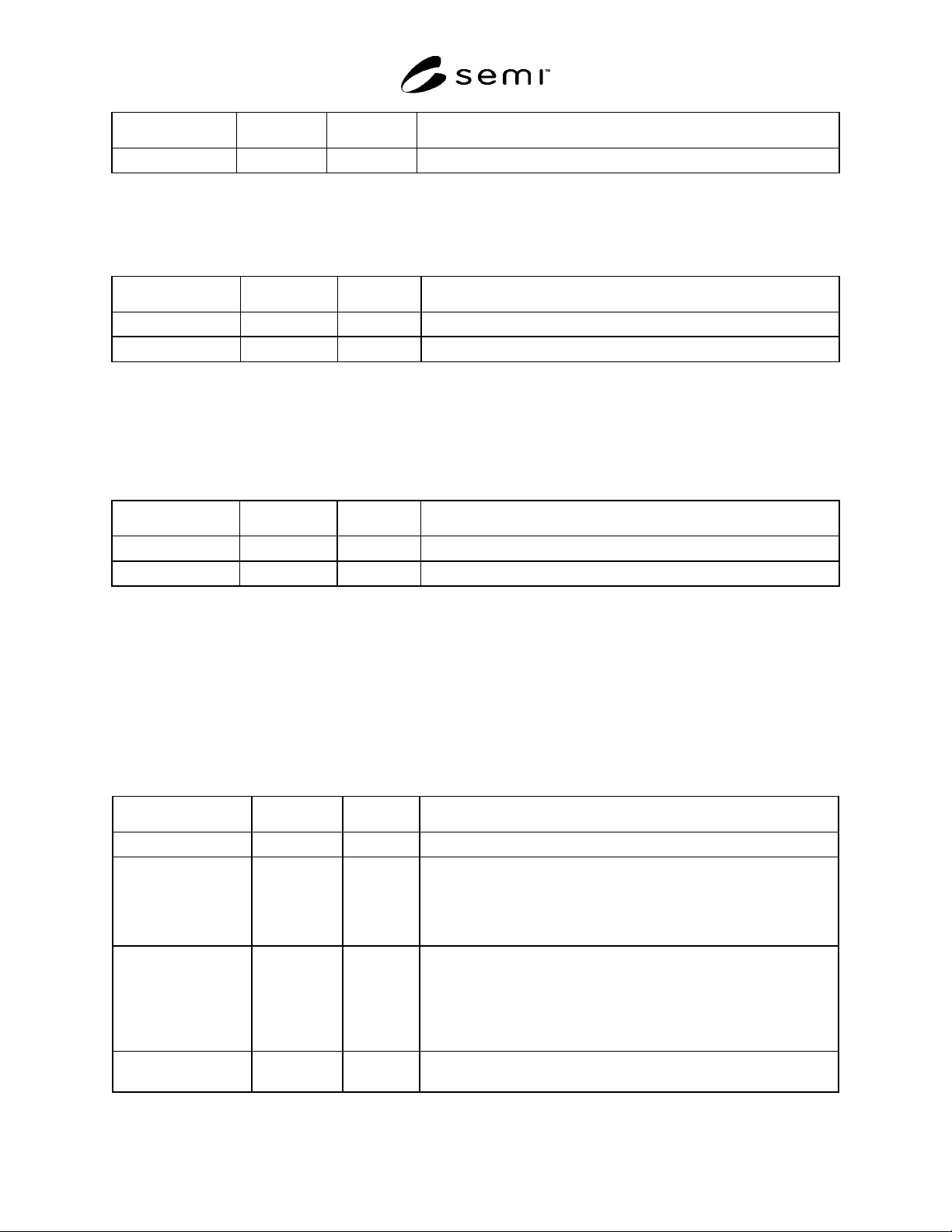
Parameter Name Req/Ind Rsp/Conf Description
CMStatus — M Information concerning the result of the service.
18.5.17 Re-QualifyReticle
18.5.17.1 The Re-QualifyReticle service is sent by the host to indicate that a reticle should be re-qualified.
Table 52 Re-QualifyReticle Service Parameter Definitions
Parameter Name Req/Ind Rsp/Conf Description
ReticleID M — ReticleID to remove from equipment.
RPMStatus — M Information concerning the result of the service.
18.5.18 ReserveAtPort
18.5.18.1 The ReserveAtPort service is sent by the host to indicate future activity at the load port. This allows for
reserving the port but doing host based ID verification. The load port will enter the RESERVED State after
receiving this service.
Table 53 ReserveAtPort Service Parameter Definitions
Parameter Name Req/Ind Rsp/Conf Description
PortID M — The Port ID to reserve.
CMStatus — M Information concerning the result of the service.
18.5.19 ReticleTransferJob
18.5.19.1 The ReticleTransferJob service is sent by the host to inform the equipment of the expected arrival of a
reticle pod to a reticle pod load port and/or the expected departure of a reticle pod. The equipment should create an
association between the reticle pod and reticle load port. The equipment should transition the load port reservation
state model to RESERVED. The ReticleTransferJob service is also used by the host to inform the equipment which
reticles contained in the reticle pod should be removed and placed in the equipment. Lastly the ReticleTransferJob
service is used by the host to inform the equipment which reticles contained in the equipment should be removed
from the equipment and placed in the reticle pod. This service is optional.
Table 54 ReticleTransferJob Service Parameter Definitions
Parameter Name Req/Ind Rsp/Conf Description
PodID M — The PodID of the pod which will delivered to the equipment.
InputPortID M — The Port ID where the pod will be received.
If zero: The pod must be picked from the tool’s internal buffer (for
internal buffer equipment only).
Either InputPortID or OutputPortID must be used (both may be specified
as well).
OutputPortID M — The Port ID to which the pod will be delivered after having executed all
related reticle actions.
If zero: The pod will remain in the tool’s internal buffer (for internal
buffer equipment only).
Either InputPortID or OutputPortID must be used (both may be specified
as well).
PodPropertiesList C — A list of name value pairs providing attributes for the pod object being
instantiated with the ReticleTransferJob service.
SEMI E109-0305 © SEMI 2001, 2005 56
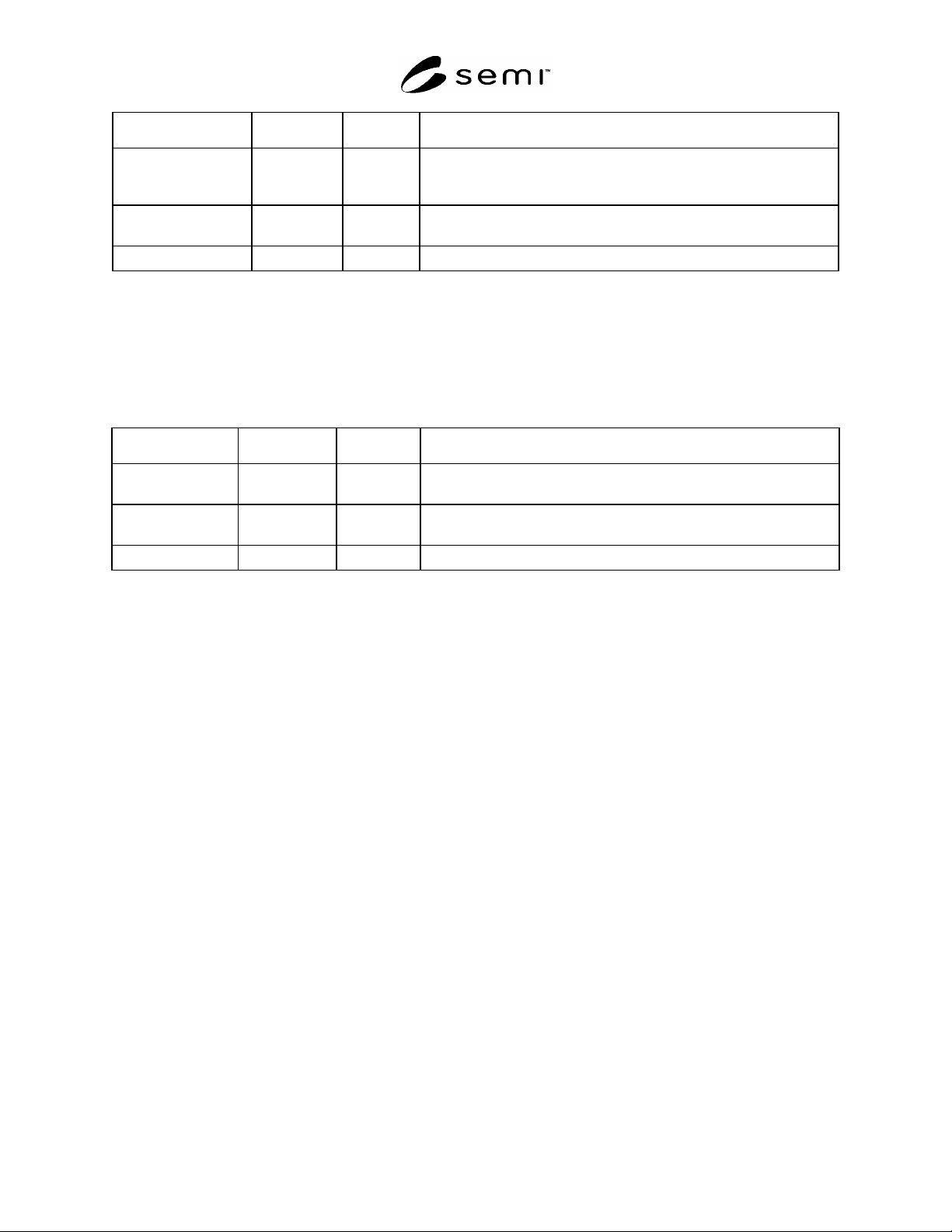
Parameter Name Req/Ind Rsp/Conf Description
ArrivingReticleList C — The list of reticles to remove from the reticle pod and place in the
equipment. Either ArrivingReticleList or DepartingReticleList must be
used.
DepartingReticleList C — The list of reticle to remove from the equipment and place in the reticle
pod. Either ArrivingReticleList or DepartingReticleList must be used.
RPMStatus — M Information concerning the result of the service.
18.5.20 Unclamp
18.5.20.1 The Unclamp service is used by the host if the equipment has separate mechanisms for unclamping the
carrier that are independent of opening the carrier. It is used to instruct equipment to disengage the independent
clamping mechanism. It is used by the host when “macro” instructions such as provided by Bind, PodNotification,
ProceedWithPod and ReticleTransferJob have not been provided by the host.
Table 55 Unclamp Service Parameter Definitions
Parameter Name Req/Ind Rsp/Conf Description
PodID C — The PodID of the pod to unclamp. Either the PodID or the PortID must
be specified.
PortID C — The PortID for which to unclamp a carrier. Either the PodID or the
PortID must be specified.
CMStatus — M Information concerning the result of the service.
19 Pod Tag Read/Write
19.1 Some technologies allow data to be stored on a PodID tag where it can be subsequently read and/or modified.
In one case the equipment can write information to the PodID tag. For example, the equipment will have knowledge
of the ReticleID of a reticle placed in a pod. At this time the equipment may write the ReticleID on the PodID tag.
In another case, it is the host that specifies when this data is written and read, because the equipment has no
knowledge of the contents of the data. The read operations shall be performed only when the pod is at the read
position. The write operations shall be performed only when the pod is at the write position.
NOTE 2: The read and write positions may be the same position. The host shall be able to both read and write whenever
PodHold switch is set to Host Release and the pod is at the respective read or write position. Once the host has completed all of
its read and write operations for that pod, then the host sends the PodRelease request to the equipment. The PodRelease service
informs the equipment that pod read or pod write is complete. The PodRelease service has a different purpose from the PodOut
service. The intent of the PodOut service request is to move the pod to a load port, while the intent of the PodRelease service
request is to inform equipment that it may move the pod away from the read or write position. Therefore, PodOut may also be
used with the PodRelease command. If PodHold is Host Release, then the pod shall be kept at the write position until an
PodRelease service request is received, regardless of when a PodOut is sent. If PodHold is set to Equipment Release, then the
PodRelease request has no effect.
20 Additional Events
20.1 This section identifies data collection events that are not related to State transitions for variable data items.
The intent of this section is to ensure certain data is available for specific events that are not related to state
transitions, not to define all the additional collection events for RPMS. Also, all state transitions in RPMS state
models are required to have associated event reports.
20.2 Buffer Capacity Changed Event
20.2.1 An event shall be generated whenever Buffer Capacity changes. This applies to all internal buffers and
internal buffer partitions.