semi合集-English.pdf - 第3470页
SEMI E134-0305 © SEMI 2004, 2005 23 consumers shall be specified by an y adjunct document defining a technical binding for this specif ication. pl anI d ti me De l e te d del et edB y D CP D el et ed Figure 15 DCPDeleted…
SEMI E134-0305 © SEMI 2004, 2005 22
Argument Description Kind Form
error The consumer submitting the DCP does
not have sufficient privilege to delete the
requested DCP.
error Structured data, of type UnauthorizedOperation,
described in Section 9.1.2.2.5 . If the consumer
was attempting to delete a built-in DCP (see
Section 11.1.2.1 ), the requiredPrivilege attribute
of the UnauthorizedOperation class shall be set to
the value “no such privilege”.
error The equipment does not recognize the
requested planId.
error Structured data, of type NoSuchPlan, described in
Section 9.1.2.4.3.
error The requested planId is currently active error Structured data, of type DCPIsActive (see Section
9.1.2.8.3).
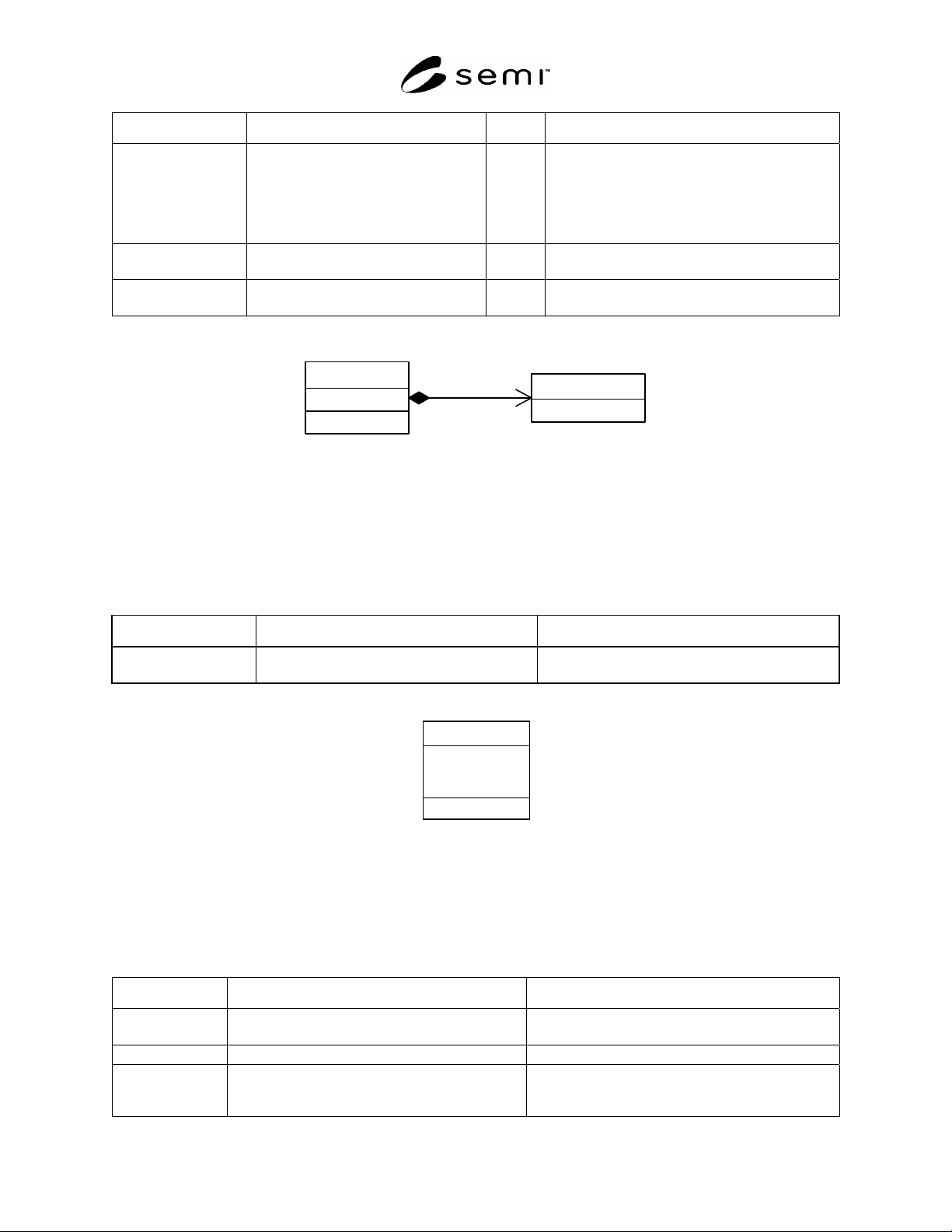
DCPIsActive
DCPActivated
activat edPlan
11
Figure 13
DCPIsActive Error
9.1.2.8.3 DCPIsActive — This class describes an error in activating or deleting a DCP that is currently active. It
provides information describing the original activation of the DCP.
9.1.2.8.3.1 DCPIsActive Association Definition Table
Table 29 DCPIsActive Association Definition
Association Role Name Definition Comments
activatedPlan Provides a description of the original activation
of the DCP.
Structured data, of type DCPActivated, described in
Section 9.1.2.8.4.
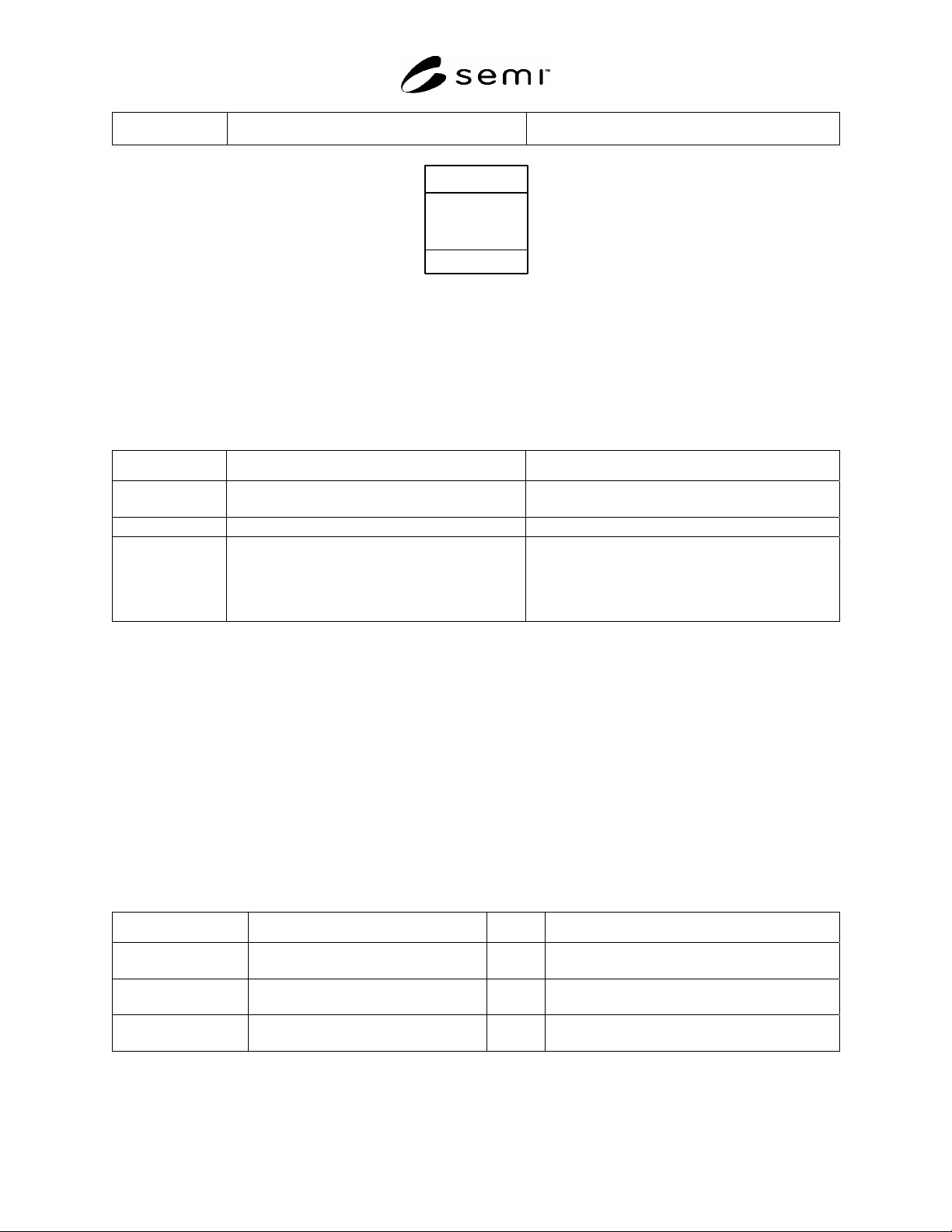
planId
timeActivated
activatedBy
DCPActivated
Figure 14
DCPActivated Class
9.1.2.8.4 DCPActivated — This class describes a DCP that has been successfully activated on the equipment.
9.1.2.8.4.1 DCPActivated Attribute Definition Table
Table 30 DCPActivated Attribute Definition
Attribute Name Definition Form
planId Identifies an active DCP. Text, equal to the ‘id’ attribute of the
DataCollectionPlan that has been activated.
timeActivated The date and time at which the DCP was activated. Text, formatted according to Section 14.5.
activatedBy The identity of the consumer that activated the
DCP.
Text, equal to a valid identifier for the consumer that
took the action (see Limitations, Section 3.1.2). The
valid values to use for this attribute to identify
SEMI E134-0305 © SEMI 2004, 2005 23
consumers shall be specified by any adjunct document
defining a technical binding for this specification.
planI d
timeDeleted
delet edBy
DCPDeleted
Figure 15
DCPDeleted Class
9.1.2.8.5 DCPDeleted — This class describes a DCP that has been deleted from the equipment. It is used only in
the response to the DeletePlan operation. The equipment is not required to retain a history of deleted DCPs.
9.1.2.8.5.1 DCPDeleted Attribute Definition Table
Table 31 DCPDeleted Attribute Definition
Attribute Name Definition Form
planId Identifies the DCP that was deleted. Text, equal to the ‘id’ attribute of the
DataCollectionPlan that was deleted.
timeDeleted The date and time at which the DCP was deleted. Text, formatted according to Section 14.5.
deletedBy The identity of the consumer that deleted the DCP. Text, equal to a valid identifier for the consumer that
deleted the DCP (see Limitations, Section 3.1.2 ).
The valid values to use for this attribute to identify
consumers shall be specified by any adjunct document
defining a technical binding for this specification.
9.1.2.9 GetParameterValues — This operation can be used by consumers to determine the current state of the
equipment. It is not intended to be used as a substitute for data collection through DCPs. Upon receiving this
request, the equipment shall return the most current values for the requested Parameters known to the equipment at
the time of the request. The equipment is not required to actively retrieve new or update internally stored values at
the time of the request. Consumers should be aware that the time at which the equipment last obtained or updated
the requested Parameter values may be earlier than the time at which the request is made. If some values cannot be
obtained at the time of the request (perhaps due to an internal equipment failure), or if the request refers to
Parameters that are not defined, the equipment shall indicate so by returning NoValue (see Section 14.2.1.4) for each
such Parameter.
9.1.2.9.1 If the consumer does not have sufficient privilege (see Section 10) to request Parameter values, the
equipment shall return an UnauthorizedOperation error.
9.1.2.9.2 GetParameterValues Operation Arguments
Table 32 GetParameterValues Argument Definitions
Argument Description Kind Form
parameterRequest The Parameters whose values are being
requested.
in List of elements of type ParameterRequest,
described in Section 11.1.9.
parameterValues The values of the requested parameters. out List of elements of type ParameterValue,
described in Section 14.2.
error The consumer does not have sufficient
privilege to request Parameter values.
error Structured data, of type UnauthorizedOperation,
described in Section 9.1.2.2.5.
9.1.2.10 GetObjTypeInstanceIds — This operation provides consumers with information required to request the
values of attributes of specific E39-compliant objects that have been instantiated on the equipment. A consumer
SEMI E134-0305 © SEMI 2004, 2005 24
interested in the attributes of specific E39 objects can only make requests from a specific object instance if the
unique instance identification information for such objects is known. This operation allows consumers to learn from
the equipment how many E39-compliant objects of a given ObjType are instantiated on the equipment at the time of
the request, and what their unique instance identification information is. The consumer may then use that instance
information to request E39-compliant object attribute values using either the GetParameterValues operation (see
Section 9.1.2.9), or by including this information in a DCP. E39-compliant object attribute values are returned as
ParameterValues (see Section 14.2).
9.1.2.10.1 This specification does not define the format of an E39-compliant object instance identifier; this format
shall be fully specified by any implementation mapping of this specification.
9.1.2.10.2 Upon receiving this request, the equipment shall return a list of the instance identifiers of all SEMI E39-
compliant objects that exist at the time of the request, and are of the requested ObjType, and that are provided by the
requested source. If the request includes unrecognized ObjTypes or sources, the equipment shall indicate so by
returning ObjTypeRequestError (see Section 9.1.2.10.11) for each such request. Consumers can request the list of
all instances, all instances of a specific type, all instances from a specific source, or all instances of a specific type
from a specific source.
9.1.2.10.3 If the consumer does not have sufficient privilege (see Section 10) to request ObjType instance id’s, the
equipment shall return an UnauthorizedOperation error.
9.1.2.10.4 GetObjTypeInstanceIds Operation Arguments
Table 33 GetObjTypeInstanceIds Argument Definitions
Argument Description Kind Form
request The ObjTypes whose instance id’s are
being requested.
in List of elements of type ObjTypeRequest,
described in Section 9.1.2.10.6.
objTypeInstances The instance id’s of the requested
ObjTypes.
out List of elements of type ObjTypeResult, described
in Section 9.1.2.10.9 . See Section 9.1.2.10.5 for
further description.
error The consumer does not have sufficient
privilege to request ObjType instance
id’s.
error Structured data, of type UnauthorizedOperation,
described in Section 9.1.2.2.5.
9.1.2.10.5 objTypeInstances — The equipment shall return one and only one element of type ObjTypeResult for
each unique ObjType-source combination resulting from the original request. For example, if the consumer
requested all “Carrier” ObjType instance id’s, regardless of the source, and the equipment has only one source of
that ObjType, then only one ObjTypeResult will be returned. That result will contain all instance id’s for that
ObjType provided by that source. If there were two or more sources of that ObjType, the equipment would return as
many ObjTypeResult elements as there were sources, each element containing all instance id’s of that ObjType
provided by that source.
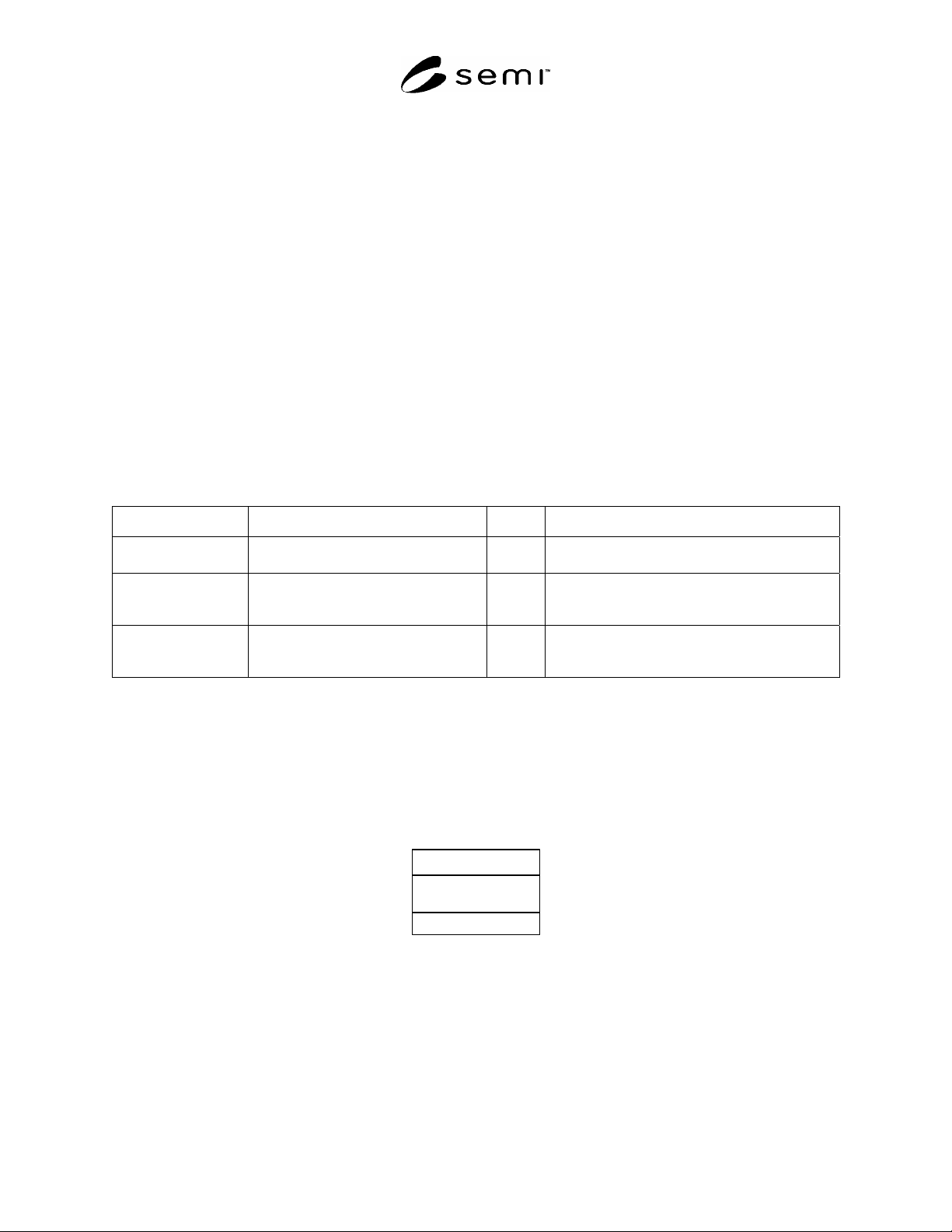
sourceId
objTy peId
ObjTypeRequest
Figure 16
ObjTypeRequest Class