semi合集-English.pdf - 第2517页
SEMI E88-1104 E © SEMI 1999, 2004 14 8.6.3 Port Transfer State Defin itions 8.6.3.1 OUT OF SERVICE — Tra n sfer to /from this port is disabled and the port should not be us ed in any Transfer command issued by the host. …
SEMI E88-1104
E
© SEMI 1999, 2004 13
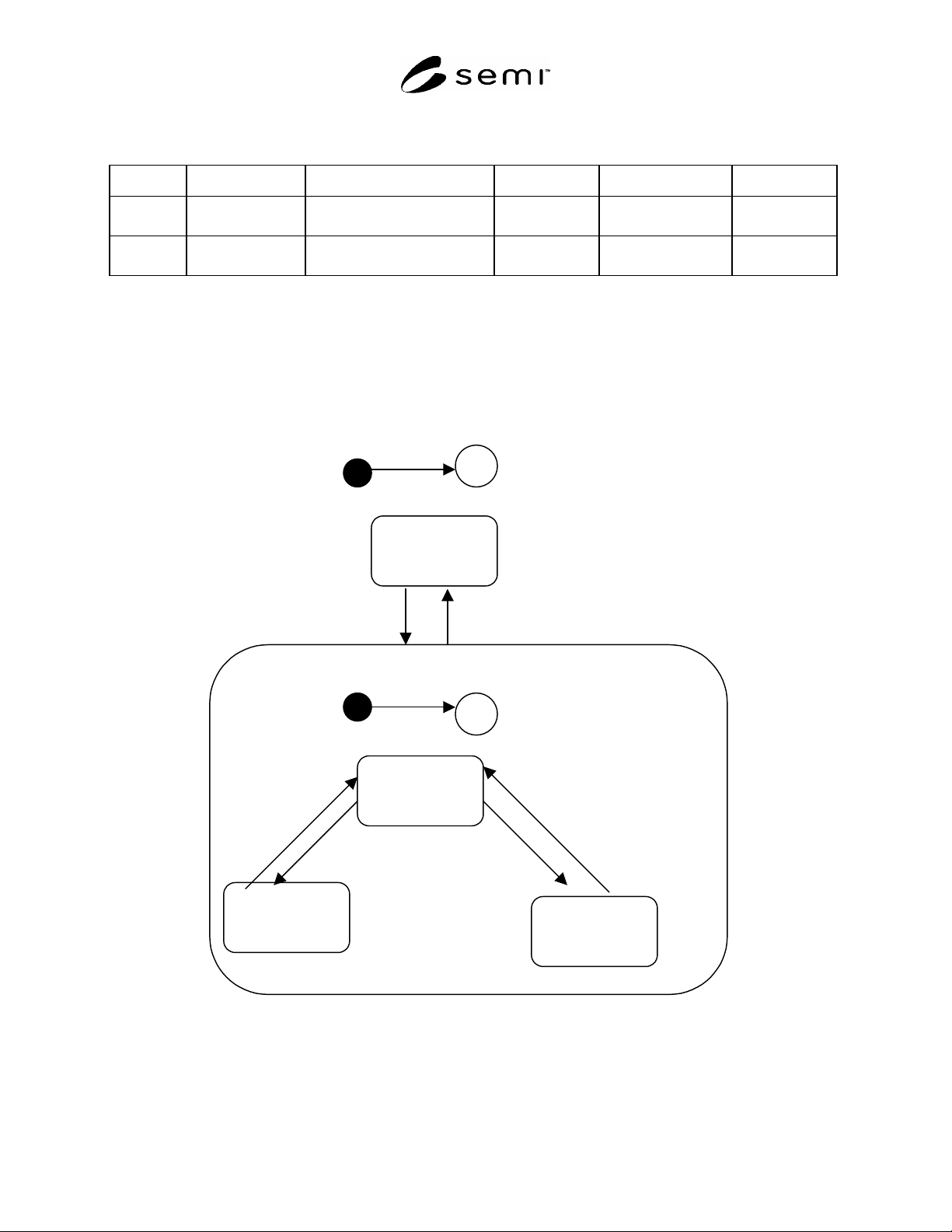
8.5.4 Stocker Crane State Transition Table
Table 4 Stocker Crane State Transition Table
Transition # Previous State Trigger New State Actions Comments
1 IDLE Crane is requested to perform
host or SC initiated work.
ACTIVE
S6F11
CraneActive
2 ACTIVE
Crane completes host or SC
initiated work.
IDLE S6F11
CraneIdle
8.6 Port Transfer State Model
8.6.1 Port Transfer State Model Requirements
8.6.1.1 The purpose of the port state model is to provided information to the host for the use in accessing ports.
This may permit the host and stocker to utilize ports that are in service while avoiding the use of ports that are not in
service.
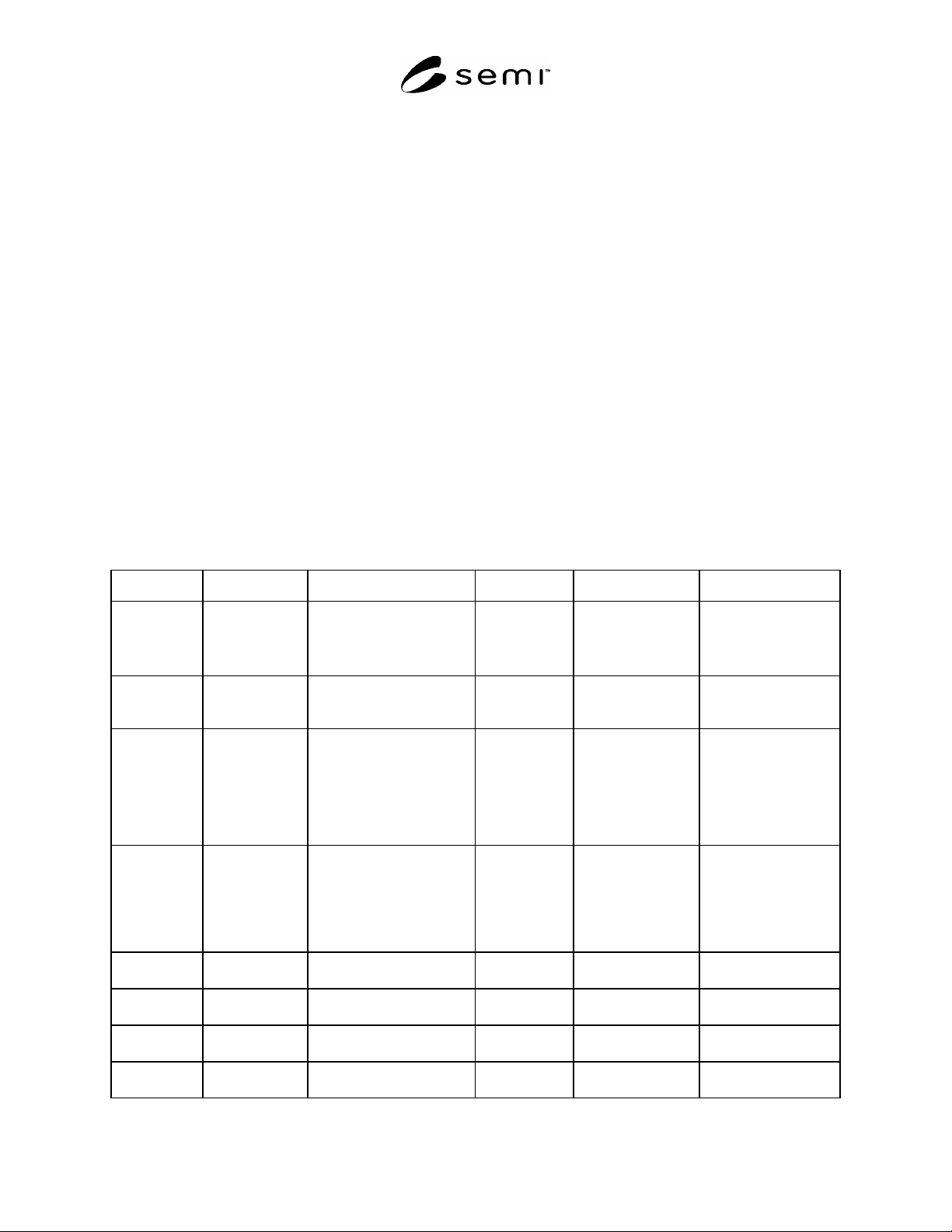
8.6.2 Port Transfer State Model
IN SERVICE
C
READY TO
LOAD
READY TO
UNLOAD
TRANSFER
BLOCKED
5
6
7
8
4
C
1
OUT OF
SERVICE
2 3
Figure 7
Port State Model Diagram
A-1.1.1.1
SEMI E88-1104
E
© SEMI 1999, 2004 14
8.6.3 Port Transfer State Definitions
8.6.3.1 OUT OF SERVICE — Transfer to/from this port is disabled and the port should not be used in any Transfer
command issued by the host. If the SC State is “Alarm” and the port cannot be accessed normally, the port transfer
state shall be “Out Of Service”. This includes situations where the “Alarm” may not be directly related to the port.
For example, the alarm may be associated with the crane and since the crane cannot function, the port cannot be
serviced normally. If any port on a multi-position conveyor with a single LP position is “Out Of Service”, then all
ports on the conveyor shall be “Out Of Service”. If a command is issued by the host which uses this port, it will not
be rejected simply because the port is in this state.
8.6.3.2 IN SERVICE — Transfer to/from this port is enabled.
8.6.3.3 The following are optional sub-states of the IN SERVICE state to provide information to the host for the
use in accessing ports. The information is generally obtained by the SC via a low-level interface with the connected
equipment (generally inline process tools). The connected equipment should generally, though not required, follow
the Load Port Transfer State Model defined in SEMI E87. If these states are implemented, they are not required
for every port.
8.6.3.3.1 TRANSFER BLOCKED — The state is neither READY TO LOAD nor READY TO UNLOAD.
8.6.3.3.2 READY TO LOAD — The port is able to accept (be loaded with) a carrier from the Stocker SEM
equipment.
8.6.3.3.3 READY TO UNLOAD — The port is able to have a carrier removed (unloaded) by the Stocker SEM
equipment.
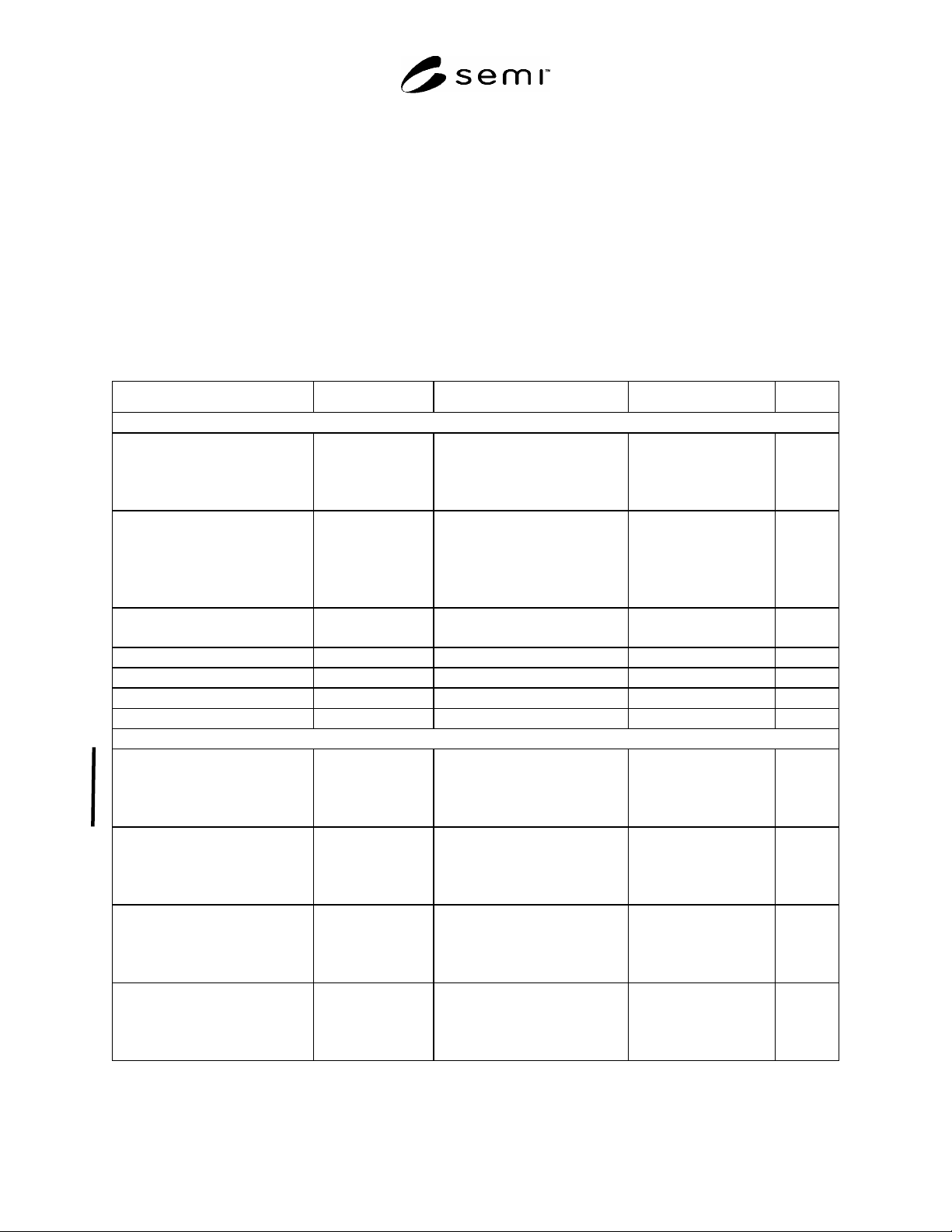
8.6.3.4 Port Transfer State Transition Table
Table 5 Port Transfer State Transition Table
Transition # Previous State Trigger New State Action Comments
1 None System reset. OUT OF
SERVICE
Or
IN SERVICE
S6F11
PortOutOfService
Or
S6F11 PortInService
The new state is based
on the current status of
the port or the state
prior to system reset.
2 OUT OF
SERVICE
The equipment has
determined that the port can
be utilized for transfers.
IN SERVICE S6F11 PortInService
3 IN SERVICE The equipment has
determined that the port
should not be used for
transfers.
OUT OF
SERVICE
S6F11
PortOutOfService
This could be the result
of an alarm condition
that affects only the
port, the entire device,
or a portion of the
device which includes
the port.
4 None System Reset. TRANSFER
BLOCKED
READY TO
LOAD
READY TO
UNLOAD
S6F11
PortTransferBlocked
S6F11
PortReadyToLoad
S6F11
PortReadyToUnload
The new state is based
on the current status of
the port.
5 TRANSFER
BLOCKED
Port ready for carrier
delivery.
READY TO
LOAD
S6F11
PortReadyToLoad
6 TRANSFER
BLOCKED
Port ready for carrier
removal.
READY TO
UNLOAD
S6F11
PortReadyToUnload
7 READY TO
LOAD
No carrier transfer allowed. TRANSFER
BLOCKED
S6F11
PortTransferBlocked
8 READY TO
UNLOAD
No carrier transfer allowed. TRANSFER
BLOCKED
S6F11
PortTransferBlocked
SEMI E88-1104
E
© SEMI 1999, 2004 15
9 Collection Event List
9.1 This section identifies data collection events and defines (Stream 6) reporting levels for variable data items. The
host can use the report definition scenario defined in SEMI E30 to define reports at Stocker SEM defined levels.
The intent of this section is to demonstrate that certain suggested data is available at specific events. The collection
events are grouped according to whether or not they are associated with a state change (according to the state models
defined within this document).
9.2 Requirements
9.2.1 This standard requires all collection events listed in the SEMI E30 standard (according to the GEM
capabilities required per Section 14). There are cases where specific collection event names are designated for GEM
defined collection events. Such collection event names are denoted by “Y” in the GEM column.
9.3 State Transition Collection Event Table
Table 6 State Transition Collection Event Table
Collection Event Name From State To State Required DVVALs GEM
SC STATE TRANSITION EVENTS
AlarmCleared ALARMS NO ALARMS CommandID
ErrorID
StockerUnitInfo
ErrorNumber
Y
AlarmSet NO ALARMS
ALARMS
ALARMS
ALARMS
CommandID
ErrorID
StockerUnitInfo
RecoveryOptions
ErrorNumber
Y
SCAutoCompleted PAUSED
PAUSING
AUTO
AUTO
N/A N
SCAutoInitiated None SC INIT N/A N
SCPauseCompleted PAUSING PAUSED N/A N
SCPaused SC INIT PAUSED N/A N
SCPauseInitiated AUTO PAUSING N/A N
TRANSFER COMMAND STATE TRANSITION EVENTS
TransferAbortCompleted ABORTING None CommandID
CarrierID
CarrierLoc
CarrierZoneName
N
TransferAbortFailed ABORTING ACTIVE CommandID
CarrierID
CarrierLoc
CarrierZoneName
N
TransferAbortInitiated ACTIVE ABORTING CommandID
CarrierID
CarrierLoc
CarrierZoneName
N
TransferCancelCompleted CANCELING None CommandID
CarrierID
CarrierLoc
CarrierZoneName
N