semi合集-English.pdf - 第2378页
SEMI E84-0305 © SEMI 1999, 2005 22 HO_AVBL signal may be turned OFF indepen dently of the other SEMI E84 sign als, prior to or during the hando ff. The active stocker is expected to c o nfirm the HO_AVBL signal in the fo…
SEMI E84-0305 © SEMI 1999, 2005 21
L_REQ
(P->A)
READY
(P->A)
HO_AVBL
(P->A)
ES
(P->A)
CS_0
(A->P)
CS_1
(A->P)
VALID
(A->P)
TR_REQ
(A->P)
BUSY
(A->P)
COMPT
(A->P)
CS is
Specified
Carrier is
Detected
Transfer is
Completed
Release CS
is Specified
Transfer
Start
U_REQ
(P->A)
CONT
(A->P)
CS is
Specified
Carrier is
Detected
Transfer is
Completed
Release CS
is Specified
Transfer
Start
TD0
TD0
TA1
TA1
TA2
TA2
TA3
TA3
TP1
TP1
TP2
TP2
TP3
TP3
TP4
TP4
TP5
TP5
step numbers
are for
reference only
1
2
3
5
8
12
9
6
4
11
10
14
13
15
7
16
17
18
20
23
27
24
21
19
26
25
30
28
29
22
TP6 / TD1
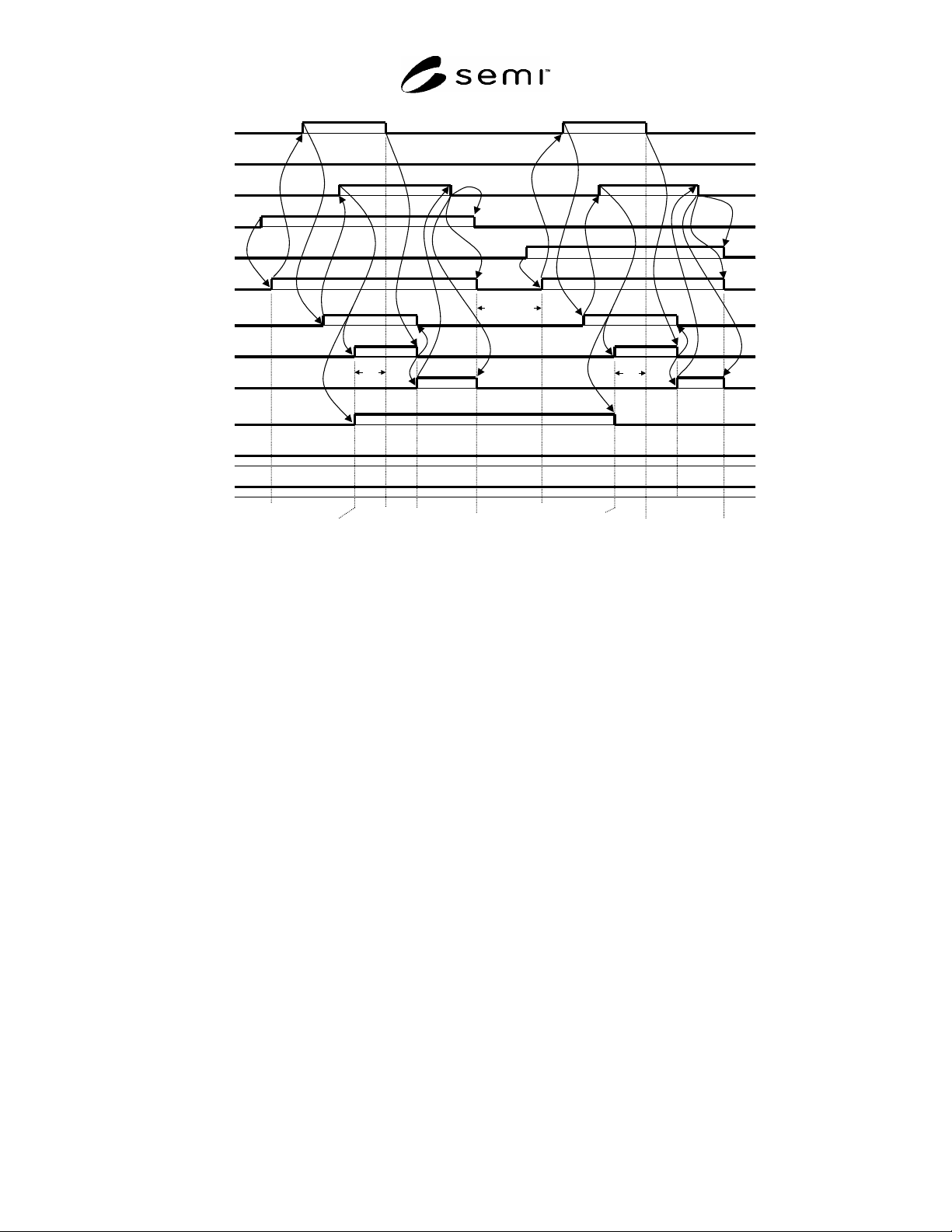
Figure 19
Signal Time Diagram for Continuous Handoff (LOAD and LOAD)
6.2.7 Handoff Available Signal Operation Sequence (HO_AVBL)
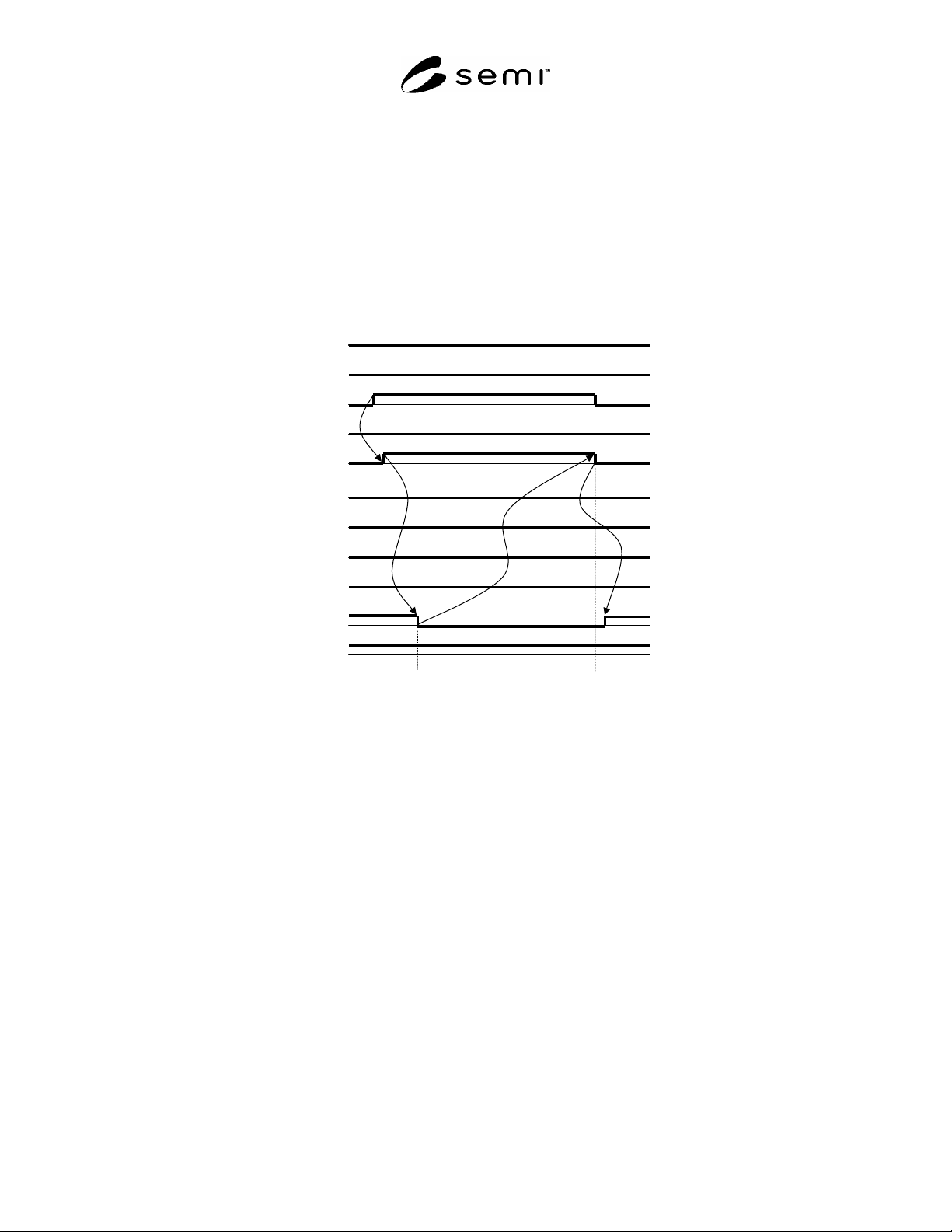
6.2.7.1 Example time diagrams for the HO_AVBL signal are shown in Figures 20 through 26. The HO_AVBL
signal is ON during passive equipment normal operations and shall be turned OFF when the passive equipment
detects an exception for the handoff. The active equipment is informed of the exception condition by the HO_AVBL
signal. The HO_AVBL signal may be turned OFF independently of the other SEMI E84 signals, prior to or during
the handoff. The active equipment is expected to confirm the HO_AVBL signal in the following periods:
a)
From the time at which the VALID signal is turned ON to the time at which the L_REQ or U_REQ signal is
turned ON.
b)
From the time at which the TR_REQ signal is turned ON to the time at which the READY signal is turned
ON.
6.2.7.2
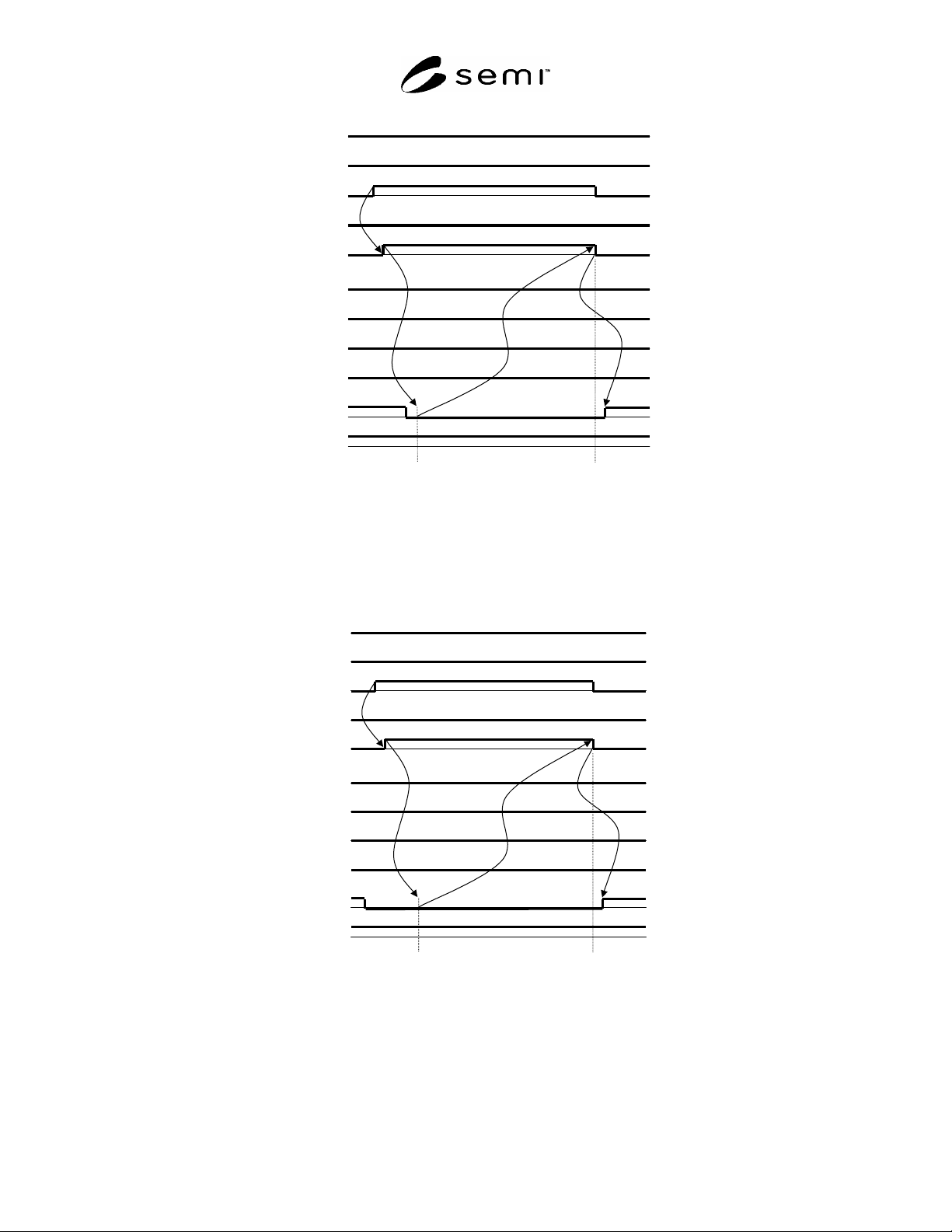
Figures 20 through 23 are the time diagrams to explain situation a) in the section above and show examples
of potential HO_AVBL signal activity. The active equipment stops the handoff when it detects that the HO_AVBL
signal is turned OFF by the passive equipment. The active equipment turns the VALID signal OFF to close the
handshake (CS_0 and CS_1 signals must be set to OFF at this time). The passive equipment turns the HO_AVBL
signal ON after the VALID signal is turned to OFF (L_REQ or U_REQ must be set to OFF).
6.2.7.3
Figures 24 through 26 are the time diagrams to explain situation b) in the section above and show examples
of potential HO_AVBL signal activity. The active equipment stops the handoff when it detects that the HO_AVBL
signal is turned OFF by the passive equipment. The active equipment turns the VALID signal OFF to close the
handshake (CS_0, CS_1, and TR_REQ signals must be set to OFF). The passive equipment turns the HO_AVBL
signal ON after the VALID signal is turned to OFF (L_REQ or U_REQ must be set to OFF).
6.2.8 Handoff Available Signal Operation Sequence (for interbay passive OHS and Stocker)
6.2.8.1 Example time diagrams for the HO_AVBL signal are shown in Figures 27 through 29. The HO_AVBL
signal is ON during passive OHS normal operations and shall be turned OFF when the passive OHS detects an
exception for the handoff. The active stocker is informed of the exception condition by the HO_AVBL signal. The
SEMI E84-0305 © SEMI 1999, 2005 22
HO_AVBL signal may be turned OFF independently of the other SEMI E84 signals, prior to or during the handoff.
The active stocker is expected to confirm the HO_AVBL signal in the following period:
a) From the time at which the TR_REQ signal is turned ON to the time at which the READY signal is turned ON.
6.2.8.2 Figures 27 through 29 are diagrams explaining the above item a) and showing examples of potential
HO_AVBL signal activity. The active stocker stops transferring when the active stocker detects that the HO_AVBL
signal has been turned OFF by the passive OHS. By turning off the AM_AVBL signal, the active Stocker closes the
transfer sequence. In such a case, the TR_REQ signal must go OFF as the transfer sequence has ended. Also, the
passive OHS must turn OFF the VS_0 and VS_1 signals. Next, the passive OHS must turn ON the HO_AVBL
signal after the VA signal has gone OFF (the L_REQ or U_REQ must be set OFF).
L_REQ
(P->A)
READY
(P->A)
HO_AVBL
(P->A)
ES
(P->A)
CS_0
(A->P)
CS_1
(A->P)
VALID
(A->P)
TR_REQ
(A->P)
BUSY
(A->P)
COMPT
(A->P)
HO_AVBL is
Confirmed
OFF
End of
Handshake
CONT
(A->P)
TD0
step numbers are
for reference only
1
2
6
3
4
5
NOTE 1: The HO_AVBL signal turns OFF while the active equipment is confirming the signal in step 3.
Figure 20
Example of Handoff Available Signal
SEMI E84-0305 © SEMI 1999, 2005 23
READY
(P->A)
HO_AVBL
(P->A)
ES
(P->A)
CS_0
(A->P)
CS_1
(A->P)
VALID
(A->P)
TR_REQ
(A->P)
BUSY
(A->P)
COMPT
(A->P)
HO_AVBL is
Confirmed
OFF
End of
Handshake
CONT
(A->P)
TD0
step numbers are
for reference only
1
2
6
3
4
5
L_REQ
(P->A)
NOTE 1: The HO_AVBL signal turns OFF after the VALID signal is turned ON. The active equipment confirms the signal is
OFF in step 3.
Figure 21
Example of Handoff Available Signal
L_REQ
(P->A)
READY
(P->A)
HO_AVBL
(P->A)
ES
(P->A)
CS_0
(A->P)
CS_1
(A->P)
VALID
(A->P)
TR_REQ
(A->P)
BUSY
(A->P)
COMPT
(A->P)
HO_AVBL is
Confirmed
OFF
End of
Handshake
CONT
(A->P)
TD0
step numbers are
for reference only
1
2
6
3
4
5
NOTE 1: The HO_AVBL signal turns OFF just before the active equipment arrives. The active equipment confirms the signal is
OFF in step 3.
Figure 22
Example of Handoff Available Signal