semi合集-English.pdf - 第4710页
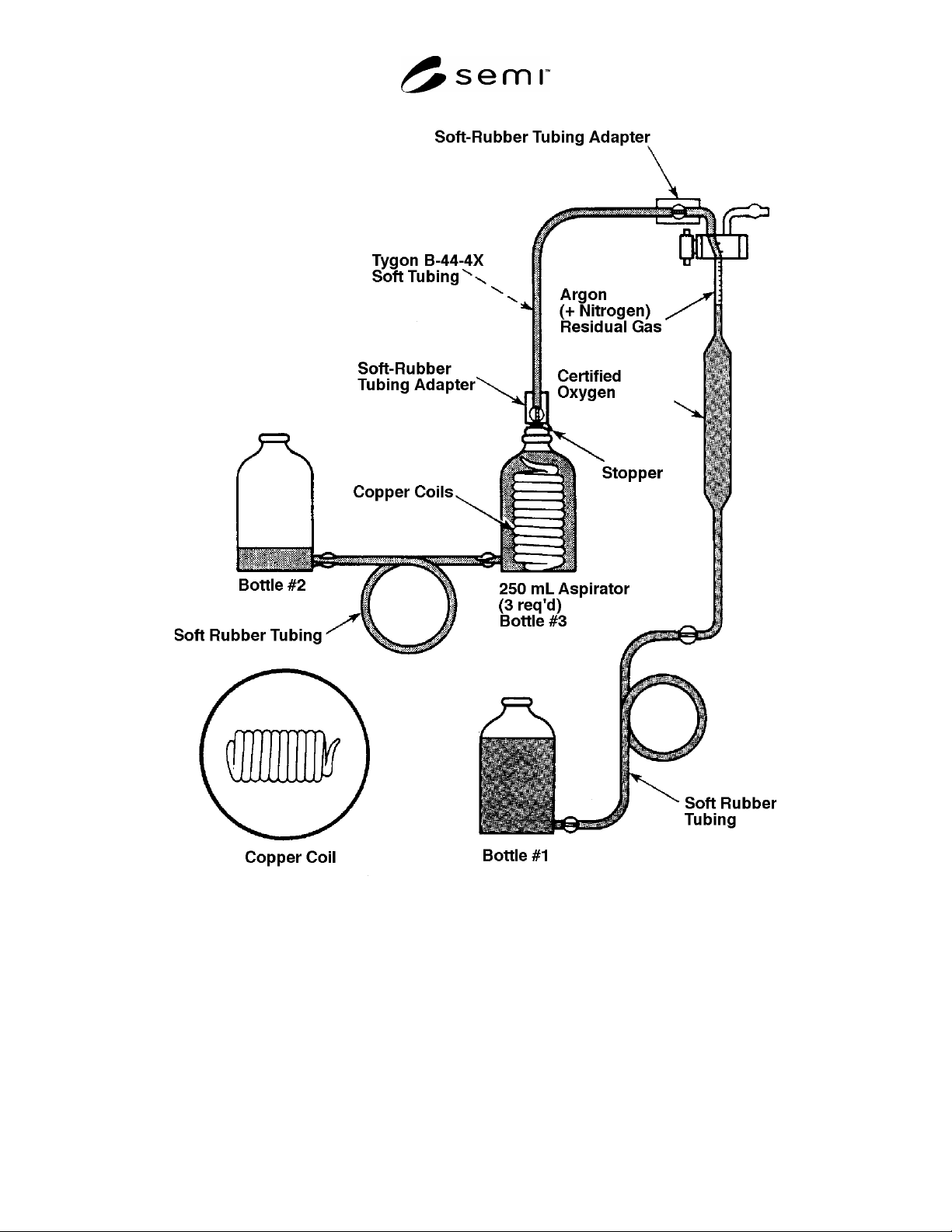
SEMI C3.22-1000 © SEMI 1983, 2004 5 Buret Diagram A

SEMI C3.22-1000 © SEMI 1983, 2004 4
4.5.6 Standardization
4.5.6.1 The method of analysis stated above can be
used as a primary standard, meaning cylinders analyzed
by this method can be used as standards of
measurement on electronic analyzers used to measure
oxygen.
4.5.6.2 This method is specific to oxygen when carbon
dioxide is not present in the sample gas. When carbon
dioxide is one of the components of the sample gas, the
carbon dioxide must first be scrubbed from the sample.
4.6 Notes
Note 1: The 0–1 range can be used provided that zero
and span gas standards in oxygen with known levels of
hydrocarbons between 0–1 ppm are used in the
calibration of the analyzer.
Note 2: As the flow rate and heat capacity of the matrix
gas affect the instrument output, the zero and span gas
matrices must coincide with that of the sample gas.
Note 3: The effective response of a flame ionization
detector-equipped total hydrocarbon analyzer to
different hydrocarbons can vary and must be
approximated. However, the response of the most
common hydrocarbon impurities in oxygen can be
accurately totaled and compared to methane.
Note 4: The sampling system and hygrometer must be
designed to operate under the sample pressure, or the
sample pressure must be reduced (by a regulator with
diaphragm of stainless steel or other suitable material)
to accommodate the pressure restrictions of the
analytical hygrometer.
Note 5: The National Institute of Standards and
Technology (NIST) provides calibration services for the
thermometers used in dewpoint/frostpoint hygrometers.
Note 6: This method is not applicable if other
constituents in the gas will condense before water
vapor, e.g., carbon dioxide and/or oil contamination.
Note 7: This procedure will be required only
immediately after changing the test solution or
contaminating the apparatus with air.
SEMI C3.22-1000 © SEMI 1983, 2004 5
Buret
Diagram A
SEMI C3.22-1000 © SEMI 1983, 2004 6
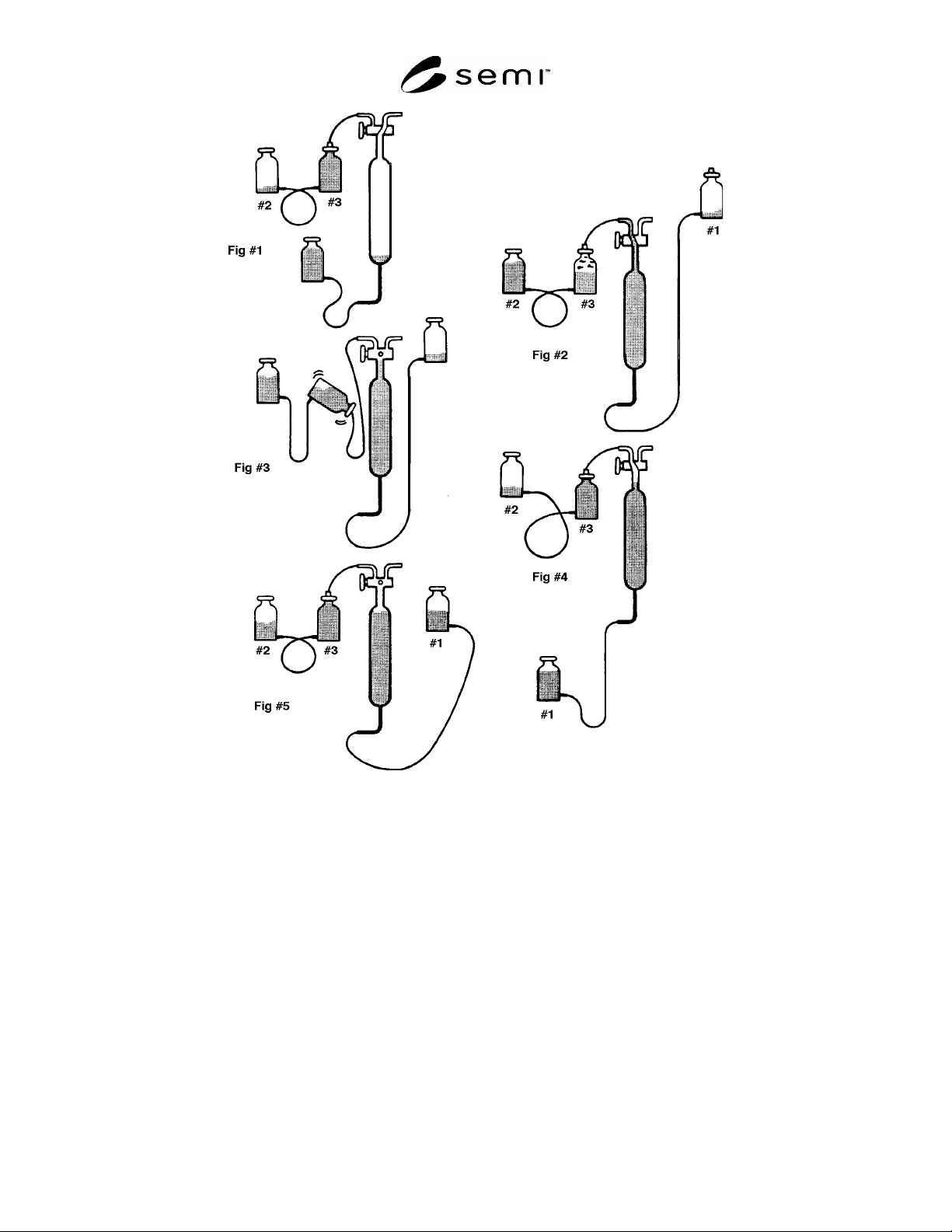
Diagram B
NOTICE: These standards do not purport to address safety issues, if any, associated with their use. It is the
responsibility of the user of these standards to establish appropriate safety and health practices and determine the
applicability of regulatory limitations prior to use. SEMI makes no warranties or representations as to the suitability
of the standards set forth herein for any particular application. The determination of the suitability of the standard is
solely the responsibility of the user. Users are cautioned to refer to manufacturer’s instructions, product labels,
product data sheets, and other relevant literature respecting any materials mentioned herein. These standards are
subject to change without notice.
The user’s attention is called to the possibility that compliance with this standard may require use of copyrighted
material or of an invention covered by patent rights. By publication of this standard, SEMI takes no position
respecting the validity of any patent rights or copyrights asserted in connection with any item mentioned in this
standard. Users of this standard are expressly advised that determination of any such patent rights or copyrights, and
the risk of infringement of such rights, are entirely their own responsibility.
Copyright by SEMI® (Semiconductor Equipment and Materials
International), 3081 Zanker Road, San Jose, CA 95134. Reproduction of
the contents in whole or in part is forbidden without express written
consent of SEMI.