semi合集-English.pdf - 第3493页
SEMI E134-0305 © SEMI 2004, 2005 46 14.1.1 Figure 24 shows how to represent a DataCo llectionRep ort containing the data a ssociated with a specific DCP. These form ats are used to send data t o consumers using the inter…
SEMI E134-0305 © SEMI 2004, 2005 45
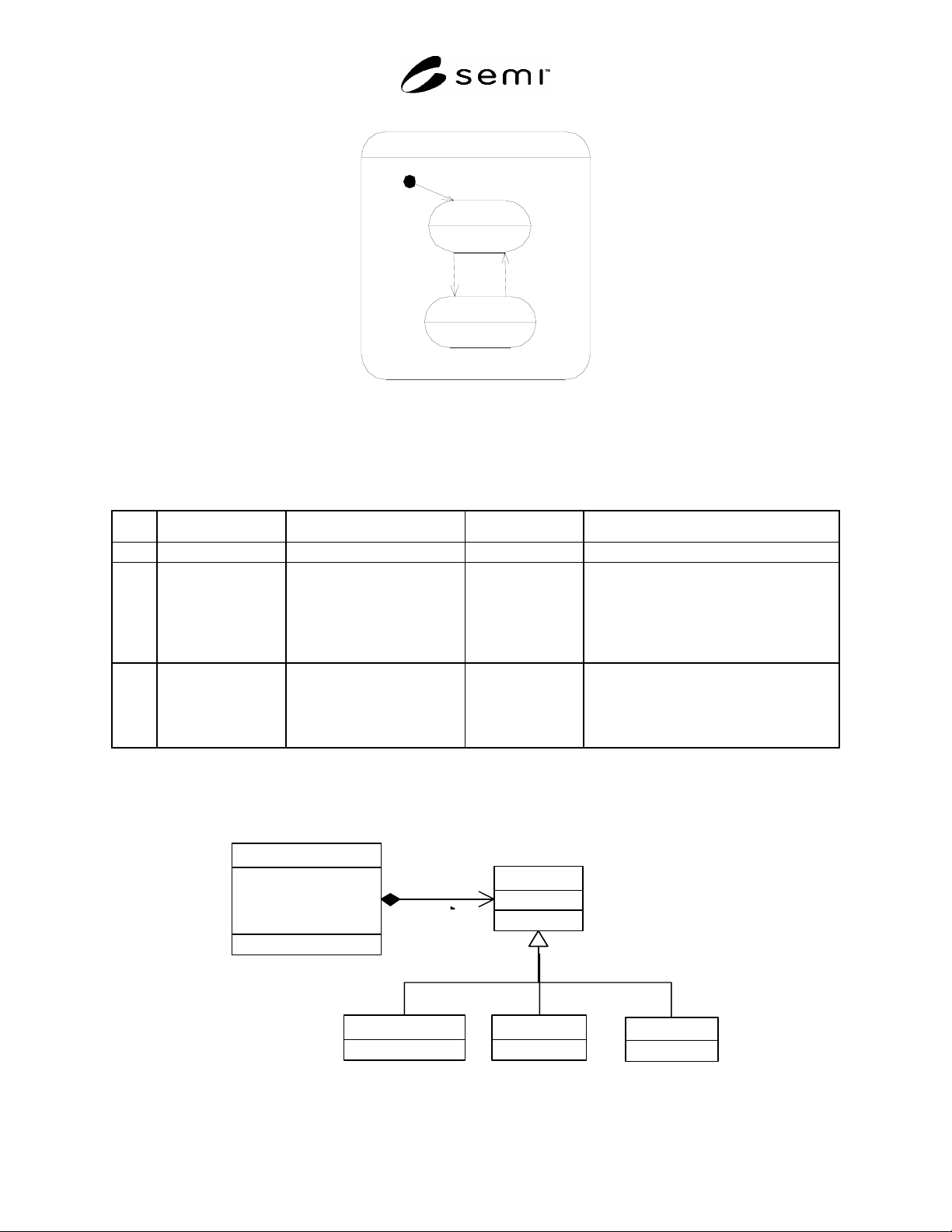
Operat ionalPerformanceConditions
Normal
BelowT hreshold
H
1
2
3
Figure 23
Operational Performance State Diagram
13.1.8 OperationalPerformanceConditions Transition Table
Table 54 Operational Performance Conditions Transition Definition
Num Previous State Trigger New State Actions
1 (no state) The equipment initializes. Normal
2 Normal The equipment detects a
reduction in performance
below supplier-specified
parameters.
BelowThreshold The equipment notifies all consumers that
have the ManageOnlyAuthoredDCPs
privilege level or higher,that the equipment
is experiencing operational performance
problems, providing the information
described in Section 15.1.5.
3 BelowThreshold Normal The equipment notifies all consumers that
have the ManageOnlyAuthoredDCPs
privilege level or higher of the current
performance status, providing the
information described in Section 15.1.5.
14 Data Collection Report Formats
14.1 Data Collection Reports
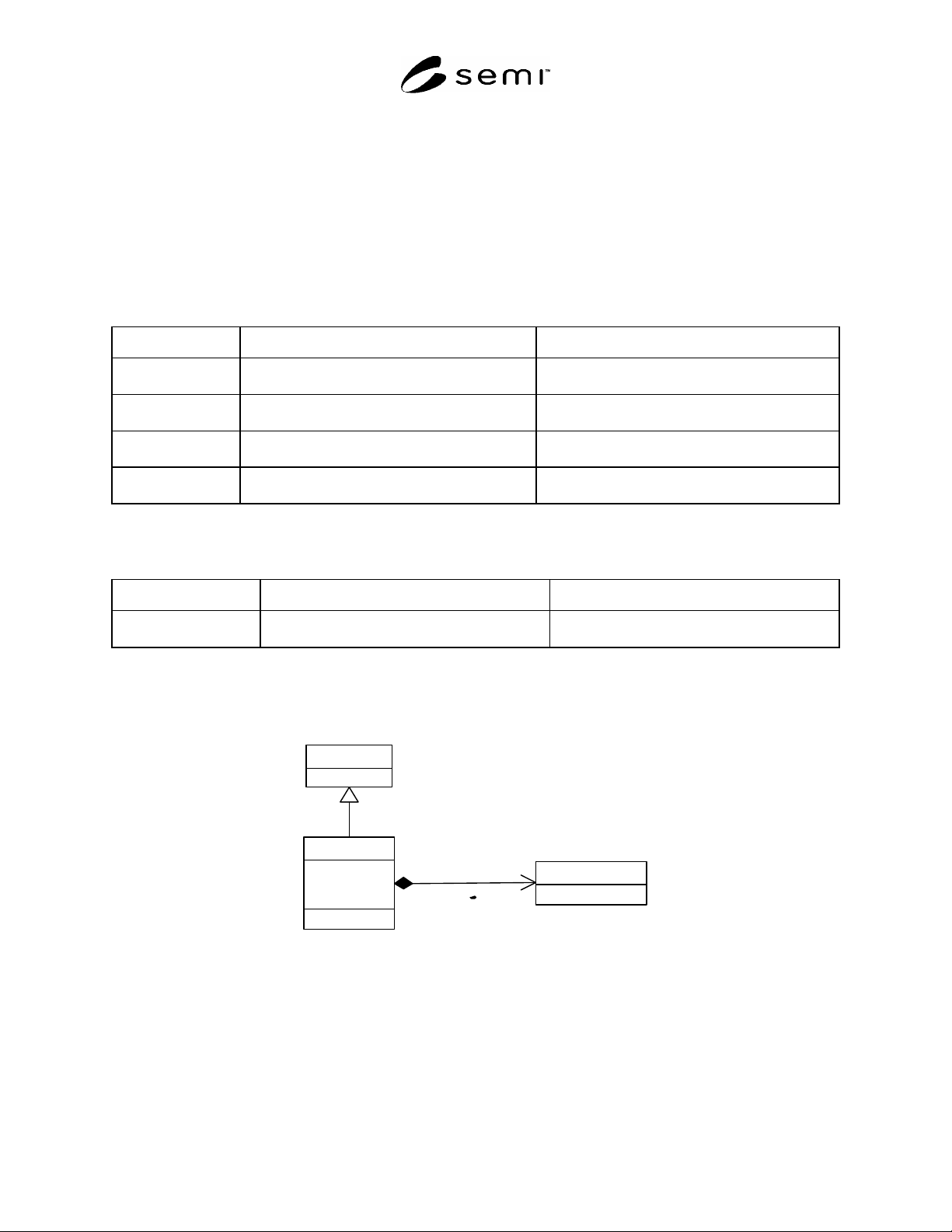
planI d
bufferStartTime
bufferEndTime
reportTime
DataCollectionReport
ExceptionReport EventR epo rt
TraceReport
Report
1
reports
1..*
{ordered}
Figure 24
Data Collection Reports
SEMI E134-0305 © SEMI 2004, 2005 46
14.1.1 Figure 24 shows how to represent a DataCollectionReport containing the data associated with a specific
DCP. These formats are used to send data to consumers using the interface defined in Section 15. The equipment is
not required to retain these reports for re-transmission once they have been sent to a consumer.
14.1.1.1 DataCollectionReport — this class represents one or more collected data items. A data collection report
contains one or more Reports, which can be an ExceptionReport, EventReport, or TraceReport. If the
DataCollectionReport contains more than one of those items, they are ordered according to the time of their
occurrence (‘reportTime’, in the case of TraceReports). A DataCollectionReport for a given DCP shall not contain
more than one Report if the ‘intervalInMinutes’ field of the corresponding DCP was set to 0.
14.1.1.2 DataCollectionReport Attribute Definition Table
Table 55 DataCollectionReport Attribute Definition
Attribute Name Definition Form
planId The unique id of this trace report, as specified in
the DCP.
Text
bufferStartTime The time at which the buffer period being reported
was started.
Text, formatted according to Section 14.5 .
bufferEndTime The time at which the buffer period being reported
ended.
Text, formatted according to Section 14.5 .
reportTime The time at which the DataCollectionReport was
created.
Text, formatted according to Section 14.5 .
14.1.1.3 DataCollectionReport Association Definition Table
Table 56 DataCollectionReport Association Definition
Association Role Name Definition Comments
reports One or more reports providing data requested by
an active DCP.
Ordered list of structured data, of any type
derived from Report.
14.1.2 Report — This abstract base class represents any report item that can be included in a DataCollectionReport.
This class has no attributes or associations.
14.1.3 Event Reports
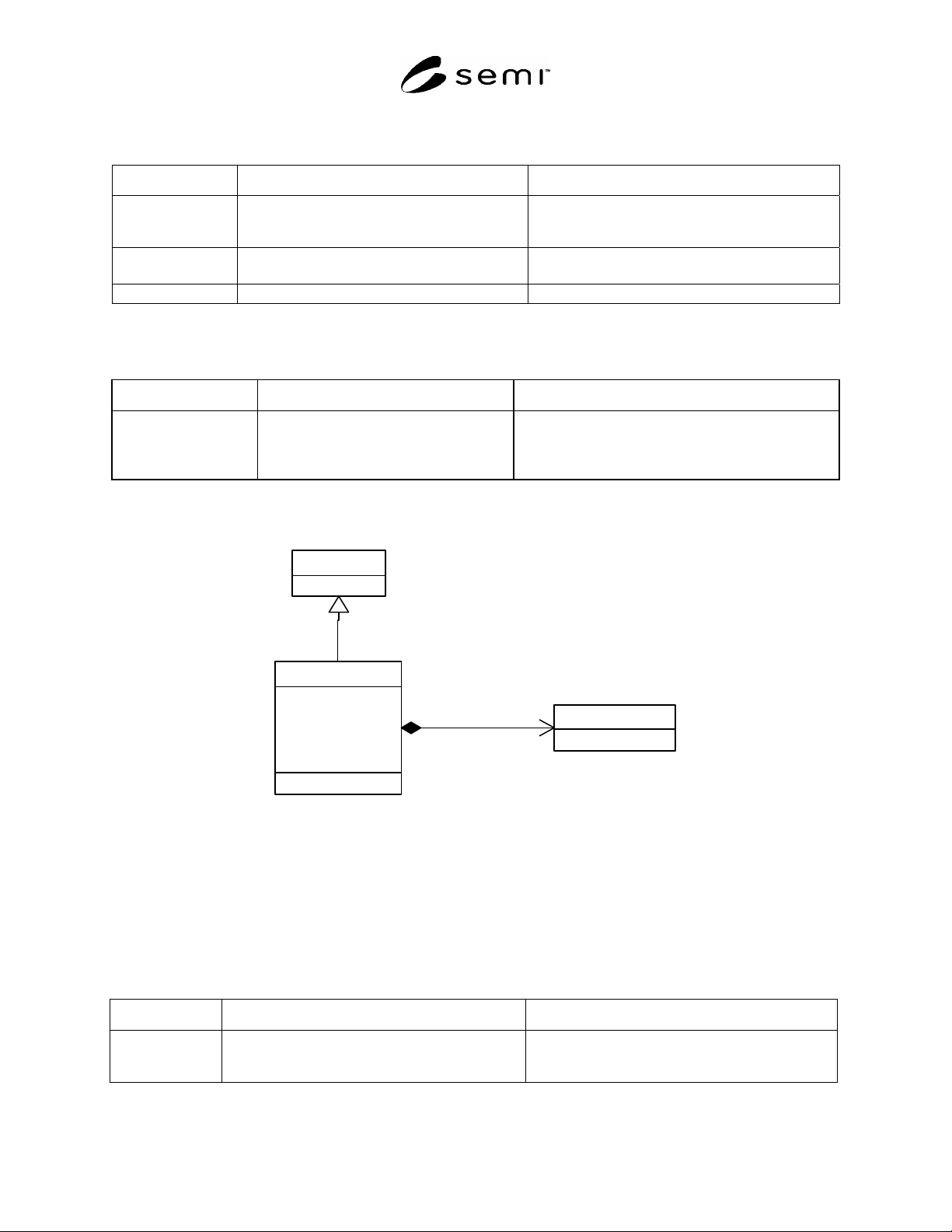
sourceId
event Id
event Time
EventReport
ParameterVal ue
1
parameterValues
0.. *
Report
{ordered}
Figure 25
Event Reports
14.1.3.1 Figure 25 shows how to represent the occurrence of an event included in a DCP.
14.1.3.1.1 EventReport — Represents the occurrence of an event. Each event has a source or origin of the event, a
unique event id, and the time at which the event was detected.
SEMI E134-0305 © SEMI 2004, 2005 47
14.1.3.1.2 EventReport Attribute Definition Table
Table 57 EventReport Attribute Definition
Attribute Name Definition Form
sourceId The identifier of the source of the event. Text, formatted according to the convention used for
identifying an event source (see limitations, Section
3.1.1).
eventId The identifier of the event. Text, formatted according to the convention used for
identifying an event (see limitations, Section 3.1.1).
eventTime The time at which the event was detected. Text, formatted according to Section 14.5.
14.1.3.2 EventReport Association Definition Table
Table 58 EventReport Association Definition
Association Role Name Definition Comments
parameterValues The parameters requested for this event. List of zero or more elements of type ParameterValue,
described in Section 14.2. ParameterValues appear in
the order specified in the original EventRequest in the
corresponding DCP.
14.1.4 Exception Reports
sourceId
exc eptionId
exc eptionTime
severity
state
ExceptionReport
ParameterValue
1
parameterValues
0..*
Report
{ordered}
Figure 26
Exception Reports
14.1.4.1 Figure 26 shows how to report the occurrence of an exception included in a DCP.
14.1.4.1.1 ExceptionReport — Represents the occurrence of an exception. Each exception has a source or origin of
the exception, a unique exception id, the time at which the exception was detected, and the severity of the exception.
14.1.4.1.2 ExceptionReport Attribute Definition Table
Table 59 ExceptionReport Attribute Definition
Attribute Name Definition Form
sourceId The identifier of the source of the exception. Text, formatted according to the convention used for
identifying an exception source (see Limitations,
Section 3.1.1).