semi合集-English.pdf - 第1851页
SEMI E42-0704 © SEMI 1995, 2004 120 BAKE;2.3 BakeTime undefined for unlinked recipe R1-6 Applications of Object Serv ices Object Service s are defined in SEMI E39 (Object Servic es Standard ( OSS): Conce p ts, Behavi or,…

SEMI E42-0704 © SEMI 1995, 2004 119
minimum = 100 seconds
maximum = 300 seconds;
or
TIME BakeTime • (200,100,300,”s”) /* default,min,max,units */
that define the process parameter “BakeTime”, its initial value and restrictions. The BAKE;2.3 recipe may use the
BakeTime parameter in further internal statements to determine the length of time a wafer is processed, such as:
wait for TIME BakeTime;
This parameter may then be set by a parent recipe as in Example (1) below or from the EqpSpec_PARAM attribute
(see 5.3.1.4) or with a “Select Recipe” command from the host or operator.
For example, a recipe “BAKE;2.3” may define a variable “BakeTime”, while a recipe “RAMP;1,0” may define a
variable “RampSetPoint”. A parent recipe “XYZ” might contain external references in the text of the source form
such as:
(1) RUN RAMP;1 // use default for RampSetPoint
RUN BAKE;2.3 with BakeTime=10 // bake for 10 seconds
or
(2) set RampSetPoint to 500; /* ramp up to 500 degC */
do RAMP(RampSetPoint);
set Baketime to 120; /* 120 sec (2 min.) bake */
do BAKE;2.3(BakeTime);
or
(3) RAMP(RampSetPoint:=500)
BAKE;2.3(BakeTime:=Time_A) /* 1st bake time may vary */
RAMP(RampSetPoint:=650)
BAKE;2.3(BakeTime:=Time_B) /* 2nd bake time may vary*/
RAMP(RampSetPoint:=800)
BAKE;2.3(BakeTime:=Time_B+50) /* 2nd bake plus 50 sec */
where “Time_A” and “Time_B” were both formally defined within XYZ.
In example (1), no initial value is specified for RampSetPoint. In this case, when the main recipe is selected, the
initial value specified either in EqpSpec_LinkParam
or in Gen_LinkParam (that is the same as the definition in
RAMP;2.3) is used. However, in this example, the parameter BakeTime is assigned a value by the parent recipe,
and this supersedes any value from a recipe attribute or a “Select Recipe” command from the host or operator. In
the example given, BakeTime is assigned a value outside of the declared domain. This should create an error when
the recipe is verified.
Examples (2) and (3) illustrate how subrecipes RAMP and BAKE may be referenced multiple times by a parent
recipe, and the parent may provide different values with each reference (Example 2) or may define new parameters
to use with different references (Example 3).
In the above examples, PARAMETERS (set when each individual recipe is verified) and Gen_LinkParam (set when
XYZ is linked) will contain parameter definitions as follows:
Recipe
PARAMETERS n_LinkParam
XYZ;0.8 Time_A Time_A
Time_B Time_B
RampSetPoint
BakeTime
RAMP;1.0 RampSetPoint undefined for unlinked recipe
SEMI E42-0704 © SEMI 1995, 2004 120
BAKE;2.3 BakeTime undefined for unlinked recipe
R1-6 Applications of Object Services
Object Services are defined in SEMI E39 (Object Services Standard (OSS): Concepts, Behavior, and Services). This
section provides a description of how these services may be applied for RMS.
R1-6.1 Scope — Scope may be used to specify the namespace of interest. It may also be used to specify a
namespace or recipe execution resource belonging to a component agent of the service provider. For example, scope
allows a factory host to ask a cluster tool for the attributes of a cluster module.
Scope may be used to point to one of several namespaces supported by an agent.
R1-6.2 Filter — A filter may be used when asking a namespace for a list of recipe identifiers to limit the number of
identifiers returned. For example, the service user may ask a namespace for a list of recipe identifiers that were
edited by “Tom” (Attribute name = “EditedBy”, Attribute value = “Tom”, Attribute Relation = “is equal to”) and
that are linked (Attribute name = “Linked”, Attribute value = “TRUE”, Attribute Relation = “is equal to”).
R1-6.3 Complex Attributes — Object Services do not provide a way to change individual elements in an attribute
with a structure or list form. To add, delete, or modify items in a list or structure, it is necessary to first get the
current attribute value for the object of interest using the GetAttr service, to make the desired changes externally to
the value, and then to write the new value using the SetAttr service.
R1-7 Examples of RMS Application
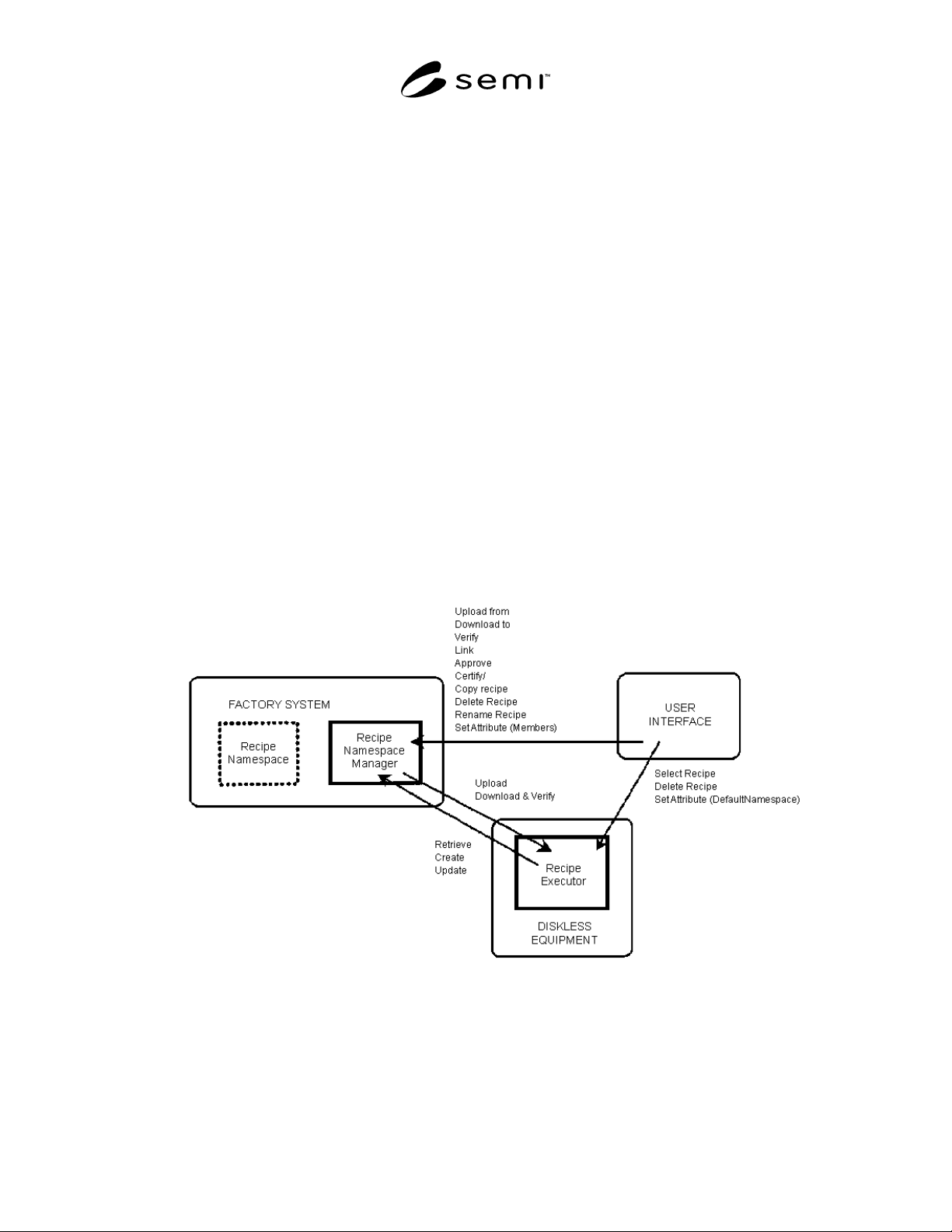
Figure R1-2 illustrates possible interactions between a namespace and namespace manager implemented on a
factory system, a diskless equipment with a recipe executor, and an operator.
Figure R1-2
Example of RMS Applications

SEMI E42-0704 © SEMI 1995, 2004 121
Other examples would be similar. Interactions are primarily with external service users of namespace and recipe
execution capabilities, and between namespace managers and recipe executors.
Namespaces do not interact with one another. To copy a recipe from one namespace to another, an intermediary is
required. This is not covered by RMS.
NOTICE: These standards do not purport to address safety issues, if any, associated with their use. It is the
responsibility of the user of these standards to establish appropriate safety and health practices and determine the
applicability of regulatory limitations prior to use. SEMI makes no warranties or representations as to the suitability
of the standards set forth herein for any particular application. The determination of the suitability of the standard is
solely the responsibility of the user. Users are cautioned to refer to manufacturer's instructions, product labels,
product data sheets, and other relevant literature respecting any materials mentioned herein. These standards are
subject to change without notice.
The user’s attention is called to the possibility that compliance with this standard may require use of copyrighted
material or of an invention covered by patent rights. By publication of this standard, SEMI takes no position
respecting the validity of any patent rights or copyrights asserted in connection with any item mentioned in this
standard. Users of this standard are expressly advised that determination of any such patent rights or copyrights, and
the risk of infringement of such rights, are entirely their own responsibility.
Copyright by SEMI® (Semiconductor Equipment and Materials
International), 3081 Zanker Road, San Jose, CA 95134. Reproduction o
f
the contents in whole or in part is forbidden without express written
consent of SEMI.