semi合集-English.pdf - 第4649页
SEMI C2.27-1102 © SEMI 1984, 2002 2 8.1.1.3 Tygo n R tubing, 6 mm (1/ 4 in). 8.1.1.4 PTFE tubing , 6 mm (1/4 in). 8.1.1.5 Valve assembly consist ing of a needle valve with a stainless steel needle, a steel bushing and st…
SEMI C3.27-1102 © SEMI 1984, 2002 1
SEMI C3.27-1102
SPECIFICATION FOR BORON TRIFLUORIDE (BF
3
) IN CYLINDERS,
99.0% QUALITY
This specification was technically approved by the Global Gases Committee and is the direct responsibility of
the North American Gases Committee. Current edition approved by the North American Regional Standards
Committee on July 21, 2002. Initially available at www.semi.org October 2002; to be published November
2002. Originally published in 1984; previously published in 1994.
1 Purpose
1.1 The purpose of this document is to provide a
specification for Boron Trifluoride (BF
3
) used in the
semiconductor industry.
2 Scope
2.1 This document covers requirements for Boron
Trifluoride (BF
3
) used in the semiconductor industry.
2.2 If analytical methods are not complete, the
requirements are presented as a guideline.
2.3 This standard does not purport to address safety
issues, if any, associated with its use. It is the
responsibility of the user of these standards to establish
appropriate safety and health practices and determine
the applicability of regulatory limitations prior to use.
3 Description
3.1 Boron trifluoride is a colorless gas. It fumes in
moist air and has a pungent odor. Boron trifluoride is
nonflammable and does not support combustion.
4 Referenced Standards
4.1 SEMI Standards
SEMI C1 — Specifications for Reagents
SEMI C3 — Specifications for Gases
5 Terminology
5.1 Terminology appropriate to this standard is defined
in SEMI C3.
6 Specifications
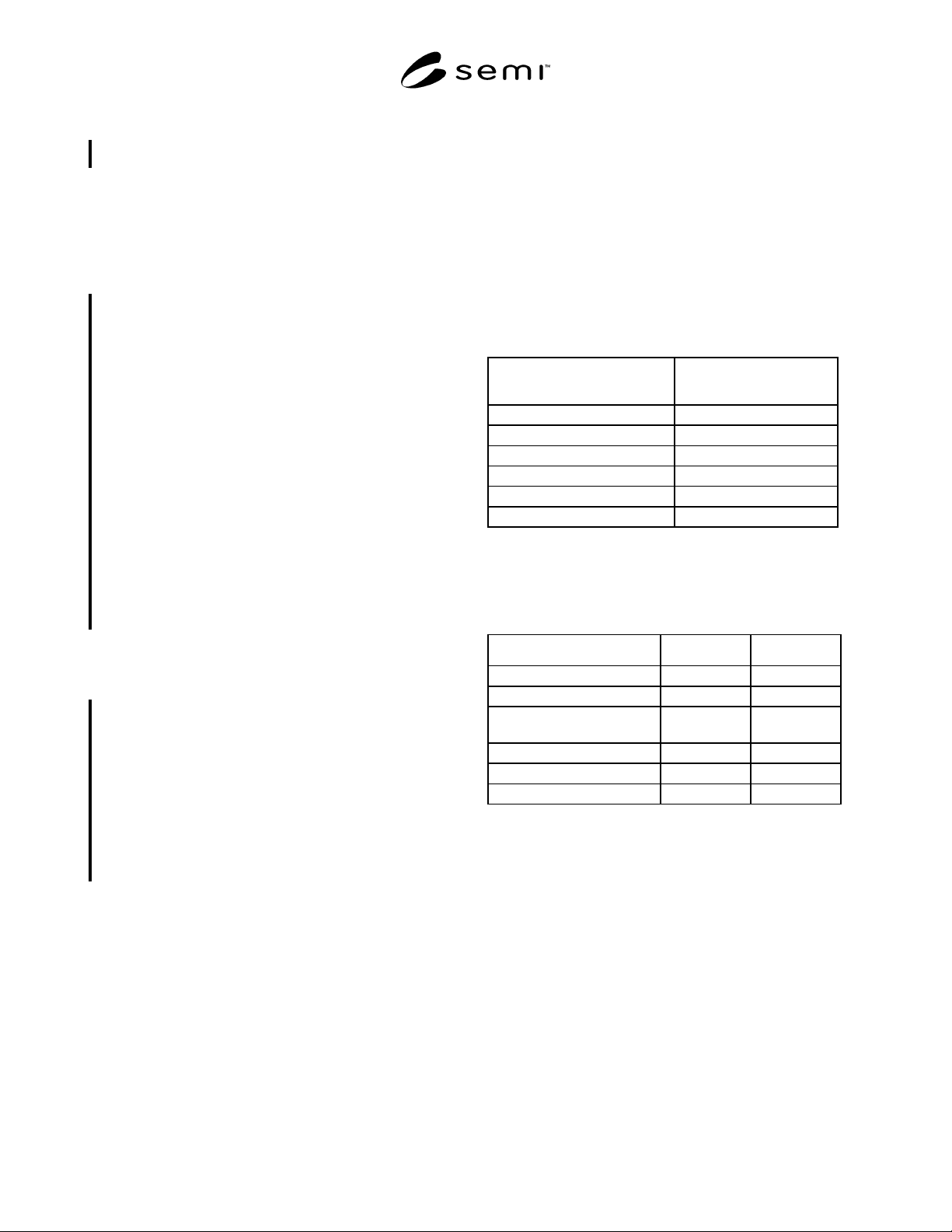
QUALITY: 99.0%
Impurities
Maximum Acceptable Level
(ppm)*
Gases not soluble in water 0.94%
Particles **
Silicon Tetrafluoride (SiF
4
) 200
Sulfur Dioxide (SO
2
) 21
Total Sulfates (SO
4
-2
) 7
TOTAL IMPURITIES 9628
* An analysis of significant figures has not been considered. The
number of significant figures will be based on analytical accuracy and
the precision of the provided procedure.
** To be determined between supplier and user.
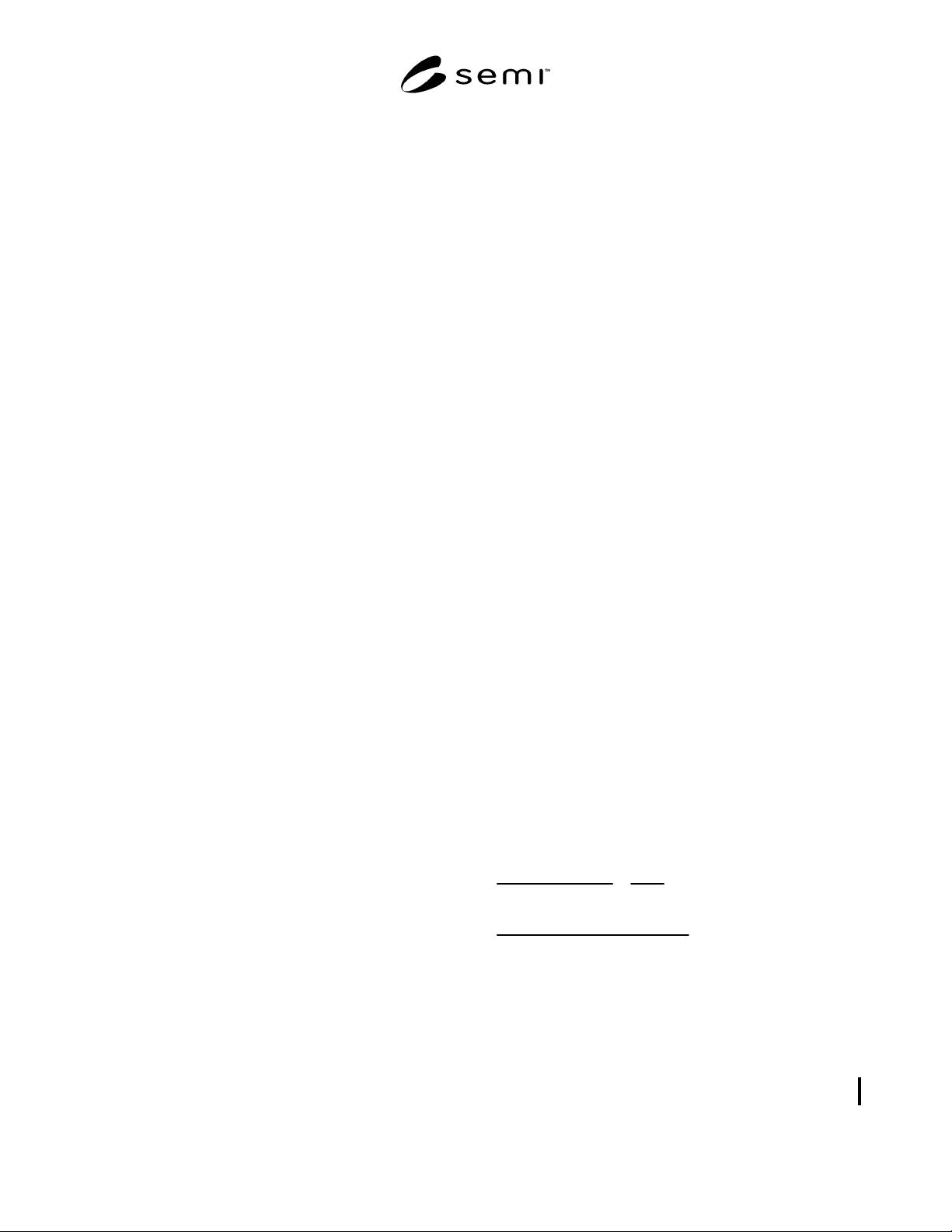
7 Physical Constants (for information only)
Metric Units US Units
Molecular weight 67.81 67.81
Boiling point at 1 atm −100.4°C −149.0°F
Density of gas at 70°C
(21.1°F) and 1 atm
3.076 g/L 0.192 lb/ft
3
Specific gravity of gas 2.7 2.7
Critical pressure 49.2 atm 723 psia
Critical Temperature −12.25°C 9.95°F
8 Analytical Procedures
8.1 Sampling Procedures — Boron trifluoride is
sampled separately for water-soluble gases and water-
insoluble gases. The water-soluble components are
collected in a plastic bottle which contains chopped ice.
After the ice melts, weighed aliquots of the solution are
taken for individual determinations. The water-
insoluble components are collected in a modified gas
collection tube.
8.1.1 Apparatus
8.1.1.1 Balance, l000-g capacity, capable of weighing
to 0.01 g.
8.1.1.2 Polyethylene bottles (wide mouth, 1-L capacity)
with caps.
SEMI C2.27-1102 © SEMI 1984, 2002 2
8.1.1.3 Tygon
R
tubing, 6 mm (1/4 in).
8.1.1.4 PTFE tubing, 6 mm (1/4 in).
8.1.1.5 Valve assembly consisting of a needle valve
with a stainless steel needle, a steel bushing and steel
coupling with a steel gas cylinder connection; a gas
take-off consisting of a steel sleeve from the valve with
steel pipe leading to a 61 cm Tygon delivery tube. The
delivery tube is a temporary connection and is replaced
as needed (see Figure 1).
8.1.1.6 Trap: 1-liter polyethylene bottle fitted with a 2-
hole Neoprene stopper and two 4-inch pieces of 1/4"
PTFE tubing which do not extend below the stopper by
more than 1 inch. The Tygon delivery tube is attached
to one of the PTFE tubes in the stopper (Inlet to Trap).
A 61 cm length of Tygon tubing is attached to the
second piece of PTFE tubing in the stopper (Outlet from
Trap). The trap is supported with a clamp and ring
stand.
8.1.1.7 Modified gas collecting tube (see Figure 2);
250-mL Pyrex sampling tube (modified with a
graduated scale on one end).
8.1.2 Reagents
8.1.2.1 Distilled-water ice, cracked.
8.1.2.2 Nitrogen, dry; 35 ppm water, or less.
8.1.3 Operating Procedure - Water-Insoluble
Components
CAUTION: Perform all work in a hood.
8.1.3.1 Prepare the gas-collecting tube by washing with
distilled water, rinsing with acetone, then drying in an
air oven at 100–125°C. Flush with dry nitrogen for
about one minute. Leave filled with dry nitrogen; close
the stopcocks.
8.1.3.2 Connect the needle valve assembly apparatus to
the cylinder to be tested.
8.1.3.3 Attach the gas-collecting tube to the valve
nipple with a short piece of dry Tygon tubing.
8.1.3.4 Open the cylinder valve, open the gas collecting
tube stopcocks, and very carefully crack open the
needle valve.
8.1.3.5 Purge the tube for 5 minutes with a slow stream
of BF
3
gas.
8.1.3.6 Close the needle valve, close the gas-collecting
tube stopcocks, and then close the cylinder valve.
8.1.3.7 Proceed with the analysis, after removing the
gas-collecting tube from the valve nipple.
8.1.4 Operating Procedure - Water Soluble
Components
CAUTION: Perform all work in a hood.
8.1.4.1 Before attaching the Tygon delivery tube, purge
the sampling valve system for 1 minute with a slow
stream of boron trifluoride from the cylinder. Use a
separate piece of tubing when purging.
8.1.4.2 Weigh an empty 1-L polyethylene bottle with
cap to the nearest 0.01 g. Record this weight as A.
8.1.4.3 Fill the bottle with about 400 g of cracked,
distilled-water ice. Re-weigh the bottle with cap to the
nearest 0.01 g; record as weight B.
8.1.4.4 A sampling line is used to transfer BF
3
gas from
the cylinder to the sample bottle.
8.1.4.5 Connect the Tygon delivery tube from the
sampling valve apparatus to the trap. Support the Tygon
tubing from the trap outlet; then open the needle valve
and adjust until a steady flow of BF
3
is obtained. Insert
this Tygon tubing (from the trap outlet) into the
polyethylene sample bottle, extending down to the
bottom of the bottle. Carefully introduce the BF
3
into
the ice until most of the ice is melted, then close the
needle valve and remove the Tygon tubing. Remove the
sample bottle and cap it. Re-weigh the bottle, cap and
contents to the nearest 0.01 g. Record this weight as C.
8.1.4.6 Mix thoroughly by careful inversion until all of
the ice melts, being certain to keep the plastic bottle
tightly capped so that none of the liquid is lost.
8.1.4.7 Proceed with the determination of water-soluble
components, being sure to do the sulfur dioxide first,
since opening the bottle repeatedly may result in a
considerable loss of sulfur dioxide.
8.1.4.8 Calculations for sample size:
B - A = Grams of Ice (H
2
O)
C - A = Weight of Solution (BF
3
Solution)
C - B = Weight of Water-soluble Material (grams of
BF
3
gas)
Grams of BF
3
Gas
Grams of Solution
=
C-B
C-A
= F
Grams BF
3
needed for Method
F
=
Grams Solution
Needed for Method
8.2 Air — This procedure describes the determination
of insoluble gases in boron trifluoride gas. A known
volume of boron trifluoride gas is absorbed in sodium
chloride solution, then any undissolved gases remaining
are measured and calculated as % air.
8.2.1 Method Capabilities — The range of this method
is 0.05% to 2.3%.
SEMI C3.27-1102 © SEMI 1984, 2002 3
8.2.2 Apparatus
8.2.2.1 The modified gas collecting tube shown in
Section 8.1.1.7, Figure 2.
8.2.2.2 Separatory funnel, 2000-mL Pyrex (with 61-cm
Tygon
R
tubing and pinch clamp attached to stopcock
end).
8.2.2.3 Tygon tubing, 1/4 inch.
8.2.2.4 Balance, capable of weighing 1000 grams to
0.01 gram.
8.2.3 Reagents — All reagents used are reagent grade
unless otherwise indicated.
8.2.3.1 Water — All water used in the preparation of
reagents and in the procedure is either distilled or
deionized.
8.2.3.2 Sodium chloride solution — Dissolve 300 g of
sodium chloride in 1 liter of water.
8.2.4 Calibration - Gas Collecting Tube
8.2.4.1 Weigh the gas collecting tube to the nearest 0.1
g; weight = A, then clamp the tube securely on a
ringstand with the calibrated stem up.
8.2.4.2 Fill the tube with distilled water and allow it to
stand with the top stopcock open until it has reached
room temperature.
8.2.4.3 Record the room temperature to the nearest
0.01°C; temperature = °C.
8.2.4.4 Close the top stopcock. Drain and dry both of
the outer stems. Weigh the water-filled collecting tube
to the nearest 0.1 g; weight = B.
8.2.4.5 The net weight of the water in the tube (B - A)
in grams is equal to the volume of the tube in milliliters,
corrected for the density of water at temperature °C.
Determine this volume as follows:
V
olume in mL =
(B - A)
D - E
w
here D = Density (g/mL) of water
a
t temperature
°
C (from Table 1).
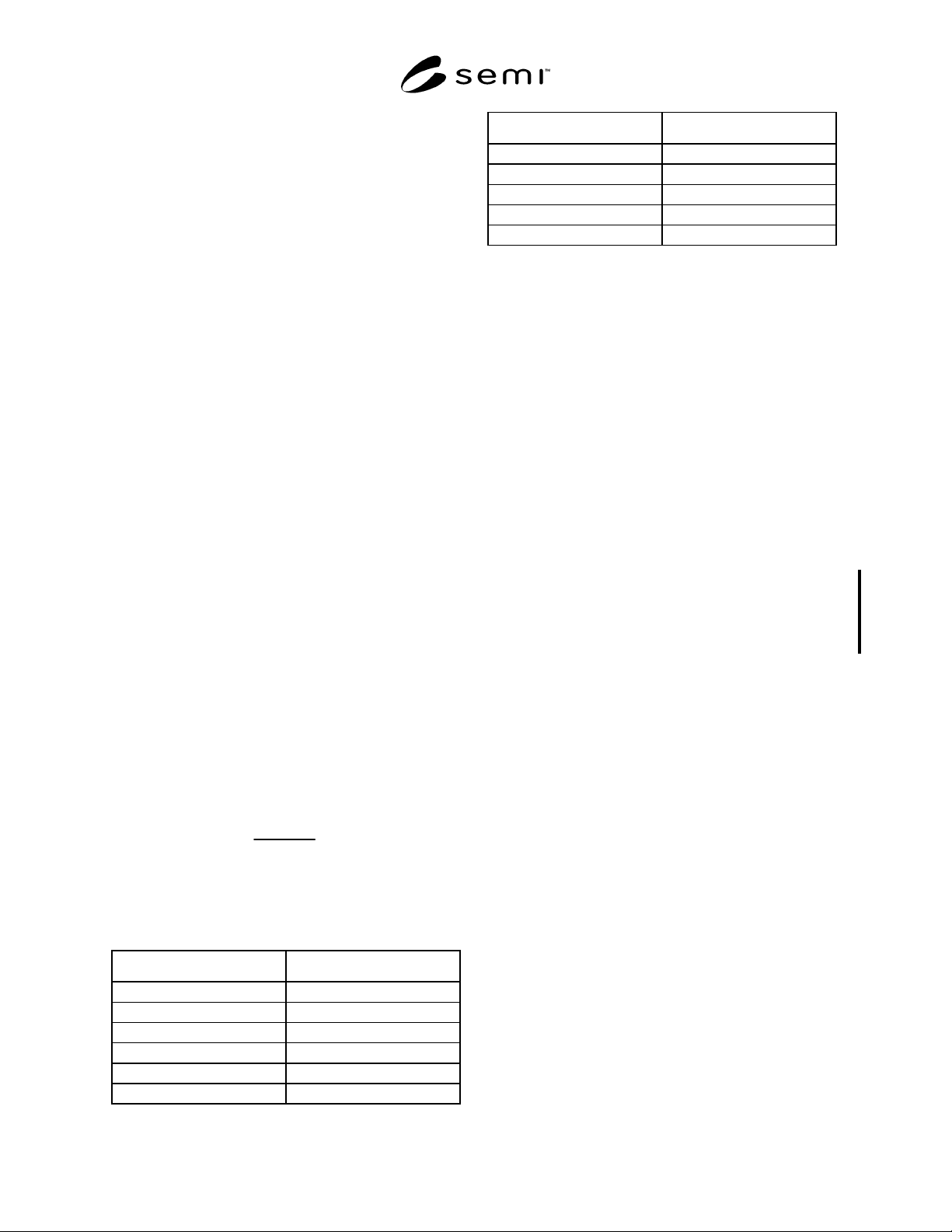
Table 1 Density vs T°C for Water
Temp. °C Density g/mL
20 0.99823
21 0.99802
22 780
23 756
24 732
25 0.99707
Temp. °C Density g/mL
26 681
27 654
28 626
29 597
30 567
8.2.5 Procedure
8.2.5.1 Obtain the sample of BF
3
gas in the gas
collecting tube. See Section 8.1.3 for sampling details.
8.2.5.2 Fill the separatory funnel with sodium chloride
solution. Attach Tygon tubing and a pinch clamp to the
funnel.
8.2.5.3 With a small dropper, fill the glass tubing
leading to the stopcock opposite the calibrated end of
the gas collecting tube with the salt solution. (Note: the
gas collecting tube is inverted at this point.)
8.2.5.4 Open the separatory funnel stopcock and the
pinch clamp on the Tygon tubing. Hold the tubing
upright and when it completely fills with NaCl solution,
slip the tubing onto the end of the gas collecting tube
which was previously filled in step 8.2.5.3.
NOTE 1: There should be no air bubbles in the connections
between the gas collecting tube and the separatory funnel. A
trace of a wetting agent such as Ultrawet (Atlantic Refining
Co.) in the salt solution assists in freeing small air bubbles
from the walls of connecting tubes.
8.2.5.5 Hold the gas collecting tube vertical, with the
calibrated end up and the entire collecting tube below
the liquid level of the separatory funnel.
8.2.5.6 Open the lower stopcock of the gas collecting
tube carefully and shake the tube to aid in dissolving of
the BF
3
gas in the salt solution.
8.2.5.7 Bring the liquid level in the gas collecting tube
equal to the liquid level in the separatory funnel.
8.2.5.8 Read and record the volume of undissolved gas
in the upper calibrated end of the gas collecting tube
and record this volume, to the nearest one-tenth of a
milliliter; mL = F. Record the room temperature.
8.2.6 Calculations
8.2.6.1 F = Total milliliters of undissolved gas (from
Section 8.2.5.8).
8.2.6.2 E = Total volume of gas collecting tube in mL;
see Calibration - Gas Collecting Tube.