semi合集-English.pdf - 第3000页
SEMI E120.1-0705 © SEMI 2004, 2005 14 Table 9 Translation Tabl e For Subsystem Attribute or Role Name UML Type XML Element or Attribute (or Reference) XML Name/Type element (used fir st time a Subsystem is defined in the…
SEMI E120.1-0705 © SEMI 2004, 2005 13
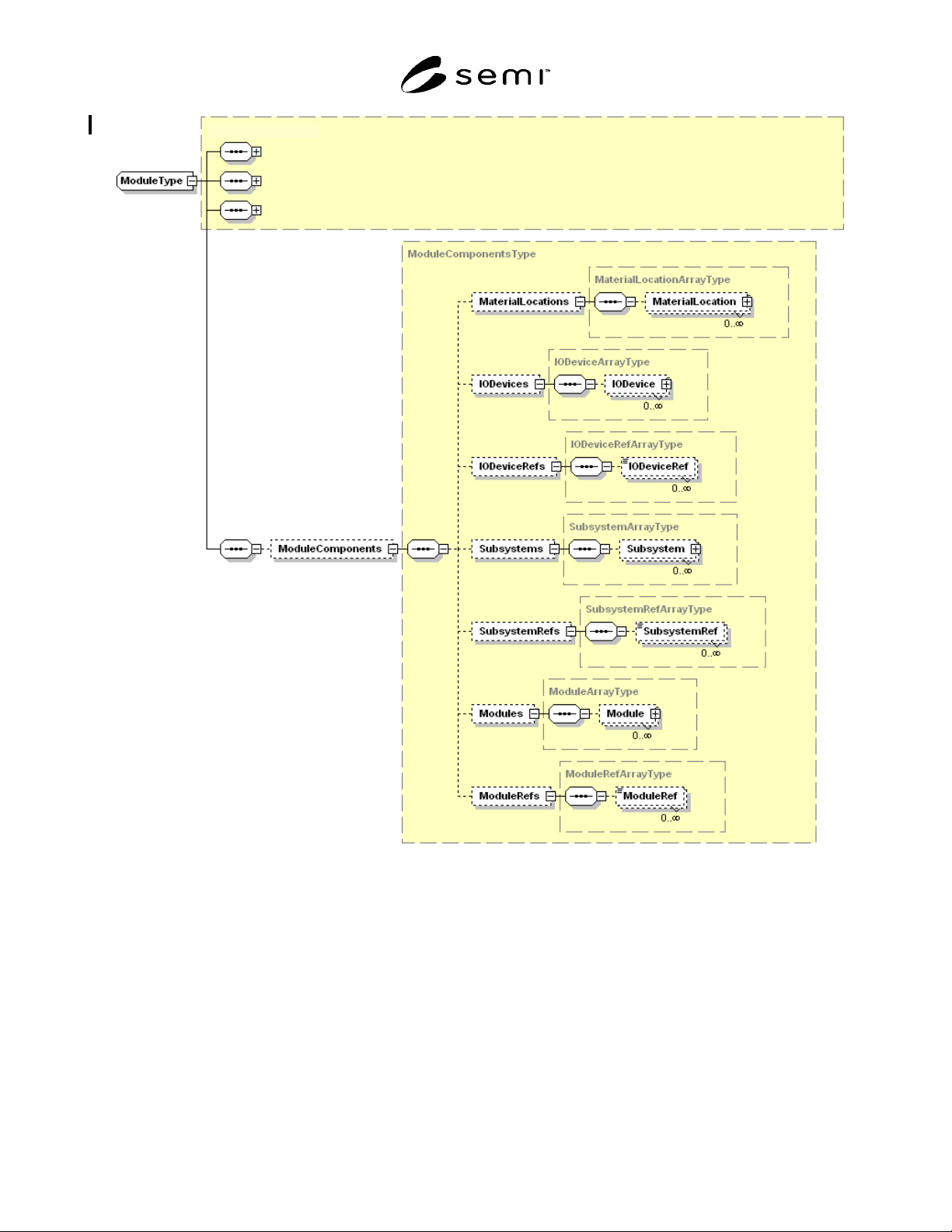
ExecutionElement Type
Figure 9
ModuleType
6.3.7 Subsystem => SubsystemType
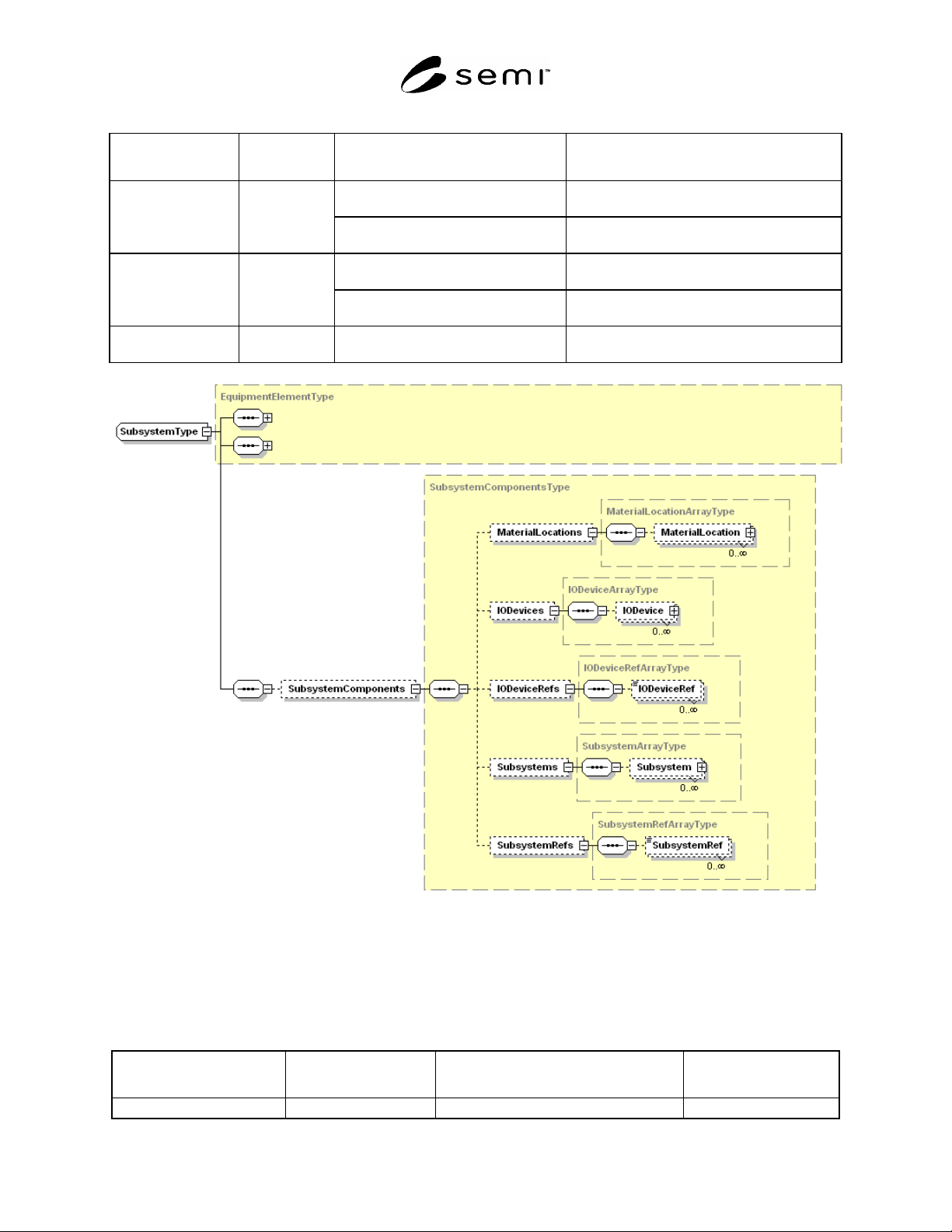
6.3.7.1 The Subsystem class is mapped to the XML SubsystemType. SubsystemType extends EquipmentElement
(see Figure 10). It is also a container for all of the components of the Subsystem – IODevices and other Subsystems.
6.3.7.2 Table 9 shows how the associations of the Subsystem class are mapped into XML. The SubsystemType
contains the element SubsystemComponents to act as a container. The XML elements listed in the table are
contained in SubsystemComponents.
SEMI E120.1-0705 © SEMI 2004, 2005 14
Table 9 Translation Table For Subsystem
Attribute or Role
Name
UML Type
XML Element or Attribute
(or Reference)
XML Name/Type
element (used first time a Subsystem is
defined in the system)
Subsystems: SubsystemArrayType
subsystems aggregation
element (references a previously
defined Subsystem)
SubsystemRefs: SubsystemRefArrayType
element (used first time an IODevice is
defined in the system)
IODevices: IODeviceArrayType
iodevices aggregation
element (references a previously
defined IODevice)
IODeviceNodeArrayType
materialLocations composition element
MaterialLocations:
MaterialLocationArrayType
Figure 10
SubsystemType
6.3.8 IODevice => IODeviceType
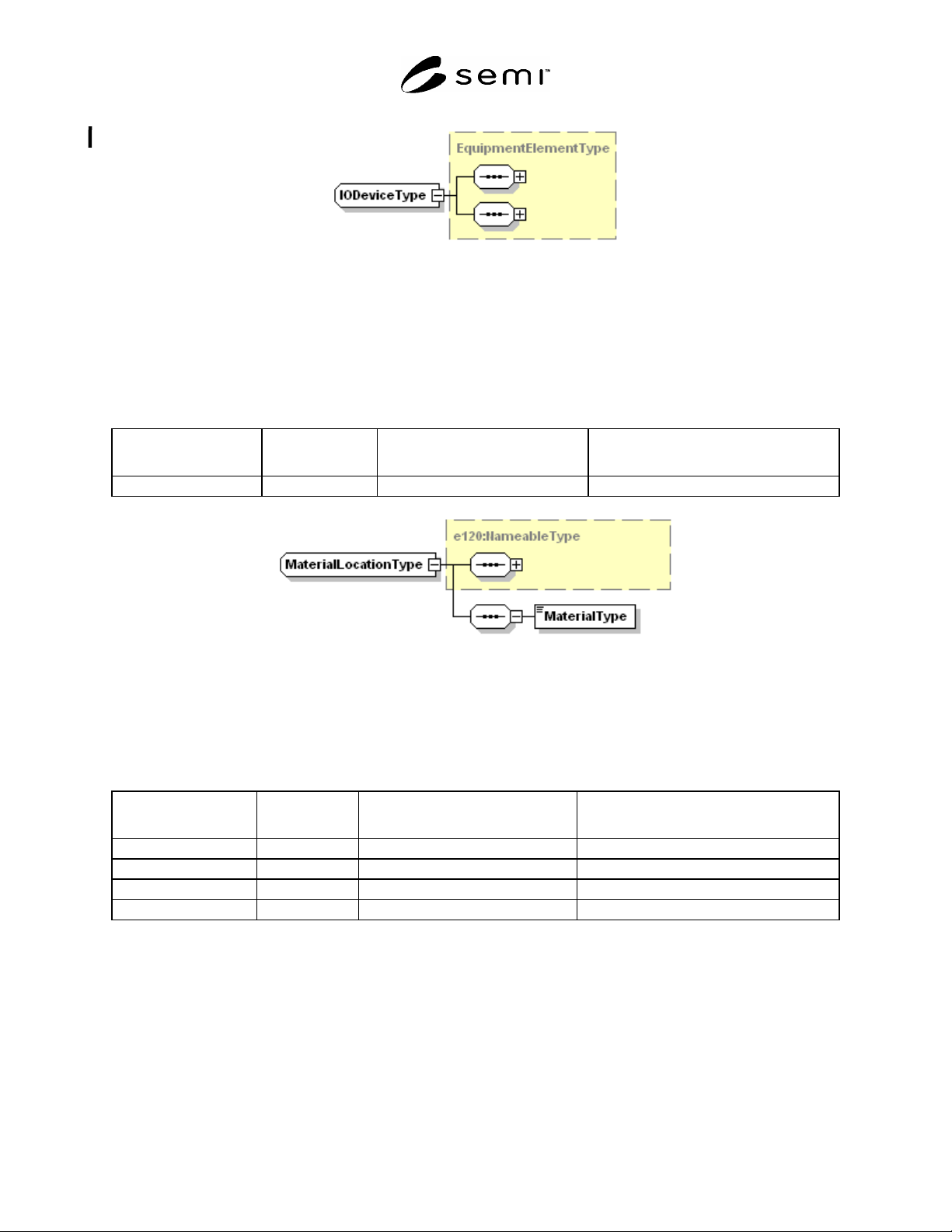
6.3.8.1 The IODevice class is mapped to the XML IODeviceType. IODeviceType defines no attributes or
navigable associations, but it does extend EquipmentElementType (see Figure 11). It is included in multiple
associations, but it cannot navigate any of them. Therefore, its translation table is empty.
Table 10 Translation Table For IODevice
Attribute or Role Name UML Type
XML Element or Attribute
(or Reference)
XML Name/Type
none
SEMI E120.1-0705 © SEMI 2004, 2005 15
Figure 11
IODeviceType
6.3.9 MaterialLocation => MaterialLocationType
6.3.9.1 The MaterialLocation class is mapped to the XML MaterialLocationType. MaterialLocationType extends
NameableType (see Figure 12).
6.3.9.2 Table 11 shows how the attribute of the MaterialLocation class is mapped into XML.
Table 11 Translation Table For MaterialLocation
Attribute or Role Name UML Type
XML Element or Attribute
(or Reference)
XML Name/Type
materialType enumeration element MaterialType: MaterialTypeEnum
Figure 12
MaterialLocationType
6.3.10 SoftwareModule => SoftwareModuleType
6.3.10.1 The SoftwareModule class is mapped to the XML SoftwareModuleType. Table 12 shows how the
attributes of SoftwareModule are mapped to XML. The resulting XML structure is illustrated in Figure 13.
Table 12 Translation Table For SoftwareModule
Attribute or Role Name UML Type
XML Element or Attribute
(or Reference)
XML Name/Type
name string element Name: xs:string
supplier string element Supplier: xs:string
description string element Description: xs:string
version string element Version: xs:string