semi合集-English.pdf - 第2465页
SEMI E87-0705 © SEMI 1999, 2005 34 Table 18 Bind Serv ice Parameter Definitions Parameter Name Req/Ind Rsp/Conf Description PortID M — The PortID where a carrier is expected. CarrierID M — The expected CarrierID. Propert…
SEMI E87-0705 © SEMI 1999, 2005 33
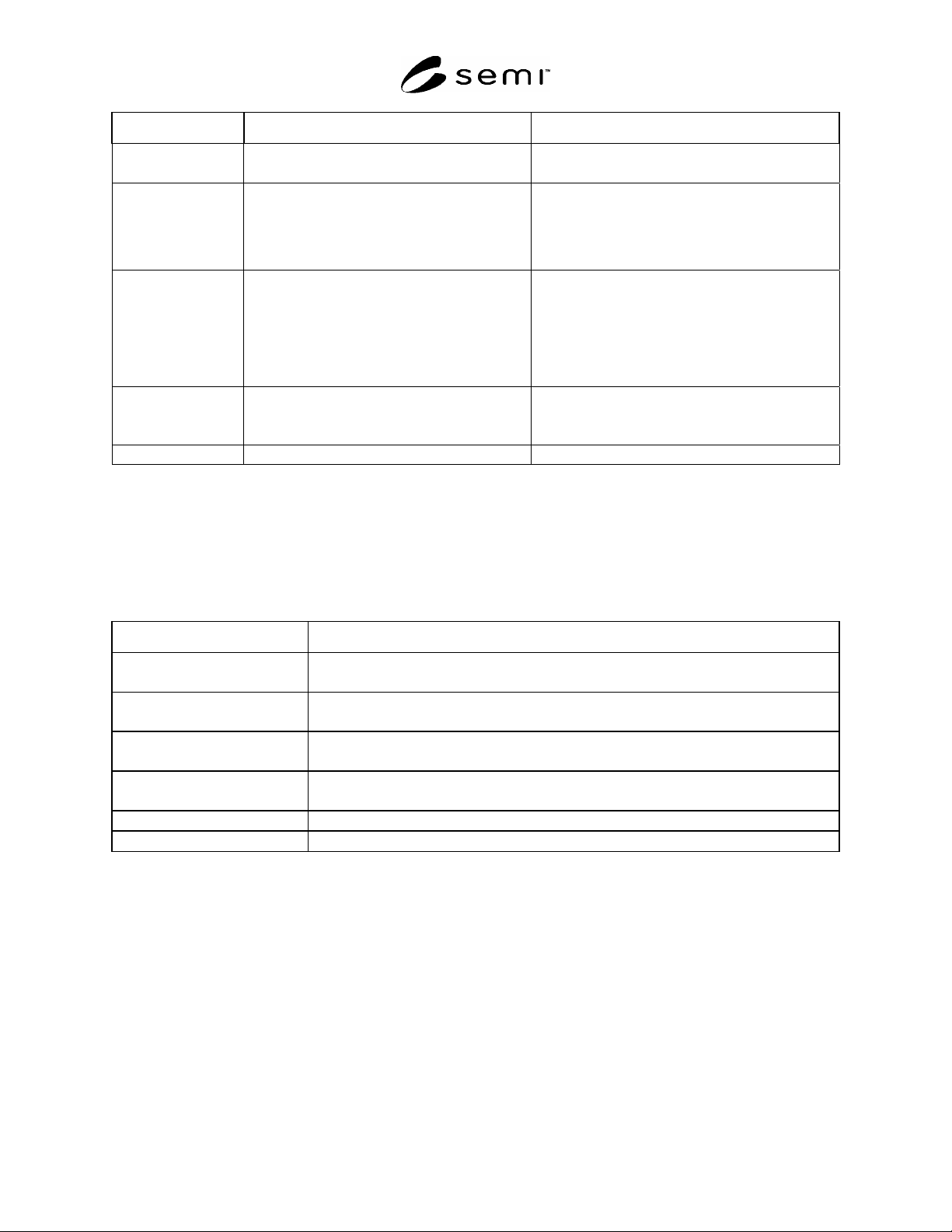
Parameter Name Form Description
PortID Integer
1 to n.
ID number of a load port. The PortID number should
be the same as the load port number.
PortList List
1 to n items.
List of n items
PortID
1
.
.
n PortID
n
PropertiesList List
1 to n name/value pairs.
List of n items
1. AttributeID
1
AttributeData
1
.
.
n. AttributeID
n
AttributeData
n
ServiceStatus Enumerated:
IN SERVICE,
or OUT OF SERVICE.
The desired transfer service status of the specified list
of load ports.
Status A list of ErrorCode/ErrorText pairs. Reports any errors found.
16.3.2 The “Acknowledge, request will be performed with completion signaled by a later event” response to a
service, may apply to services listed in the table below. If this does apply, the supplier must document the event that
signals completion. Any service not included in Table 17 shall respond with “Acknowledge, command has been
performed.”
16.3.2.1 Events that may signal completion are listed in Table 17.
Table 17 Deferred Completion Events
Service Events that may signal completion
CarrierOut CarrierLocation Changed Event
Load Port State Change Event (transition 9)
CarrierIn CarrierLocation Change Event
Load Port State Change Event (transition 8)
CancelCarrier CarrierLocation Changed Event
Load Port State Change Event (transition 9)
CancelCarrierAtPort CarrierLocation Changed Event
Load Port State Change Event (transition 9)
ChangeService LoadPortTransferState Change Event (transition 2 and 3)
ChangeAccess Load Port Access Mode State Change Event (transition 2 and 3)
16.4 Service Message Definitions
16.4.1 The following tables specify the allowable/required parameters for each service. The column marked
“REQ/IND” specifies which parameters are required to be supported for CMS compliance (see ¶7.3.4.3).
16.4.2 Bind
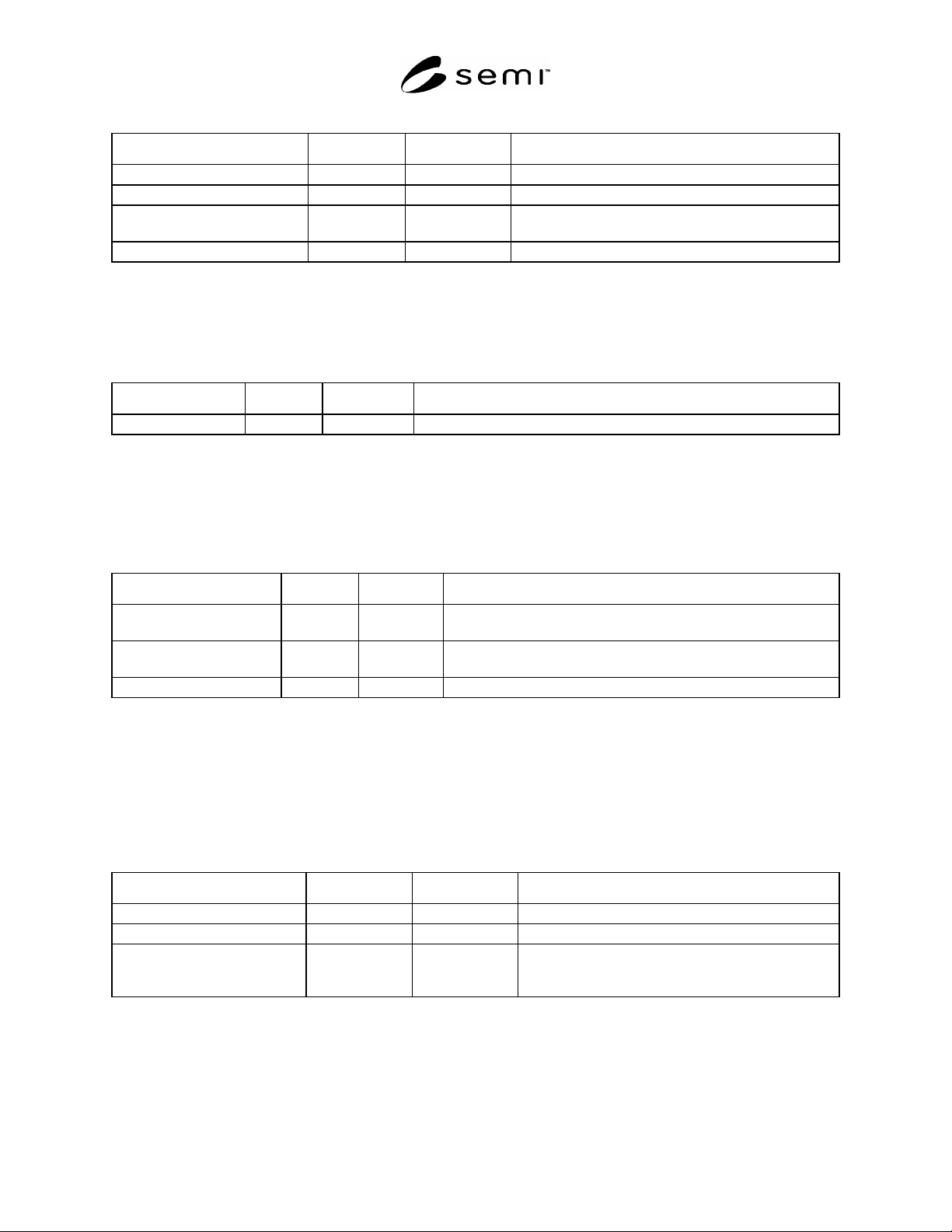
16.4.2.1 The Bind service is used to associate a CarrierID with a load port. The Bind can contain a PropertiesList of
carrier object attributes that are supplied by the host. A carrier object is instantiated when this service is used
successfully. The Bind service will be rejected if the carrier specified has already been instantiated through the Bind
or CarrierNotification service, or a carrierID read. The Bind service also triggers a transition in the Load Port
Reservation state model from NOT RESERVED to RESERVED.
SEMI E87-0705 © SEMI 1999, 2005 34
Table 18 Bind Service Parameter Definitions
Parameter Name Req/Ind Rsp/Conf Description
PortID M — The PortID where a carrier is expected.
CarrierID M — The expected CarrierID.
PropertiesList C — A list of name value pairs providing attributes for the
carrier object being instantiated with the Bind service.
CMStatus — M Information concerning the result of the service.
16.4.3 CancelAllCarrierOut
16.4.3.1 The CancelAllCarrierOut service is sent to internal buffer production equipment to cancel all CarrierOut
services in queue.
Table 19 CancelAllCarrierOut Service Parameter Definitions
Parameter Name Req/Ind Rsp/Conf Description
CMStatus — M Information concerning the result of the service.
16.4.4 CancelBind
16.4.4.1 The CancelBind request is used to cancel the association between a port and a Carrier ID. The carrier
object is destroyed when this service is used successfully. The CancelBind service also triggers a transition in the
Load Port Reservation state model from RESERVED to NOT RESERVED.
Table 20 CancelBind Service Parameter Definitions
Parameter Name Req/Ind Rsp/Conf Description
PortID C — The PortID for which to cancel the load port to carrier association.
Either PortID or CarrierID must be specified.
CarrierID C — The CarrierID for which to cancel the load port to carrier association.
Either PortID or CarrierID must be specified.
CMStatus — M Information concerning the result of the service.
16.4.5 CancelCarrier
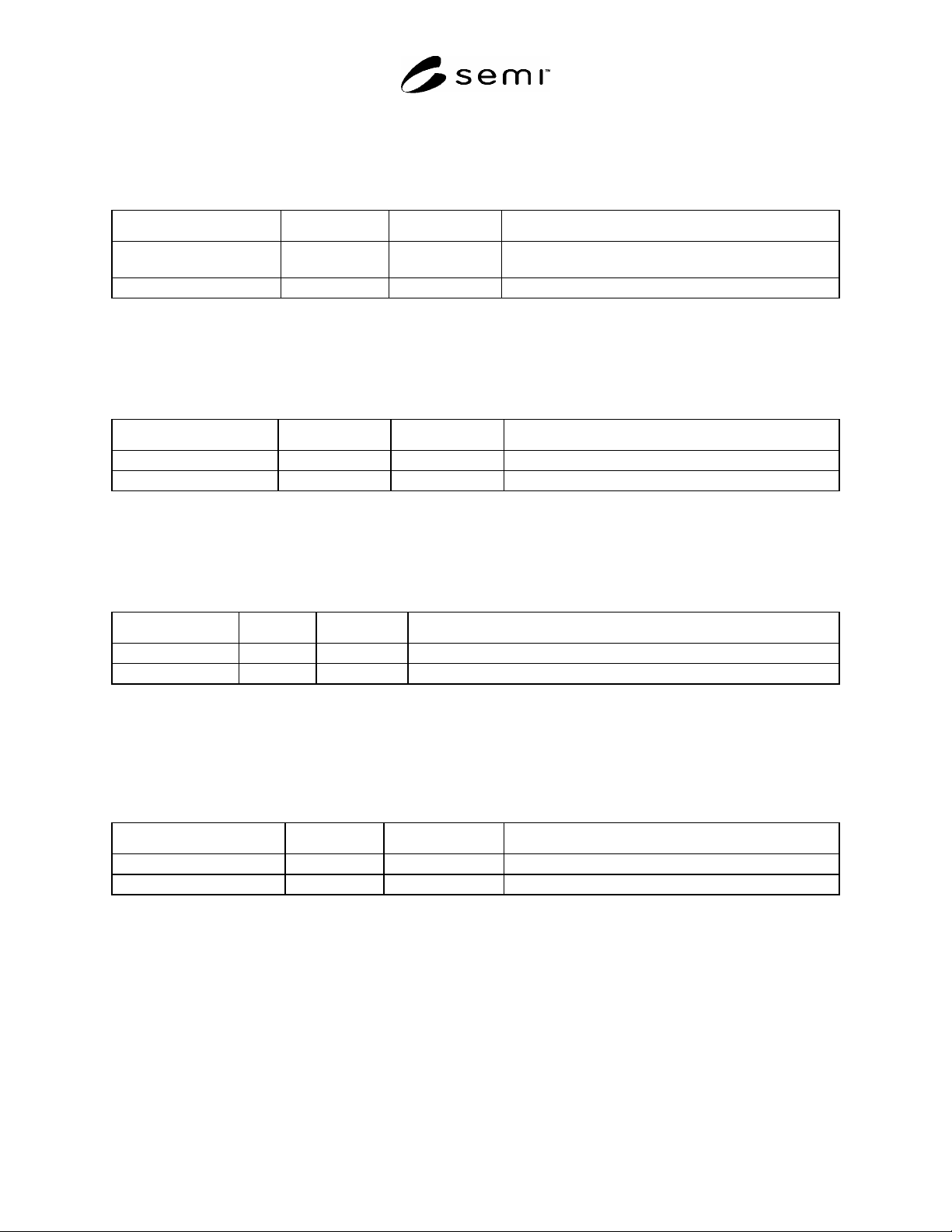
16.4.5.1 The CancelCarrier request is used to stop a carrier. If the carrier is at a load port, then it shall be returned to
the load/unload location of the load port and made ready for unload. If the carrier is at an internal location the carrier
will return to an internal buffer location. A subsequent CarrierOut request is required for the production equipment
to move the carrier to the external load port. The production equipment shall reject this service if issued after
substrates have been removed for processing.
Table 21 CancelCarrier Service Parameters
Parameter Name Req/Ind Rsp/Conf Description
CarrierID M — The carrierID to cancel.
CMStatus — M Information concerning the result of the service.
PortID C — The PortID where the carrier object is located. This
parameter is not required if the carrier object has been
previously instantiated.
SEMI E87-0705 © SEMI 1999, 2005 35
16.4.6 CancelCarrierAtPort
16.4.6.1 CancelCarrierAtPort is used to abort any carrier at a designated port. This service can be used when the
carrierID of the carrier at the designated port is unknown.
Table 22 CancelCarrierAtPort Service Parameters
Parameter Name Req/Ind Rsp/Conf Description
PortID M — Any carrier that exist on the load port specified shall be
made ready for unloading.
CMStatus — M Information concerning the result of the service.
16.4.7 CancelCarrierNotification
16.4.7.1 The CancelCarrierNotification is used by the host to request the equipment cancel a previous
CarrierNotification service. This service shall cause the equipment to destroy the carrier object specified.
Table 23 CancelCarrierNotification Service Parameter Definitions
Parameter Name Req/Ind Rsp/Conf Description
CarrierID M — The CarrierID of the carrier object to destroy.
CMStatus — M Information concerning the result of the service.
16.4.8 CancelCarrierOut
16.4.8.1 The CancelCarrierOut service is sent to internal buffer production equipment to cancel a queued
CarrierOut.
Table 24 CancelCarrierOut Service Parameter Definitions
Parameter Name Req/Ind Rsp/Conf Description
CarrierID M — CarrierID for the CarrierOut service that is being cancelled.
CMStatus — M Information concerning the result of the service.
16.4.9 CancelReservationAtPort
16.4.9.1 The CancelReservationAtPort service is sent by the host to cancel a reservation at the load port. The load
port will enter the UNRESERVED State after receiving this service. A Port reserved by the physical initiation of a
carrier out operation may not be cancelled by this service.
Table 25 CancelReservationAtPort Service Parameter Definitions
Parameter Name Req/Ind Rsp/Conf Description
PortID M — The Port ID to reserve
CMStatus — M Information concerning the result of the service.
16.4.10 CarrierIn
16.4.10.1 The CarrierIn service is only used to request the internal buffer equipment internalize a carrier that has
been moved to the load port via a previous CarrierOut service. When using host based verification, the production
equipment shall move the carrier in to the internal buffer for the first time after receiving the ProceedWithCarrier
request. If the CarrierIn service is received by the production equipment without previously having received a
CarrierOut service for the carrier, the service will be refused.