semi合集-English.pdf - 第3339页
SEMI E130-1104 © SEMI 2003, 2004 53 Pre-Align Chuck PJ02 PJ01 SubstPJ01.01 SubstPJ01.02 AU X Tr ay Pre-Align Chuck PJ02 PJ01 SubstPJ01.03 SubstPJ02.01 AU X Tr ay Pre-Align Chuck PJ02 PJ01 SubstPJ02.01 SubstPJ02.02 AU X T…
SEMI E130-1104 © SEMI 2003, 2004 52
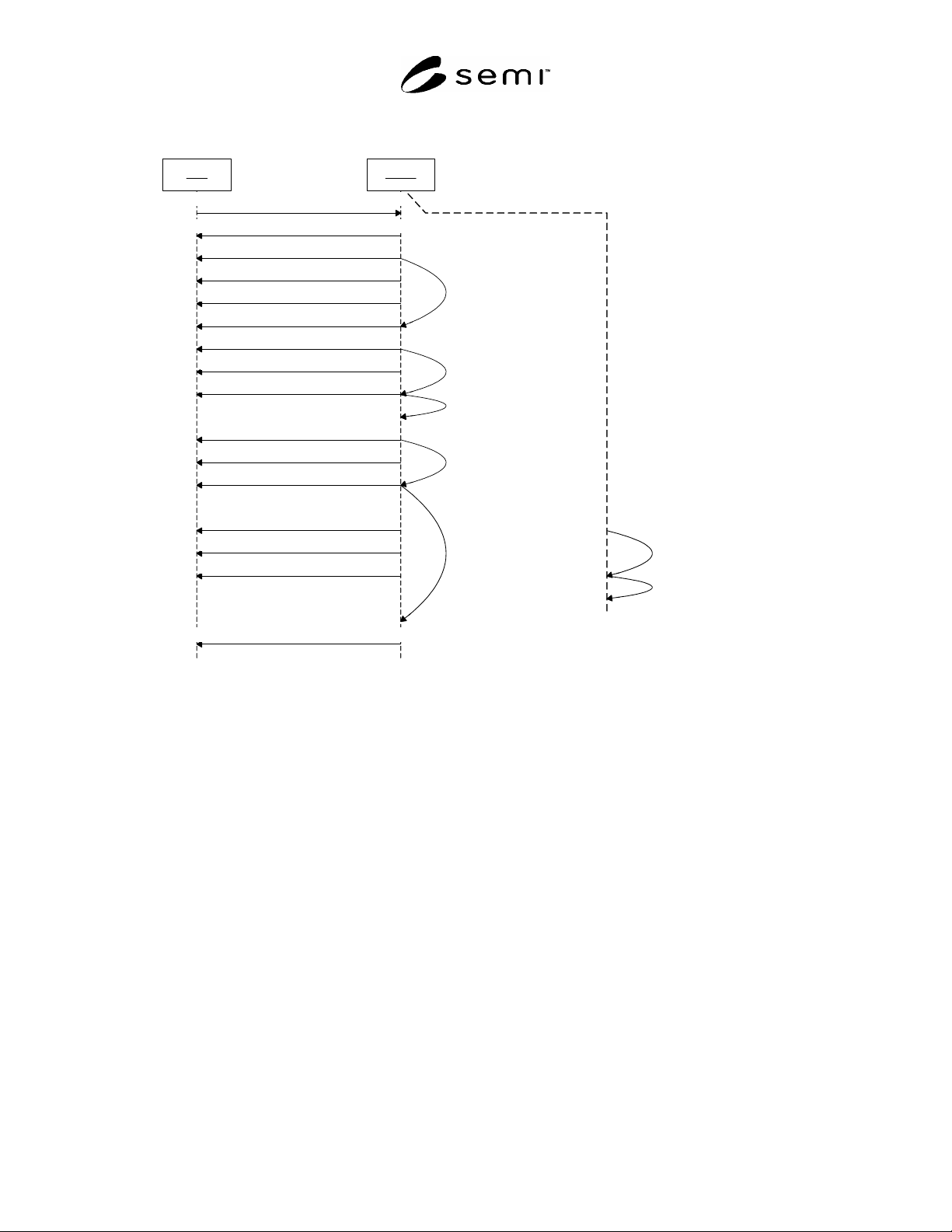
R1-1.11.2.6 Unload Correlation Substrate — Unloading the correlation substrate triggers the prober to restore the
substrates to the state that existed prior to the host issuing the LOAD-TEST-SUBST command.
Host Prober
UNLOAD-TEST-SUBST(SubstLoc: AUX Tray)
PS: AWAITING COMMAND to HANDLING MATERIAL
SubstAUX: IN PROCESS to PROCESSED
AUX Tray: UNOCCUPIED to OCCUPIED
SubstAUX: AT WORK to AT DESTINATION
Chuck: OCCUPIED to UNOCCUPIED
Unload Correlation Substrate()
Pre-align: UNOCCUPIED to OCCUPIED()
SubstPJ01.01: AT SOURCE to AT WORK()
CarrierA.01: OCCUPIED to UNOCCUPIED()
Pre-align()
Move SubstPJ01.01 to Pre-align()
Chuck: UNOCCUPIED to OCCUPIED()
SubstPJ01.01: AT WORK to AT WORK()
Pre-align: OCCUPIED to UNOCCUPIED()
Move SubstPJ01.01 to Chuck()
Align and Profile Move SubstPJ01.02 to Pre-align()
Pre-align: UNOCCUPIED to OCCUPIED
SubstPJ01.02: AT SOURCE to AT WORK()
CarrierA.02: OCCUPIED to UNOCCUPIED()
Pre-align()
PS: HANDLING MATERIAL to AWAITING COMMAND(X:refX, Y:refY)
Figure R1-27
Unload Correlation Substrate Scenario
R1-1.11.2.7 Post-Conditions — The prober has restored the substrates to their original condition that preceded the
host issuing the LOAD-TEST-SUBST command. SubstPJ01.01 is on the chuck. The chuck is positioned at the
coordinates: refX,refY.
R1-1.11.2.7.1 If a control map is being used, the control map is reset and the chuck is positioned on the first site
contained in the map.
R1-2 Additional Non-Standardized Behaviors
This section contains a list of behaviors that are desirable but outside the scope of the PSEM300 standard.
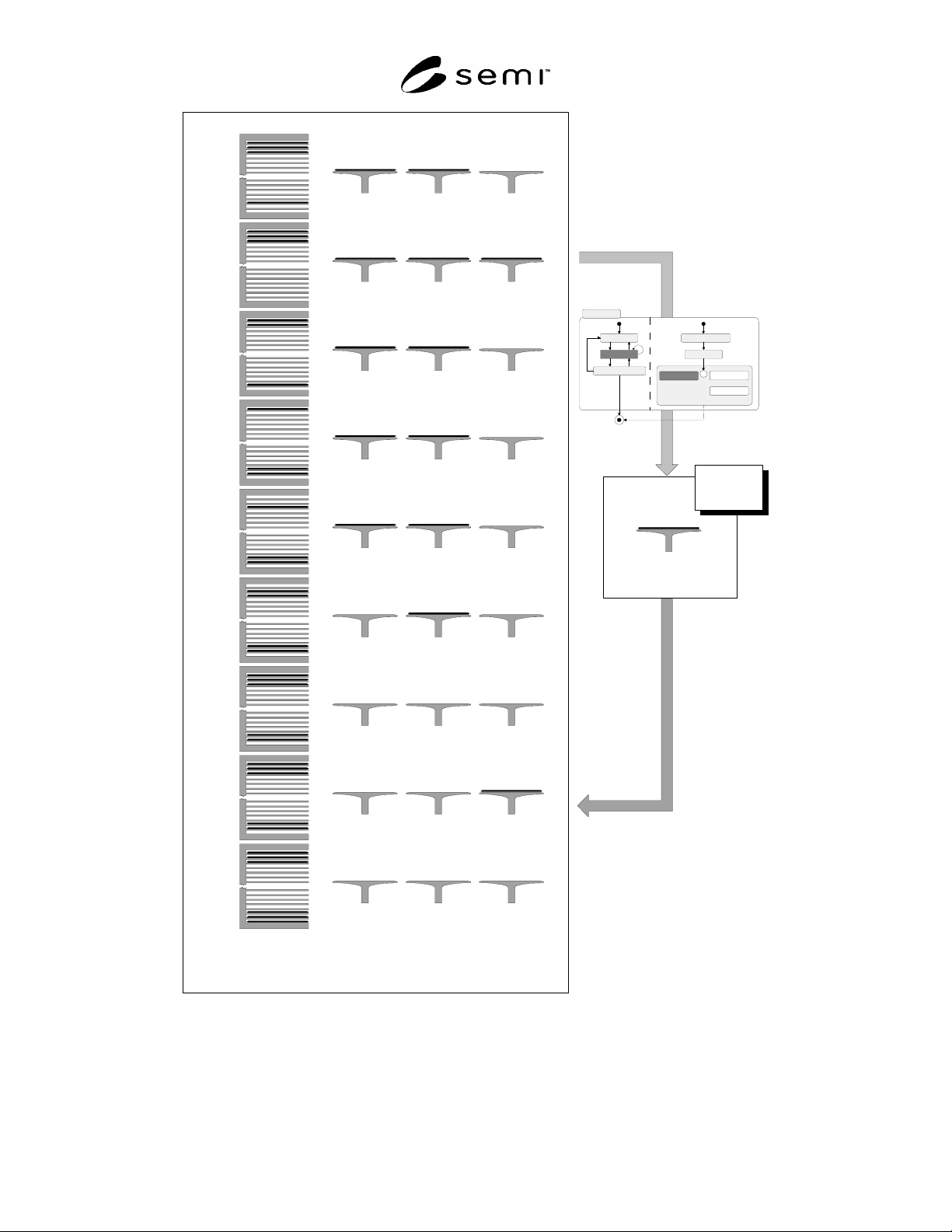
R1-2.1 Off-Board Inspection
R1-2.1.1 When the need exists to remove a substrate for external inspection, the prober should remember that the
substrate has been removed from the equipment. The Process Job pertaining to the given substrate should not
terminate until the substrate has been returned to the correct carrier substrate location as designated in the Control
Job’s MtrlOutSpec (or to the source location if the MtrlOutSpec was not provided).
R1-2.1.2 Support for off-board inspection is not part of this specification due to the challenge of tracking a substrate
that has been removed from the tool. However, this feature can be requested as a user defined feature. No guidance
is available within this specification regarding the tracking of the substrate or the related impact on the PJ/CJ and
Carrier states.
SEMI E130-1104 © SEMI 2003, 2004 53
Pre-Align Chuck
PJ02
PJ01
SubstPJ01.01
SubstPJ01.02
AUX Tray
Pre-Align Chuck
PJ02
PJ01
SubstPJ01.03SubstPJ02.01
AUX Tray
Pre-Align Chuck
PJ02
PJ01
SubstPJ02.01
SubstPJ02.02
AUX Tray
Pre-Align Chuck
PJ02
PJ01
SubstPJ02.02
SubstPJ02.03
AUX Tray
Pre-Align Chuck
PJ02
PJ01
SubstPJ02.03
AUX Tray
Pre-Align Chuck
PJ02
PJ01
AUX Tray
Pre-Align Chuck
PJ02
PJ01
SubstPJ01.01
AUX Tray
Pre-Align Chuck
PJ02
PJ01
AUX Tray
Pre-Align Chuck
PJ02
PJ01
SubstPJ01.01
SubstPJ01.02
AUX Tray
SubstPJ01.03
SubstPJ01.01
Inspection
1
2
3
56
AT SOURCE
4
8
7
9
AT WORK
AT DESTINATION
10
11
NEEDS PROCESSING
IN PROCESS
PROCESSING COMPLETE
C
PROCESSED
ABORTED
STOPPED
12
Sub s tPJ0 1. 01
?
External
Inspection
Equipment
Figure R1-28
Off-Board Inspection Scenario
SEMI E130-1104 © SEMI 2003, 2004 54
RELATED INFORMATION 2
NOTICE: This related information is not an official part of SEMI E130 and was derived from the work of the
originating task force. This related information was approved for publication by full letter ballot procedures on
September 3, 2003.
R2-1 Application for Self-Indexing Probing
R2-1.1 Following ideas for implementation of specific integrations are not a part of this specification but
applications for some regency solution to maximize compliance to this specification.
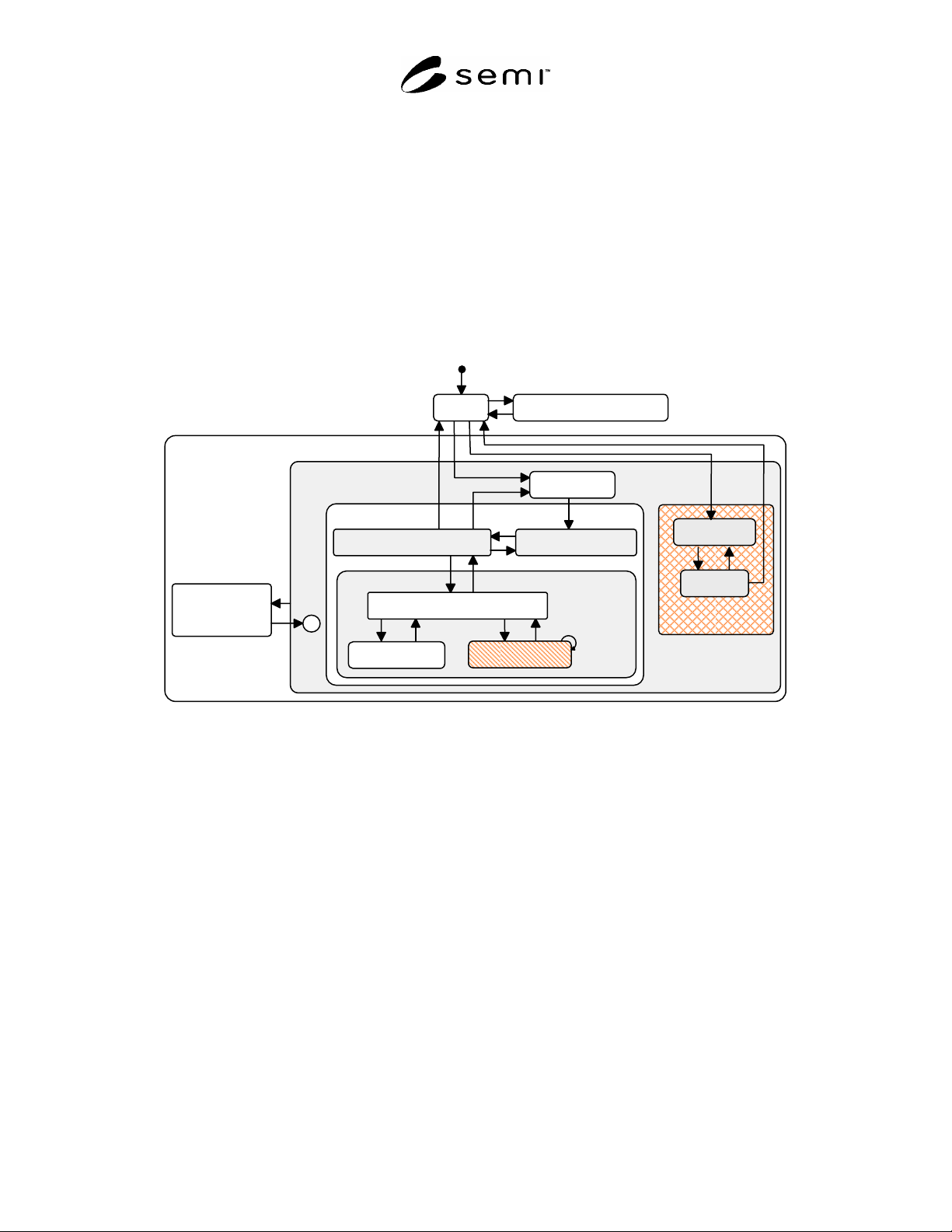
R2-1.2 Some wafer prober with combined specific IC testers may index dice automatically by itself synchronized
with such communication as GPIB or RS-232C between tester and prober. According state model in this
specification, a series of this automated indexing and testing could be execution of a service task (hatched area in
following diagram).
PROCESS
EXECUTING
PROCESSING
BLOCKED
3
C
16
15
4
5
SUBSTRATE
LOADED
6
8
10
9
11
12
13
2
IDLE
SETTING UP
AWAITING COMMAND
HANDLING MATERIAL
AWAITING LOAD
7
IDLE WITH ALARMS
PROCESSING ACTIVE
17
18
14
1
SERVICE TASK
MOVING XYZ
VERIFYING
SORTING
20
21
AUTOPROBING
19
22
Figure R2-1
Self-Indexing State Model
R2-1.2.1 For the other application to distinguish this normal probing task from such generic service tasks as
Cleaning Probes, adding substate “AUTOPROBING” in the state of “PROCESS” is one of ideas as an extension of
this specification. The diagram above illustrates the extension (cross-hatched substate) of a part of the state model
in this specification. This extension also eliminates loading/unloading remote commands and related states, and is
more close to processing state in SEMI E91 (PSEM).
R2-1.2.2
Above diagram illustrates the extension (cross-hatched substate) of a part of the state model in this
specification. Clarification of extended sub-states and transitions are given below.
R2-1.3 AUTOPROBING — Automatic processing state without instruction of host. Programmed such service
operations as inking cleaning are included in this states as well as probing sequence with automated self indexing
dice. Usually prober communicates with tester through serial or parallel cable in this state.
R2-1.4 VERIFYING — One of substates of AUTOPROBING. This states starts before loading the first wafer of PJ
and concludes when all set-up conditions and all alignments for the first wafer of PJ including needle-pad alignment
for the first dice on the first wafer is completed.
R2-1.5 SORTING — One of substates of AUTOPROBING. Prober executes processing automatically without
specific host instruction. The prober needs thecapability to index to the right dice by itself, communicate with the
tester, and execute programmed sequences including such service operation as cleaning and inking.