semi合集-English.pdf - 第1931页
SEMI E54.1-1000 © SEMI 1996, 2000 37 7.4.5.1.15 W a rningHy stersis — An attrib u t e whic h specifies the amount of hyste resis to be applied in the clearing of an alarm condition (see Section 7.4.5 .1.12). The behavior…
SEMI E54.1-1000 © SEMI 1996, 2000 36
7.4.5.1.1 Offset — An attribute which specifies the
amount of offset correction being applied to derive the
value of the “Value” attribute (inherited) of the object
instance. It is expressed in terms of the units specified
by the “DataUnits” attribute.
7.4.5.1.2 Gain — An attribute which is used to define
the range of the “Value” attribute (inherited) of the
object instance. The method of conveying this range
with this attribute is beyond the scope of this document.
7.4.5.1.3 DataType — An attribute which defines the
format of the data associated with “Value” attribute
(inherited) of the object instance.
7.4.5.1.4 DataUnits — An attribute which defines the
current units associated with “Value” attribute
(inherited) of the object instance.
7.4.5.1.5 SafeState — An attribute which defines the
Value (inherited attribute) to be reported by the object
instance when it is in a non-OPERATING state. The
enumeration of the SafeState attribute is given in Table
39.
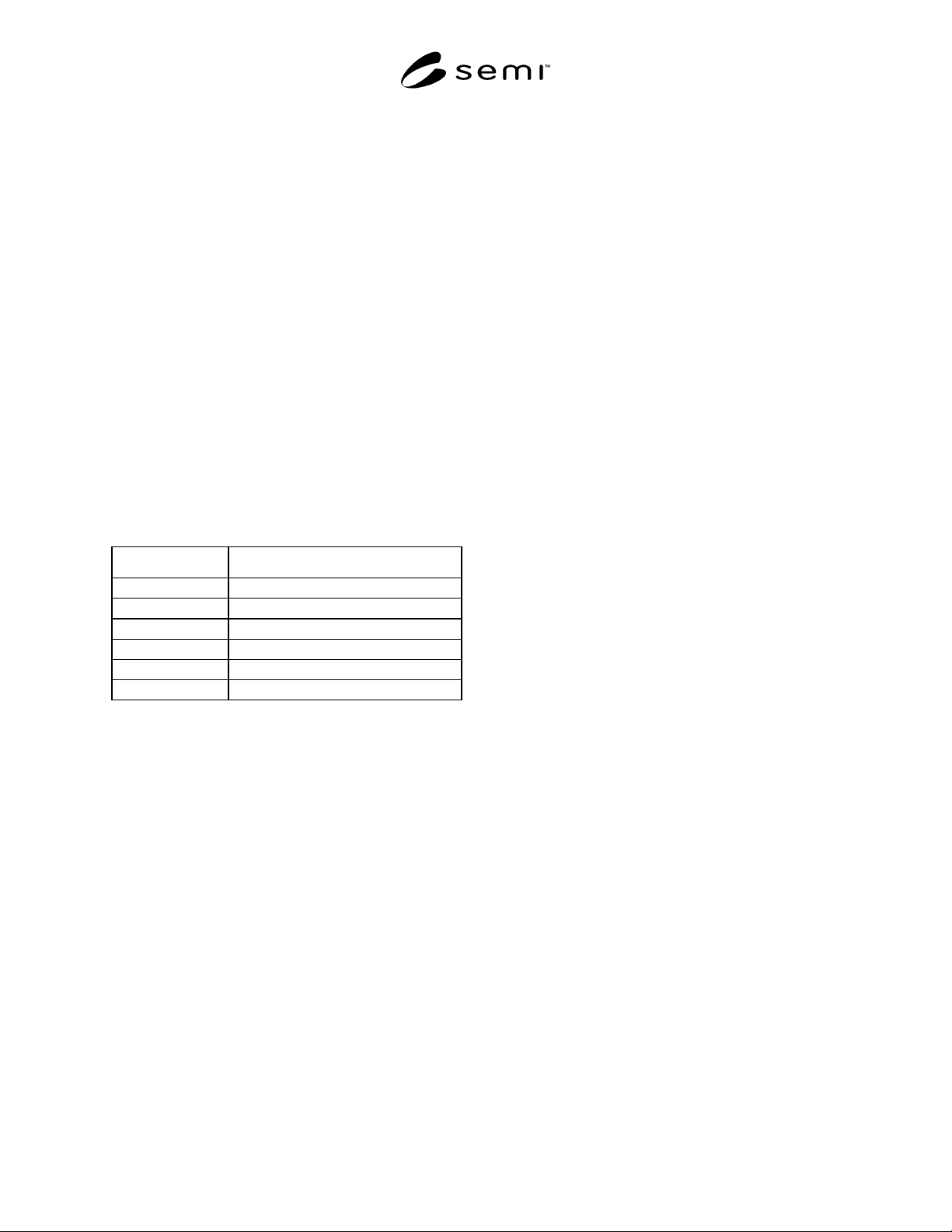
Table 39 SafeState Attribute Values
Attribute Value DM Object State
0Zero
1 Full-Scale
2LVV
3 Undefined
4 – 63 Reserved
64 – 255 Open
7.4.5.1.6 EnableReportDelta — An attribute which
enables the reporting of the attribute “Value” based on
the “ReportDelta” attribute value (see below); a value
of TRUE signifies that reporting using the
“ReportDelta” method is enabled.
7.4.5.1.7 ReportDelta — The value of this attribute
indicates the amount by which the sensor value
(indicated by the “Value” attribute (inherited)) must
change before it is published. When the value of the
EnableReportDelta attribute indicates that this method
of reporting is “enabled”, and when the value of the
“Value” attribute changes by an amount in excess of the
amount indicated by the ReportDelta attribute value, the
object will publish the Value attribute.
7.4.5.1.8 EnableReportROC — The Enable
ReportROC (rate of change) attribute enables the
reporting of the attribute “Value” based on the
“ReportROC” attribute value (see below); a value of
TRUE signifies that reporting using the rate of change
method is enabled.
7.4.5.1.9 ReportROC — The value of this attribute
indicates the rate by which the sensor value (indicated
by the “Value” attribute (inherited)) must change before
it is published. The attribute value context is
DataUnits/Time; the specific context of DataUnits is
defined in the DataUnits attribute, while the unit of
Time is context-specific. When the value of the
EnableReportDelta attribute indicates that this method
of reporting is “enabled”, and when the value of the
“Value” attribute changes at a rate in excess of the
amount indicated by the ReportDelta attribute value, the
object will publish the Value attribute.
7.4.5.1.10 AlarmTripPointHigh — An attribute which
specifies the value above which the object instance
“Value” attribute (inherited) value must be to generate
an alarm status indication. The behavior associated with
the generation of an alarm status indication (beyond
that described in Section 7.4.1.3) is beyond the scope of
this document.
7.4.5.1.11 AlarmTripPointLow — An attribute which
specifies the value below which the object instance
“Value” attribute (inherited) value must be to generate
an alarm status indication. The behavior associated with
the generation of an alarm status indication (beyond
that described in Section 7.4.1.3) is beyond the scope of
this document.
7.4.5.1.12 AlarmHystersis — An attribute which
specifies the amount of hysteresis to be applied in the
clearing of an alarm condition. For example: a Trip
Point High value of 100 with a hysteresis value of 2
will result in an exception condition being set when the
Value attribute exceeds 100 in the positive direction
and cleared when the Value attribute exceeds 98 in the
negative direction. Similarly, a Trip Point Low value of
100 with a hysteresis value of 2 will result in an
exception condition being set when the Value attribute
exceeds 100 in the negative direction and cleared when
the Value attribute exceeds 102 in the positive
direction. The behavior associated with the generation
and clearing of exception conditions is beyond the
scope of this document.
7.4.5.1.13 WarningTripPointHigh — An attribute
which specifies the value above which the object
instance “Value” attribute (inherited) value must be to
generate a warning status indication. The behavior
associated with the generation of a warning status
indication is beyond the scope of this document.
7.4.5.1.14 WarningTripPointLow — An attribute
which specifies the value below which the object
instance “Value” attribute (inherited) value must be to
generate a warning status indication. The behavior
associated with the generation of a warning status
indication is beyond the scope of this document.
SEMI E54.1-1000 © SEMI 1996, 200037
7.4.5.1.15 WarningHystersis — An attribute which specifies the amount of hysteresis to be applied in the clearing
of an alarm condition (see Section 7.4.5.1.12). The behavior associated with the generation and clearing of exception
conditions is beyond the scope of this document.
7.4.5.2 Sensor-Analog Input Class Services — No SAI class common services are defined. Note that the SAI class
inherits all AE and S class services.
7.4.5.3 Sensor-Analog Input Class Behavior — No SAI class common behavior is defined. Note that the SAI class
inherits all AE and S class-defined behavior.
7.4.6 Sensor-Binary Input (SBI) Class — The SBI class at the third level of the active element generalization
hierarchy contains structure and behavior common to all binary input sensor element instances in a device. Note
that, as discussed in Section 7.4, since this is the lowest level of class description in the generalization hierarchy for
this device element type (see Figure 7), object instances can be created as instances of this class type.
7.4.6.1 Sensor-Binary Input Class Attributes — All required and “common optional” SBI class attributes are listed
in Table 40 and described below. For an explanation of the table format, see Section 7.3.1. Note that the SBI class
also inherits all AE and S class attributes.
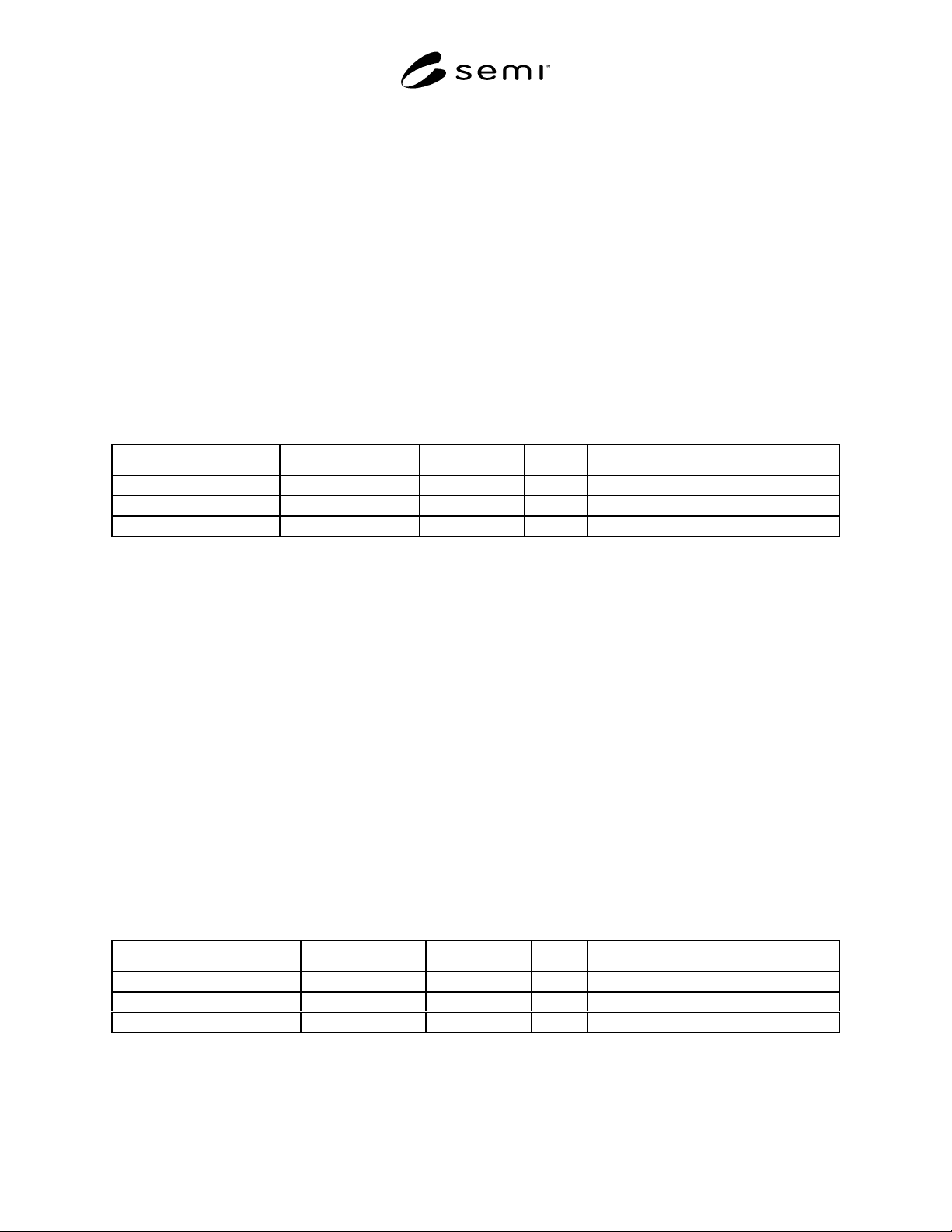
Table 40 SBI Class Attributes*
Attribute Name Attribute Identifier Access (Network) Rqmt Form
DebounceControl SbiA64 RW N Context-specific
AlarmState SbiA65 RW N Boolean
WarningState SbiA66** RW N Boolean
* A “Definition” column is not included. For attribute definitions, see text.
** ID’s Sbi67 through SbiA127 are reserved for future Sbi class attribute definition.
7.4.6.1.1 DebounceControl — This attribute is used to control sensitivity to ‘false’ transitions. The method of
utilization of this attribute for debounce control is application-specific.
7.4.6.1.2 AlarmState — The value of the Value attribute (i.e., TRUE or FALSE) that will cause an alarm condition.
7.4.6.1.3 WarningState — The value of the Value attribute (i.e., TRUE or FALSE) that will cause a warning
condition.
7.4.6.2 Sensor-Binary Input Class Services — No SBI class common services are defined. Note that the SBI class
inherits all AE and S class services.
7.4.6.3 Sensor-Binary Input Class Behavior — No SBI class common behavior is defined. Note that the SBI class
inherits all AE and S class-defined behavior.
7.4.6.4 Sensor-Enumerated Input Class Services — No SEI class common services are defined. Note that the SEI
class inherits all AE and S class services.
7.4.6.5 Sensor-Enumerated Input Class Attributes — All required and “common optional” SEI class attributes are
listed in Table 41 and described below. For an explanation of the table format, see Section 7.3.1. Note that the SEI
class also inherits all AE and S class attributes.
Table 41 SEI Class Attributes*
Attribute Name Attribute Identifier Access Network Rqmt Form
DebounceControl SeiA64 RW N Context-Specific
AlarmState SeiA65 RW N Enumerated
WarningState SeiA66 RW N Enumerated
* A “Definition” column is not included. For attribute definitions, see text.
7.4.6.5.1 DebounceControl — This attribute is used to control sensitivity to ‘false’ transitions. The method of
utilization of this attribute for debounce control is application-specific.
SEMI E54.1-1000 © SEMI 1996, 2000 38
7.4.6.5.2 AlarmState — The value of the Value attribute that will cause an alarm condition.
7.4.6.5.3 WarningState — The value of the Value attribute that will cause a warning condition.
7.4.7 Actuator-Analog Output (AAO) Class — The AAO class at the third level of the active element generalization
hierarchy contains structure and behavior common to all analog output actuator element instances in a device. Note
that, as discussed in Section 7.4, since this is the lowest level of class description in the generalization hierarchy for
this device element type (see Figure 7), object instances can be created as instances of this class type.
7.4.7.1 Actuator-Analog Output Class Attributes — All required and “common optional” AAO class attributes are
listed in Table 42 and described below. For an explanation of the table format, see Section 7.3.1. Note that the AAO
class also inherits all AE and A class attributes.
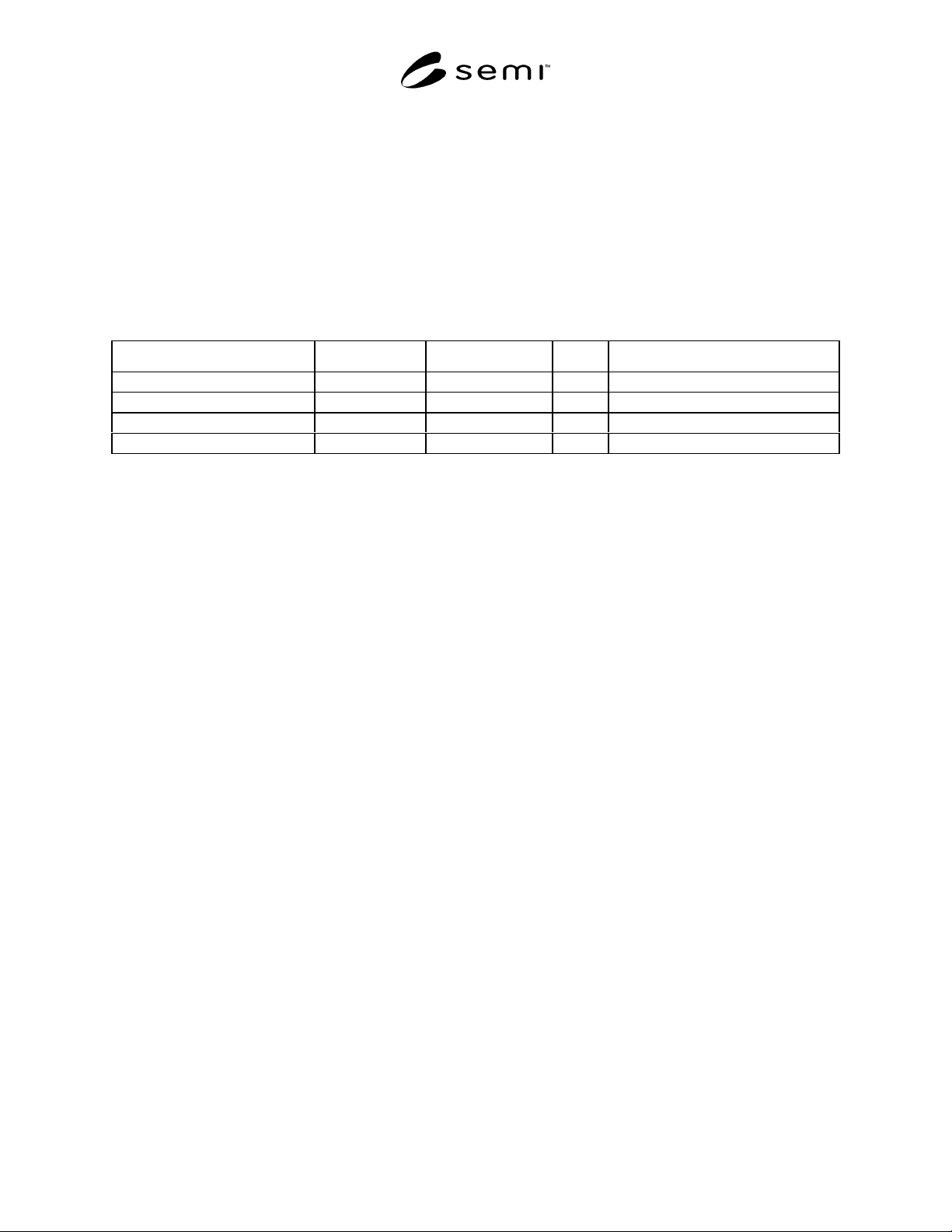
Table 42 AAO Class Attributes*
Attribute Name Attribute Identifier Access (Network) Rqmt Form
Offset AaoA64 RW N Context-specific
Gain AaoA65 RW N Context-specific
DataType AaoA66 RW N Context-specific
DataUnits AaoA67** RW N Context-specific
* A “Definition” column is not included. For attribute definitions, see text.
** ID’s AaoA68 through AaoA127 are reserved for future Aao class attribute definition.
7.4.7.1.1 Offset — An attribute which specifies the amount of offset correction being applied to derive the value of
the “Value” attribute (inherited) of the object instance. It is expressed in terms of the units specified by the
“DataUnits” attribute.
7.4.7.1.2 Gain — An attribute which is used to define the range of the “Value” attribute (inherited) of the object
instance. The method of conveying this range with this attribute is beyond the scope of this document.
7.4.7.1.3 DataType — An attribute which defines the format of the data associated with “Value” attribute
(inherited) of the object instance.
7.4.7.1.4 DataUnits — An attribute which defines the current units associated with “Value” attribute (inherited) of
the object instance.
7.4.7.2 Actuator-Analog Output Class Services — No AAO class common services are defined. Note that the AAO
class inherits all AE and A class services.
7.4.7.3 Actuator-Analog Output Class Behavior — No AAO class common behavior is defined. Note that the AAO
class inherits all AE and A class-defined behavior.
7.4.8 Actuator-Binary Output (ABO) Class — The ABO class at the third level of the active element generalization
hierarchy contains structure and behavior common to all binary output actuator element instances in a device. Note
that, as discussed in Section 7.4, since this is the lowest level of class description in the generalization hierarchy for
this device element type (see Figure 7), object instances can be created as instances of this class type.
7.4.8.1 Actuator-Binary Output Class Attributes — No ABO class common attributes are defined. Note that the
ABO class inherits all AE and A class attributes.
7.4.8.2 Actuator-Binary Output Class Services — No ABO class common services are defined. Note that the ABO
class inherits all AE and A class services.
7.4.8.3 Actuator-Binary Output Class Behavior — No ABO class common behavior is defined. Note that the ABO
class inherits all AE and A class-defined behavior.
7.4.9 Actuator-Enumerated Output (AEO) Class — The AEO class at the third level of the active element
generalization hierarchy contains structure and behavior common to all Enumerated output actuator element
instances in a device. Note that, as discussed in Section 7.4, since this is the lowest level of class description in the
generalization hierarchy for this device element type (see Figure 7), object instances can be created as instances of
this class type.