semi合集-English.pdf - 第6871页
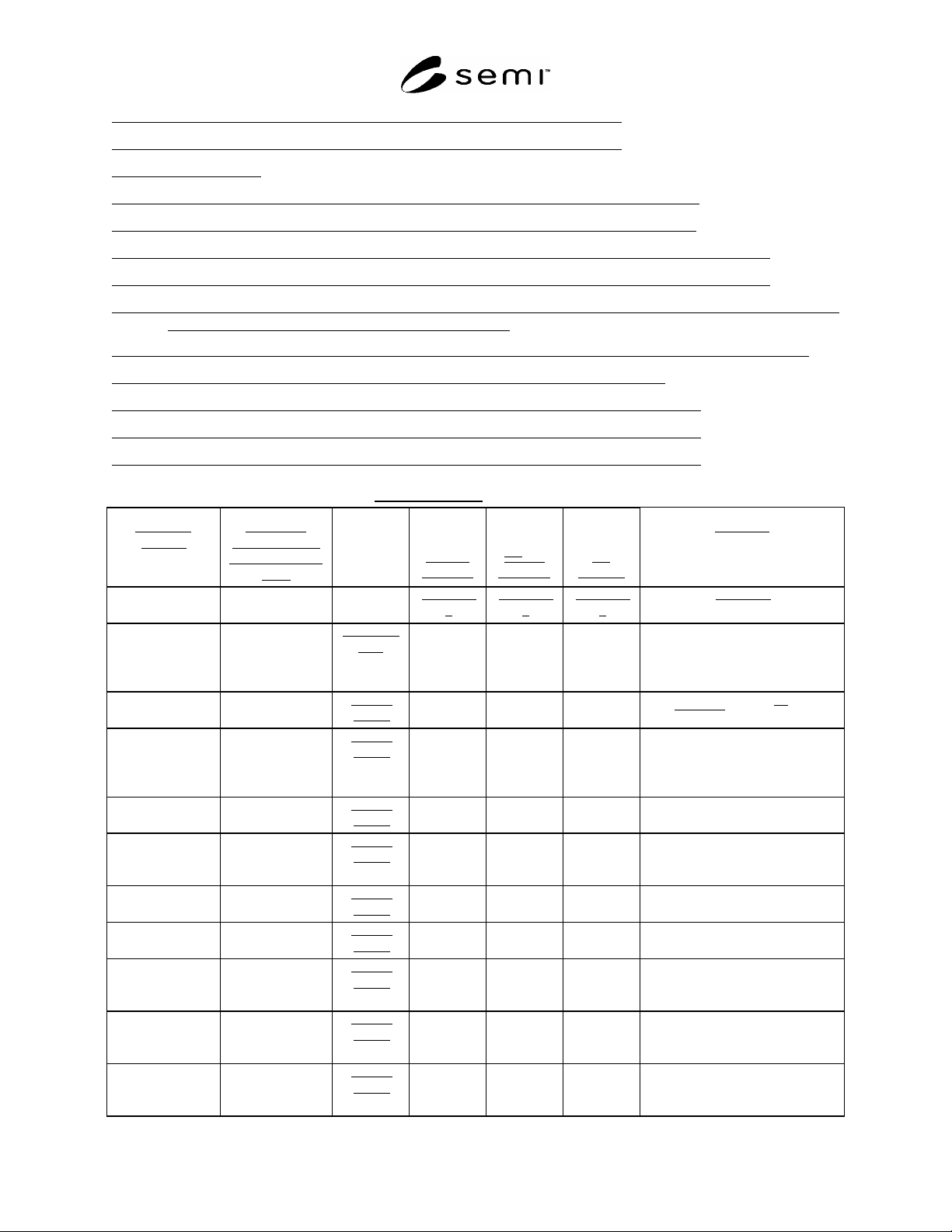
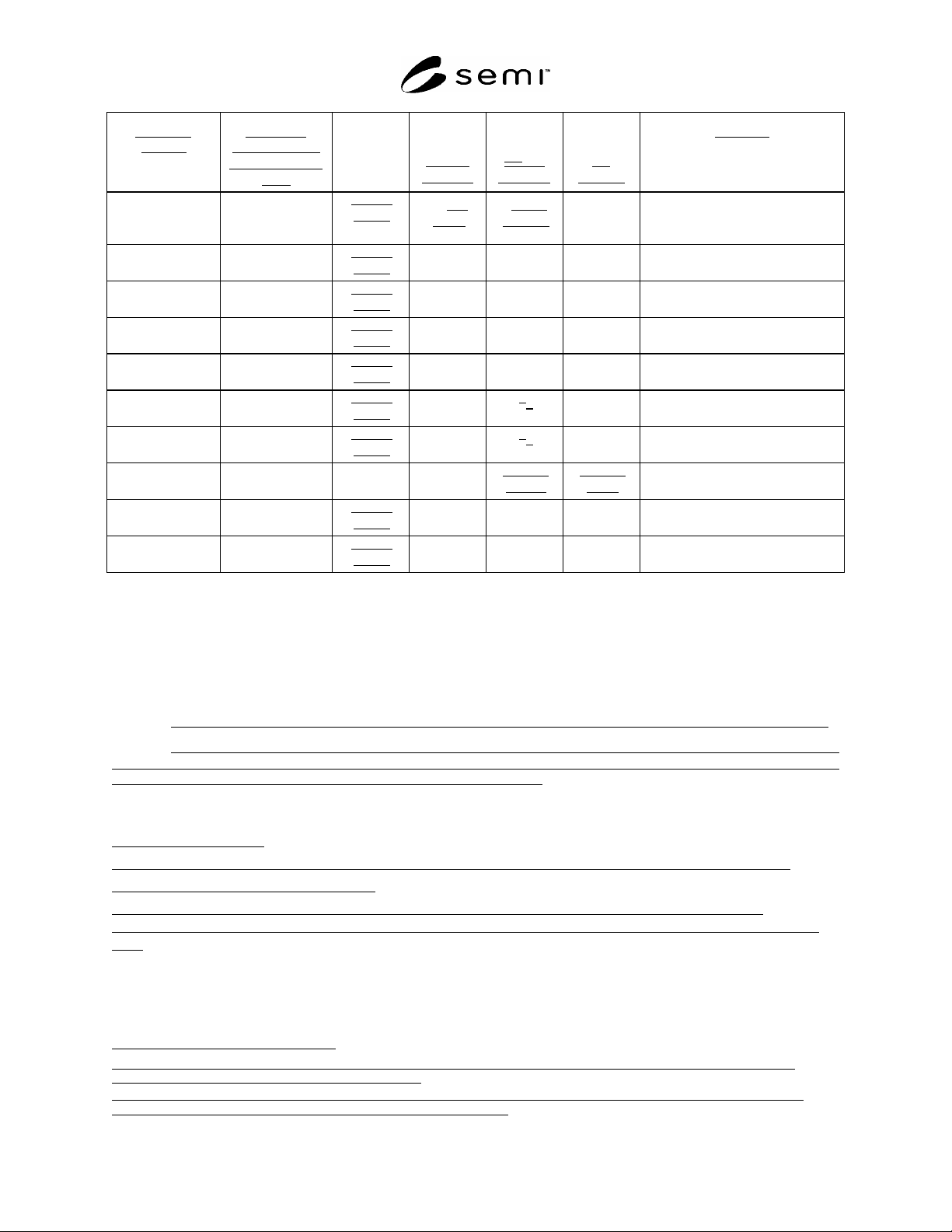
SEMI S2-0703a E © SEMI 1991, 2004 100 Reference Number Equipment Safety Features (not an inclusive list) D USA 21 CFR 1040.10 A Europe EN IEC 60825-1 B Japan JIS C 6802 C Examples 11. Class Designation & Warning Labe…
SEMI S2-0703a
E
© SEMI 1991, 2004 99
D. Collecting optics type: ________
E. Focal length in millimeters (mm): ________
Laser Control Measures
1.
Identify protective measures required during maintenance. __________________
____________________________________________________________________
2.
Laser Controlled Area required for Maintenance procedures? ( ) Yes ( ) No
3.
Laser Controlled Area required for Service procedures. ( ) Yes ( ) No
4.
If a Nominal Ocular Hazard Distance (NOHD) is used as a control measure, then provide the NOHD
calculations. See IEC 60825-1 for NOHD calculations.
NOTE R9-2: Attach a diagram of the laser beam path and the irradiance/radiant exposure at each significant point.
Personnel Protective Equipment (PPE) (for laser radiation hazards in excess of the MPE)
1.
Optical Density (OD) of PPE required during maintenance activities: ___________
2.
OD of PPE required during service activities: ___________
3.
Recommended PPE manufacturer and model #: ______________________________
Table R9-1 Equipment Safety Features Reference Table
Reference
Number
Equipment
Safety Features
(not an inclusive
list)
D
USA
21 CFR
1040.10
A
Europe
ENIEC
60825-1
B
Japan
JIS
C 6802
C
Examples
Paragrap
h
P
aragrap
h
Paragrap
h
Examples
1. Protective
Housing
( ) Yes (
) No
(f)(1) 4.2 4.2.1 Aluminum or steel enclosures,
windows that provide adequate
attenuation, optical fibers or
beam tubes.
2. Safety
Interlocks
( ) Yes
( ) No
(f)(2) 4.3 4.2.2 See Interlock
Section 11 of
SEMI S2.
3. Remote
Interlock
Connector
( ) Yes
( ) No
(f)(3) 4.4 4.2.3 Usually a 12 to 24 volt set of
contacts available to the user to
integrate additional room control
measures.
4. Key Control ( ) Yes
( ) No
(f)(4) 4.5 4.2.4 A key that is not removable in
the operations mode.
5. Laser Radiation
Emission
Warning
( ) Yes
( ) No
(f)(5) 4.6 4.2.5 A light or indicator that warns
the user of the emission through
the aperture.
6. Beam
Attenuator
( ) Yes
( ) No
(f)(6) 4.7 4.2.6 Shutters, beam blocks or water-
cooled beam dumps
7. Location of
Controls
( ) Yes
( ) No
(f)(7) 4.8 4.2.7
8. Viewing Optics ( ) Yes
( ) No
(f)(8) 4.9 4.2.8 Must block all hazardous
wavelengths to acceptable
levels.
9. Scanning
Safeguard
( ) Yes
( ) No
(f)(9) 4.10 4.2.9 Shuts down if the scanning
mechanism (such as a rotating
mirror or galvanometer) fails.
10. Manual Reset
Mechanism
( ) Yes
( ) No
(f)(10) 4.3.1 4.2.2(c) A button or circuit that must be
energized before the equipment
resumes its functions.
SEMI S2-0703a
E
© SEMI 1991, 2004 100
Reference
Number
Equipment
Safety Features
(not an inclusive
list)
D
USA
21 CFR
1040.10
A
Europe
ENIEC
60825-1
B
Japan
JIS
C 6802
C
Examples
11. Class
Designation &
Warning Labels
( ) Yes
( ) No
(g)(1)-
(g)(4)
5.1-5.6,
5.8-5.11
4.3 Identify which standard was
used for each hazard
classification.
12. Aperture Label ( ) Yes
( ) No
(g)(5) 5.7 4.3.7 Identify the aperture.
13. Positioning of
Labels
( ) Yes
( ) No
(g)(9) 5.1 4.3.1 Conspicuous, but size is not
specified.
14. User
Information
( ) Yes
( ) No
(h)(1) 6.1 4.4.1 SOPs, instruction manuals
15. Service
Information
( ) Yes
( ) No
(h)(2) 6.2 4.4.2 Accessible laser radiation levels
during Service
16. Measurements ( ) Yes
( ) No
(e) 8
9 3.4
17. Classification ( ) Yes
( ) No
(c) 9
8 3.3.3
18. Certification
Information
21 CFR TBD by
Europe
TBD by
Japan
19. Certification
Label
( ) Yes
( ) No
1010.2
20. Identification
Label
( ) Yes
( ) No
1010.3
A. The US FDA/CDRH makes 21 CFR 1040.10 available, so the latest version should be used. The version used to update this table was dated
April 1, 2003.
B. The IEC laser products standard used to update this table was 60825-1 © IEC:1993+A1:1997+A2:2001(E)
C. The Japanese Standards Association does not offer the current version of JIS C 6802 in English.
However, the current version should be used and the Japanese version is the official version
The sections referenced in the table above are from the 1991 English version of C 6802.
D. This requirement applies only to certain classes of lasers.
NOTE 4: Both the IEC and the US FDA/CDRH have published guides to assist manufacturers with laser product conformance.
NOTE 5: The FDA/CDRH has published Laser Notice 50. This laser notice provides guidance to manufacturers relating to the
FDA/CDRH acceptance of laser products conforming to the IEC 60825-1 standard. There are conditions and additional
requirements, so manufacturers should obtain this laser notice for the details.
R9-2 Referenced Documents
R9-2.1 IEC Standards
26
IEC 60825-1 — Safety of Laser Products, Part 1: Equipment Classification, Requirements, and User’s Guide
R9-2.2 US Code of Federal Regulations
27
21CFR Parts 1000-1050 — Food and Drug Administration / Center for Devices and Radiological Health
(FDA/CDRH), Performance Standards for Electronic Products, Title 21 Code of Federal Regulations, Parts 1000-
1050
26 International Electrotechnical Commission, No. 3, rue de Varembé, Case Postale 131, CH-1211 Geneva 20, Switzerland. Telephone:
41.22.919.02.11; Fax: 41.22.919.03.00. Website: www.iec.ch
27 United States Food and Drug Administration/ Center for Devices and Radiological Health (FDA/CDRH). Available from FDA/CDRH
Website: http://www.accessdata.fda.gov/scripts/cdrh/cfdocs/cfcfr/cfrsearch.cfm
SEMI S2-0703a
E
© SEMI 1991, 2004 101
DELAYED REVISIONS SECTION 2 (EFFECTIVE JULY 1, 2006)
SEMI S10 CHANGES TO SEMI S2
NOTICE: This Delayed Revisions Section contains material that has been balloted and approved by the
SEMI Environmental Health and Safety Committee, but is not immediately effective. The provisions of this
material are not an authoritative part of the document until their effective date. The main body of SEMI S2-
0703 remains the authoritative version. Some or all of the provisions of revisions not yet in effect may
optionally be applied prior to the effective date, providing they do not conflict with portions of the
authoritative version other than those that are to be revised or replaced as part of the deferred revision, and
are labeled accordingly.
NOTICE: Unless otherwise noted, all material to be added shall be underlined
, and all material to be deleted shall
be struck through
.
D2-1 Revisions to Section 5 (Terminology) — OPTIONAL Before Effective Date
D2-1.1 Addition of the following at the beginning of Section 5.2 (Definitions):
NOTE #: Composite reports using portions of reports based upon earlier versions of SEMI S2 and SEMI S10 may require
understanding of the SEMI S2-0703 or SEMI S10-12-96 definitions for the terms hazard, likelihood, mishap, severity, and risk.
D2-1.1 Addition (in alphabetical order), deletion, and revision of the following in Section 5.2 (Definitions):
5.2.# harm — physical injury or damage to health of people, or damage to equipment, buildings or environment.
5.2.25 hazard — a condition that is a prerequisite to a mishap
condition that has the potential to cause harm.
5.2.38 likelihood — the expected frequency with which a mishap will occur. Usually expressed as a rate (e.g.,
events per year, per product, or per substrate processed). the expected frequency with which harm will occur.
Usually expressed as a rate (e.g., events per year, per product, or per substrate processed).
5.2.44 mishap
— an unplanned event or series of events that results in death, injury, occupational illness, damage to
or loss of equipment or property, or environmental damage.
5.2.60 risk — the expected losses from a mishap, expressed in terms of severity and likelihood.
the expected
magnitude of losses from a hazard, expressed in terms of severity and likelihood.
5.2.64 severity — the extent of the worst credible
loss from a mishap caused by a specific hazard. the extent of
potential credible harm.
D2-2 Revisions to Section 6.5 — OPTIONAL Before Effective Date
D2-3.1 Revision of the following in Section 6.5:
NOTE 7 The intent is to control single fault conditions that result in significant risks (i.e., Critical
Very High, High, or Medium
risks based on the example risk assessment matrix in SEMI S10).
NOTE #: The risk category of “Very High” corresponds identically to the risk category, used in previous SEMI documents (e.g.,
S10-1296, SEMI S2, and SEMI S14) of “Critical”. The term was changed to facilitate translation from English.
D2-3 Revisions to Section 6.8.1 — OPTIONAL Before Effective Date
D2-3.1 Revision of the existing Section 6.8.1 as shown below:
6.8.1 The hazard analysis should include consideration of:
the application or process;
the hazards associated with each task;
anticipated failure modes;
the probability of occurrence and severity of a mishap
harm;
the level of expertise of exposed personnel and the frequency of exposure;