semi合集-English.pdf - 第3500页
SEMI E134-0305 © SEMI 2004, 2005 53 14.3.1.10 BinaryVal ue — Represents a binary value. 14.3.1.11 BinaryV alue Attribute Definition Table Table 72 Binary Value Attribute Defini tion Attribute Name Definition Form binVal …
SEMI E134-0305 © SEMI 2004, 2005 52
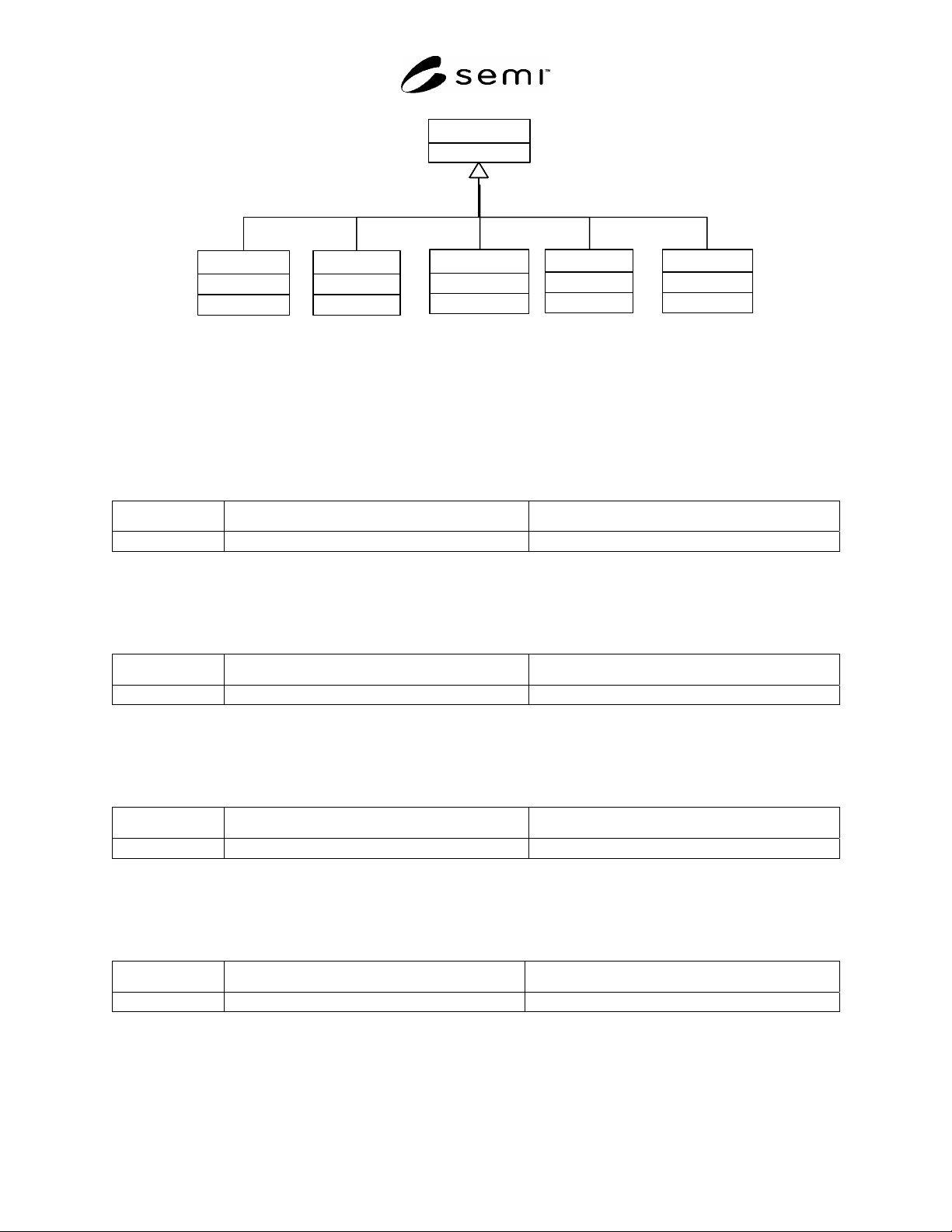
realVal
RealValue
boolVal
BooleanValue
binVal
BinaryValue
stringVal
String Valu e
intVal
IntegerValue
Ab stractValue
Figure 29
Primitive Value Types
14.3.1.1 Figure 29 shows a basic set of classes that can be used to represent primitive type values.
14.3.1.2 IntegerValue — Represents an integer value.
14.3.1.3 IntegerValue Attribute Definition Table
Table 68 IntegerValue Attribute Definition
Attribute Name Definition Form
intVal The value of the integer item. Integer
14.3.1.4 RealValue — Represents a real (floating point) number value.
14.3.1.5 RealValue Attribute Definition Table
Table 69 RealValue Attribute Definition
Attribute Name Definition Form
realVal The value of the real number item. Real
14.3.1.6 BooleanValue — Represents a boolean value.
14.3.1.7 BooleanValue Attribute Definition Table
Table 70 BooleanValue Attribute Definition
Attribute Name Definition Form
boolVal The value of the Boolean item. Boolean
14.3.1.8 StringValue — Represents a string value.
14.3.1.9 StringValue Attribute Definition Table
Table 71 StringValue Attribute Definition
Attribute Name Definition Form
stringVal The value of the string item. Text
SEMI E134-0305 © SEMI 2004, 2005 53
14.3.1.10 BinaryValue — Represents a binary value.
14.3.1.11 BinaryValue Attribute Definition Table
Table 72 BinaryValue Attribute Definition
Attribute Name Definition Form
binVal The value of the binary item. Binary
14.4 Structured and Enumerated Parameter Values
14.4.1 To make the data requested in a DCP available to a consumer, there must be a mechanism for representing
the values of structured types such as arrays and structures in the type system being used. The specific structured
types that should be represented are typically determined by the implementation technology that will be used to
communicate values of the declared type (e.g., SECS-II, XML, OMG IDL, etc.). The primitive types described here
should be considered a minimum set that could be refined and extended to work best with the type system in use.
Any specification that translates these types into a specific type system shall define how it has mapped these
primitive types into the technology-specific type system in addition to specifying any extended primitive types
beyond those described here.
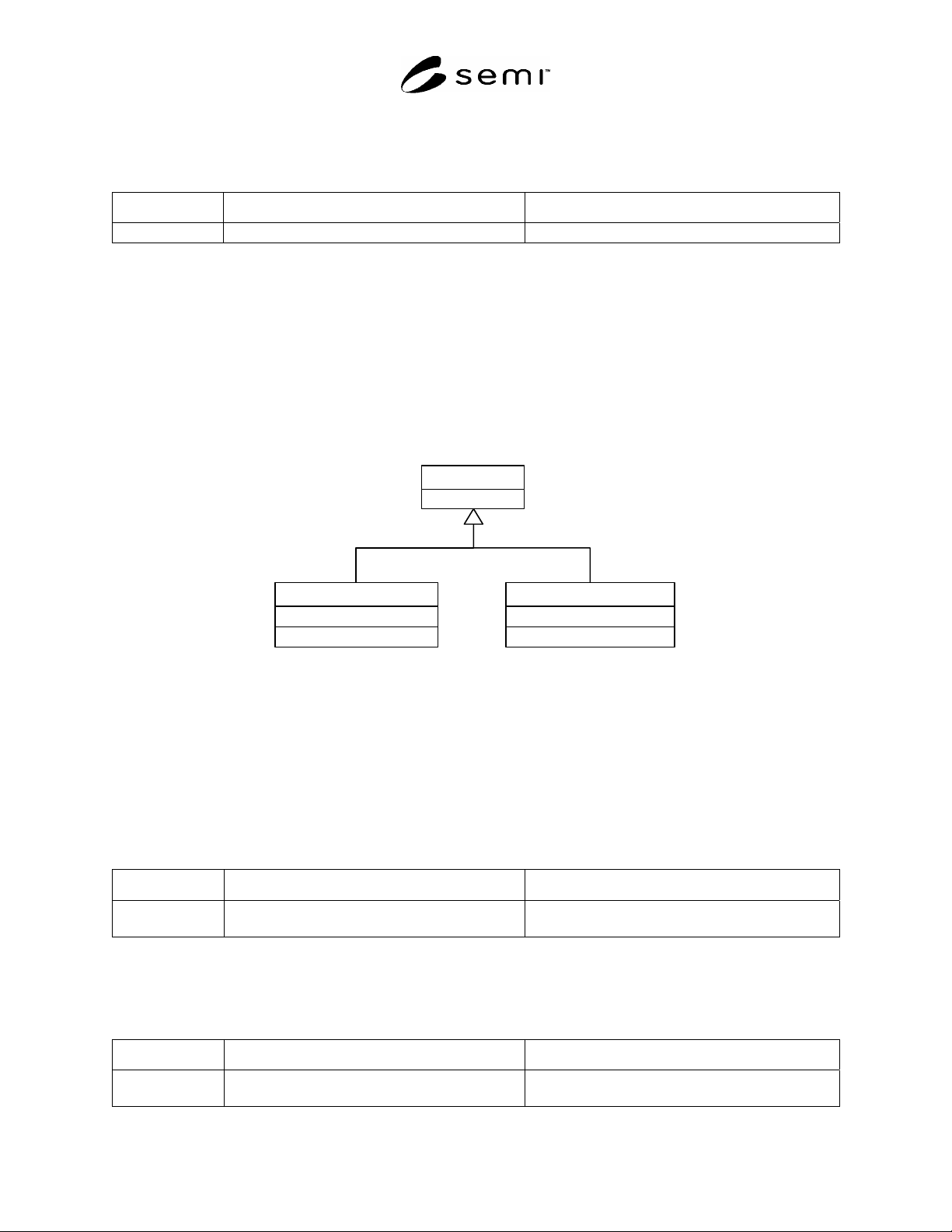
stringEnumVal
EnumeratedStringValue
int EnumVal
Enumerated In tegerValue
Ab stractValu e
Figure 30
Enumerated Values
14.4.2 Figure 30 shows how to represent values of enumerated types, which have a discrete set of possible values,
only one of which is provided by an instance of these classes (definition of the complete set of possible values is out
of scope for this specification).
14.4.2.1 EnumeratedStringValue — Represents a single value from a string-based enumeration.
14.4.2.2 EnumeratedStringValue Attribute Definition Table
Table 73 EnumeratedStringValue Attribute Definition
Attribute Name Definition Form
stringEnumVal The value of the enumerated item. Text, restricted to one of the legal values of the
enumeration.
14.4.2.3 EnumeratedIntegerValue — Represents a single value from an integer-based enumeration.
14.4.2.4 EnumeratedIntegerValue Attribute Definition Table
Table 74 EnumeratedIntegerValue Attribute Definition
Attribute Name Definition Form
intEnumVal The value of the enumerated item. Integer, restricted to one of the legal values of the
enumeration.
SEMI E134-0305 © SEMI 2004, 2005 54
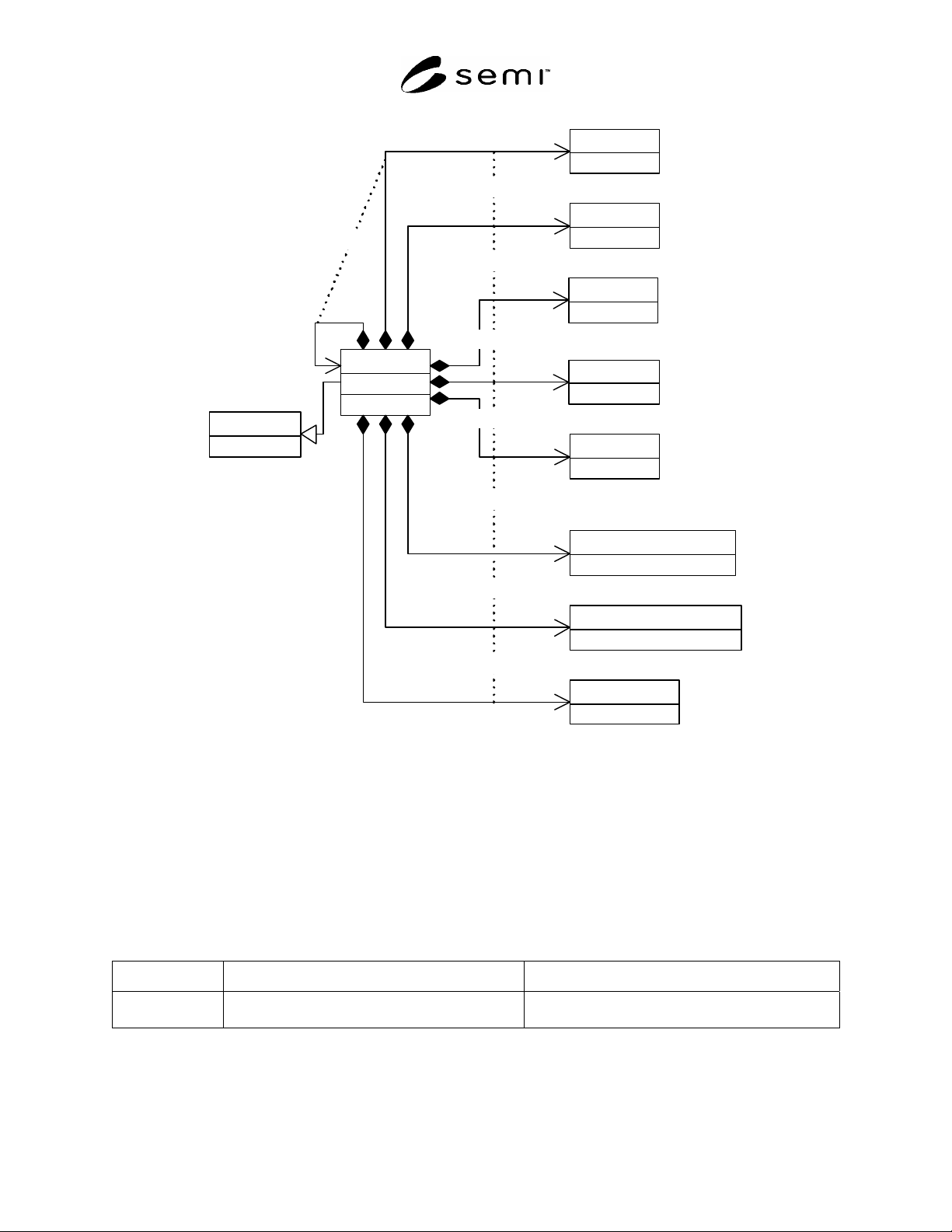
ArrayValue
Enu merated String Value
Enu merated IntegerValue
IntegerValue
RealValue
BooleanValue
StringValue
BinaryValue
StructureValue
1
values
0..*
1
values
0..*
1
values
0..*
1
values
0..*
1
values
0..*
1
values
0..*
1
values
0..*
1
values
0..*
1
0..*
{XOR}
{XOR}
{XOR}
{XOR}
{XOR}
{XOR}
{XOR}
{XOR}
AbstractValue
{ordered}
{ordered}
{ordered}
{ordered}
{ordered}
{ordered}
{ordered}
{ordered}
{ordered}
Figure 31
Array Values
14.4.3 Figure 31 shows how to represent array values. An array is an ordered collection of zero or more elements,
each element of the same type. In this case the UML {XOR} constraint is used to show that arrays must contain
values of one type only (integers, reals, strings, etc.). Note also that array values can be nested (each element of an
array can be an array).
14.4.3.1 ArrayValue — Represents an array of one or more values of the same type.
14.4.3.2 ArrayValue Attribute Definition Table
Table 75 ArrayValue Attribute Definition
Attribute Name Definition Form
values The values of the array. Ordered list of elements, each of the same specific
primitive, enumerated, structure, or array type.