semi合集-English.pdf - 第3599页
SEMI E139-0705 © SEMI 2005 23 8.4.2.2. 2 The Service Descriptions ta ble has six columns: The first column lists the services. The second col umn defines th e type of service. T his may be a request/response message …
SEMI E139-0705 © SEMI 2005 22
8.4.2.1 RaPnodes
8.4.2.1.1 RaP defines RaPnodes as the providers of RaP services. There are three types of RaPnodes:
EquipmentNodes, FICSnodes, and EditorNodes.
EquipmentNode — The EquipmentNode provides RaP Services for accessing the equipment.
FICSnode — The FICSnode provides RaP Services for accessing the Factory Information and Control System
(FICS).
EditorNode — The EditorNode provides RaP Services for accessing the PDEeditor.
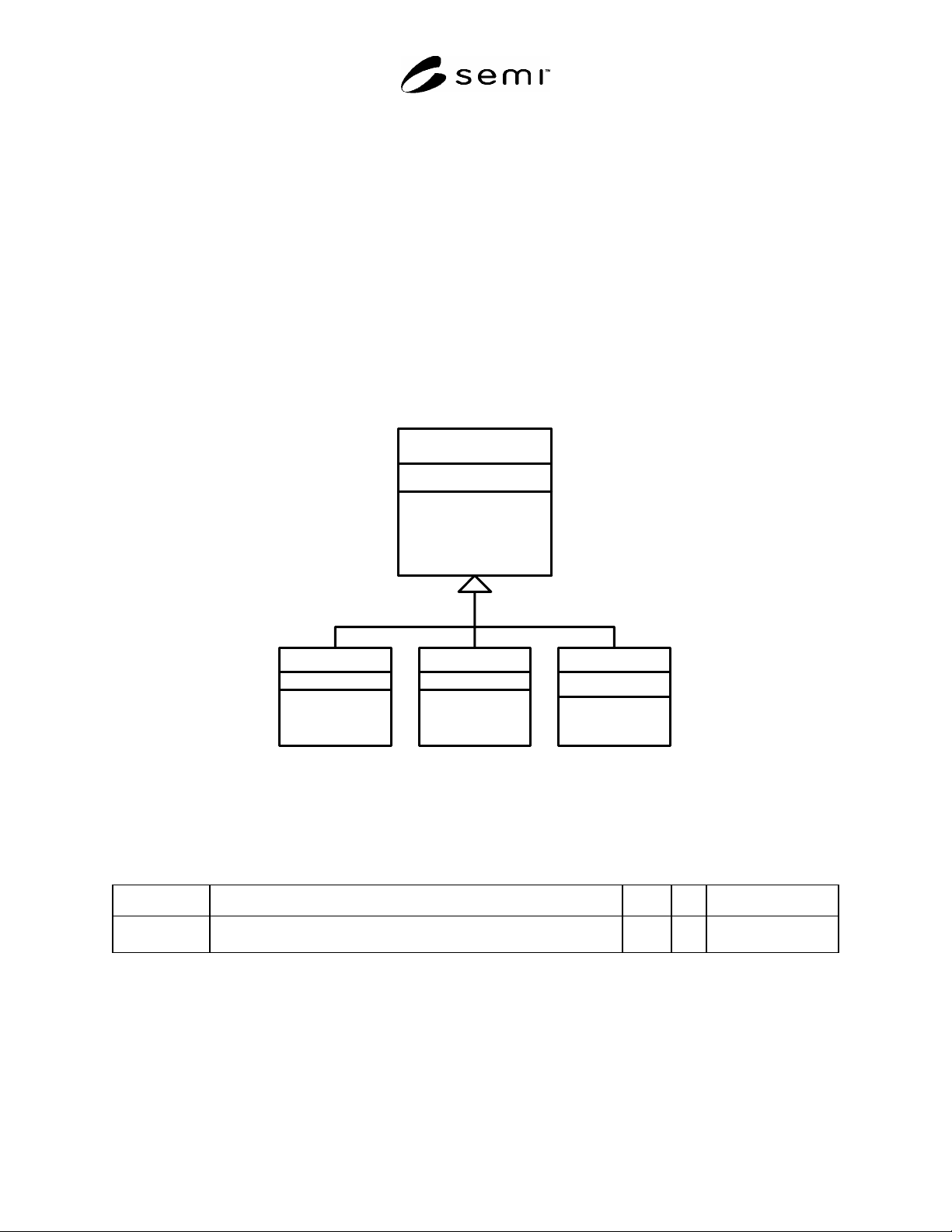
8.4.2.1.2 Figure 8 is a UML class diagram illustrating the relationships of the RaPnodes. As the diagram shows,
there are some services that are common to all RaPnodes. Other services are unique to certain types of RaPnodes.
This is more fully specified in Table 14 below.
8.4.2.1.3 The clients of RaP services can be any entity with communication access to a RaPnode. If the client for
RaP services is also a RaPnode, then more robust interactions are possible with messages initiated from both
RaPnodes. For more discussion on communication scenarios, see Related Information.
FICSnode
deletePDE()
EditorNode
verifyPDE()
deletePDE()
resolvePDE()
EquipmentNode
getPDEdirectory()
getPDEheader()
getPDE()
requestToSendPDE()
sendPDE()
nodeID
RaPnode
Figure 8
RaPnode Class Diagram
8.4.2.1.4 The class diagram also identifies the nodeID attribute (see Table 14). All RaPnodes shall define a nodeID
that can be used for identification in communications. The nodeID is referenced by the createNode attribute of the
PDEheader class.
Table 14 RaPnode Class Attributes
Attribute Name Definition Access Reqd Form
nodeID Identifier of the RaPnode. The nodeID shall be unique within the
factory where it is being used.
RO Y String
8.4.2.2 Required Services Per Node
8.4.2.2.1 As discussed in §2, RaP defines services that apply to three different communication nodes: the FICS, the
Equipment, and the PDEeditor. Each of those nodes is required to provide certain services to be compliant to RaP.
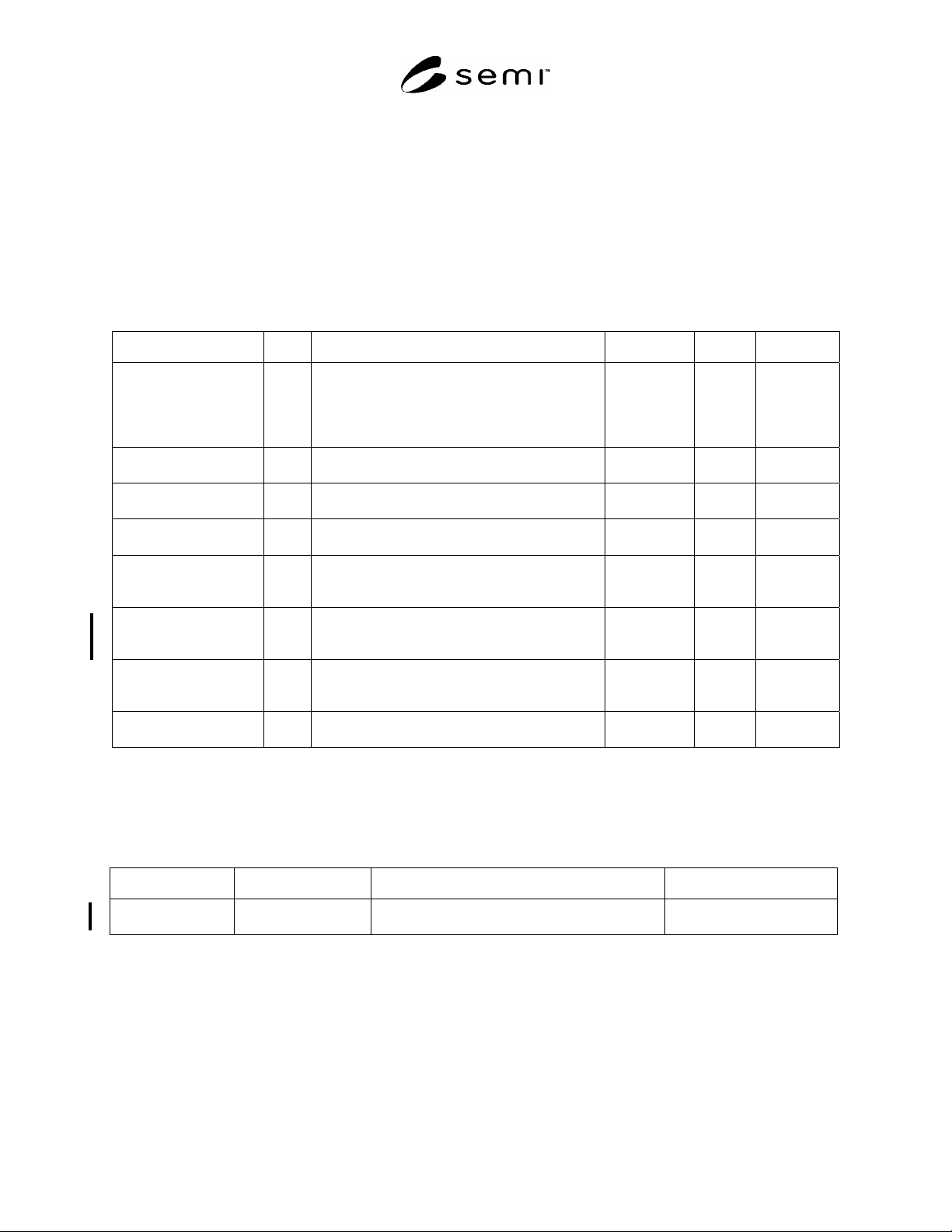
Table 15, Service Descriptions, describes each service defined by RaP and which node must provide that service.
This listing corresponds to the services listed in Figure 8.
SEMI E139-0705 © SEMI 2005 23
8.4.2.2.2 The Service Descriptions table has six columns:
The first column lists the services.
The second column defines the type of service. This may be a request/response message pair (denoted by “R”)
or a notification message (denoted by “N”).
The third column is a textual description of the service.
Columns 4–6 each represent a RaP communication node. For each service, a checked box in this column
indicates that the node is required to provide this service. An empty box indicates that the service shall not be
provided.
Table 15 Service Descriptions
Service Name Type Description Equipment FICS Editor
getPDEdirectory() R
This service requests a list of the PDEs managed
by the RaPnode. The requestor may supply
selection criteria for which PDEs to re
p
ort and may
also select certain attributes to be returned for each
reported PDE.
deletePDE() R
This service requests the service provider to delete
the specified PDE(s) from the RaPnode.
getPDEheader() R
This service requests the service provider to return
the complete header of the specified PDE(s).
getPDE() R
This service requests the service provider to return
the specified PDE(s) in a TransferContainer.
requestToSendPDE()
R
This service requests the service provider to grant
or deny permission to transfer a collection of PDEs
in a TransferContainer to the service provider.
sendPDE() R
This service requests the service provider to accept
the set of PDE’s in the included
TransferContainer.
resolvePDE() R
This service requests the service provider to
determine the complete recipe hierarchy beneath
the specified PDE based on the ReferencedPDEs.
verifyPDE() R
This service requests the service provider to check
various aspects of the specified PDE.
8.4.2.3 Service Message Parameters
8.4.2.3.1 The following service parameter dictionary (Table 16) defines the name, description, and format for
parameters used by RaP services. The format column uses data types defined in ¶6.2.5.1.3.
Table 16 Service Parameter Dictionary
Parameter Name Form Description Where Used
delRspInfo
list of (uid, delRspStat)
Contains a list of the status for each specified PDE
(as identified by the uid).
deletePDE()

SEMI E139-0705 © SEMI 2005 24
Parameter Name Form Description Where Used
delRspStat
Error
Status response for the deletePDE() service. The
following responses are allowed:
“OK” — Successfully deleted specified PDE.
“PDEnotFound” — PDE was not found on the
service provider.
“PDElocked” – The PDE is present, but cannot be
deleted at this time. For example, the PDE might
be executing or reserved for a job. The PDE was
not deleted.
“Other” — A problem occurred that is not
described by the other enumerated values. The
PDE was not deleted.
delRspInfo parameter
dirRspStat Error
Status response for the getPDEdirectory() service.
The following responses are allowed:
“OK” — Successfully returned requested data.
“BadFilter” — One or more of the PDE filter
specified were not properly specified.
“BadAttribute” — One or more of the PDE
attributes requested to be returned do not exist.
getPDEdirectory()
getRspInfo
list of (uid, getRspStat)
Contains a list of the status for each specified PDE
(as identified by the uid).
getPDE(), getPDEheader()
getRspStat Error
Status response for the getPDE() service. The
following responses are allowed:
“OK” — Successfully returned the PDE (or
header).
“PDEnotFound” — The PDE was not available
from the service provider.
“PDElocked” — The PDE exists, but cannot be
transferred now (for example, it may be in use).
“Other” — A problem occurred that is not
described by the other enumerated values.
getRspInfo parameter
inputMap
list of (pdeRef,
resolution)
Client provided list of PDE references and
corresponding resolutions. Each inputMap entry is
a pair of values: a reference to a PDE and the uid
that is the resolution for that reference. When the
pdeRef is a uid, the resolution shall always contain
the same value. This list may contain zero entries.
resolvePDE(), verifyPDE()
operator Enumeration
Choice of available operators that relate the
attribute value to the specified value. The
following values are allowed:
“EQ” — Equals (numeric or string)
“GT” — Greater Than (numeric)
“LT” — Less Than (numeric)
“GE” — Greater than or equal to (numeric)
“LE” — Less than or equal to (numeric)
“Like” — Contains the substring (string)
“NotEQ” — Not Equal (numeric or string)
“NotLike” — Does not contain the substring
(string)
PDEFilter parameter
outputMap
list of (pdeRef,
resolution)
Service provider generated list of PDE references
and their resolutions. Each outputMap entry is a
pair of values: a reference to a PDE and the uid
that is the resolution for that reference. When the
pdeRef is a uid, the resolution shall always contain
the same value.
resolvePDE()