semi合集-English.pdf - 第3378页
SEMI E132.1-0305 © SEMI 2005 5 4.3 W3C Standards 2 Extensible Markup La nguage (XML) 1.0 (Second Edition) — W3C, 6 October 20 00 (http://www.w3.org/TR/2000/REC-xml-2000100 6/). Namespaces in XML — W3C, 14 January 199 9 (…
SEMI E132.1-0305 © SEMI 2005 4
Table 79 XML Schema................................................................................................................................................41
Table 80 SessionClient PortType Definitions..............................................................................................................42
Table 81 SessionClient Binding Definitions................................................................................................................42
Table 82 SessionClient Port Type ...............................................................................................................................42
Table 83 SessionClient Binding ..................................................................................................................................43
Table 84 Translation Table for SessionPing Output Parameters .................................................................................43
Table 85 SessionPing Messages..................................................................................................................................44
Table 86 SessionPing PortType Operation..................................................................................................................44
Table 87 SessionPing Operation Binding....................................................................................................................44
Table 88 SessionFrozen Messages ..............................................................................................................................45
Table 89 SessionFrozen PortType Operation ..............................................................................................................45
Table 90 SessionFrozen Operation Binding ................................................................................................................45
Table 91 Translation Table for SessionClosed Input Parameters ................................................................................46
Table 92 SessionClosed Messages ..............................................................................................................................46
Table 93 SessionClosed PortType Operation ..............................................................................................................46
Table 94 SessionClosed Operation Binding ................................................................................................................46
1 Purpose
1.1 Specification Purpose
1.1.1 The purpose of this specification is to provide an authentication implementation using SSL and a
WSDL/SOAP implementation and XML Schema that corresponds to the UML model for Equipment Client
Authentication and Authorization as defined by SEMI E132.
2 Scope
2.1 Specification Scope
2.1.1 The scope of this document is the faithful representation of the ECA model in an XML schema and
corresponding WSDL services. It will not add new domain information or concepts to the model. The only
additions made are those needed to render useful WSDL or XML Schema.
NOTICE: This standard does not purport to address safety issues, if any, associated with its use. It is the
responsibility of the users of this standard to establish appropriate safety and health practices and determine the
applicability of regulatory or other limitations prior to use.
3 Limitations
3.1 Provisional Specification
3.1.1 This specification is provisional pending the approval of SEMI E138. This specification relies on XML
Schema types defined in Core Components, and cannot be fully implemented without these types. Finalization of
that specification is a condition for the removal of the provisional status of this document.
4 Referenced Standards
4.1 SEMI Standards
SEMI E121 — Guide for Style & Usage of XML for Semiconductor Manufacturing Applications
SEMI E132 — Specification for Equipment Client Authentication and Authorization
4.2 OMG Standards
1
Unified Modeling Language (UML) Specification, Version 1.4, OMG Specification 01-09-67,
(http://www.omg.org/technology/documents/modeling_spec_catalog.htm).
1 Object Management Group, Inc., 250 First Ave. Suite 100, Needham, MA 02494, U.S.A., Phone: 781.444.0404, Fax:781.444.0320, website:
www.omg.org.
SEMI E132.1-0305 © SEMI 2005 5
4.3 W3C Standards
2
Extensible Markup Language (XML) 1.0 (Second Edition) — W3C, 6 October 2000
(http://www.w3.org/TR/2000/REC-xml-20001006/).
Namespaces in XML — W3C, 14 January 1999 (http://www.w3.org/TR/1999/REC-xml-names-19990114/).
XML Schema Part 0: Primer — W3C, 2 May 2001 (http://www.w3.org/TR/xmlschema-0/).
XML Schema Part 1: Structures — W3C, 2 May 2001 (http://www.w3.org/TR/xmlschema-1/).
XML Schema Part 2: Datatypes — W3C, 2 May 2001 (http://www.w3.org/TR/xmlschema-2/).
XML Path Language (Xpath) — W3C, 16 November 1999 (http://www.w3.org/TR/xpath/).
Web Services Description Language (WSDL) 1.1 — W3C Note, (http://www.w3.org/TR/wsdl)
Simple Object Access Protocol (SOAP) 1.1 — W3C Note, (http://www.w3.org/TR/2000/NOTE-SOAP-20000508/)
4.4 Other Standards
Secure Sockets Layer (SSL) Protocol 3.0 (available from http://wp.netscape.com/eng/ssl3/draft302.txt)
NIST FIPS PUB 180-1 — Secure Hash Algorithm (SHA-1) (http://csrc.nist.gov/publications/fips/fips180-1/fip180-
1.pdf)
Web Services Interoperability (WS-I): Basic Profile Version 1.0a (http://www.ws-i.org/Profiles/Basic/2003-
08/BasicProfile-1.0a.html)
Internet Engineering Task Force (IETF) RFC 2459 — Internet X.509 Public Key Infrastructure Certificate and CRL
Profile (http://www.ietf.org/rfc/rfc2459.txt)
PKCS #12: Personal Information Exchange Syntax Standard, version 1.0 (available from
http://www.rsasecurity.com/rsalabs/pkcs/pkcs-12/)
Universal Unique Identifier (UUID) — ISO/IEC 11578:1996 Information technology – Open Systems
Interconnection – Remote Procedure Call (http://www.iso.ch/cate/d2229.html)
NOTICE: Unless otherwise indicated, all documents cited shall be the latest published versions.
5 Terminology
5.1 Abbreviations and Acronyms
5.1.1 HTTP — Hyper Text Transport Protocol
5.1.2 SHA — Secure Hash Algorithm
5.1.3 SOAP — Simple Object Access Protocol
5.1.4 SSL — Secure Sockets Layer
5.1.5 UML — Unified Modeling Language
5.1.6 W3C — World Wide Web Consortium
5.1.7 WSDL — Web Service Description Language
5.1.8 XML — eXtensible Markup Language
5.2 Definitions
5.2.1 UML (Unified Modeling Language) — a notation for representing object-oriented designs and views created
by Booch, Rumbaugh, and Jacobson in order to merge their three popular notations plus aspects of other existing
notations into a single object-oriented notation intended to be usable by all.
2 World Wide Web Consortium, Massachusetts Institute of Technology (MIT), Computer Science and Artificial Intelligence Laboratory
(CSAIL), 32 Vassar Street Room 32-G515, Cambridge, MA 02139, USA, Telephone: 617.253.2613, Fax: 617.258.5999, website: www.w3.org.
SEMI E132.1-0305 © SEMI 2005 6
5.2.2 XML (eXtensible Markup Language) — a markup language used for representing data rich with context and
content in documents and in communications. XML is an extension of SGML, a document-oriented markup
language. It was created by W3C for use on the Internet.
6 Conventions
6.1 Translating UML to XML Schema
6.1.1 The reader is expected to have a working knowledge of the UML, XML, and Schema specifications (See
¶¶4.2 and 4.3). This document does not provide tutorial information on these subjects.
6.1.2 This document follows the guidelines for XML as outlined in SEMI E121.
6.1.3 Some of the key guidelines followed in this document are summarized here:
Attributes of UML classes are generally represented as XML attributes, to improve efficiency in transferring
metadata descriptions from the equipment. Exceptions to this convention are UML attributes that correspond to
data structures or other constructs that cannot be represented as XML attributes, or may include text values that
may need to include non-parsed character data (CDATA).
Composition associations are mapped to a single XML element (or multiple such elements if the specified
multiplicity is greater than 1).
Aggregations are modeled as contained elements or arrays of references to one or more unique attributes of the
target type.
Inheritance is modeled using complexType extension. In cases where a reference to an abstract base class
occurs in the UML model, a choice compositor for each of the possible derived types is used in order to restrict
instance documents from including arbitrary extension through type substitution.
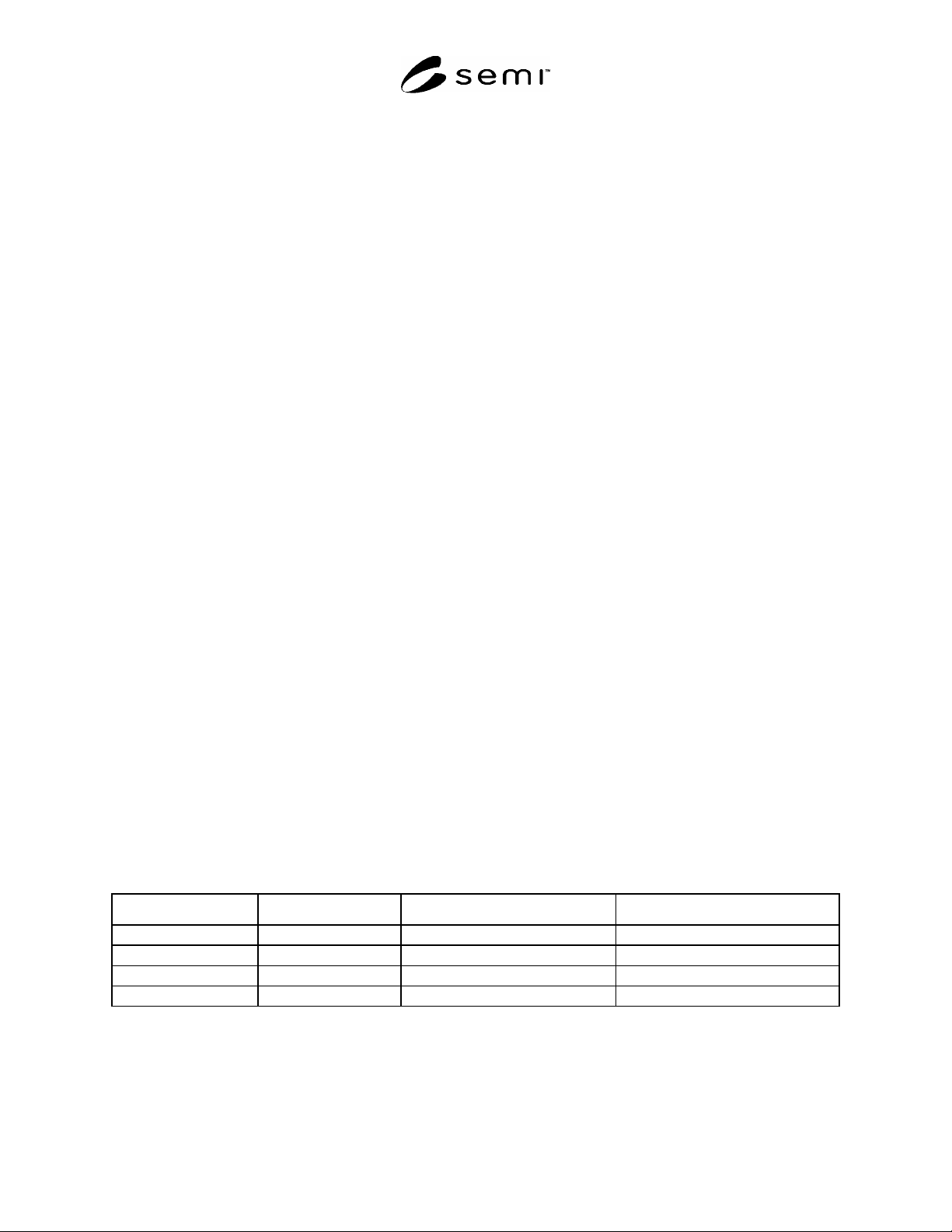
6.1.4 The translation of a UML class to XML Schema types is documented using a table format illustrated by Table
1. Operations defined for a UML class are translated into WSDL operations.
6.1.5 Translation Table Column Header Description
Attribute or Role Name — If an attribute, the name of the attribute is placed here. If an association (including
aggregation or composition), the role name from the UML diagram is placed here. Compositions are often not
assigned roll names. In that case “none” is placed here.
UML Name/Type — If an attribute, the data type of the UML attribute is place here. If an association, the type
of association is placed here. The possible types are “Composition”, “Aggregation”, or the basic “Association”.
UML defines these three types of association.
XML Element or Attribute — Lists the type of XML construct used to represent the UML attribute or
association.
XML Name/Type — Provides the name and data type of the resulting XML construct. The type may be a built-
in type (for example, xs:string), or a named type defined within the XML Schema.
Table 1 Example Translation Table
Attribute or Role Name UML Name/Type XML Element or Attribute XML Name/Type
friend association element Friend: HumanReferenceArray
employees aggregation element Employees: HumanArray
family composition element Family: HumanArray
name string element Name: xs:string
6.1.6 Translating Operations to XML Schema
6.1.6.1 The translation of an operation defined for UML interface classes to XML Schema types is documented
using a table format illustrated in Table 2. One row is provided for each possible input/output argument for the
operation being described.