semi合集-English.pdf - 第4593页
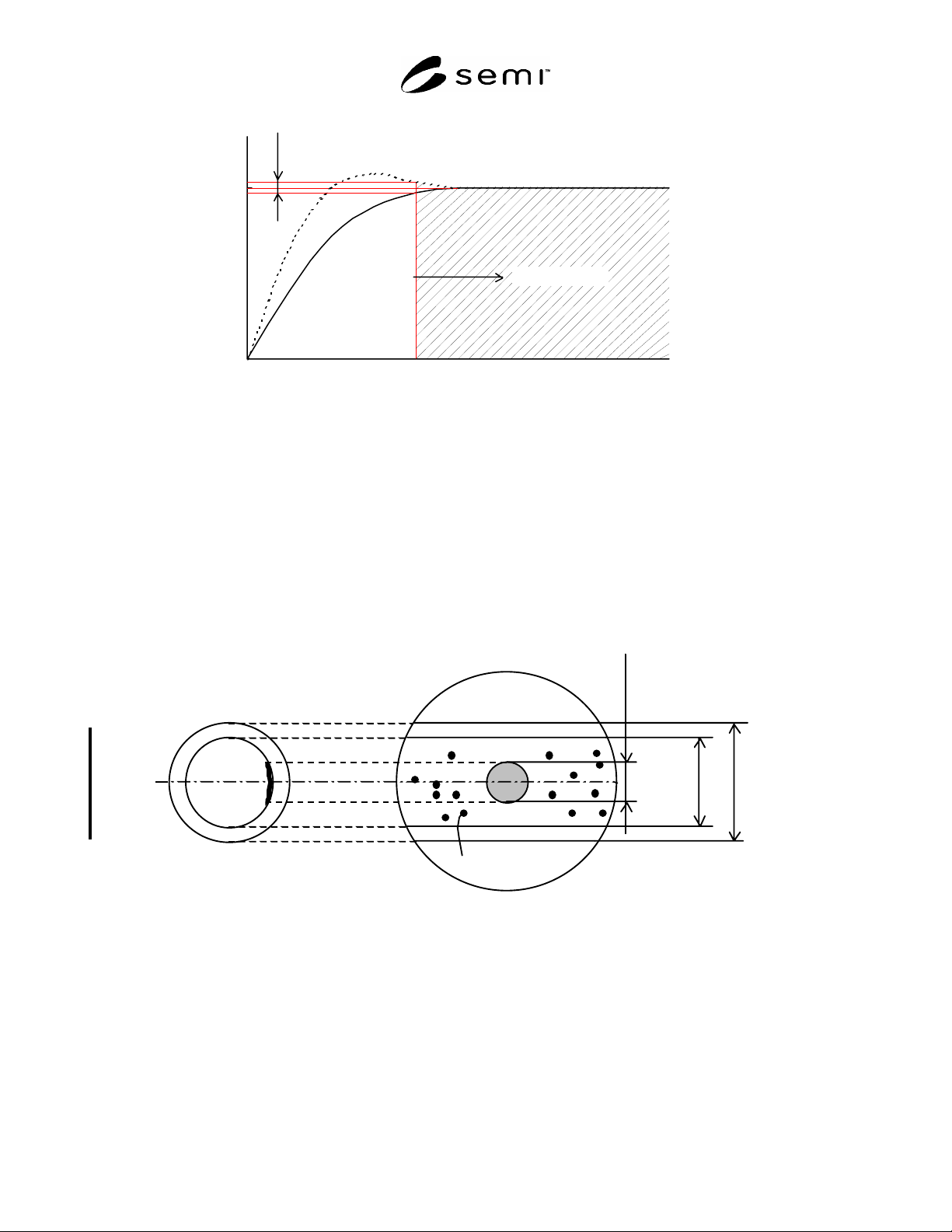
SEMI D35-1103 E © SEMI 2003 5 M e a s ur e me nt St a r t e d ±3% O v ercu rren t Lum inanc e 100% 0 S Figure 4 Measuring Time o f Optical Characteristic s Commentary on Figure 4 : The CCFL luminance has a sp ecial risin…
SEMI D35-1103
E
© SEMI 2003 4
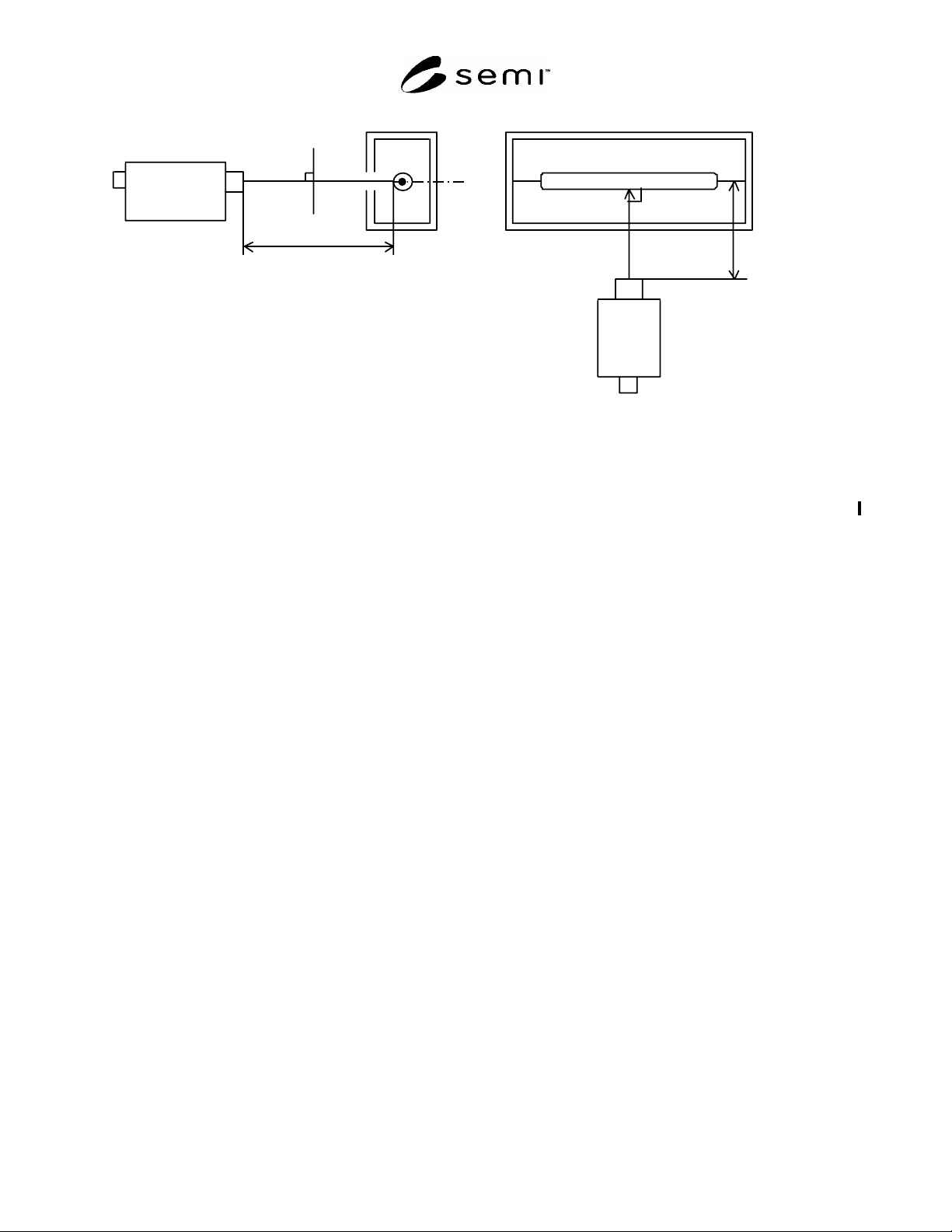
Distance of
measurement
Windle ss stat e
Spectroradiometer
or Colorimeter
Distance of measurement
CCFL
Spectroradiometer
or Colorimeter
Figure 3
Optical Characteristics Measurement
9 Procedure
9.1 Measurement of Electrical Characteristics
9.1.1 Measurement of Stable Discharge Voltage —
Apply zero or very low voltage to the both ends of a
lamp (between two electrodes) and increase the voltage
gradually (slide-up). The lamp starts to discharge after
the voltage reaches a certain value. Furthermore,
increase the voltage gradually (slide-up) and measure
the potential difference between the lamp ends
(electrodes) as a stable discharge voltage when a main
discharge starts.
9.1.2 Measurement of Lamp Current — Adjust the
output voltage of power supply unit to gain a specified
lamp current. Measure the lamp current at GND
terminal when it becomes stable at a specified value.
Record the preset voltage of the power supply as well.
(Refer to Figure 1 or Figure 2.)
9.1.3 Measurement of Lamp Voltage — Measure the
potential difference between both ends (electrodes) of a
lamp as a lamp voltage when the lamp current becomes
stable at a specified lamp current. If the lamp current is
affected when a probe is connected, adjust the lamp
current to make it a specified lamp current. Measure
the lamp current after it becomes stable.
9.1.4 Lamp Wattage — It is defined as a product of
lamp current, lamp voltage and power factor
(W = VL × IL × cos) and expressed as a reference
value. When the phase difference between the lamp
current and lamp voltage can be ignored and if such
situation is specified, the product of the lamp current
and lamp voltage (W = VL × IL) may be expressed as a
reference value.
9.2 Measurement of Optical Characteristics
9.2.1 Point of Measurement — The point is the side
surface of a lamp, which is within the range of viewing
angle (black circle) of a measuring instrument. The area
of measurement is the central part of the lamp. The
point of measurement shall be so small relatively to the
inner diameter of the lamp that the dislocation of the
point may not vary the luminance and chromaticity.
The point of measurement is a cylindrical surface but it
could be regarded as a plain surface due to the
smallness. (See Figure 5.) The dispersion due to
dislocation of a point of measurement is smaller within
the range that is less than or equal to 50% of the inner
diameter. The luminance decreases in the other range.
9.2.2 Distance of Measurement — The distance shall
be from a lamp surface to be measured to a light-
receiving lens surface of a measuring instrument. The
size of viewing angle varies according to adjustment by
luminance meter and the distance of measurement, set
the distance to match the inner diameter mentioned
above. When measuring, the inner surface of the lamp
and the focal point shall be well matched (Figure 5). (If
the focal point of the luminance meter is displaced, the
luminance and chromaticity values will not be indicated
correctly.)
9.2.3 Timing of Measurement — Measure after the
luminance seems stable at a specified lamp current
(where the luminance fluctuation difference is within
± 3% of the stable luminance, for example). (See Figure
4.)
SEMI D35-1103
E
© SEMI 2003 5
Me asure me nt St arte d
±3%
Overcurrent
Luminanc e
100%
0
S
Figure 4
Measuring Time of Optical Characteristics
Commentary on Figure 4: The CCFL luminance has a special rising property. The highest luminance and stable
luminance vary by the combination of ambient temperature and lamp current and the transitions vary as well. This is
based upon the fact that the CCFL luminance depends on temperature and the generated heat by lighting affects it.
For this reason, the luminance varies until the lamp wall temperature becomes stable. Before the measurement, grasp
the special rising property of luminance and set the timing of measurement of the stable luminance.
9.2.4 Measurement of Luminance — Set a spectroradiometer or a colorimeter vertical to a side to be measured and
measure according to the above-mentioned instruction of measurement. Avoid shades of mercury particles in the
lamp. (See Figure 5.)
Station Diame
t
Lamp insi
d
diamete
Lamp outsi
d
diamete
M ercury Grain
(Within 50%
inner diame
t
Station Diameter
(Within 50% of
inner diameter)
Lamp inner
diameter
Lamp outer
diameter
Figure 5
Measuring Spot (Diameter) for Optical Characteristics
9.2.5 Measurement of Chromaticity — Measure in the same manner and at the same time of the measurement of
luminance.
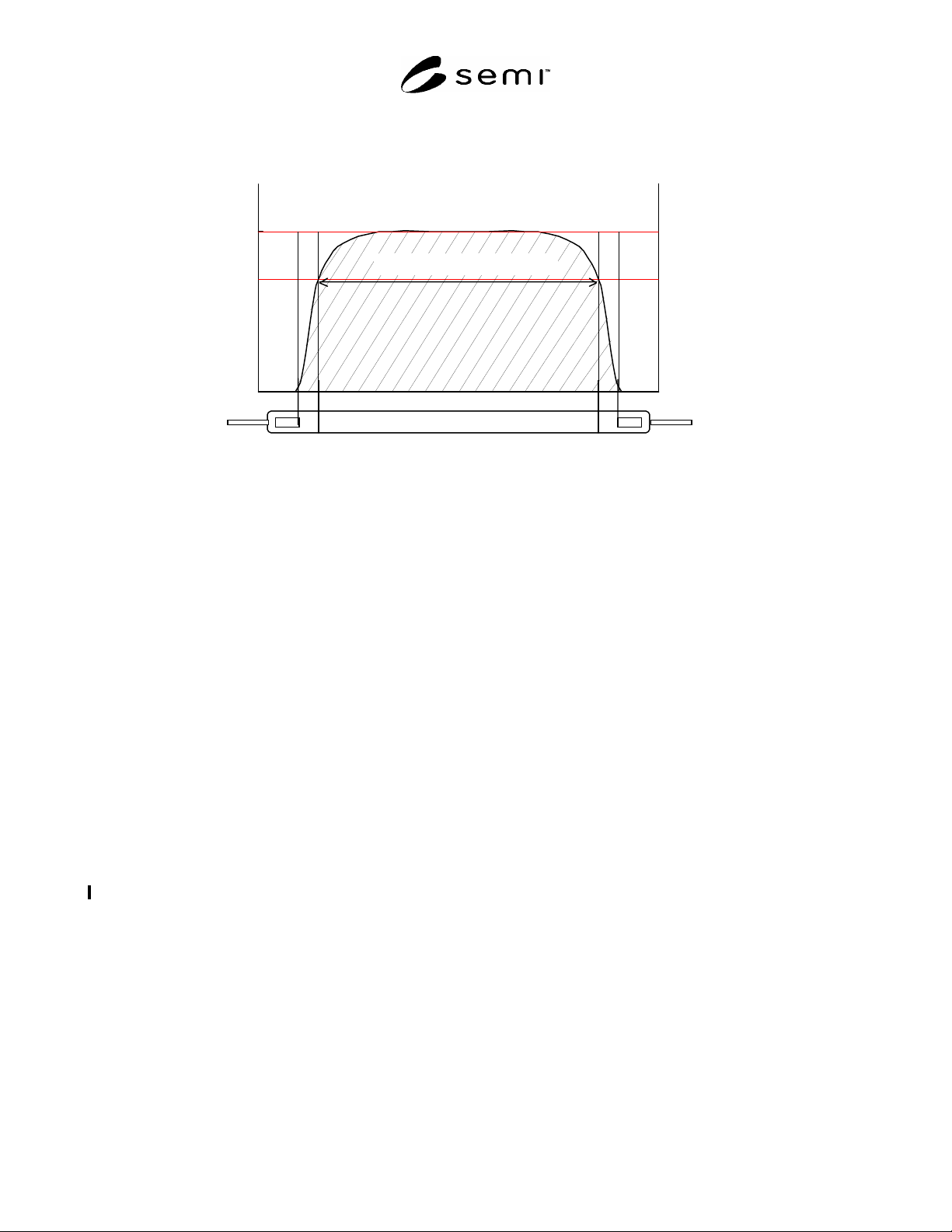
9.3 Measurement of Effective Length of Luminous Part — Measure when the luminance is fully stable at a specified
lamp current according to the measuring conditions mentioned above. The luminance varies greatly around
electrodes since the temperature variation is big among points of measurement due to high temperature of a lamp
wall. Sufficient aging shall be performed before measurement to avoid impacts of the change of passage of time to
SEMI D35-1103
E
© SEMI 2003 6
each point to be measured. Fix the lamp and move the spectroradiometer or the colorimeter for better measurement
since the lamp wall temperature does not vary and so the luminance becomes stable in this way. (See Figure 6.)
100%
0
mm
Luminance
Effective length of luminous part
70%
Figure 6
Measurement of Effective Length of Luminous Part
9.4 Measurement of Luminance Stabilization Time —
Use a CCFL in which the wall temperature and ambient
temperature are kept in equilibrium before lighting.
From just after a CCFL is turned on by specified lamp
current, measure the luminance changes until it seems
stable (where the luminance fluctuation difference is
within ± 3% of the stable luminance, for example).
10 Reporting Results
10.1 Report the following items:
10.1.1 report date,
10.1.2 test date,
10.1.3 measuring equipment types, and conditions of
use (lighting frequency, rated length of connecting
wire, distance of measurement, viewing angle, etc.),
10.1.4 conditions of test specimen (size, other
specifications, etc.),
10.1.5 to specify item names and necessary entries for
the CCFL outer and inner diameters, lamp length and
necessary specifications,
10.1.6 conditions of measurement (ambient
temperature, aging time, etc.),
10.1.7 measurement results (electrical and optical
characteristics), and
10.1.8 remarks (other notes).
11 Related Documents
Related Information 1: documents regarding main
discharge,
Related Information 2: dark characteristics, and
Related Information 3: precautions for measuring
method (leakage current, lamp wall temperature,
temperature slide-up speed for master CCFL, etc.).
NOTICE: SEMI makes no warranties or
representations as to the suitability of the standards set
forth herein for any particular application. The
determination of the suitability of the standard is solely
the responsibility of the user. Users are cautioned to
refer to manufacturer's instructions, product labels,
product data sheets, and other relevant literature,
respecting any materials or equipment mentioned
herein. These standards are subject to change without
notice.
By publication of this standard, Semiconductor
Equipment and Materials International (SEMI) takes no
position respecting the validity of any patent rights or
copyrights asserted in connection with any items
mentioned in this standard. Users of this standard are
expressly advised that determination of any such patent
rights or copyrights, and the risk of infringement of
such rights are entirely their own responsibility.