semi合集-English.pdf - 第3370页
SEMI E132-0305 © SEMI 2004, 2005 23 14.3.2 Session States 14.3.2.1 ACTIVE — Parent state, c overs entire lifecycle of an authenticated session. Session is active beginning with a successful request to es tablish a new se…
SEMI E132-0305 © SEMI 2004, 2005 22
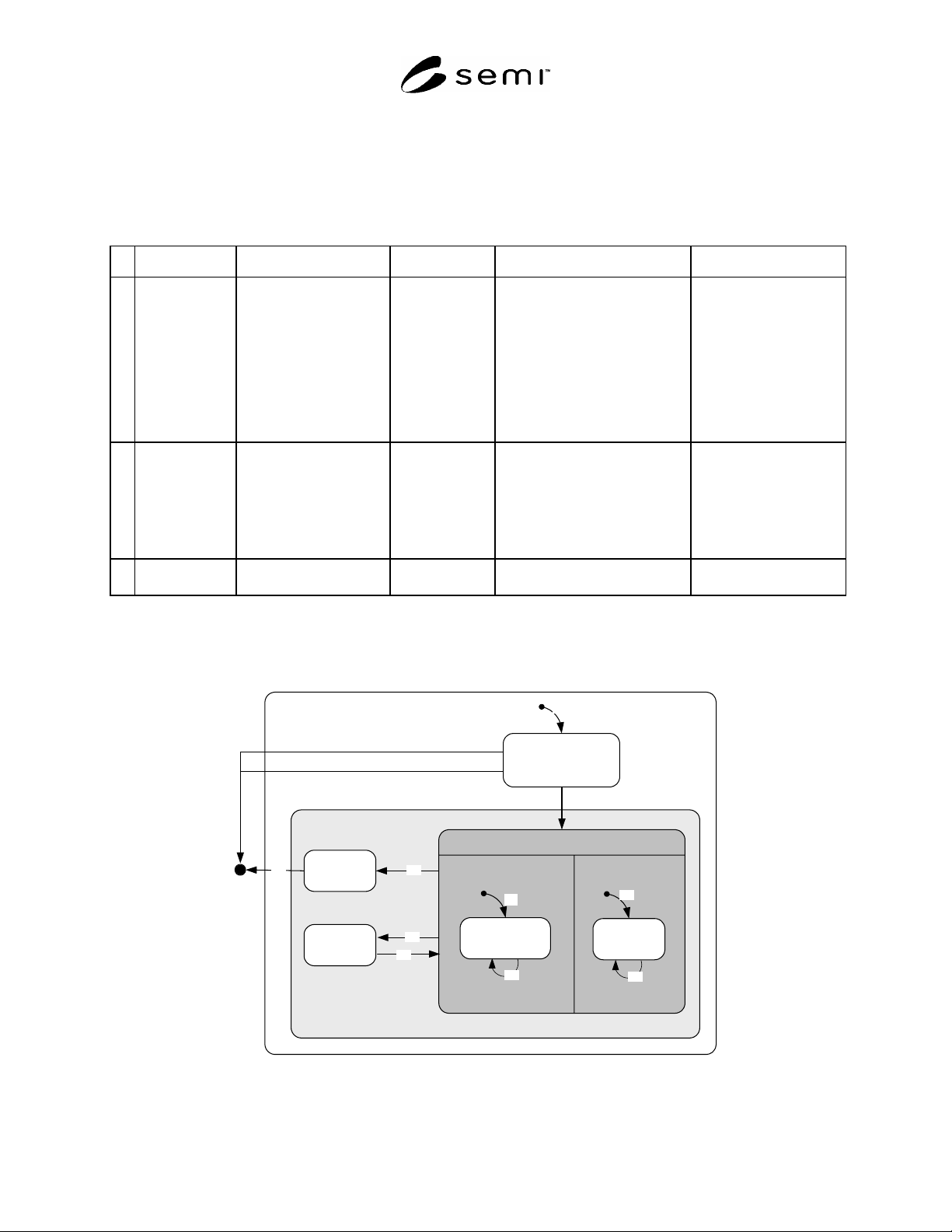
14.2.1.2 ALLOWED — Establishment of authenticated sessions is allowed. Upon entry to this state, all FROZEN
persistent sessions are resumed per the session state model. While in this state, requests for establishment of new
authenticated sessions are accepted, see Section 14.3 Session State Model for behavior on establishment of an
authenticated session.
14.2.2 Session Establishment State Transitions
Table 33 Session Establishment State Transitions Table
# Current State Trigger New State Actions Comments
1 (no state) Completion of system
initializations or the
equipment is in a state
where it can support
authenticated session
communications.
ALLOWED The equipment shall wait for
requests to establish
authenticated sessions. All
FROZEN persistent sessions are
resumed by automatic re-entry to
the ESTABLISHED state.
Any connectivity issues
encountered in attempting
to re-establish persistent
sessions shall be managed
by each session’s
Authenticated Session
state model defined in
Section 14.3 (see, for
example, Section
14.3.2.7).
2 ALLOWED The equipment is
powering down or
emergency down.
DISALLOWED If possible, the equipment shall
close all active non-persistent
sessions, notify all clients with
persistent sessions that their
session is being FROZEN, and
reject any requests for session
establishment.
3 DISALLOWED Equipment shutdown
complete.
(no state)
14.3 Session State Model
14.3.1 The session state model defines behavior of equipment related to establishing an authenticated session,
supporting the services and message exchanges over the established session and to terminating the session.
READY
AUTHENTICATING
CLOSING
1
5
ESTABLISHED
ACTIVE
SESSION
MONITOR
7
9
8
MONITORING
COMMUNICATING
FROZEN
10
11
2
6
12
Authenticated Session
4
3
Figure 16
Authenticated Session State Diagram
SEMI E132-0305 © SEMI 2004, 2005 23
14.3.2 Session States
14.3.2.1 ACTIVE — Parent state, covers entire lifecycle of an authenticated session. Session is active beginning
with a successful request to establish a new session, and is active until the session is closed.
14.3.2.2 AUTHENTICATING — This state is where the client and the equipment carry out the authentication
process and establish new authenticated sessions. Privileges are granted to the session once the client is
authenticated and the session successfully established. See Section 10 for the authentication message flow, and
Section 13.2.6 for session establishment.
14.3.2.3 ESTABLISHED — This state is the parent of all those sub-states that relate to service invocation and
communications subsequent to successful authentication and session establishment. It has two simultaneous sub-
states, COMMUNICATING and MONITORING, both of which are active whenever the session is
ESTABLISHED.
14.3.2.4 COMMUNICATING (ESTABLISHED Sub-State) — This is the ESTABLISHED sub-state where all session
communications are handled.
14.3.2.5 MONITORING (ESTABLISHED Sub-State) — This state provides a watchdog mechanism to monitor status
of the established session.
14.3.2.6 READY (COMMUNICATING Sub-State) — Initial state upon session established and COMMUNICATING
state becomes active. Both the client and the equipment have been successfully authenticated without errors. The
equipment is awaiting service requests in this state and can report relevant events to authenticated clients. Except
for the services defined in this specification, the services allowed or events reported are dependent on the
specifications that defined them.
14.3.2.7 SESSION MONITOR (MONITORING Sub-State) — Initial state upon entry to ESTABLISHED state and
when MONITORING becomes active. The equipment shall periodically check the active status of the session by
sending ping messages to the client. See Section 15.1.1for details of the SessionPing message. A ping message is
sent upon first entry to the state. When resuming persistent sessions during equipment startup, the ping message
tells client of each persistent session that the equipment is now online. The interval at which the next ping message
is sent, and the number of attempts to be made before closing a session shall be configurable, and must include a
way to disable periodic pings (such as by using a delay interval of zero). If the client does not respond after the
configured number of pings, the equipment shall terminate the session automatically. The default number of ping
attempts shall be set to 3.
14.3.2.8 CLOSING — Session is being terminated either at request of client, security admin, or equipment initiated
due to errors. Session context are cleared including established session identifier. A SessionClosed (section 15.1.3)
notification is sent to client (if possible) on transition to this state.
14.3.2.9 FROZEN — A persistent session is put on hold as the equipment is powered down or in a state where it is
not able to communicate. A SessionFrozen (section 15.1.2) notificatication is sent to client (if possible) on
transition to this state. When resuming a persistent session, behavior is governed by re-entry to the ESTABLISHED
state and its sub-states.
14.3.3 Session State Transitions
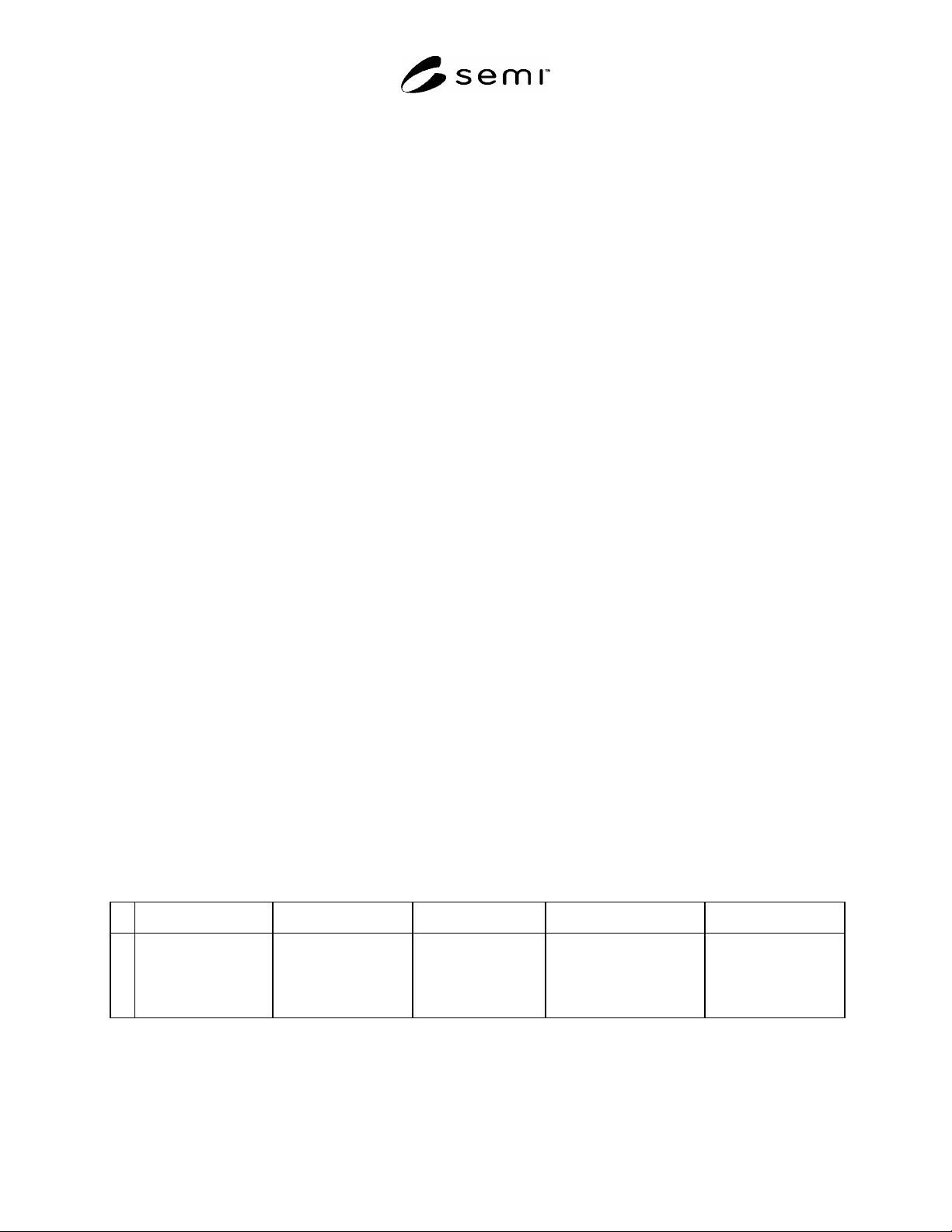
Table 34 Session State Transitions Table
# Current State Trigger New State Actions Comments
1 (no state) Client request to start
an authenticated
session
AUTHENTICATING Equipment and client
begins authentication and
session establishment
message flow (see Sections
10 and 14.3.2.2).

SEMI E132-0305 © SEMI 2004, 2005 24
# Current State Trigger New State Actions Comments
2 AUTHENTICATING Client or equipment
failed to authenticate,
an error occurred
during the process, or
the client has no
corresponding
ACLEntry.
(no state) Error reported and
connection is terminated.
3 AUTHENTICATING Request to establish
new session received
but max session limit
would be exceeded, or
request is for a new
admin session and
there is already an
active admin session.
(no state) Error reported and
connection is terminated.
4 AUTHENTICATING Client and equipment
successfully
authenticated with no
errors and the request
to establish new
session was successful.
ESTABLISHED Equipment enters the
COMMUNICATING and
MONITORING sub-states
for the session. Active
session count is
incremented if non-admin
session.
5 ESTABLISHED Entry to
COMMUNICATING,
client authenticated and
a session is established
or resumed.
READY Equipment is waiting for
service requests for this
session.
COMMUNICATING
and MONITORING
are concurrent sub-
states of
ESTABLISHED.
6 READY Equipment receives a
client request for
service.
READY Equipment verifies session
id and permission for the
client to execute requested
service based on granted
privileges.
7 ESTABLISHED Entry to
MONITORING, client
authenticated and a
session is established
or resumed.
SESSION MONITOR Equipment sends a ping
message to client to
indicate session is
established. When
resuming persistent
sessions during startup,
indicates equipment is
now online.
Concurrent with
COMMUNICATING
state.
8 SESSION MONITOR Ping delay timer
reached
SESSION MONITOR Equipment sends ping
message to client. If ping
is not replied within
configurable timeout, or
after the configured
number of retries, the
session will be closed by
equipment.
See Section 14.3.2.7.
9 ESTABLISHED Client or
SecurityAdmin request
to terminate session,
equipment is shutting
down, or
communication errors
have been detected by
the equipment.
CLOSING Equipment properly closes
session and clears any
state information.
SessionClosed notification
is sent to client (if
possible).
See Sections 14.3.2.3
and 13.1.4 for
discussion of
equipment response to
communication errors.