semi合集-English.pdf - 第1623页
SEMI E38-1296 © SEMI 1995 , 1996 12 • to the intratool port resource in the destinatio n attached module to receive the ma terial from the transport mod ul e. Transfer jobs are m ade up of atomic transfers. An atomic tra…
SEMI E38-1296 © SEMI 1995, 199611
7.1.4 Material Movement Models — Material movement in a cluster tool includes all services required within the
cluster tool to move material from the factory to a sequence of process modules in order to be processed and then
back to the factory. Material is moved individually within a cluster tool and may be received from the factory in
cassettes or individually.
The material movement model is divided into three parts as follows:
• intratool material movement defines the transfer of material between attached modules, with the transfer agent
being a transport module.
• intertool material movement defines the exchange of carriers and single material with the factory at the cluster
tool cassette module.
• carrier mapping defines presence and identifiers of single material contained in carriers.
These three models are used to establish the Material Movement Management definition within a cluster tool.
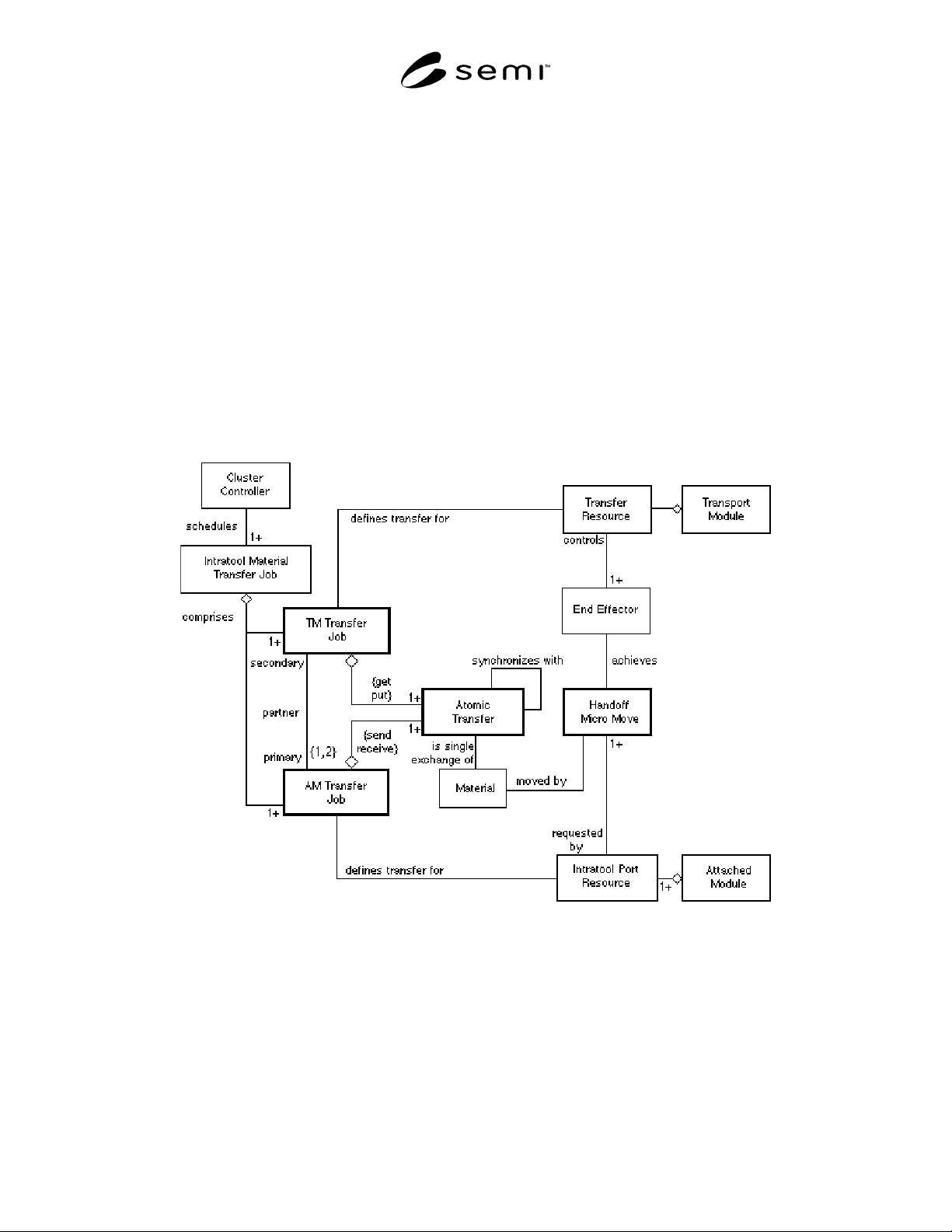
7.1.4.1 Intratool Material Transfer — The intratool material movement model is shown in Figure 8. An intratool
material transfer is the movement of material from one attached module to another attached module through the
linking transport module.
Figure 8
Intratool Material Movement Information Model
The cluster controller schedules an intratool material transfer job when intratool material transfer is required. This is
achieved by TM and AM transfer jobs assigned to the appropriate module resource in each of the participating
modules:
• to the transfer resource in the transport module to get the material from the source attached module and put it
into the destination attached module.
• to the intratool port resource in the source attached module to send the material to the transport module.
SEMI E38-1296 © SEMI 1995, 1996 12
• to the intratool port resource in the destination attached module to receive the material from the transport
module.
Transfer jobs are made up of atomic transfers. An atomic transfer in one transfer partner synchronizes with the
corresponding atomic transfer in the other partner to achieve the material transfer through handoff micro moves. In a
cluster tool, the attached module is the primary partner, requesting the handoff micro moves, and the transport
module is the secondary partner achieving those micro moves by controlling the end effector on which the material
is transported.
The transport module is responsible for managing constraints on the simultaneous opening of isolation valves as it
relates to contamination of the transport module's environment by that of an attached module, as well as cross
contamination between modules. The attached module ensures that its environment will not contaminate the
transport module before synchronizing for handoff. The rules for re-establishing isolation at verification are
determined by the transport module.
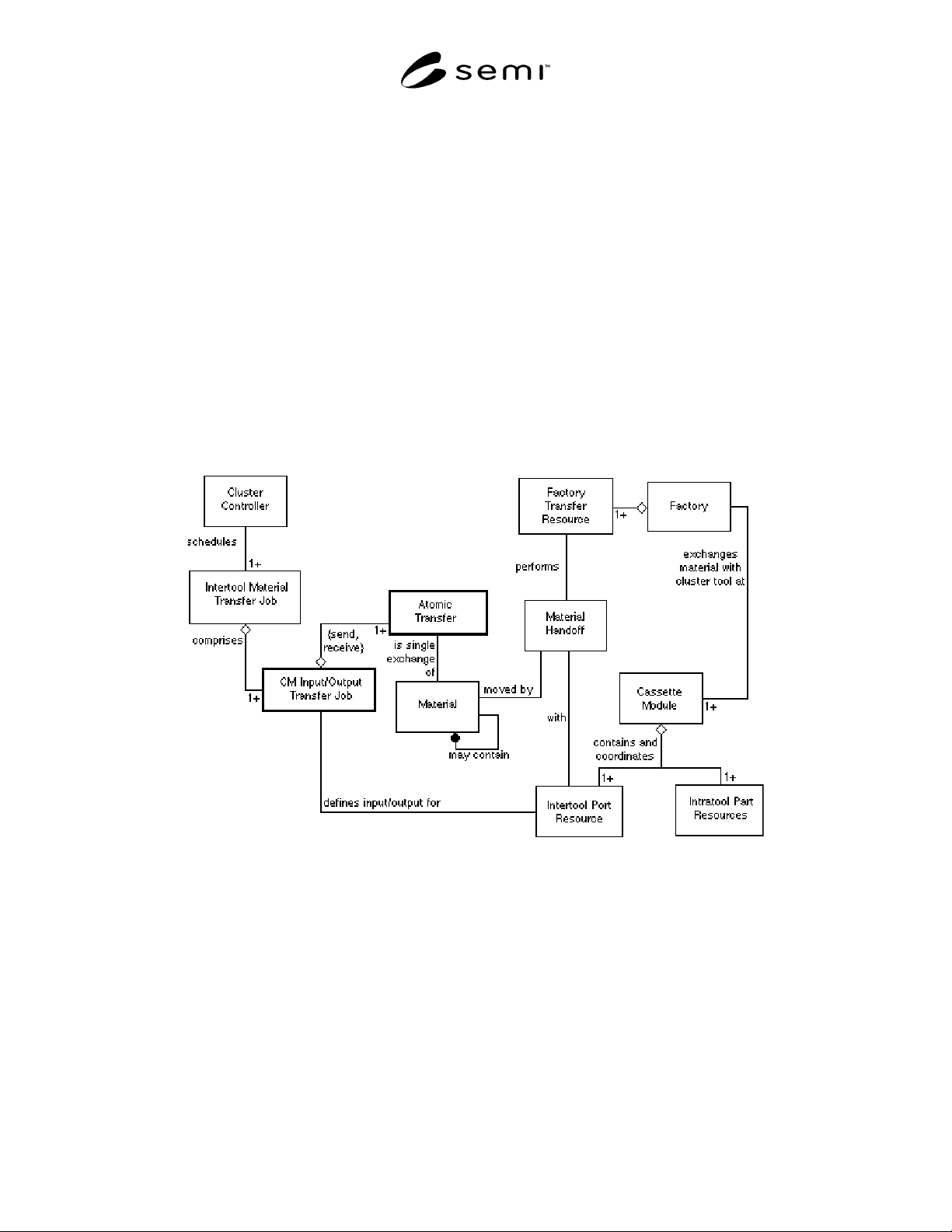
7.1.4.2 Intertool Material Transfer — The cassette module performs material exchange with the factory. The
material generally consists of cassettes with single material or empty cassettes, but may be individual single
material. The intertool material movement model, shown in Figure 9, is similar to the intratool material movement
model. An intertool material transfer is a transfer in the factory which includes the cluster tool as one of the transfer
partners.
Figure 9
Intertool Material Movement Information Model
In the cluster tool, the cluster controller schedules an intertool material transfer job when material exchange with the
factory is required. This job may be an element of a factory material transfer job in which the cluster tool is a
partner.
The intertool material transfer job is achieved by a CM input/output transfer job assigned to the intertool port
resource in the participating cassette module. It defines the material exchange with the factory for the cassette
module. The CM input/output transfer job comprises an atomic transfer, which defines the roles in the material
handoff.
In the cassette module, material transfer with the transport module is controlled by the intratool port resource. It is
the responsibility of the cassette module to coordinate its intertool and intratool port resources.
SEMI E38-1296 © SEMI 1995, 199613
The factory transfer resource may be an operator,
SMIF, AGV, or other mechanism. Its definition,
associated transfer jobs, and the handoff, are beyond the
scope of this standard. Factory material movement may
be achieved automatically using applicable SEMI
standards.
7.1.4.3 Carrier Mapping — The final element of
material movement in a cluster tool is the mapping of
single material in a carrier. Once a cassette is received
by the cluster tool, it is necessary to communicate the
presence and identifiers of the material it contains.
Batch process modules also require these carrier
mapping services in order to define loading of the
process carrier.
In carrier mapping, the carrier may be a cassette used to
hold single material loaded at the cassette module from
the factory, or a process carrier used to hold multiple
material for batch processing. For the purposes of
carrier mapping, these are equivalent, and the
relationships are shown in the material model, Figure 6.
A carrier has an ordered set of material slots, a
specialization of material location, each of which can
hold a single material. The material slot of a carrier is
only of interest when the carrier is in the cluster tool, so
it is viewed as a location of the module which contains
the carrier. In addition to occupancy, a single material
may be assigned to a material slot, indicating, for
example, the particular slot to which a single material
is to be moved when available. Information on material
presence and assignment of the material identifier may
be detected in the module or determined by the cluster
controller or a supervisory controller.
7.1.5 Exception Model — In an automated control
system where the operator interface is remote from the
module controller, it is necessary to have interactive
exception handling for error recovery. In addition to
exception reporting, a module requires input from a
decision authority to resolve recoverable abnormal
situations. These include exception conditions which
extend beyond the module domain and those for which
the module has insufficient information, such as in
hardware failure.
The decision authority in a cluster tool is the cluster
controller. It may interact with an operator to determine
the appropriate recovery action to perform.
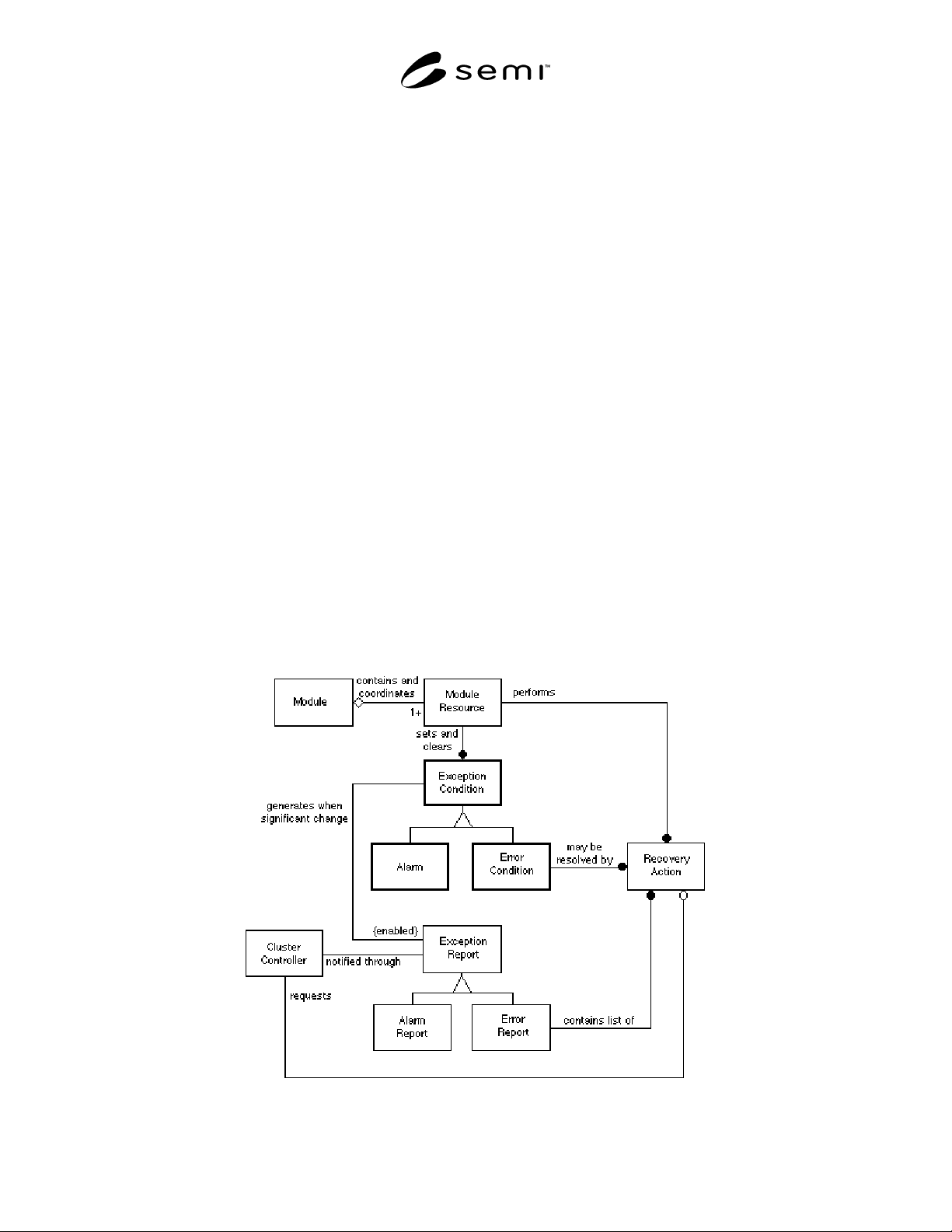
Figure 10 shows the exception model. Module
resources detect appropriate exception conditions,
which may be set or cleared. An abnormal situation is
indicated by the corresponding exception condition
being in the set state. A significant change in exception
condition information generates an exception report to
notify the decision authority. Both detection of the
abnormal situation and its resolution generate exception
reports. Reporting of each exception condition may be
enabled and disabled independently in order to mask
nuisance exceptions.
Figure 10
Exception Information Model